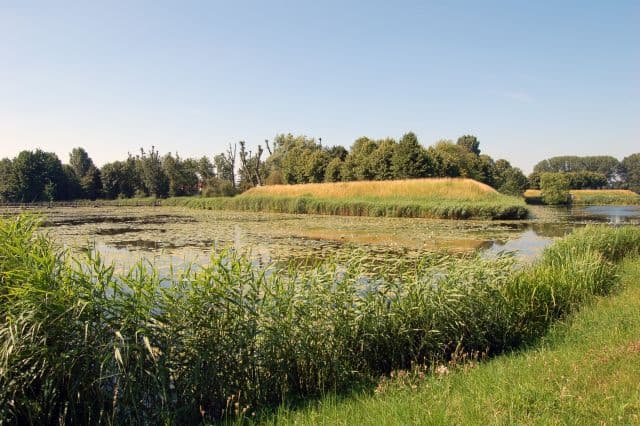
Wierickerschans
Wierickerschans Fort is a significant component of the Old Dutch Waterline or "Oude Hollandse Waterlinie," an ingenious 17th-century defense system in the Netherlands. This system allowed large areas of Holland to be deliberately flooded, creating a formidable natural barrier against invading armies from the East. The strategic inundation protected major towns and cities in the western part of the country, leveraging the unique Dutch landscape and hydrological expertise.
Historical context and strategic importance
The Old Dutch Waterline was a defensive network operational from the early 17th century and remained in military use until the 19th century. It was designed to defend the economically and politically vital provinces of Holland and Utrecht by flooding low-lying polders and fields, hindering enemy troop movements. Within this defensive scheme, Wierickerschans Fort held a central position, commanding key access points and serving as a military headquarters during critical conflicts.
The Fort is located on a raised terrain, classifying it as a hill castle, which provided a tactical advantage for surveillance and defense. Its placement within the waterline allowed control over the inundation zones and the protection of crucial waterways and roads.
Construction and architectural features
Constructed in the 17th century during the Renaissance period, Wierickerschans Fort exhibits characteristics typical of military architecture of that era. The fortification was designed to withstand artillery attacks, featuring thick earthen ramparts reinforced with brick and stone. The layout includes bastions, which are angular projections enabling defensive fire along the walls, and a surrounding moat that could be flooded as part of the waterline defense.
The fort's design reflects the influence of the trace italienne style, a Renaissance innovation in fortification that emphasized low, thick walls and angular bastions to better resist cannon fire. The use of water as a defensive element was particularly advanced, integrating natural flooding with man-made structures.
Role during the Franco-Dutch War
Wierickerschans Fort gained prominence in 1672, known as the "Rampjaar" or Disaster Year in Dutch history, when the Dutch Republic faced simultaneous invasions by France, England, and other allies. During this conflict, Stadtholder Willem III (later King William III of England) established his military headquarters at the fort. This highlights the fort's strategic importance as a command center during one of the most critical periods of Dutch resistance.
The fort's position allowed Willem III to coordinate defensive operations effectively, utilizing the waterline's flooding capabilities to impede French advances. This period cemented the fort's role in Dutch military history and its association with one of the country's most notable leaders.
Preservation and current status
Today, Wierickerschans Fort remains a well-preserved example of Renaissance military architecture integrated into a unique water-based defense system. The fort and the surrounding waterline are recognized for their cultural and historical significance, illustrating Dutch ingenuity in landscape management and military engineering.
The site is accessible to visitors interested in military history, Dutch heritage, and engineering. It offers insight into the strategic use of water in defense and the evolution of fortification design from the Renaissance through the early modern period.
Legacy of the old dutch waterline
The Old Dutch Waterline represents a remarkable example of adaptive defense that combined natural geography with human innovation. Wierickerschans Fort stands as a key element of this system, embodying the tactical and architectural advancements that allowed the Dutch Republic to defend itself against larger invading forces.
The fort's historical significance extends beyond military architecture; it reflects the broader Dutch mastery of water management, a theme central to the country's history and identity.
Frequently asked questions (FAQ)
- How do I get to Wierickerschans?
- Wierickerschans is located in the Netherlands and can easily be accessed by car or public transportation. If you are taking public transport, local buses frequently connect nearby towns to the site. Parking is available on-site for those driving.
- What is the historical significance of Wierickerschans?
- Wierickerschans is a historical fortification dating back to the 17th century, originally built to defend the area during conflicts. It played a crucial role in the military history of the Netherlands, particularly during the Eighty Years' War. The site is a testament to the strategic military architecture of its time.
- When was Wierickerschans constructed?
- Wierickerschans was constructed in 1625 as part of a series of fortifications in the region. It was designed to protect the waterways and provide a defensive position against invaders. Its construction reflects the military needs of the era.
- Can I take guided tours of Wierickerschans?
- Yes, guided tours are available at Wierickerschans, providing visitors with in-depth knowledge about its history and architecture. These tours are led by knowledgeable guides who can answer questions and share fascinating stories. It’s recommended to check the schedule and book in advance.
- Why is Wierickerschans considered an important architectural site?
- Wierickerschans is recognized for its unique star-shaped design, which exemplifies the military architecture of the 17th century. The fortification features earthen ramparts and a moat, showcasing advanced defensive techniques of its time. Its preservation allows visitors to appreciate the historical significance of such structures.
- Is it possible to visit Wierickerschans year-round?
- Yes, Wierickerschans is open to visitors year-round, though opening hours may vary seasonally. It is advisable to check the official website for the most current opening times and any special events. Visiting during spring and summer offers the best experience, as the grounds are lush and vibrant.
- What are the ticket prices for Wierickerschans?
- Entry to Wierickerschans is generally affordable, with discounted rates for children and seniors. Tickets can be purchased on-site or through the official website. Special events may have different pricing, so it's best to check beforehand.
- What are some nearby attractions to Wierickerschans?
- Nearby attractions include the picturesque town of Wieringerwerf and several nature reserves perfect for hiking and birdwatching. The area also offers cycling routes that allow visitors to explore the scenic Dutch countryside. Don't miss the chance to visit local cafes and shops that enhance your experience.
- What is the best time to visit Wierickerschans?
- The best time to visit Wierickerschans is during the spring and summer months when the weather is pleasant and the gardens are in full bloom. These seasons also feature more frequent events and guided tours. Autumn can be beautiful too, with colorful foliage, but it's advisable to check for any weather-related closures.
Photo gallery

Information
Loading map...
Visitor reviews
No reviews yet. Been here? Write the first review and help other travelers!
Write the first reviewVisited this castle? Share your experience
Your review helps other travelers and adds first-hand knowledge to our encyclopedia.



