White Tower of Thessaloniki
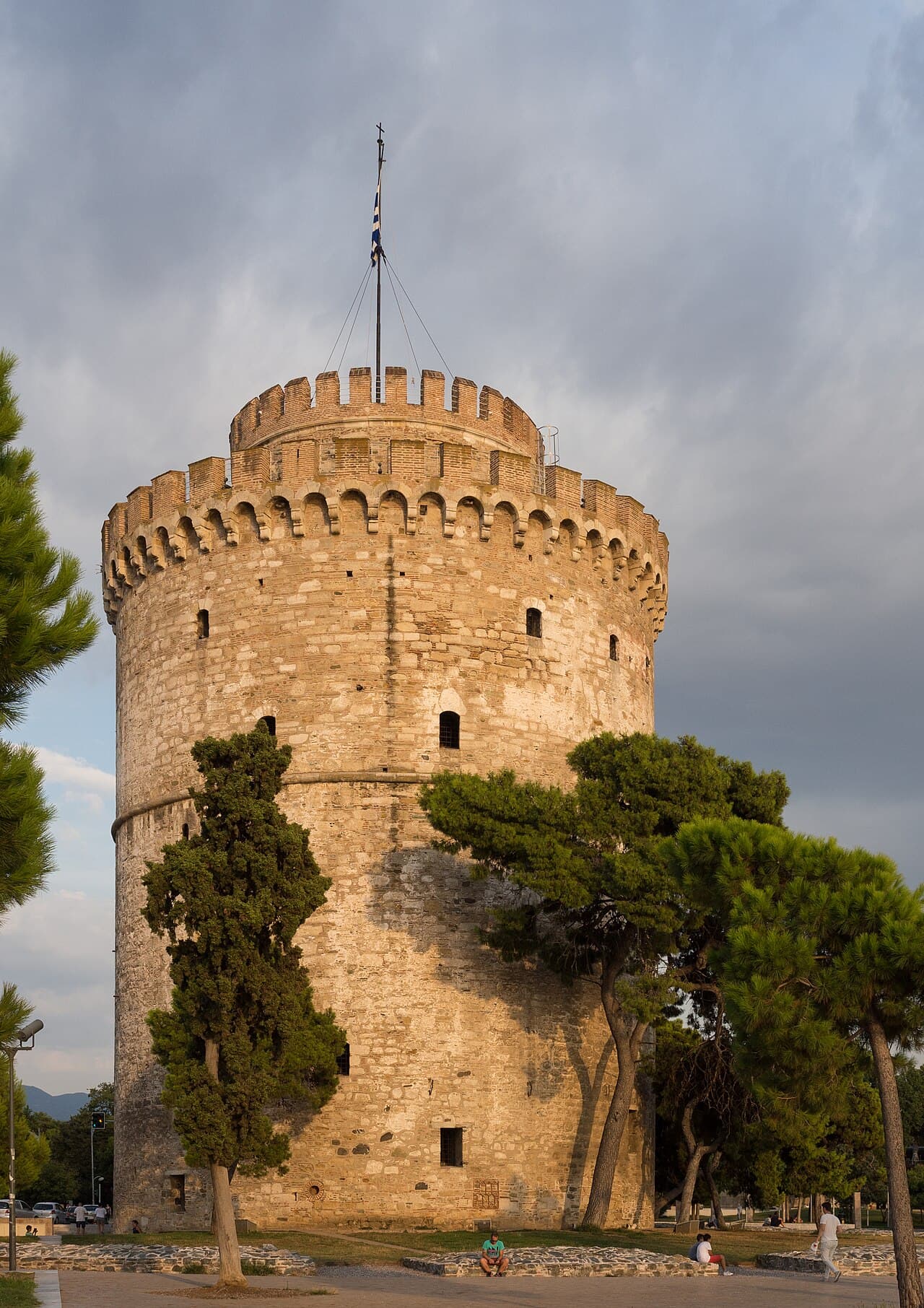
The White Tower of Thessaloniki stands as a prominent hill castle and historic monument on the waterfront of Thessaloniki, the capital of the Macedonian region in northern Greece. This imposing structure is one of the city's most recognizable landmarks and serves as a museum today, attracting numerous visitors interested in its rich history and architectural significance.
Historical background and origins
The current White Tower was constructed in the 15th century by the Ottoman Empire after their conquest of Thessaloniki in 1430 under Sultan Murad II. It replaced an earlier Byzantine fortification that had existed since at least the 12th century. This earlier structure formed part of the city's defensive walls, guarding the strategic port and anchorage of Thessaloniki on the Aegean Sea.
During the Ottoman period, the tower was integrated into the city's fortress system and was used primarily as a defensive stronghold and a prison. It acquired a fearsome reputation as a place of detention and execution, especially during the reign of Mahmud II, when it was the site of the mass execution of rebellious Janissaries in the early 19th century.
Architectural features and modifications
The White Tower is a cylindrical structure approximately 34 meters high and 23 meters in diameter, with walls up to 7 meters thick. It features a single gate and a series of small windows and arrow slits, typical of late medieval military architecture. The tower's robust construction and strategic placement on a small hill overlooking the sea allowed it to serve as a key defensive point controlling access to Thessaloniki's harbor.
After Greece regained control of Thessaloniki in 1912, the tower underwent substantial remodeling. Its exterior was whitewashed, giving it the distinctive appearance that inspired its modern name, the White Tower. This renovation also included restoration efforts to preserve the tower as a cultural monument and museum.
The White Tower as a symbol of Thessaloniki
Today, the White Tower is one of Thessaloniki's most important cultural symbols. It represents the city's diverse history, reflecting its Byzantine origins, Ottoman past, and modern Greek identity. The tower houses a museum that exhibits Thessaloniki's history from antiquity through the Byzantine and Ottoman periods to the present day.
Visitors can explore the tower's interior, which includes exhibition halls, a panoramic viewing platform at the top, and displays that detail the architectural evolution and historical events associated with the tower. Its location on the waterfront promenade also makes it a popular spot for both tourists and locals.
Significance in military and cultural history
The White Tower of Thessaloniki played a vital role in the city's defense system during the late medieval period and the centuries of Ottoman rule. Its use as a prison and execution site highlights the turbulent history of Thessaloniki under Ottoman governance.
Architecturally, the tower exemplifies the functional military designs of the era, with thick walls and limited openings to withstand sieges and attacks. Its transformation into a museum and cultural monument in the 20th century reflects the broader trend of repurposing historic military structures for educational and heritage preservation purposes.
Visitor information and accessibility
The White Tower is open to the public as a museum, with visiting hours typically spanning from morning to early evening. It provides an accessible cultural experience for visitors interested in exploring Thessaloniki's layered history and architectural heritage.
Its position on the city's waterfront makes it easily reachable by foot or public transport, and it is often included in walking tours of Thessaloniki's historic center. The tower's museum offers informative exhibits in multiple languages, enhancing its appeal to international tourists.
Frequently asked questions (FAQ)
- What is the historical significance of the White Tower of Thessaloniki?
- The White Tower of Thessaloniki is a symbol of the city and has played a crucial role in its history. Originally built as a fortification in the 15th century, it has served various purposes, including a prison and a watchtower, reflecting the diverse cultural influences in the region.
- When was the White Tower of Thessaloniki constructed?
- Construction of the White Tower began in 1430 and was completed shortly thereafter. It stands as a testament to the Ottoman architectural style and the city's historical evolution during the Byzantine and Ottoman periods.
- Can I visit the White Tower of Thessaloniki?
- Yes, the White Tower is open to visitors, allowing you to explore its rich history and stunning architecture. Inside, you can find exhibits that detail the tower's past and its significance to Thessaloniki.
- What are the opening hours for the White Tower of Thessaloniki?
- The White Tower is typically open from 8:00 AM to 8:00 PM during the summer months and from 8:00 AM to 3:00 PM in the winter. It's advisable to check the official website for any changes, especially on holidays.
- Is it possible to access the White Tower with a wheelchair?
- The White Tower is partially accessible to visitors with mobility challenges. While there are ramps available, some areas may have limited access due to the historical nature of the structure.
- What are the ticket prices for visiting the White Tower?
- As of the latest information, the entrance fee to the White Tower is around €6 for adults, with discounts available for students and seniors. It's a good idea to check for any special promotions or free admission days.
- When is the best time to visit the White Tower of Thessaloniki?
- The best time to visit is during the spring (April to June) and fall (September to October) when the weather is pleasant and the crowds are smaller. This allows for a more enjoyable experience while exploring the tower and its surroundings.
- What nearby attractions can I explore after visiting the White Tower?
- After visiting the White Tower, you can explore the beautiful waterfront promenade of Thessaloniki, the Archaeological Museum, and the Rotunda. These attractions offer a deeper insight into the rich history and culture of the city.
Photo gallery

Information
Current owner
Municipality of Thessaloniki
Loading map...
Visitor reviews
No reviews yet. Been here? Write the first review and help other travelers!
Write the first reviewVisited this castle? Share your experience
Your review helps other travelers and adds first-hand knowledge to our encyclopedia.