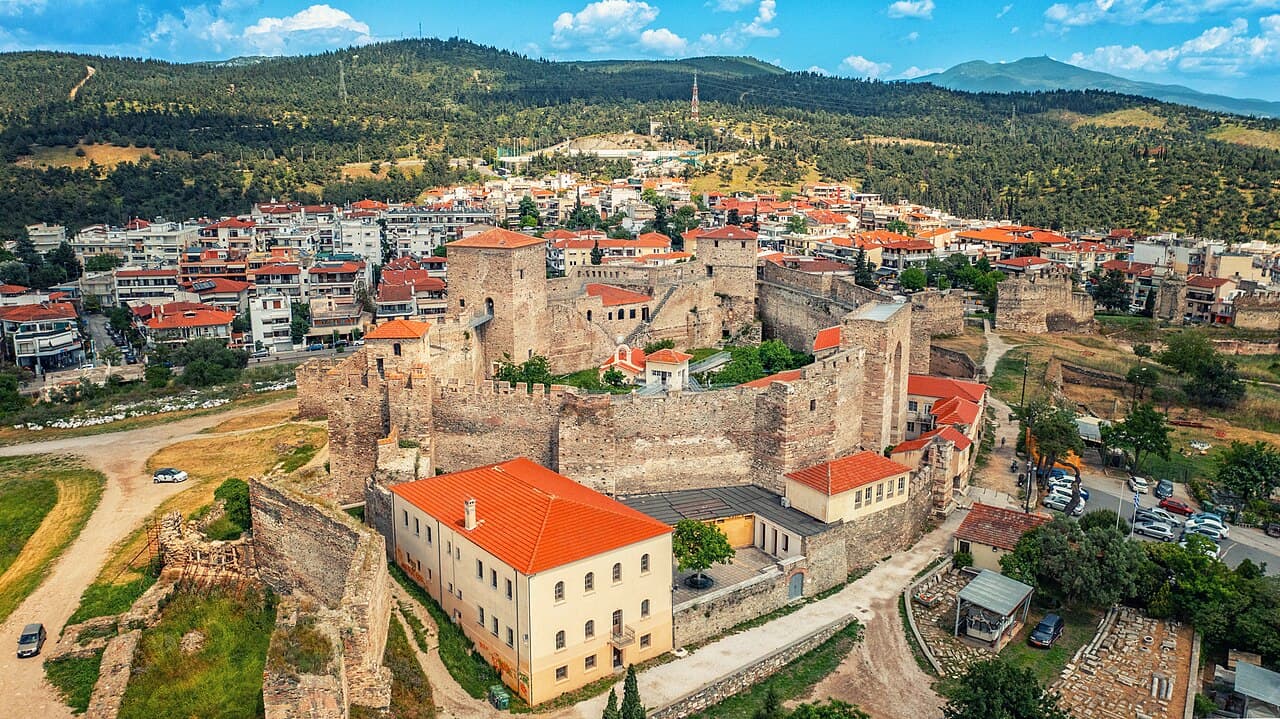
The Heptapyrgion fortress, also known as Eptapyrgio in modern Greek and Yedi Kule in Ottoman Turkish, stands prominently on the north-eastern corner of the Acropolis of Thessaloniki in Greece. This imposing structure, whose name translates to "Fortress of Seven Towers," paradoxically features ten towers. Its name likely draws inspiration from the Yedikule Fortress in Constantinople (modern Istanbul), reflecting the cultural and political ties of the region during the Byzantine and Ottoman periods.
Originally constructed as a fortified bastioned fortress, the Heptapyrgion played a critical role as the major redoubt of Thessaloniki's acropolis. It served as the seat of the city's garrison commander during Ottoman rule until the late 19th century, underscoring its strategic military importance. The fortress's robust bastioned walls and defensive towers exemplify military architecture adapted to the evolving demands of warfare from the Byzantine through the Ottoman era.
Historical background and military significance
The origins of the Heptapyrgion date back to the Byzantine period, although the fortress underwent significant modifications and expansions under Ottoman rule. Its name, meaning "seven towers," is somewhat misleading as the fortress actually includes ten towers, a feature that distinguishes it from other contemporary fortifications. The fortress was integral to the defense of Thessaloniki, a key city in the Byzantine Empire and later the Ottoman Empire, guarding the northeastern approach to the acropolis.
During the Ottoman era, the fortress was not only a military bastion but also the administrative center for the city's garrison. It was heavily fortified to withstand sieges and served as a symbol of Ottoman authority in the region. The fortress's strategic location allowed for control over the city and its surroundings, making it a crucial military asset.
Architectural features and layout
The Heptapyrgion's architecture reflects a blend of Byzantine and Ottoman influences, with its bastioned fortifications designed to resist artillery attacks. The fortress's ten towers are arranged to provide overlapping fields of fire, enhancing its defensive capabilities. The walls are thick and robust, constructed from local stone and masonry techniques characteristic of the periods.
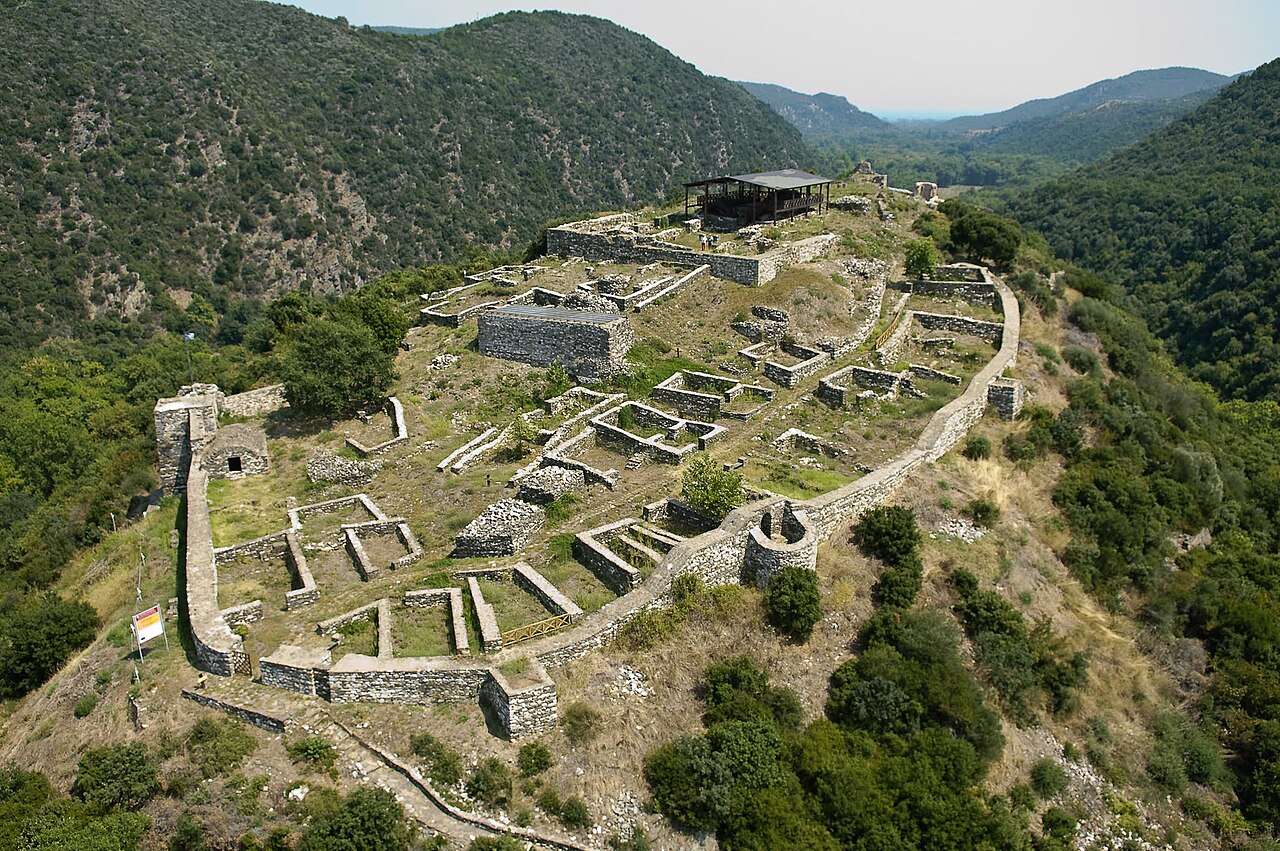
Within the fortress, there are remnants of various structures including barracks, , and storage facilities, indicating its function as a garrison and military stronghold. The layout is compact yet strategically planned to maximize defense and operational efficiency.
The transformation into a prison
In the late 19th century, the Heptapyrgion was repurposed as a prison, known as the Φυλακές Επταπυργίου. This function continued until 1989, marking over a century of use as a detention facility. The prison's notoriety is reflected in Greek cultural memory, notably in rebetika songs that reference the infamous Yedi Kule prison, highlighting its role in social and political history.
Restoration and current status
Since the 1970s, the Heptapyrgion has been the subject of ongoing restoration and archaeological work. These efforts aim to preserve its historical fabric and make the site accessible for educational and cultural purposes. Today, the fortress stands as a significant monument reflecting the layered history of Thessaloniki, from Byzantine stronghold to Ottoman bastion and prison.
The fortress is a valuable site for understanding the military architecture and urban history of Thessaloniki, attracting scholars and visitors interested in the region's complex past. Its preservation contributes to the cultural heritage of Greece and offers insights into the defensive strategies employed over centuries.
Frequently asked questions (FAQ)
- What is the historical significance of the Heptapyrgion fortress?
- The Heptapyrgion fortress served as a key defensive stronghold for Thessaloniki during the Byzantine and Ottoman periods, protecting the city's acropolis and acting as the garrison command center.
- Can visitors tour the Heptapyrgion today?
- Yes, the fortress is partially preserved and open to visitors, with ongoing restoration efforts enhancing its accessibility and educational value.
- Why is the fortress called Heptapyrgion if it has ten towers?
- The name Heptapyrgion means "Fortress of Seven Towers" but the structure actually has ten towers. The name likely references the similar Yedikule Fortress in Constantinople rather than the exact tower count.
- When was the Heptapyrgion used as a prison?
- The fortress was converted into a prison in the late 19th century and remained in use until 1989, becoming infamous in Greek cultural memory.
- What architectural styles influence the Heptapyrgion?
- The fortress features a blend of Byzantine and Ottoman architectural elements, particularly in its bastioned defensive walls and tower design.
Photo gallery

Information
Loading map...
Visitor reviews
No reviews yet. Been here? Write the first review and help other travelers!
Write the first reviewVisited this castle? Share your experience
Your review helps other travelers and adds first-hand knowledge to our encyclopedia.