The Ruins of Rentina
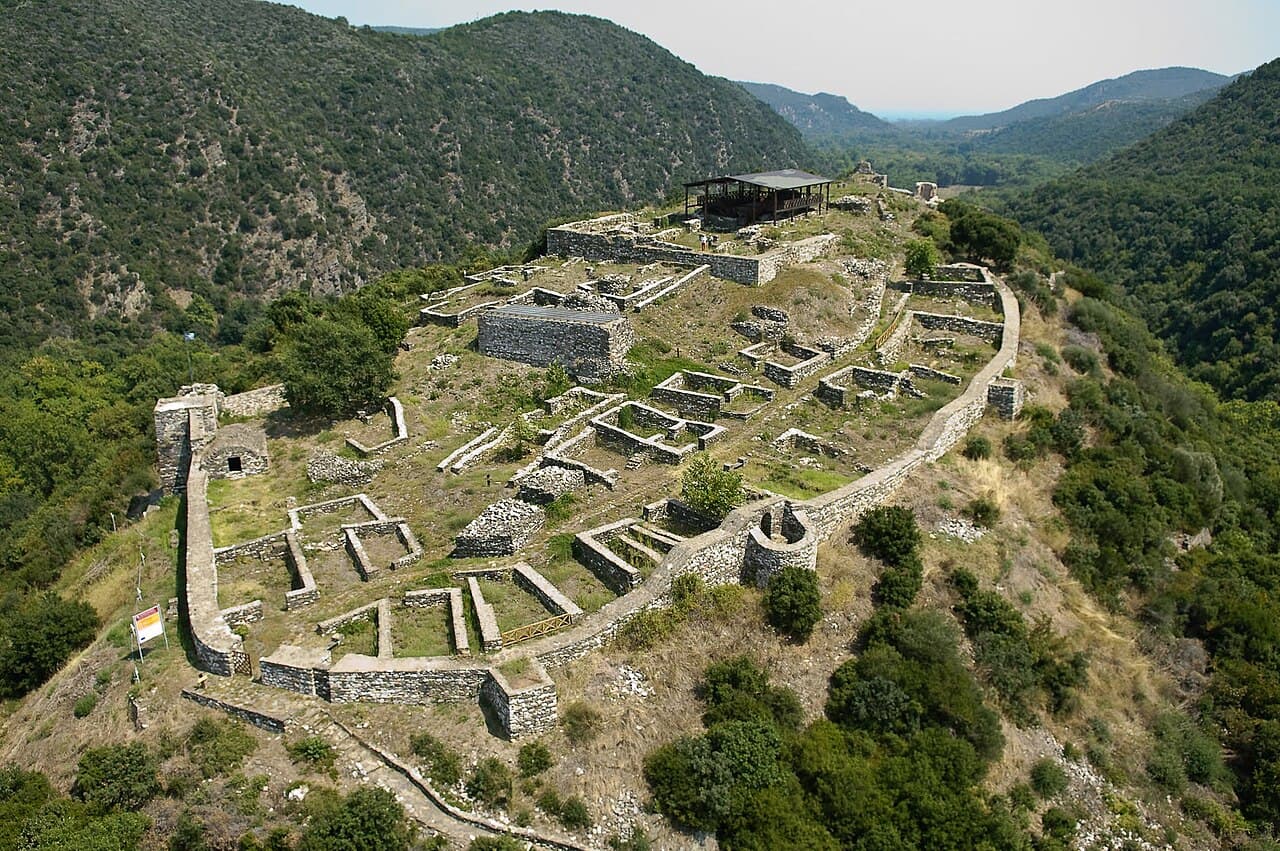
The ruins of Rentina Castle stand as a remarkable testament to the strategic military and religious significance of this hilltop site near Thessaloniki, Greece. Overlooking the fertile Rihios River Valley, the castle occupies a commanding position at the western entrance to the Rentina Pass, a vital route in Aegean Macedonia. This site has witnessed continuous human occupation and fortification from the Neolithic period through the early Ottoman era, reflecting a complex layering of civilizations and architectural styles.
Archaeological evidence confirms that the hilltop was initially settled during the Neolithic, capitalizing on its natural defensibility and access to water. The earliest known fortifications date to around 450 AD, when a roughly pentagonal stronghold was constructed to guard the region. This early fortress included water reservoirs carved into the rock to sustain a garrison, underscoring the site's military importance from antiquity.
Historical development and strategic role
Early and byzantine periods
During the reign of Emperor Justinian I (527–565 AD), the fortress underwent significant reinforcement, including the heightening of walls and the addition of semicircular towers and enhanced water storage facilities. These improvements likely correspond to the fortress Artemision described by the historian Procopius. The castle's fortifications were built predominantly from roughly hewn stone without mortar, a technique that, while expedient, made the walls vulnerable to erosion over time.
By the 10th century, Rentina Castle evolved beyond a mere military installation to become a religious center. The establishment of the bishopric of Rentina led to the construction of a significant episcopal basilica atop an earlier water cistern on the acropolis. This basilica, adorned with fresco fragments, highlights the site's dual role as a military fortress and ecclesiastical stronghold. The settlement expanded beyond the acropolis, with homes and workshops spreading along the lower town walls.
Medieval transformations and latin occupation
Following the Fourth Crusade in 1204, Rentina Castle fell under the control of the Latin Kingdom of Thessalonica. Archaeological finds, including hoards of coins, attest to a permanent military presence during this period. The Byzantine Empire, under Emperor John III Doukas Vatatzes, recaptured the fortress without resistance in 1242, restoring Byzantine control.
During the Palaiologan dynasty (13th–14th centuries), the castle prospered as regional documents record monastic possessions and functioning mills. Architectural remnants from this era include a cross-domed church with ceramic decorations dated to the early 1300s, reflecting ongoing religious and structural development.
Decline and abandonment
In the mid-14th century, amidst the Byzantine civil war, the fortress was seized by John Kantakouzenos. However, the castle's strategic significance waned as the Ottoman Empire expanded. The site was gradually abandoned in favor of nearby settlements, with archaeological evidence indicating sparse habitation through the 16th century.
Architectural features and defensive structures
Fortifications and towers
The castle's defensive complex originally formed a roughly five-sided citadel enclosing the southwestern hillside. Its walls featured nine towers strategically placed along vulnerable points, including a semicircular tower added during Justinian's reign. A primary gate on the west and a secondary gate on the south controlled access, supplemented by a smaller postern near the western entrance.
A distinctive triangular wall was constructed along the steep eastern cliffside, likely serving as a protected enclosure for livestock during attacks. Carbon-14 dating of timber remains from a tower in this section places its construction around 980 AD. This tower linked to a semi-subterranean corridor leading to an underground double-vestibule cistern topped by domes, ingeniously engineered to collect water from a nearby stream.
Water management systems
Water storage was a critical feature of the fortress. Two small underground cisterns carved into the rock within the walls supplied the garrison during sieges. One cistern is located near a tower at the northwest corner, while another sits inside the citadel. Justinian-era enhancements included a large reservoir atop the acropolis, demonstrating advanced water management to sustain inhabitants during prolonged conflicts.
Religious and domestic buildings
Within the castle complex, remains of religious buildings include the 10th-century episcopal basilica and a later cross-domed church from the Palaiologan period, both richly decorated with frescoes and ceramic elements. Evidence of domestic life is present in the form of residences, workshops, a small chapel, and a cemetery outside the walls. A paleochristian bathhouse nearby adds to the site's cultural depth.
Archaeological discoveries and preservation efforts
Excavations beginning in 1976 have revealed a wealth of artifacts illustrating the site's long occupation. Over 2,000 Greek coins spanning multiple periods, 400 fine pottery vessels, Byzantine inscriptions reused in wall construction, and personal items such as silver and gold jewelry have been uncovered. Noteworthy finds include a Byzantine skyphos from between the 10th and 14th centuries and an 11th-century Byzantine cuirass, indicating the presence of well-equipped military occupants.
The original mortar-free construction technique made the walls vulnerable to natural erosion. In 2014–2015, floods caused soil erosion and wall slippage in twelve areas along the southwestern side. Restoration efforts have since been implemented to stabilize and preserve the remaining structures, ensuring the site's continued historical and cultural significance.
Visitor information and cultural significance
Today, the ruins of Rentina Castle offer a compelling glimpse into the layered history of Byzantine and medieval Macedonia. The site provides valuable insights into military architecture, water management, and religious life spanning over a millennium. Its location near Thessaloniki makes it accessible for visitors interested in exploring Greece's rich historical heritage beyond the more frequented urban centers.
Visitors can explore the remains of the fortifications, towers, churches, and domestic quarters, gaining an appreciation for the castle's strategic and cultural importance. The site also serves as a poignant reminder of the region's complex past, from ancient Greek civilizations through Byzantine and Latin rule to Ottoman decline.
Frequently asked questions (FAQ)
- How do I get to The Ruins of Rentina?
- The Ruins of Rentina are located approximately 30 kilometers from Thessaloniki, making it accessible by car or public transport. You can take a bus from the city center to the nearby village of Rentina, followed by a short hike to the castle site.
- What is the historical significance of The Ruins of Rentina?
- The Ruins of Rentina date back to the Byzantine period and played a crucial role in the defense of the region against invasions. This castle served as a strategic military fortification, reflecting the architectural styles and military needs of its time.
- When was The Ruins of Rentina built?
- The castle was constructed in the 12th century, during the height of the Byzantine Empire. It has undergone several renovations and restorations over the centuries, particularly after it was captured by various powers.
- Can I visit The Ruins of Rentina year-round?
- Yes, The Ruins of Rentina are open to visitors throughout the year. However, it is advisable to check local weather conditions and accessibility during the winter months, as some paths may be less navigable.
- Why is The Ruins of Rentina a popular tourist destination?
- The Ruins of Rentina attract visitors due to their rich history, stunning views of the surrounding landscape, and unique architectural features. The site offers a glimpse into the past and is a favorite among history enthusiasts and photographers alike.
- Is it possible to access The Ruins of Rentina with mobility issues?
- The site has some uneven terrain and steep paths, which may present challenges for visitors with mobility issues. It is recommended to check with local guides for the best routes and possible accommodations for easier access.
- What are the opening hours for The Ruins of Rentina?
- The Ruins of Rentina are typically open from 9 AM to 5 PM, but hours may vary seasonally. It is best to confirm current opening times before planning your visit.
- Are there any ticket prices for visiting The Ruins of Rentina?
- There is no entrance fee to visit The Ruins of Rentina, making it an accessible attraction for everyone. However, donations for maintenance and preservation are appreciated and can help support the site.
- What nearby attractions can I visit while in Rentina?
- Visitors to The Ruins of Rentina can explore nearby historical sites such as the ancient city of Pella and the picturesque village of Vergina. These locations offer additional insights into the region's rich history and culture.
Photo gallery

Information
Loading map...
Visitor reviews
No reviews yet. Been here? Write the first review and help other travelers!
Write the first reviewVisited this castle? Share your experience
Your review helps other travelers and adds first-hand knowledge to our encyclopedia.