White Lodge
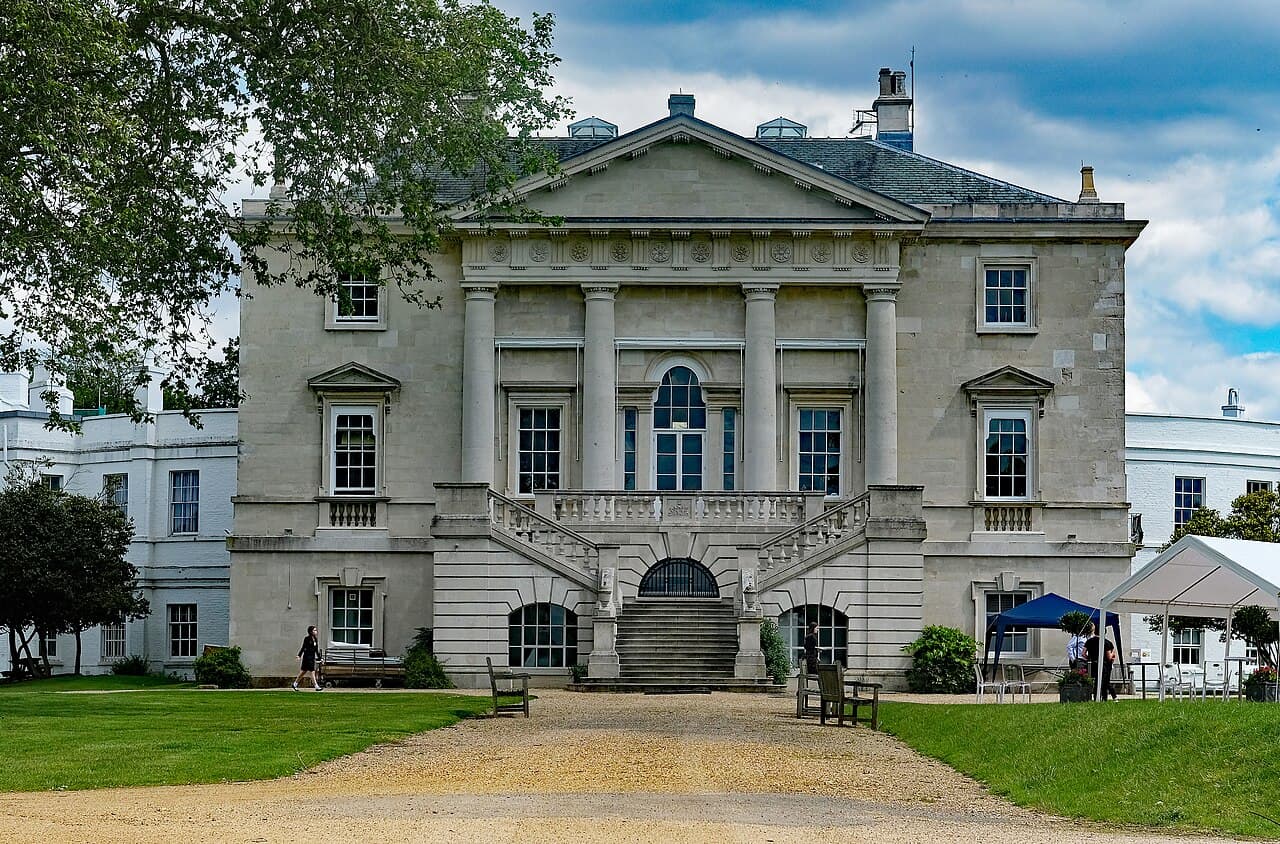
White Lodge is a distinguished Grade I listed Georgian house located in Richmond Park, within the London Borough of Richmond upon Thames. Originally built in the 18th century, it exemplifies Georgian architectural style with its elegant symmetry, classical proportions, and refined detailing. The lodge was initially constructed as a hunting lodge for the British royal family, reflecting its strategic position as a hill castle within the expansive royal parkland.
The building's history is closely tied to the British monarchy, having served as a royal residence for various members of the royal family. Over time, White Lodge transitioned from a private royal retreat to a place of education and culture. Today, it is renowned as the home of the Royal Ballet Lower School, where young dancers aged 11 to 16 receive professional training in ballet and performing arts. This adaptive reuse highlights the lodge's ongoing cultural importance and its preservation as a heritage site.
Architectural features and design
White Lodge's Georgian architecture is characterized by its balanced and harmonious facade, featuring sash windows, a central doorway framed by classical columns, and a hipped roof. The building's layout includes spacious reception rooms, high ceilings, and elegant decorative elements typical of the Georgian period. Its construction utilized high-quality materials and craftsmanship, contributing to its designation as a Grade I listed building, a status reserved for buildings of exceptional interest.
Setting and grounds
The lodge is set within Richmond Park, one of London's largest royal parks, known for its natural beauty and historic significance. The park's landscape, with its rolling hills and ancient trees, complements the lodge's stately appearance. The location on elevated terrain provided strategic views and a commanding presence, consistent with its original use as a hunting lodge.
Historical context and royal connections
White Lodge was constructed during the 18th century, a period marked by the expansion of royal estates and the development of country houses reflecting the tastes of the Georgian era. It was commissioned by King George II and designed by architect Roger Morris, who was known for his work on several notable Georgian buildings.
The lodge served various royal occupants, including Queen Charlotte, wife of King George III, who used it as a country retreat. Its role as a royal residence continued into the 19th and 20th centuries, hosting members of the royal family and dignitaries. The building's preservation reflects its importance as a symbol of royal heritage and Georgian architecture.
Transition to an educational institution
In the 20th century, White Lodge underwent a significant change in function when it became home to the Royal Ballet Lower School. This institution provides rigorous training to young dancers, preparing them for professional careers in ballet. The adaptation of the lodge for educational purposes involved careful restoration and modification to accommodate dance studios and classrooms while preserving the building's historic fabric.
This transition underscores the lodge's versatility and its ongoing contribution to British cultural life. The presence of the ballet school attracts visitors and students, ensuring the building remains active and well-maintained.
Preservation and public access
As a Grade I listed building, White Lodge is protected under UK heritage laws, ensuring its conservation for future generations. While it is primarily used as a school, the lodge occasionally opens its doors for public tours and special events, allowing visitors to appreciate its architectural beauty and historical significance.
The building's condition is well preserved, benefiting from ongoing maintenance and restoration efforts. Its status within Richmond Park also enhances its visibility and accessibility, making it a notable landmark within the London Borough of Richmond upon Thames.
Frequently asked questions (FAQ)
- How do I visit White Lodge?
- White Lodge is primarily a school and not regularly open to the public, but it occasionally offers guided tours during special events. Visitors should check the Royal Ballet Lower School's official website for tour availability and booking details.
- What is the historical significance of White Lodge?
- White Lodge was originally built as a royal hunting lodge in the 18th century and later served as a residence for members of the British royal family. Its Georgian architecture and royal connections make it an important heritage site.
- Can I attend performances or events at White Lodge?
- While White Lodge itself is mainly an educational facility, the Royal Ballet Lower School occasionally hosts performances and events. Information about public events can be found on the school's official channels.
- What architectural style is White Lodge?
- White Lodge is designed in the Georgian architectural style, characterized by symmetry, classical proportions, and elegant detailing typical of the 18th century.
- Is White Lodge accessible for visitors with disabilities?
- Access to White Lodge is limited due to its function as a school and the historic nature of the building. Visitors with disabilities should contact the Royal Ballet Lower School in advance to inquire about accessibility accommodations.
Photo gallery

Information
Current owner
Royal Ballet Lower School
Loading map...
Visitor reviews
No reviews yet. Been here? Write the first review and help other travelers!
Write the first reviewVisited this castle? Share your experience
Your review helps other travelers and adds first-hand knowledge to our encyclopedia.