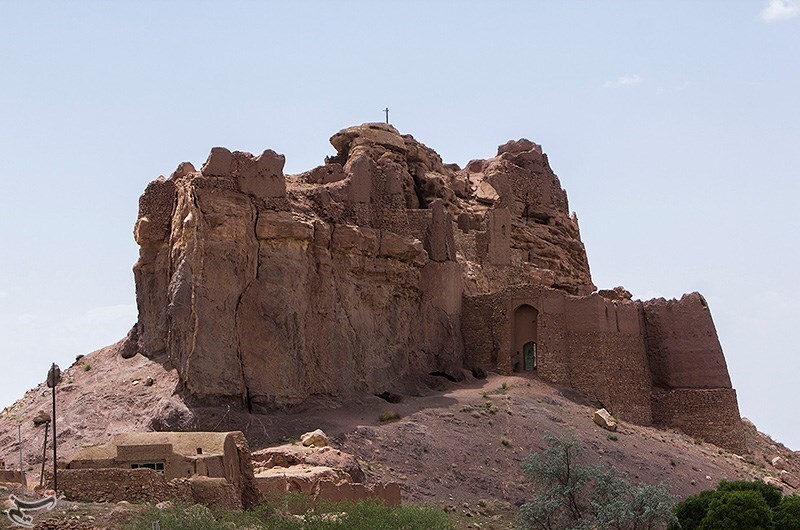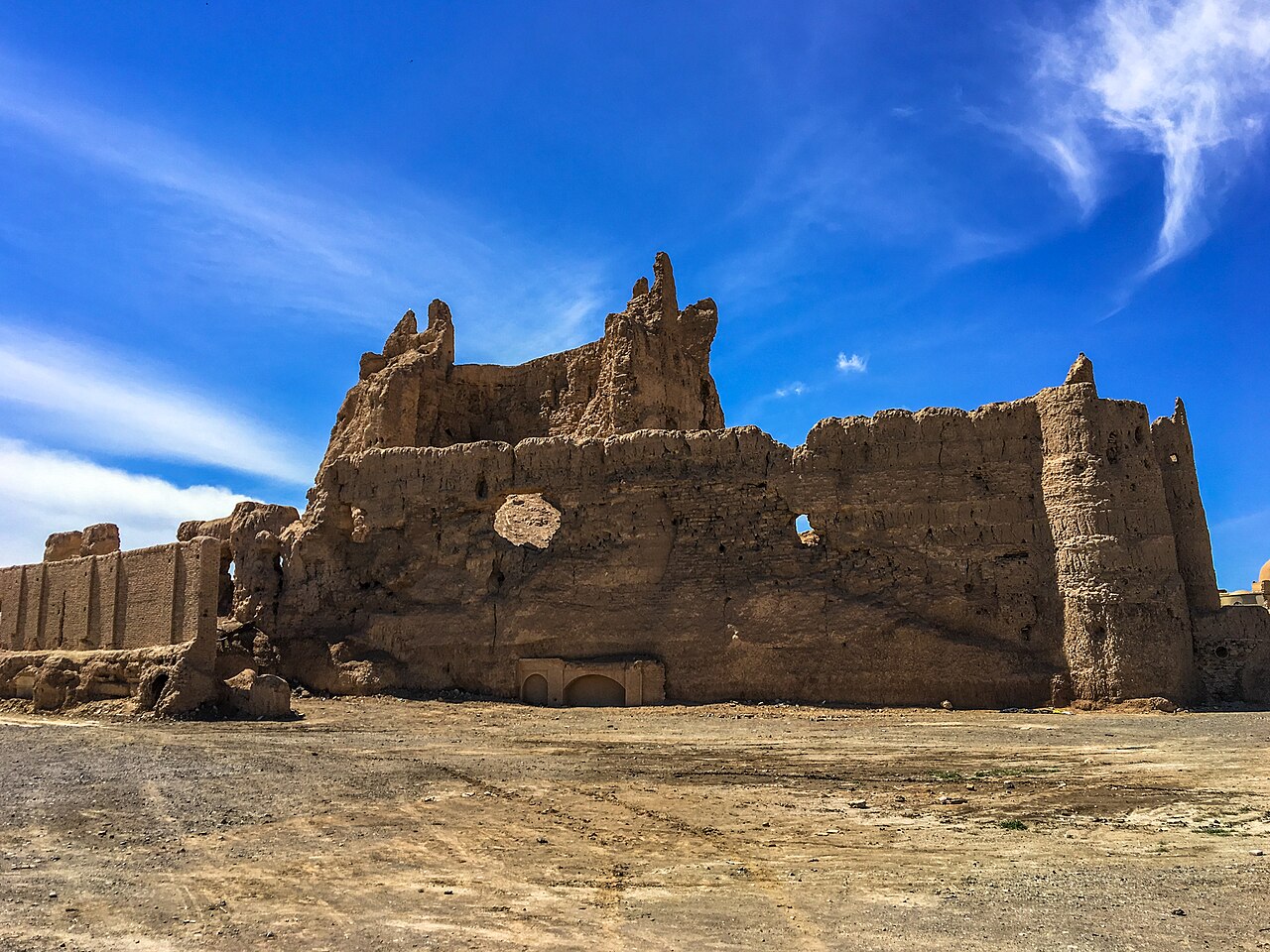
White Castle, also known as Sefid castle (Persian: قلعه سفید), is a notable historical fortress situated in Meybod County within Yazd Province, Iran. This hill castle is distinguished by its strategic location atop a natural elevation, which provided defensive advantages against invaders. The castle's origins trace back to a period between the Afsharid dynasty (18th century) and the Zand dynasty (mid-18th century), placing its construction in the post-medieval era of Iranian history. Though the exact date of establishment remains uncertain, architectural elements and historical context suggest it was built to serve military and administrative functions during a time of regional consolidation and conflict.
Architectural features and layout
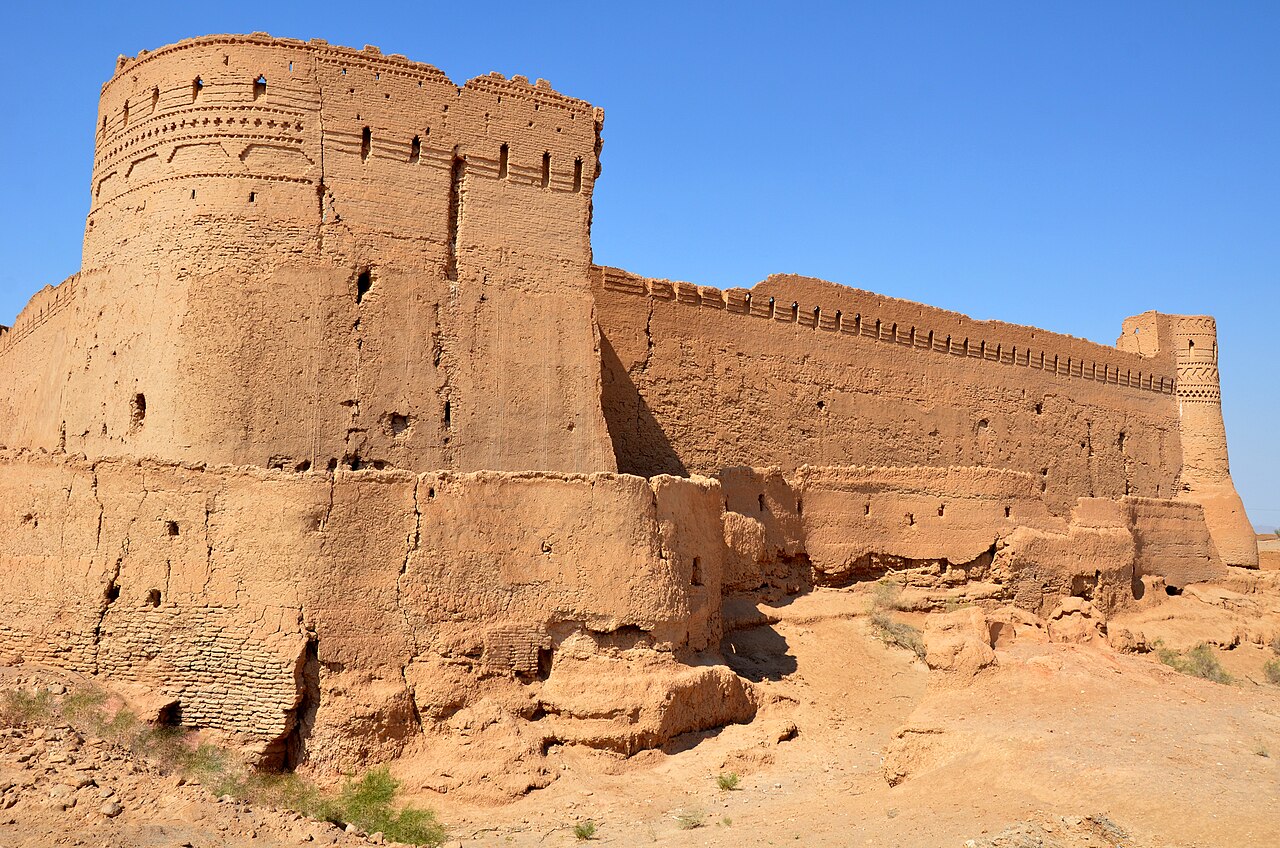
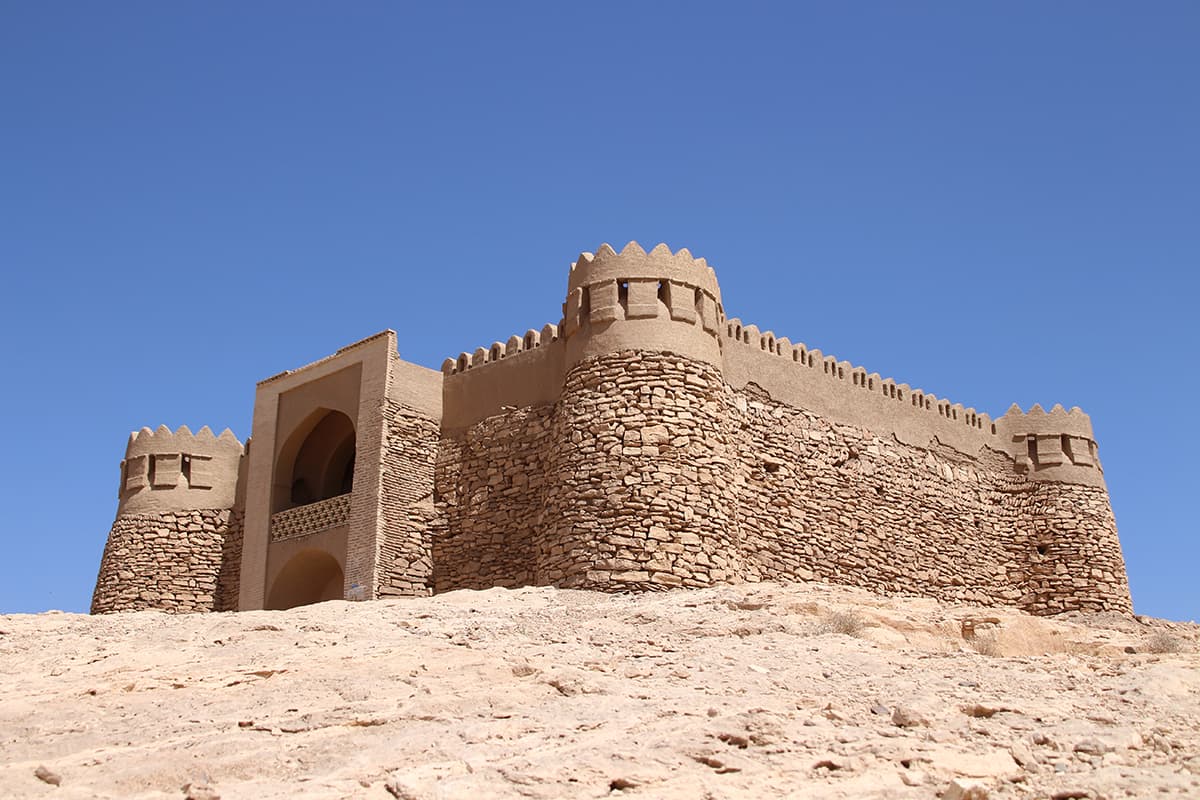
The White Castle is characterized by robust defensive structures typical of hill castles in Iran. Its walls are constructed from local stone and adobe, materials that were readily available and effective for fortification in the arid climate of Yazd. The castle features thick curtain walls that encircle the complex, designed to withstand sieges and attacks. The elevated position offers commanding views of the surrounding desert landscape, enabling early detection of approaching enemies.
Within the castle's enclosure, there are remnants of towers and bastions that once reinforced the defensive perimeter. These towers likely served as lookout posts and platforms for archers or artillery. The castle's entrance is fortified, possibly with a gatehouse structure, to control access and provide additional protection against assault.
Internal structures and functions
Inside the walls, the castle would have contained living quarters, storage rooms, and possibly a cistern for water collection, vital for sustaining inhabitants during sieges. The layout reflects a practical design focused on defense and self-sufficiency rather than elaborate residential comfort. The presence of courtyards and open spaces within the castle would have facilitated movement and military organization.
Historical context and significance
The Afsharid dynasty (1736–1796) and the Zand dynasty (1751–1794) were periods marked by political upheaval and attempts to unify Iran after the decline of the Safavid Empire. Castles like White Castle played crucial roles as military outposts and administrative centers in controlling territories and securing trade routes.
Meybod, the region where the castle is located, has a rich history as a strategic settlement in central Iran. The castle's construction during these dynasties reflects the ongoing need for fortified structures to protect against tribal conflicts and external threats. It also demonstrates the architectural adaptation to the harsh desert environment, using local materials and strategic siting.
Preservation and current condition
Today, White Castle stands as a partially preserved monument. Erosion and the passage of time have affected some of the adobe and stone structures, but significant portions of the walls and towers remain intact. The site offers valuable insights into the military architecture of the late post-medieval period in Iran and continues to attract interest from historians and tourists alike.
Efforts to maintain and study the castle contribute to preserving Iran's cultural heritage, highlighting the importance of such fortresses in understanding the region's historical landscape.
Visiting white castle
Visitors to White Castle can explore the ruins and appreciate the strategic location that once made it a formidable defensive site. The castle's position in Yazd Province, a region known for its desert architecture and historical sites, makes it a compelling destination for those interested in Iranian history and ancient military architecture.
While facilities may be limited due to the castle's remote and rugged setting, the experience offers a tangible connection to Iran's dynastic past and the architectural ingenuity employed in fortress construction.
Frequently asked questions (FAQ)
- What is the historical significance of White Castle?
- White Castle, or Nadushan, is a remarkable example of Persian military architecture dating back to the Sassanian era. It played a crucial role in the defense of the region and showcases the strategic importance of Meybod in Iranian history.
- When was White Castle built?
- White Castle was constructed in the 5th century AD, during the height of the Sassanian Empire. Its enduring structure reflects the architectural ingenuity of the time and serves as a testament to the historical legacy of the era.
- How do I get to White Castle?
- White Castle is located in Meybod, just a short drive from Yazd, making it easily accessible by car or local transportation. Visitors can also explore the surrounding areas, which offer beautiful desert landscapes and traditional Persian architecture.
- What are the opening hours of White Castle?
- White Castle is typically open to visitors from 8 AM to 6 PM daily. However, it is advisable to check local listings or contact tourist information for any seasonal changes in opening hours.
- Is it possible to take guided tours of White Castle?
- Yes, guided tours are available for visitors who wish to learn more about the history and architecture of White Castle. These tours often provide valuable insights and enhance the experience of exploring this historical site.
- Can I bring food or drinks to White Castle?
- Visitors are generally allowed to bring snacks and drinks, but it's advisable to keep the area clean and respect the site's regulations. There are also nearby cafes and restaurants in Meybod where you can enjoy traditional Iranian cuisine.
- What is the best time to visit White Castle?
- The best time to visit White Castle is during the spring and autumn months when the weather is mild and comfortable for exploration. Avoiding the peak summer heat will enhance your experience as you take in the stunning views and historical significance of the castle.
- Are there any ticket prices for visiting White Castle?
- Entry to White Castle is usually free, but there may be a small fee for guided tours or special events. It's best to check locally for any updates on pricing or potential promotions.
- What nearby attractions can I visit after White Castle?
- After exploring White Castle, visitors can check out the nearby Narin Castle, one of the oldest adobe structures in Iran, and the historic city of Meybod, known for its traditional architecture and cultural sites. These attractions offer a deeper understanding of the region's rich history and heritage.
Photo gallery

Information
Loading map...
Visitor reviews
No reviews yet. Been here? Write the first review and help other travelers!
Write the first reviewVisited this castle? Share your experience
Your review helps other travelers and adds first-hand knowledge to our encyclopedia.