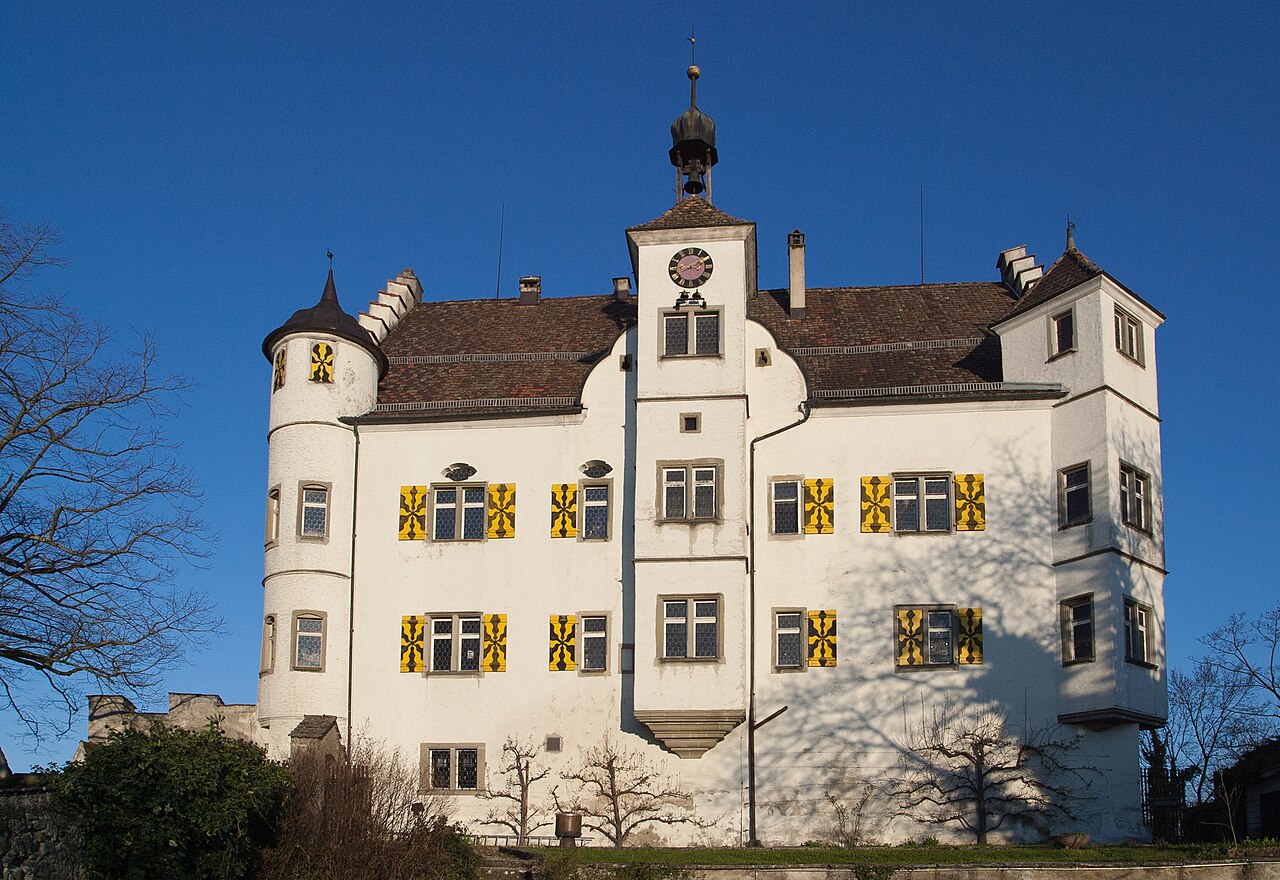
Wellenberg Castle
Wellenberg Castle stands prominently near Frauenfeld in Switzerland, embodying centuries of medieval European history and architectural evolution. Constructed originally by noble families, the castle's strategic location atop a hill overlooking the Thur valley highlights its primary function as a defensive stronghold. This commanding vantage point allowed the castle's occupants to monitor and control the surrounding landscape, a typical feature of hill castles designed for military and administrative dominance.
The earliest documentary evidence of Wellenberg Castle dates back to 1204, when it was associated with Walter von Wellenberg. During the volatile period at the end of the Interregnum—a time marked by the absence of a universally recognized emperor—the castle was used as a base for local raids. This aggressive use led to its destruction in 1258 by forces from Zürich. Following the attack, the castle's lord, Ulrich von Wellenberg, and his nephews were captured and imprisoned in Zürich, compelled to swear peace while retaining residency rights in Frauenfeld.
Medieval ownership and feudal significance
By the late 14th century, around 1370, the castle became a fief under the control of the Reichenau monastery. Shortly thereafter, ownership transferred to the von Strass family and later to the von Hohenlandenberg family. These noble families wielded considerable influence, overseeing not only the castle but also the jurisdiction of nearby villages such as Wellhausen and Thundorf, alongside several farms and administrative districts including Mettendorf, Eschikofen, and Lustorf. The von Hohenlandenberg family were notable vassals of the Habsburg dynasty and actively participated in the Appenzeller Wars, a series of conflicts in the early 15th century. Their administration extended across multiple estates, including Frauenfeld and Sonnenberg castles, reflecting the interconnected nature of noble holdings during the period.
Religious architecture and cultural influence
In 1450, Margarethe von Hohenlandenberg founded a chapel within the castle grounds. This chapel served as a significant religious center and eventually became the foundation for the parish of Felben. The establishment of this chapel illustrates the dual secular and spiritual roles castles often played in medieval society. Although detailed records of the chapel's architectural style and interior are scarce, its presence underscores the importance of ecclesiastical structures within fortified residences.
Ownership transitions and defensive enhancements
Around 1513, ownership of Wellenberg Castle passed to Jakob Mötteli von Rappenstein. Subsequently, from 1537 and for approximately 130 years, the castle was held by the von Ulm family. On the eve of the Thirty Years' War in the early 17th century, Gregor von Ulm undertook significant fortification efforts to bolster the castle's defenses. These improvements likely included strengthening walls, enhancing battlements, and possibly updating other military features to withstand contemporary siege tactics. This period reflects the castle's continued military relevance amid widespread European conflict.
In 1669, the castle was acquired on behalf of the city of Zürich by Johannes Escher. The property remained under Zürich's jurisdiction until it was sold in 1815 to Joachim Leonz Eder. The 20th century saw further private ownership changes, with the estate passing to the Schenkel family in 1900 after acquisition from the Bienz siblings.
Architectural features and preservation status
Wellenberg Castle is characterized by its carefully planned medieval fortifications, designed to maximize defense and administrative control. The castle complex includes the original chapel from 1450, which remains a key feature of the site. The castle's layout, as preserved in historical documents and visual records, reflects typical medieval architectural planning with a focus on functional defensive structures such as curtain walls, battlements, and a commanding hilltop position.
The defensive upgrades made in the early 1600s under Gregor von Ulm enhanced the castle's ability to resist siege warfare, although specific details of these fortifications are limited. The castle's preservation state is significant enough that it was placed under federal protection in 2002, recognizing its cultural and historical importance. In 2004, the Stiftung Schloss Wellenberg foundation was established to commemorate and maintain the castle's legacy, marking over eight centuries of history.
Historical legacy and cultural significance
Today, Wellenberg Castle stands as a testament to the complex history of medieval nobility, feudal administration, and military architecture in Switzerland. Its enduring presence offers insights into the social, religious, and military fabric of the region from the High Middle Ages through the early modern period. The castle's role in regional conflicts, its religious contributions through the chapel, and its strategic importance highlight its multifaceted significance.
The castle's preservation allows visitors and scholars alike to explore the evolution of medieval fortifications and noble residences in a Swiss context. Its connection to notable families such as the von Wellenberg, von Hohenlandenberg, and von Ulm families, as well as its ties to major historical events like the Appenzeller Wars and the Thirty Years' War, enrich its narrative and cultural heritage.
As a protected heritage site, Wellenberg Castle continues to be a focal point for historical research and cultural tourism. The foundation's efforts ensure that the castle's architectural and historical treasures are preserved for future generations, maintaining its status as a significant monument in Switzerland's medieval history.
Frequently asked questions (FAQ)
- How do I visit Wellenberg Castle?
- Wellenberg Castle is accessible to the public through guided tours organized by the Stiftung Schloss Wellenberg. Visitors should check the foundation's official website for tour schedules and booking information to ensure availability.
- What is the historical significance of Wellenberg Castle?
- Wellenberg Castle played a key role in regional medieval conflicts, serving as a noble residence and military fortification. It was involved in the Appenzeller Wars and underwent fortification before the Thirty Years' War, reflecting its strategic importance.
- When was the chapel at Wellenberg Castle built?
- The chapel within Wellenberg Castle was founded in 1450 by Margarethe von Hohenlandenberg. It later became the foundation for the parish of Felben, highlighting the castle's religious role.
- Can I see original architectural features at Wellenberg Castle?
- Yes, the castle retains well-preserved medieval architectural elements, including the chapel from 1450 and defensive structures enhanced in the early 17th century. These features provide insight into medieval fortification design.
- Is Wellenberg Castle protected as a heritage site?
- Wellenberg Castle has been under federal protection since 2002, ensuring its preservation as a significant cultural and historical monument in Switzerland.
Information
Sources & official resources
Verify the information above using these authoritative references.
Loading map...
Visitor reviews
No reviews yet. Been here? Write the first review and help other travelers!
Write the first reviewVisited this castle? Share your experience
Your review helps other travelers and adds first-hand knowledge to our encyclopedia.