Sonnenberg Castle
Sonnenberg Castle is a historic hill castle located in the municipality of Stettfurt in the Canton of Thurgau, Switzerland. The castle stands on the slopes of the Immenberg at an elevation of 649 metres (2,129 feet), commanding a strategic vantage point typical of medieval hill castles. It is recognized as a Swiss heritage site of national significance, reflecting its important role in regional history and architecture.
The early history and medieval origins
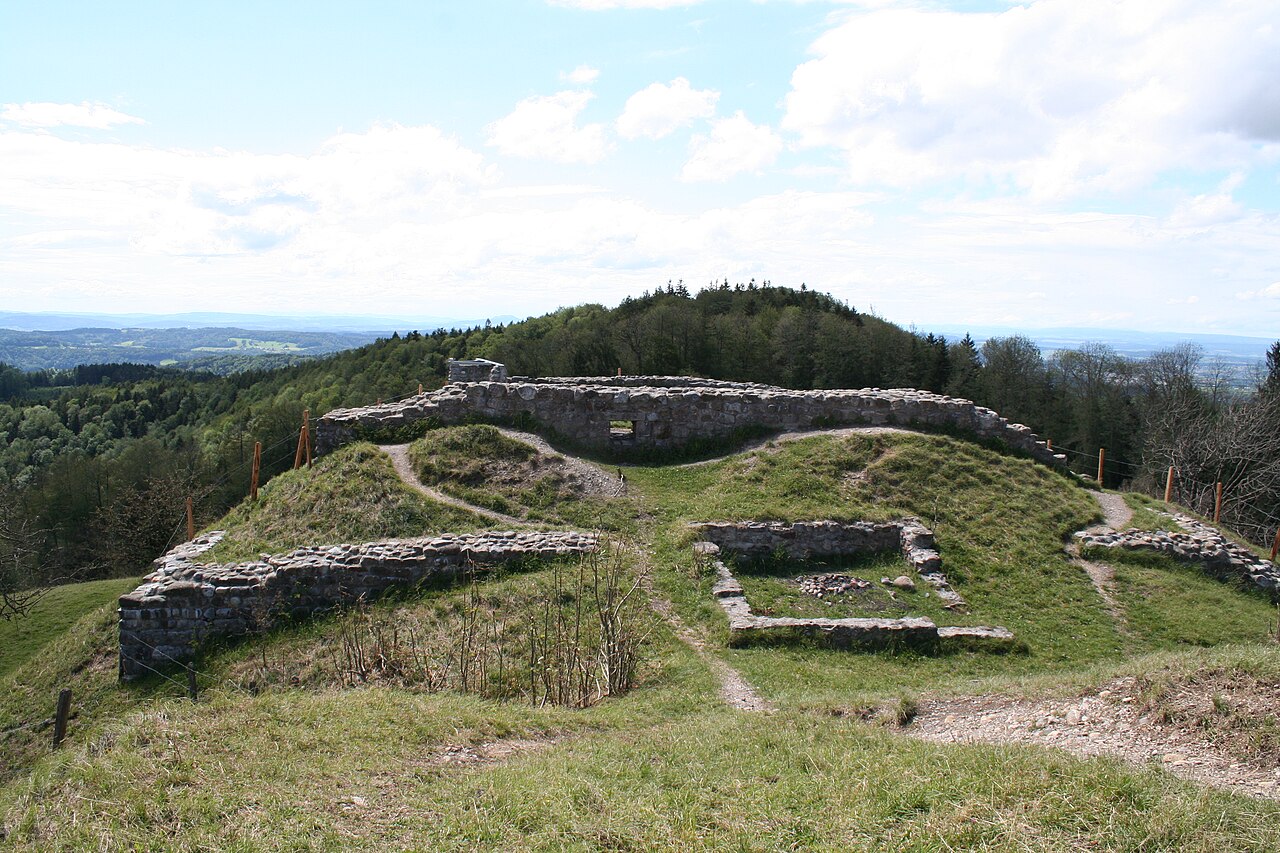
The site of Sonnenberg Castle was first mentioned in historical records in 1242 under the name Sunnunbergh. Initially, it served as the seat of a ministerial noble family, a status that underscores its early importance in feudal governance and local administration. The castle's original structure was built during the high medieval period, specifically in the 13th century, characteristic of hill castles designed for defense and control over surrounding lands.
Destruction and rebuilding in the 15th century
The medieval castle faced significant turmoil during the Appenzell Wars, a series of conflicts in the early 15th century involving regional powers. In 1407, the original castle was destroyed amid these hostilities. Following this, the castle was rebuilt by the influential Landenberg family, who were notable landowners and nobles in the region. However, the castle again suffered damage during further conflicts, including those in 1444, reflecting the turbulent political landscape of the time.
Transition to Renaissance architecture and later developments
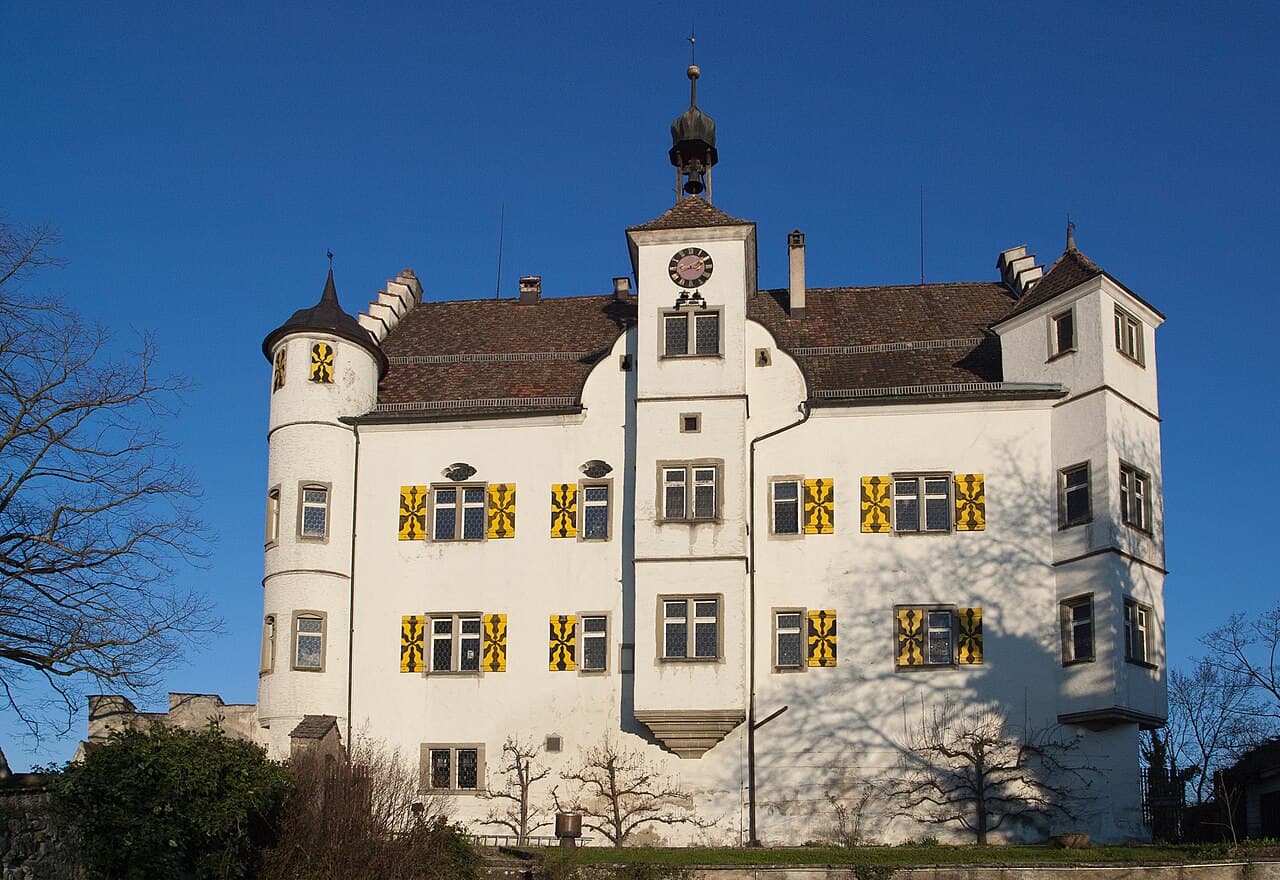
In 1580, the castle complex was acquired by Jost Zollikofer, a patrician from St. Gallen. By this time, the medieval fortress had fallen into ruin. After a devastating fire in 1595, Zollikofer commissioned the construction of the present castle, which was completed in 1596. This reconstruction marked a significant architectural transformation, as the castle was rebuilt in the late Renaissance style. The new design featured a multi-storey gabled palace surrounded by fortified outer walls and gate structures, combining residential comfort with defensive features.
Architectural features of the late Renaissance castle
The rebuilt Sonnenberg Castle exhibits characteristic elements of late Renaissance architecture, including symmetrical facades, decorative gables, and robust stone walls. The castle's layout includes a central residence with multiple floors, surrounded by protective outer walls that incorporate gatehouses and defensive towers. These features reflect the dual purpose of the castle as both a noble residence and a fortified stronghold.
Modern history and restoration efforts
In the 21st century, Sonnenberg Castle entered a new phase of restoration and private ownership. In 2007, the castle and its approximately 150-hectare agricultural estate were purchased by the Austrian investor Christian Baha. Since then, extensive restoration and conversion work has been undertaken to adapt the castle into a private residence while preserving its historical character.
The restoration process has experienced several interruptions, drawing regional media attention due to the prolonged construction and the visible presence of cranes on the site. Despite these challenges, the efforts aim to maintain the castle's architectural integrity and cultural significance.
Current use and cultural significance
Today, Sonnenberg Castle is restored and partially accessible, housing a restaurant that allows visitors to experience the historic ambiance of the site. Its status as a heritage site of national importance underscores its value as a cultural landmark in Switzerland.
The castle's location on the Immenberg slopes provides scenic views and highlights its strategic placement, which was essential for defense and control during the medieval period. Sonnenberg Castle remains a prominent example of the evolution of Swiss castle architecture from the high medieval fortress to a late Renaissance residence.
Frequently asked questions (FAQ)
- When was Sonnenberg Castle originally built?
- Sonnenberg Castle was originally constructed in the 13th century, first recorded in 1242 as Sunnunbergh.
- What architectural style characterizes the current Sonnenberg Castle?
- The present castle mainly reflects late Renaissance architecture, rebuilt in 1596 after a fire destroyed the previous structure.
- Who rebuilt Sonnenberg Castle after its destruction in the early 15th century?
- The Landenberg family rebuilt the castle following its destruction during the Appenzell Wars in 1407.
- Is Sonnenberg Castle open to visitors today?
- Yes, Sonnenberg Castle is restored and houses a restaurant, allowing visitors to experience its historic atmosphere.
- Where is Sonnenberg Castle located?
- The castle is located on the slopes of the Immenberg at 649 metres in Stettfurt, Canton of Thurgau, Switzerland.
Photo gallery

Information
Sources & official resources
Verify the information above using these authoritative references.
Loading map...
Visitor reviews
No reviews yet. Been here? Write the first review and help other travelers!
Write the first reviewVisited this castle? Share your experience
Your review helps other travelers and adds first-hand knowledge to our encyclopedia.