Weeting Castle
Weeting Castle, located near the village of the same name in Norfolk, England, is a fascinating example of a high medieval manor house rather than a true fortified castle. Built around 1180 by Hugh de Plais, a tenant of the powerful Earl of Surrey, William de Warenne, it showcases the architectural and social aspirations of the Anglo-Norman aristocracy during the late 12th century. The manor house was likely constructed on the site of an earlier Saxon settlement, emphasizing continuity of occupation and local importance.
Despite its imposing name, Weeting Castle was never designed for military defense. Instead, its rectangular moat, added in the mid-13th century, served as a symbol of wealth and status for the de Plais family. This ornamental water feature transformed the manor into an island, enhancing its prominence in the landscape and demonstrating the owner's social standing.
Historical context and ownership
The manor was commissioned by Hugh de Plais following his marriage to Philippa Montfichet, through which he acquired the estate. The design of the manor drew clear inspiration from Castle Acre Castle, the Norfolk stronghold of Hugh's feudal lord, Hamelin de Warenne, the Earl of Surrey. This architectural borrowing reflects the hierarchical relationships and cultural influences among the medieval English nobility.
Ownership of Weeting Castle passed through the centuries, remaining with the de Plais family until the late 14th century. When the male line ended, the estate transferred by marriage to the Howard family, Earls of Norfolk. Following this, the manor was abandoned and fell into ruin. In the 18th century, the ruins were incorporated into the landscaped grounds of Weeting Hall, rebuilt by Charles Henry Coote, Earl of Mountrath, where they were preserved as a picturesque feature rather than cleared away.
In the 20th century, the site came under government control in 1926 as part of a work camp program. Vegetation was cleared from the ruins, and archaeological excavations conducted between 1964 and 1966 by the Ministry of Public Works helped stabilize the remaining stonework. Today, Weeting Castle is a scheduled monument managed by English Heritage, recognized as a rare surviving example of a high-status 12th-century manor house.
Architectural layout and features
Overall plan
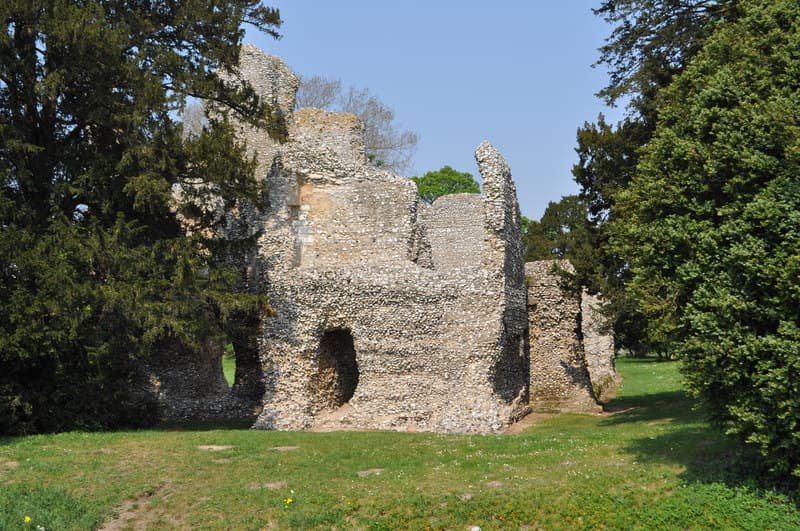
Weeting Castle was built along a south-to-north axis, comprising three main sections enclosed within a roughly rectangular area measuring about 30 by 14 metres. The principal components included a tall chamber block, a great hall, and a service wing, with a separate kitchen building set apart in a small courtyard. The manor was constructed primarily of flint rubble combined with finely cut ashlar stone, typical of high-status medieval buildings in Norfolk.
Chamber block
The chamber block rose to three storeys and served as private living quarters. Its thick walls supported a vaulted undercroft on the ground floor, likely used for storage or secure rooms. Above was a solar, a private chamber for the lord and his family, accessible via both an external staircase and an internal spiral newel staircase tucked into the northwest corner. These staircases highlight the importance of privacy and controlled access within the manor.
Great hall
The great hall was a large, two-storey space measuring nearly 15 by 12 metres internally, serving as the social and administrative heart of the manor. Its interior featured two rows of wooden arcades along each side wall, creating narrow aisles where benches were placed for seating. At the northern end, a raised dais provided a platform for the great table, framed by decorative blind stone arcading. Similar arcading adorned the opposite end of the hall, emphasizing its ceremonial importance.
Service wing and kitchen
Adjacent to the hall was a long, narrow service block approximately 12 by 3.4 metres internally, housing the pantry and buttery for food storage and preparation. This wing was likely connected to the hall by doorways to facilitate service during meals. The kitchen building was separate, located across a small courtyard to reduce fire risk to the main house. No above-ground remains of the kitchen survive today.
The moat and landscape setting
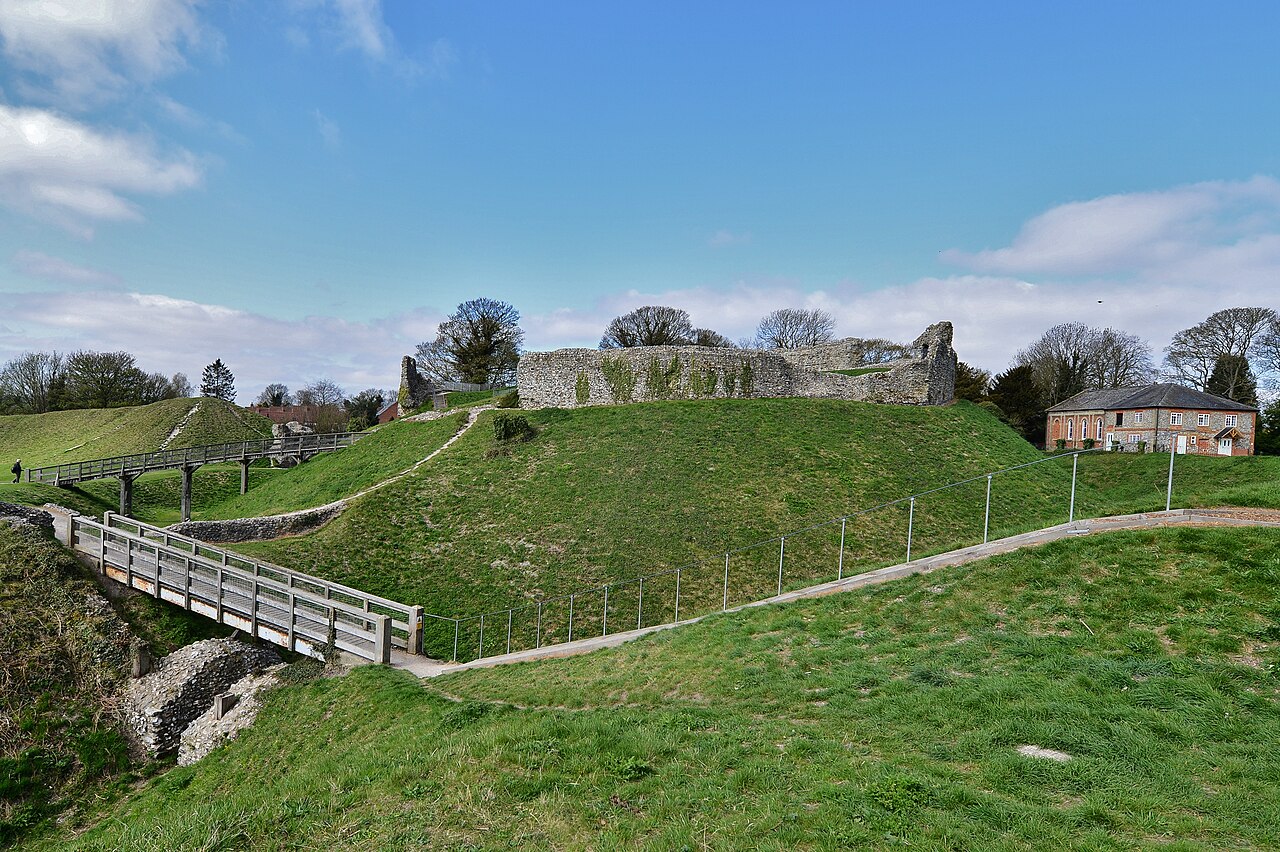
In the mid-13th century, the manor was enhanced by the addition of a wide moat about 10 metres across, which encircled the manor house and created an island approximately 85 by 60 metres in size. This moat was ornamental rather than defensive, intended to impress visitors and assert the status of the de Plais family within the rural Norfolk landscape.
Access to the island was provided by a bridge on the western side. The moat occasionally floods and remains visible today, contributing to the atmospheric setting of the ruins. An earth causeway, believed to date from the 18th century, provides modern access and corresponds with landscaping associated with Weeting Hall.
Later history and preservation
After abandonment in the late 14th century, the manor fell into ruin but was preserved as a landscape feature within the grounds of Weeting Hall during the 18th century. The hall itself was demolished in the 20th century, but the ruins of Weeting Castle remain accessible to the public.
Archaeological excavations in the 1960s helped document the layout and construction techniques of the manor, while stabilization efforts have ensured the survival of the remaining stonework. The site is now managed by English Heritage and is recognized for its cultural and architectural significance as a rare example of a high-status 12th-century manor house in Norfolk.
Associated features: the ice house
Within the island enclosure lies the ice house associated with Weeting Hall. This brick and earth mound, approximately 16 metres in diameter, was used historically to store ice harvested from the moat during winter months. The ice house is a notable surviving feature that illustrates the estate's later use and adaptation.
Visiting weeting castle today
Today, Weeting Castle is freely accessible to visitors who can explore the atmospheric ruins set in a rural Norfolk landscape. While the remains lack elaborate architectural detail, the site offers insight into medieval manor house design and the social history of the Anglo-Norman elite. The visible moat and surviving stonework provide a tangible connection to the past, making Weeting Castle a valuable heritage site for both casual visitors and history enthusiasts.
The castle's location near the village of Weeting makes it an ideal destination for those interested in medieval architecture, English history, and picturesque countryside walks. Visitors are encouraged to respect the site and enjoy the tranquil surroundings that reflect centuries of English heritage.
Frequently asked questions (FAQ)
- How do I get to Weeting Castle?
- Weeting Castle is located near the village of Weeting in Norfolk, England. It is accessible by car and local roads, with parking available nearby. Visitors should check local maps or GPS for the best route.
- What is the historical significance of Weeting Castle?
- Weeting Castle is a rare example of a high-status 12th-century manor house in Norfolk. It reflects the social and architectural aspirations of the Anglo-Norman aristocracy and has connections to prominent medieval families like the de Plais and Howards.
- Can I explore the ruins of Weeting Castle?
- Yes, the ruins of Weeting Castle are freely accessible to the public. Visitors can walk around the remains of the chamber block, great hall, and moat, enjoying the peaceful rural setting.
- When was Weeting Castle built?
- Weeting Castle was built around 1180 by Hugh de Plais, an Anglo-Norman nobleman, on the site of a previous Saxon settlement.
- Is Weeting Castle a fortified castle?
- Despite its name, Weeting Castle was never fortified. The moat was added in the 13th century purely as an ornamental feature to display wealth and status.
Photo gallery

Information
Website
Visit websiteAddress
Castle Close, United Kingdom of Great Britain and Northern Ireland
Sources & official resources
Verify the information above using these authoritative references.
Loading map...
Visitor reviews
No reviews yet. Been here? Write the first review and help other travelers!
Write the first reviewVisited this castle? Share your experience
Your review helps other travelers and adds first-hand knowledge to our encyclopedia.