Castle Acre Castle
Castle Acre Castle stands as a remarkable example of a Norman motte-and-bailey fortress located in the village of Castle Acre in Norfolk, England. Established shortly after the Norman Conquest in the 1070s, it was founded by William de Warenne, the Earl of Surrey, who strategically selected the site at the confluence of the River Nar and the ancient Roman road known as Peddars Way. This location not only provided natural defenses but also control over important communication and trade routes in medieval England.
The castle was likely built over the homestead of Toki, an Anglo-Saxon lord who held the land prior to the conquest, symbolizing the Norman assertion of control over former Anglo-Saxon territories. Initially designed as a motte-and-bailey castle, its construction featured substantial earthworks including a large motte or raised earth mound, and an inner bailey that housed a central stone hall. This hall was more residential in nature than purely military, serving as a grand country house for the de Warenne family. Early in its history, the castle’s chapel and surrounding farmland were granted to the Cluniac monks, leading to the establishment of the nearby Castle Acre Priory, completed by the mid-12th century.
The evolution of castle defenses during the anarchy
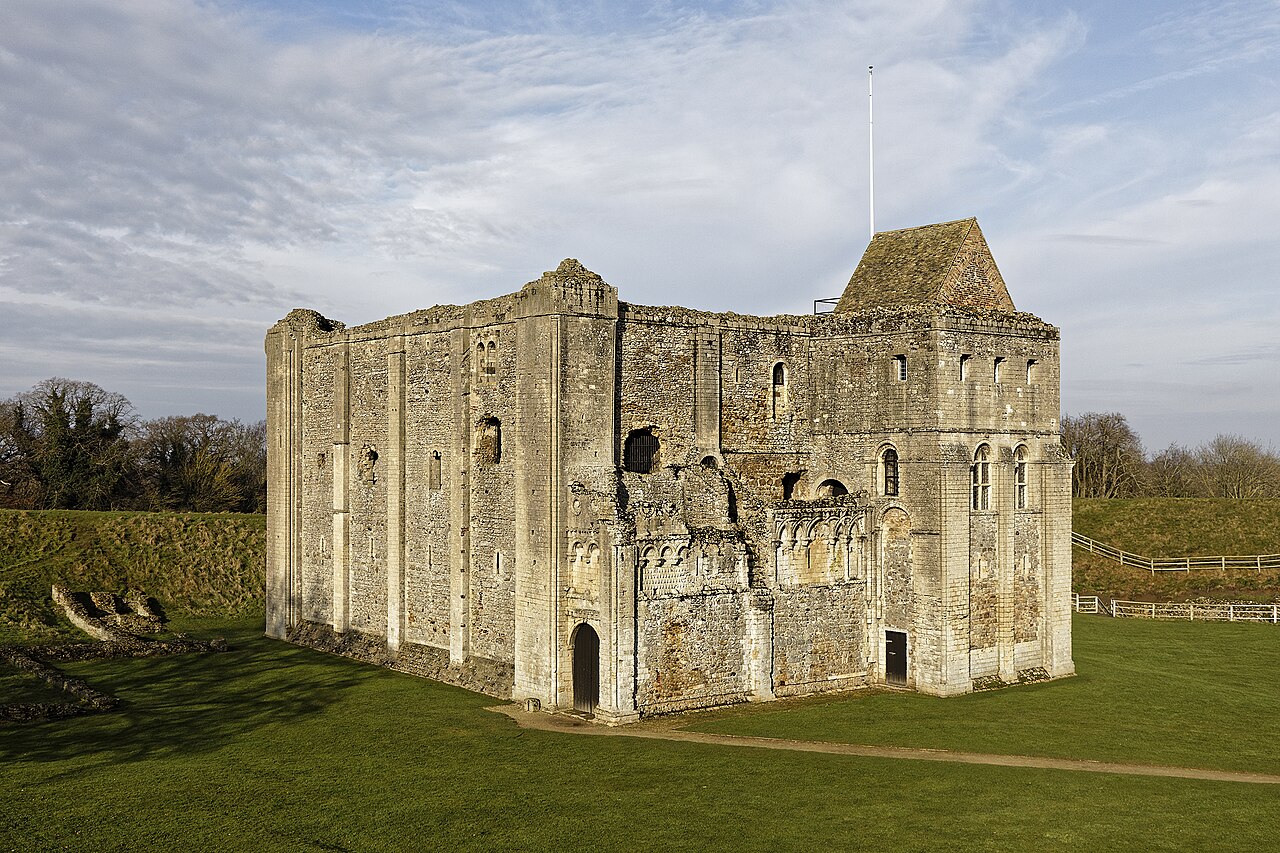
During the mid-12th century civil war known as the Anarchy (1135–1153), the castle underwent significant military enhancements under the third Earl, William de Warenne. Recognizing the need for stronger fortifications, he raised the earthworks and replaced the original timber palisades with robust stone walls. Construction began on a large, square keep atop the motte, reflecting the era’s architectural shift towards more durable and imposing stone structures.
Alongside these upgrades, a fortified settlement or planned town was developed adjacent to the castle. This settlement was enclosed by its own defensive earthworks and stone walls, and the course of Peddars Way was deliberately altered to integrate the castle, priory, and town into a cohesive fortified complex. This strategic urban planning emphasized the de Warenne family’s dominance and control over the region.
Changes under Hamelin de Warenne
By around 1164, the castle came into the possession of Hamelin de Warenne through marriage. He halted the ambitious keep construction, removing the southern half of the structure, and instead concentrated on completing three prominent stone gatehouses. These gatehouses controlled access to the castle and the adjacent town, with the bailey gatehouse still standing today as a testament to medieval military architecture.
Layout and architectural features of castle acre castle
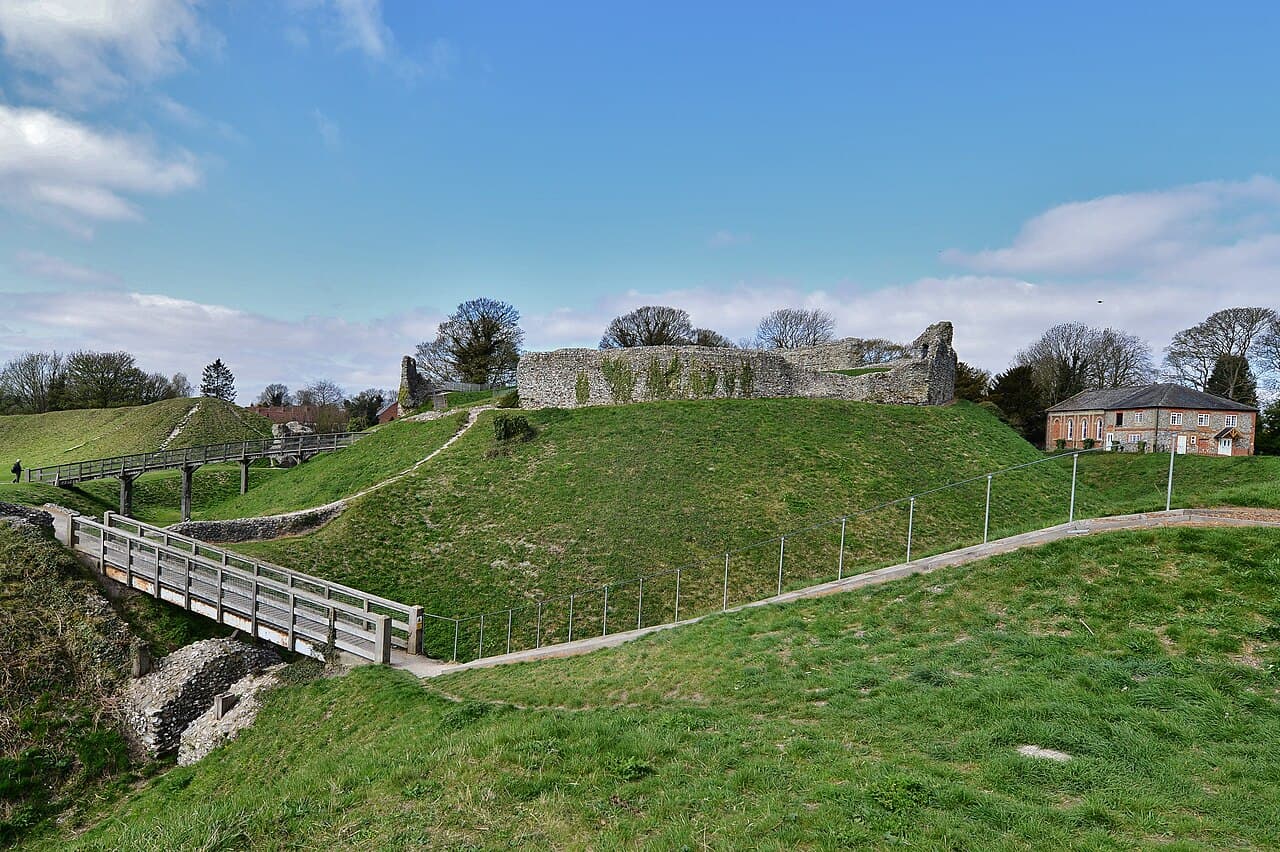
The castle’s layout is defined by three principal earthworks: the motte with its inner bailey to the north, a southern outer bailey, and a north-eastern barbican that guarded the castle’s vulnerable flank. Adjacent to the west lies the medieval planned settlement of Castle Acre, itself enclosed by defensive earthworks and stone walls.
The outer bailey is a large rectangular enclosure of approximately 8,000 square meters, protected by substantial earth banks and wide ditches. Portions of its original 12th-century stone walls are still visible. The main entrance was located at the outer bailey’s north-west corner, controlled by a stone gatehouse equipped with a portcullis. Though only the foundations of this gatehouse survive, archaeological evidence reveals its former defensive strength. Two additional gates connected the outer bailey to the barbican and the River Nar, facilitating controlled access and defense.
Within the outer bailey, the remains of domestic and religious buildings such as a hall, kitchen, living quarters, and chapel are traceable on the surface, illustrating the multifaceted life within the castle grounds.
The barbican fortified the castle’s northeastern approach and featured its own eastern entrance, defended by a gateway and a bridge across the defensive ditches.
Access to the inner bailey was originally via a wooden bridge, later replaced by stone and eventually a modern steel structure in the 20th century. The inner bailey is a circular earthwork rising up to 9.5 meters high, topped by the remains of a stone curtain wall and surrounded by deep ditches approximately 3 meters wide. The motte here resembles a circular ringwork, a medieval fortification style characterized by a circular rampart.
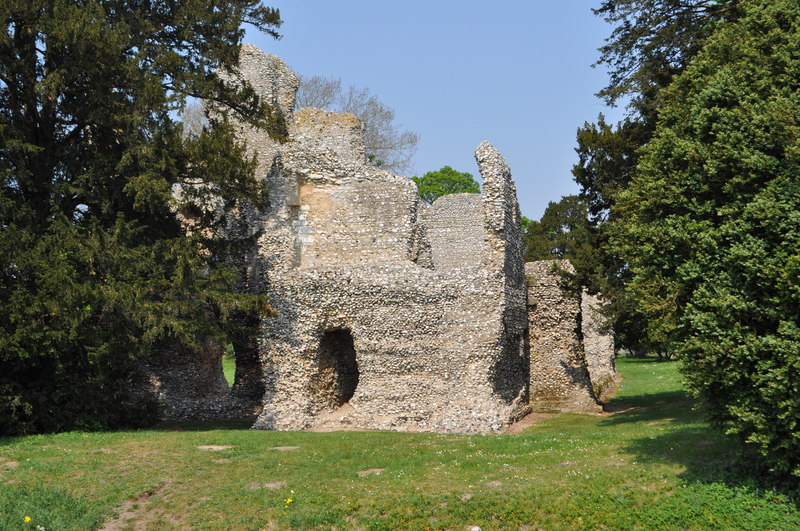
Within the inner bailey lie the ruins of the 12th-century stone keep and the foundations of the earlier 11th-century house built by William de Warenne from chalk rubble. The rampart wall, composed of chalk rubble and flint, largely survives, outlining the inner fortification’s shape.
Defensive features of the fortified settlement
The adjacent fortified settlement measures roughly 225 by 188 meters, covering about 4.25 hectares. Its defensive ramparts, known locally as Dyke Hills, run along the western and southern edges, featuring ditches about 17 meters wide and 3 meters deep with banks rising 3 meters high. The bailey gatehouse guarding the settlement is constructed from flint stone and includes two round towers and a portcullis. Although the gatehouse roof is no longer extant, much of the structure remains intact, connected to surviving sections of stone walls along the southern ramparts, demonstrating the scale and strength of the medieval fortifications.
Later history and preservation
Ownership of Castle Acre Castle remained with the de Warenne family until 1347, when it passed to Richard Fitzalan, the Earl of Arundel. By the late 14th century, the castle had fallen into ruin, reflecting the decline of many medieval fortifications in England during this period.
In the early 1600s, Sir Edward Coke acquired the castle and undertook restoration efforts, though the site continued to deteriorate over subsequent centuries. The property remained with Coke’s descendants, the Earls of Leicester, until 1971, when Thomas Coke entrusted the castle to the state.
Between 1972 and 1983, major archaeological excavations explored the inner bailey, revealing significant insights into the castle’s construction phases and historical development. Today, Castle Acre Castle is preserved and managed by English Heritage, offering visitors a glimpse into Norman military architecture and medieval life through its extensive earthworks and surviving stone structures.
Visitor experience and significance
Visitors to Castle Acre Castle can explore the impressive earthworks, including the motte and baileys, and view the remains of the stone keep and gatehouses. The site’s proximity to the Castle Acre Priory enhances its historical context, providing a comprehensive understanding of Norman influence in Norfolk.
The castle’s well-preserved layout and archaeological findings make it a key site for studying Norman fortifications and the evolution of medieval military architecture in England. Its combination of defensive and residential features illustrates the dual role of such castles as both strongholds and noble residences.
Frequently asked questions (FAQ)
- How do I get to Castle Acre Castle?
- Castle Acre Castle is located in the village of Castle Acre, Norfolk, accessible by car and public transport from nearby towns such as King's Lynn. Visitors can follow local signage or use GPS navigation to reach the site.
- What are the opening hours for visiting Castle Acre Castle?
- The castle is managed by English Heritage and is typically open daily during daylight hours, though exact times may vary seasonally. It is recommended to check the English Heritage website before visiting for current opening hours.
- Is there an entrance fee to visit Castle Acre Castle?
- English Heritage charges an admission fee for adults, with discounts available for children, seniors, and members. Some tickets may include access to both Castle Acre Castle and Castle Acre Priory.
- What can I see at Castle Acre Castle?
- Visitors can explore the extensive earthworks, including the motte, inner and outer baileys, the ruins of the 12th-century stone keep, and the bailey gatehouse. The nearby Castle Acre Priory also offers insight into the religious history linked to the castle.
- Why is Castle Acre Castle historically significant?
- Castle Acre Castle is a prime example of Norman military architecture and planned medieval urban development. Its strategic location and well-preserved earthworks illustrate the Norman consolidation of power in England after the conquest.
Photo gallery

Information
Sources & official resources
Verify the information above using these authoritative references.
Loading map...
Visitor reviews
No reviews yet. Been here? Write the first review and help other travelers!
Write the first reviewVisited this castle? Share your experience
Your review helps other travelers and adds first-hand knowledge to our encyclopedia.