Ely Castle
Ely Castle stands as a significant example of Norman military architecture in Cambridgeshire, England. Constructed shortly after the Norman Conquest of 1066, it was strategically placed on the Isle of Ely to control local resistance and assert Norman dominance. The castle's history is deeply intertwined with the turbulent medieval period of England, reflecting the shifting power struggles and military conflicts of the 11th to 13th centuries.
Early construction and strategic purpose
The initial phase of Ely Castle began in 1070 under the orders of William the Conqueror. It was built as a motte and bailey castle, a typical Norman design featuring a large artificial earth mound (the motte) topped with a wooden or stone keep, and an enclosed courtyard (the bailey) surrounded by defensive ditches and palisades. This design was favored for its speed of construction and defensive effectiveness.
The castle was intended to suppress the rebellion led by Hereward the Wake, a local Anglo-Saxon leader resisting Norman rule. The Isle of Ely was a marshy, difficult-to-access region that provided a natural refuge for rebels. Ely Castle’s position allowed the Normans to project military power into this resistant area and secure control over the region.
Medieval conflicts and political significance
After the initial conquest, the castle was abandoned for a period once Norman control was established. However, it regained importance during the Anarchy, a civil war between King Stephen and Empress Matilda in the mid-12th century. In 1140, Bishop Nigel undertook efforts to rebuild or reinforce the castle, highlighting its strategic value during this period of instability.
Despite these efforts, the castle's control shifted as Bishop Nigel surrendered it to King Stephen. Later, in 1143, Geoffrey de Mandeville was appointed governor, marking the castle's role as an administrative center as well as a military fortress.
The early 13th century brought further conflict. In 1216, during the reign of King John and the turmoil of the First Barons' War, Falkes de Breauté captured and destroyed Ely Castle. The castle saw additional military action during the Second Barons’ War in 1268, when Ely and its defenses were seized once again. Following these events, the castle was dismantled, ending its function as a fortress.
Architectural features and surviving remains
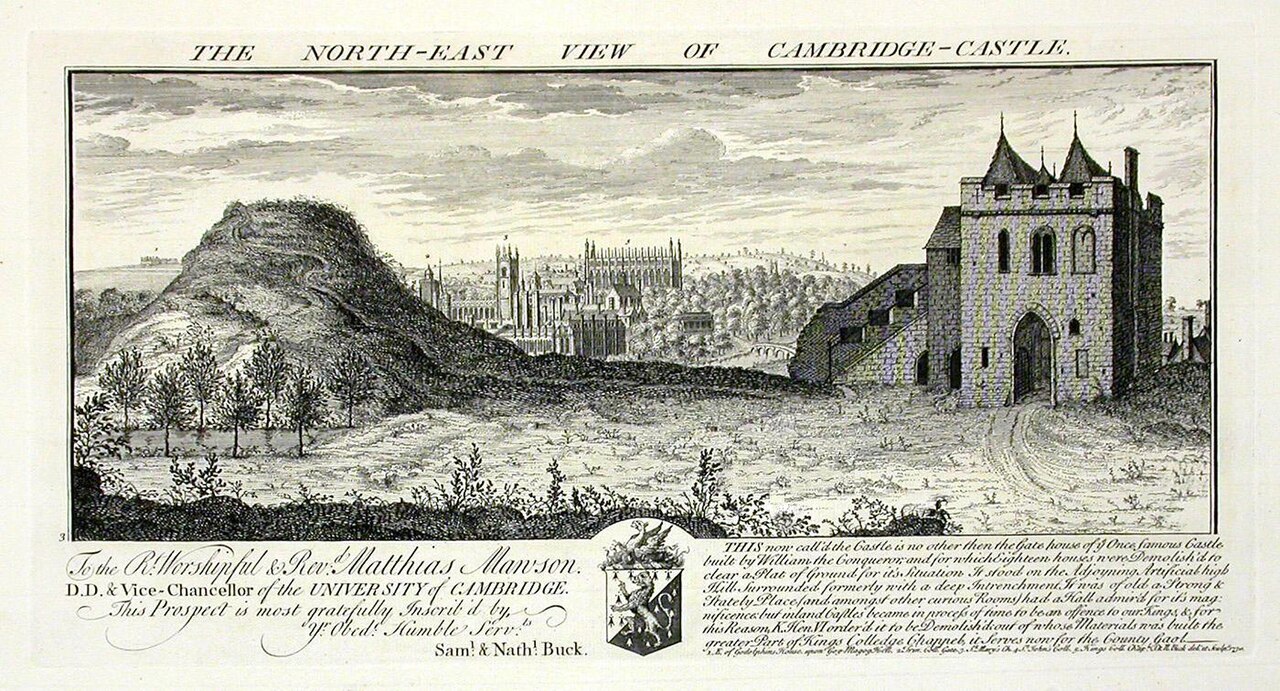
Ely Castle was constructed as a classic motte and bailey fortress. The motte was an artificial mound, known today as Cherry Hill, which remains the most prominent visible feature of the site. The bailey would have been an enclosed courtyard, likely surrounded by wooden palisades and defensive ditches.
Archaeological excavations in 2002 revealed that the motte was sealed with large quantities of clay, a technique used to stabilize the mound and prevent erosion. Excavators uncovered numerous artifacts including Norman domestic pottery such as jugs and bowls, as well as bronze tools and items related to farming and hunting. These finds indicate the daily life and activities of the castle's inhabitants during the Norman period, also reflecting lingering Viking cultural influences in the region.
No above-ground stone or wooden structures survive today. The castle’s footprint is preserved solely by the earthworks, with Cherry Hill serving as a lasting reminder of the site's medieval military significance. The artifacts recovered are displayed at the Ely Museum, providing valuable insights into Norman life and castle construction techniques.
Ely castle in historical and cultural context
The castle’s history is emblematic of the Norman strategy to consolidate control over England through rapid construction of motte and bailey fortifications. Its location on the Isle of Ely was crucial in suppressing one of the last pockets of Anglo-Saxon resistance. Throughout the medieval period, Ely Castle’s military and administrative roles evolved in response to the shifting political landscape, including civil wars and baronial uprisings.
Today, Ely Castle is recognized more for its archaeological and heritage value than as a standing fortress. The site offers a tangible connection to the Norman Conquest and medieval England’s feudal conflicts. Its earthworks are an important feature in the landscape of Ely, complementing the nearby Ely Cathedral and contributing to the city’s rich historical tapestry.
Visiting ely castle today
Visitors to Ely can explore the site of Ely Castle by viewing the prominent earthwork mound known as Cherry Hill, located near the historic Ely Cathedral. Although no standing structures remain, the site’s significance is conveyed through interpretive signage and the artifacts housed in the Ely Museum. The museum provides context on the castle’s construction, use, and the daily life of its medieval occupants.
The castle site is accessible to the public year-round and offers an evocative glimpse into Norman military architecture and medieval history. Its proximity to Ely Cathedral makes it an attractive destination for those interested in England’s medieval heritage and Norman castle-building traditions.
Frequently asked questions (FAQ)
- What is the historical significance of Ely Castle?
- Ely Castle was built by the Normans in 1070 to control the Isle of Ely and suppress local resistance, playing a key role in medieval military and administrative history.
- Can I visit Ely Castle today?
- Yes, visitors can view the earthwork mound known as Cherry Hill near Ely Cathedral, and explore related artifacts at the Ely Museum.
- When was Ely Castle built and by whom?
- Ely Castle was constructed in 1070 by William the Conqueror as a motte and bailey fortress to secure Norman control over the region.
- Are there any visible remains of the castle?
- No standing structures remain; the site is marked by the large earthwork motte called Cherry Hill, which preserves the castle's footprint.
- What artifacts have been found at Ely Castle?
- Excavations uncovered Norman pottery, bronze tools, and items related to farming and hunting, reflecting daily life during the castle's occupation.
Information
Website
Visit websiteSources & official resources
Verify the information above using these authoritative references.
Loading map...
Visitor reviews
No reviews yet. Been here? Write the first review and help other travelers!
Write the first reviewVisited this castle? Share your experience
Your review helps other travelers and adds first-hand knowledge to our encyclopedia.