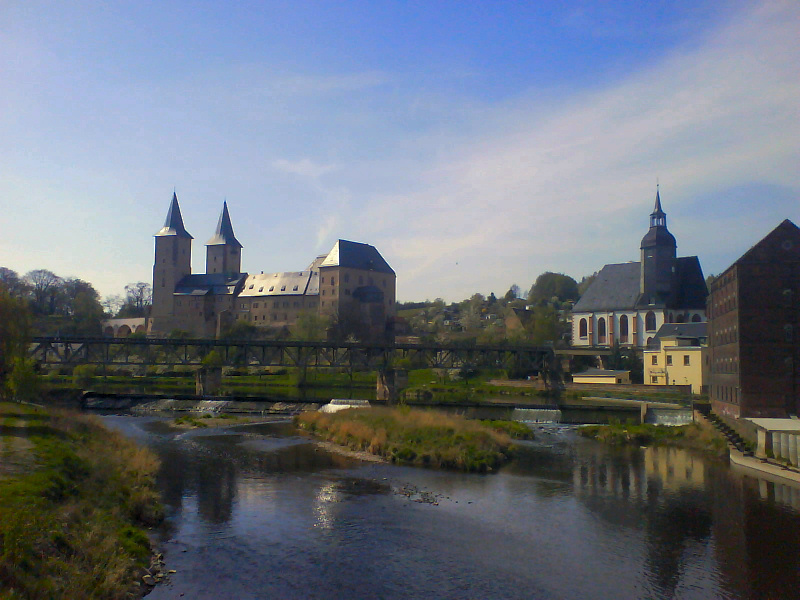
Wechselburg Priory
Wechselburg Priory is a significant historical complex located in Wechselburg, Saxony, Germany, with origins dating back to the high medieval period. Founded in 1168 by Dedo V of Wettin, the priory was originally a Benedictine monastery dedicated to religious life and monastic traditions. The foundation of the monastery marked an important development in the religious and cultural landscape of the region during the 12th century.
Founding and early history
The monastery was consecrated in 1168 and quickly became a spiritual center in the area. In 1278, the monastery was gifted by Henry the Illustrious, Margrave of Meissen, to the Teutonic Order, reflecting its growing strategic and religious importance. This transfer signaled a shift in the monastery’s role, linking it to one of the most powerful military and religious orders of the time.
During the 16th century, the priory experienced significant upheaval. In 1543, it came under the control of Maurice, Elector of Saxony, a territorial prince who acquired the abbey and its extensive possessions. The monastery was officially dissolved in 1570 amid the religious and political transformations of the Reformation era.
Architectural evolution and baroque transformation
Following the devastation of the Thirty Years' War (1618–1648), the site underwent a major transformation. The lords of Schönburg constructed a Baroque castle on the foundations of the ruined abbey. This new structure incorporated elements of the original monastery, blending medieval foundations with the ornate and grand architectural style characteristic of the Baroque period.
The castle remained in the possession of the Schönburg family until their dispossession in 1945, spanning several centuries of noble residence. The Baroque castle is notable for its elegant design, including richly decorated facades and formal gardens, which contrast with the austere monastic origins of the site.
Religious significance and modern revival
After World War II, the abbey church was repurposed as the local parish church and became a prominent place of pilgrimage. The church is especially famous for its Romanesque basilica of the Holy Cross, which has been preserved as the parish church. A key feature of this basilica is its large and intricately carved medieval rood screen, an exceptional example of medieval ecclesiastical art and craftsmanship.
In 1993, the monastic tradition was revived when Benedictine monks from Ettal Abbey re-founded Wechselburg as a priory. Although the community remains small, the monks actively engage in pastoral care, managing pilgrimages, and running a youth and family centre. This modern revival has restored Wechselburg’s role as a vibrant religious and cultural institution.
Architectural features and heritage
The surviving structures at Wechselburg Priory provide a unique glimpse into the architectural styles spanning from the Romanesque to the Baroque periods. The Romanesque basilica stands as a testament to the priory’s medieval origins, with its robust stone walls, rounded arches, and classical basilica layout. The medieval rood screen is a rare and valuable artifact, showcasing detailed wood carving and religious iconography from the Middle Ages.
The Baroque castle built by the Schönburg family adds a contrasting layer of architectural history, with its decorative elements, grand staircases, and formal gardens reflecting the tastes and social status of the early modern nobility in Saxony.
Location and cultural context
Wechselburg is situated in the region of Saxony, an area rich in medieval history and cultural heritage. The priory’s location on the site of an earlier medieval monastery and its later transformation into a noble residence illustrate the evolving political and religious landscape of central Germany over several centuries.
The priory and castle complex continue to attract visitors interested in medieval monastic life, Baroque architecture, and religious art. Its role as both a place of worship and a historical monument makes it a significant cultural landmark in the region.
Frequently asked questions (FAQ)
- When was Wechselburg Priory originally founded?
- Wechselburg Priory was founded in 1168 by Dedo V of Wettin as a Benedictine monastery.
- What architectural styles are present at Wechselburg Priory?
- The priory features Romanesque architecture in its basilica, with later Baroque additions from the castle built on the site.
- Can visitors see the medieval rood screen at Wechselburg Priory?
- Yes, the priory is famous for its large and intricately carved medieval rood screen, which remains a highlight of the basilica.
- Is Wechselburg Priory still an active religious community?
- Yes, Benedictine monks re-founded the priory in 1993, and it remains an active religious community involved in pastoral care and pilgrimages.
- What happened to Wechselburg Priory during the Reformation?
- The priory was dissolved in 1570 after coming under the control of Maurice, Elector of Saxony, during the Reformation period.
- How did the Baroque castle at Wechselburg come to be?
- After the Thirty Years' War, the lords of Schönburg built a Baroque castle on the ruins of the abbey, which remained in their family until 1945.
Information
Current owner
Benedictine monks of Wechselburg Priory
Loading map...
Visitor reviews
No reviews yet. Been here? Write the first review and help other travelers!
Write the first reviewVisited this castle? Share your experience
Your review helps other travelers and adds first-hand knowledge to our encyclopedia.