Wasserburg Haus zum Haus
Wasserburg Haus zum Haus stands as a remarkable example of a high medieval moated castle located in Ratingen, Germany. Dating back to its construction in 1276, this castle has been restored and preserved, showcasing the architectural and defensive features typical of the period. Its name, translating roughly as "house within a house," reflects the castle's unique structural composition and its strategic design as a fortified residence.
Historical significance and origins
The castle was originally built in the late 13th century, during the high medieval period, a time when moated castles were prominent defensive structures across Europe. Wasserburg Haus zum Haus was constructed to serve both as a noble residence and a stronghold, protecting its inhabitants from regional conflicts and raids. Its location in Ratingen, near the Rhine-Ruhr metropolitan area, placed it in a strategically important position for controlling local trade routes and territorial boundaries.
Throughout its history, the castle has witnessed various phases of ownership and use, reflecting the shifting political and social landscape of the region. It was likely held by local nobility who played roles in the governance and defense of the surrounding lands. The castle's endurance and restoration highlight its cultural and historical value as a symbol of medieval heritage in Germany.
Architectural features and layout
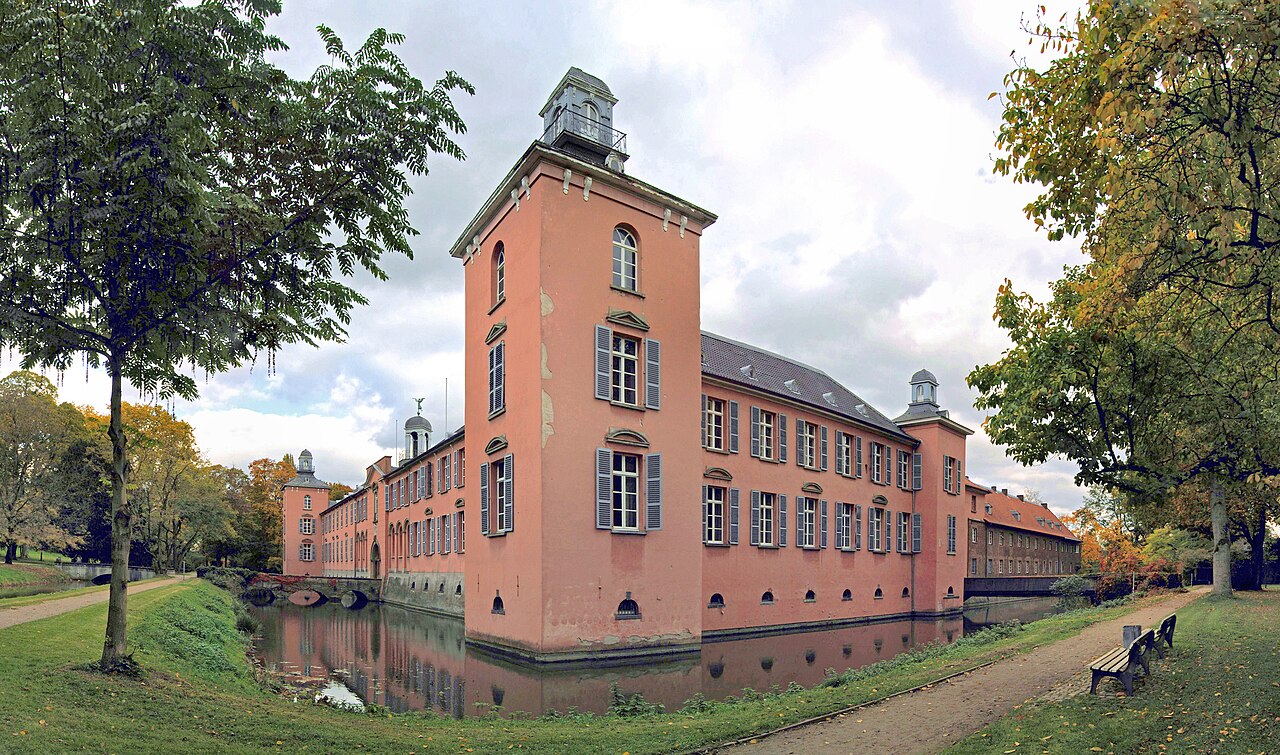
Wasserburg Haus zum Haus exemplifies the characteristics of a moated castle, featuring a surrounding water-filled moat that provided an effective defense against attackers. The moat encircles the main residential buildings and fortified walls, creating a formidable barrier and enhancing the castle's defensibility.
The castle's layout includes a central keep or main tower, which served as the last refuge during sieges and housed essential living quarters. Surrounding the keep are various outbuildings and courtyards, which supported daily life and the castle's administrative functions. The walls are constructed from local stone, with defensive features such as battlements and arrow slits designed for archers to repel invaders.
Access to the castle is controlled by a gatehouse that would have been equipped with a drawbridge over the moat, adding to the defensive complexity. The combination of water defenses and robust masonry made Wasserburg Haus zum Haus a resilient fortification in its time.
Restoration and current condition
The castle has undergone significant restoration efforts to preserve its structural integrity and historical authenticity. These restorations have focused on maintaining the original medieval architectural elements while adapting the site for modern use and public appreciation.
Today, Wasserburg Haus zum Haus is considered well preserved and accessible to visitors interested in medieval architecture and history. Its restoration allows for educational tours and cultural events, making it a valuable heritage site in the region.
Visiting Wasserburg Haus zum Haus
Visitors to the castle can explore its historic courtyards, defensive walls, and the surrounding moat, gaining insight into medieval castle life and defense strategies. The castle's location in Ratingen makes it a convenient destination for those interested in Germany's medieval past.
While specific visiting hours and ticket prices may vary, the castle is often open to the public during weekends and special events. It offers a unique opportunity to experience a high medieval moated castle that has survived centuries of change.
Architectural and cultural importance
Wasserburg Haus zum Haus represents a significant example of medieval military architecture adapted for residential purposes. Its moat, gatehouse, and fortified walls illustrate the defensive innovations of the high medieval period. The castle also serves as a cultural landmark, reflecting the social hierarchy and feudal structures of its era.
As a preserved historical monument, it contributes to the understanding of medieval life in the Rhineland region and offers valuable insights into the architectural practices of the time.
Frequently asked questions (FAQ)
- When was Wasserburg Haus zum Haus built?
- Wasserburg Haus zum Haus was built in 1276 during the high medieval period, reflecting typical medieval defensive architecture.
- What type of castle is Wasserburg Haus zum Haus?
- It is a moated castle, also known as a water castle, featuring a surrounding moat for defense.
- Is Wasserburg Haus zum Haus open to visitors?
- Yes, the castle is open to visitors, often during weekends and special events, offering tours of its historic structures.
- What are the main architectural features of Wasserburg Haus zum Haus?
- Key features include a water-filled moat, fortified walls with battlements, a gatehouse with a drawbridge, and a central keep.
- Where is Wasserburg Haus zum Haus located?
- The castle is located in Ratingen, in the North Rhine-Westphalia region of Germany.
Information
Address
Mühlenkämpchen
Loading map...
Visitor reviews
No reviews yet. Been here? Write the first review and help other travelers!
Write the first reviewVisited this castle? Share your experience
Your review helps other travelers and adds first-hand knowledge to our encyclopedia.