Hugenpoet Castle
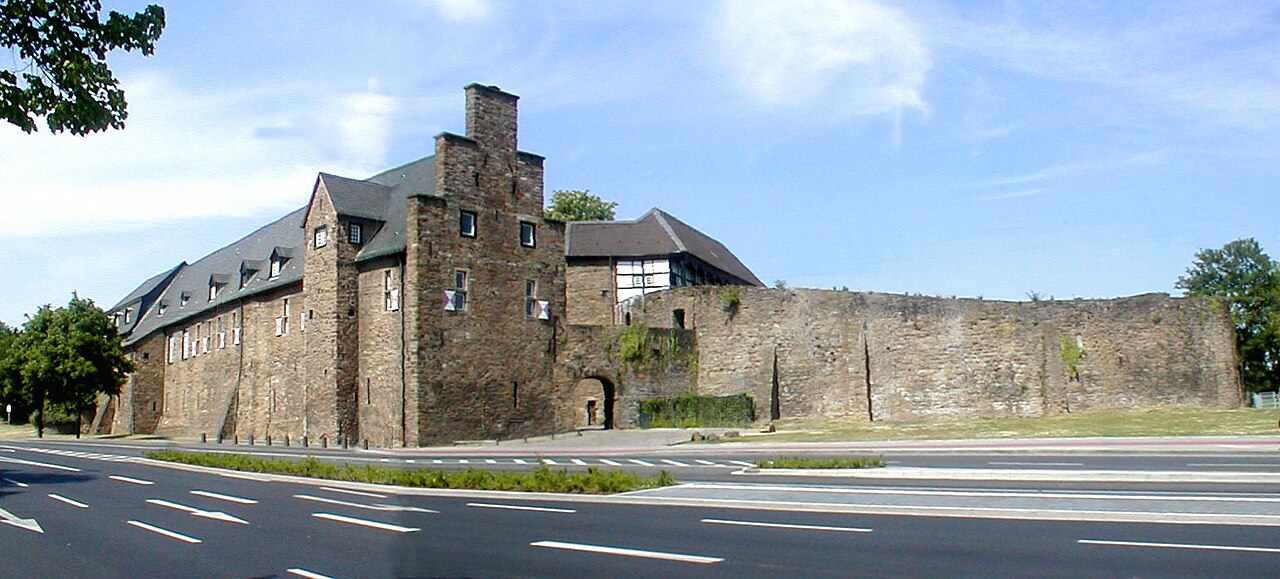
Hugenpoet Castle, located in Essen, Germany, is a remarkable example of a Renaissance water castle with origins dating back to the early Middle Ages. The estate was first documented in 778 AD as a royal property under Charlemagne, making it one of the region's oldest recorded fortified sites. Over the centuries, the castle has witnessed significant historical events, architectural transformations, and ownership changes that reflect the broader socio-political developments of the Rhineland and the Holy Roman Empire.
The original medieval fortress was strategically positioned to control access across the Ruhr River, near the important bridge leading toward Kettwig. This location underscored the castle's military and administrative importance during the feudal era. The earliest known structure was a motte-and-bailey type fortification called Motte Nettelshof, associated with the Carolingian royal estate and later the Werden Abbey. In 1314, the castle was granted as a fief to the knight Vlecke von Hugenpoet, marking the beginning of the Hugenpoet family's long-standing connection to the site.
Destruction and rebuilding through conflict
The original medieval castle suffered destruction in 1478 during a feud between Duke Johann I of Cleves and the Duchy of Guelders. While much of the fortress was burned down, some structures such as a tower and an outbuilding survived until the 18th century before being replaced by agricultural buildings. The castle endured further damage during the Thirty Years' War in the early 17th century, when Hessian troops inflicted significant harm to the estate.
In 1647, Johann Wilhelm von Nesselrode zu Hugenpoet initiated the demolition of the war-damaged ruins to pave the way for a new castle. This reconstruction project was completed in 1696 under Freiherr Konstantin Erasmus von Nesselrode zu Hugenpoet, who shaped the castle into a Baroque-style residence. Despite its Baroque rebuilding phase, the castle is predominantly recognized today for its later Neo-Renaissance architectural elements introduced in the 19th century.
Architectural evolution and stylistic features
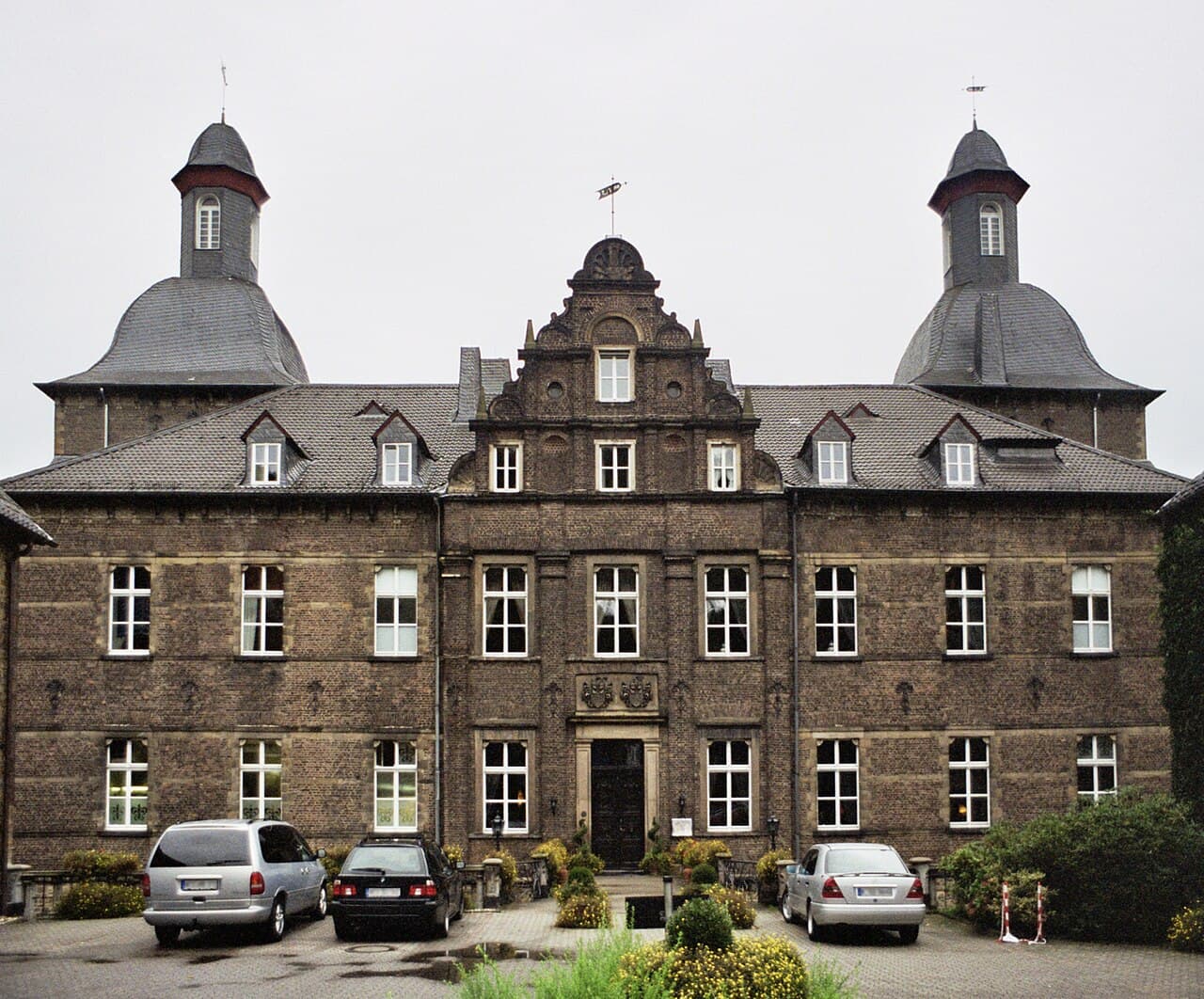
Between 1844 and 1872, architects August Lange and Heinrich Theodor Freyse undertook a significant remodeling of the castle, infusing it with Neo-Renaissance characteristics inspired by Dutch architecture. This included the addition of stepped gables, enlarged windows, and decorative brickwork that enhanced the castle's aesthetic appeal while respecting its historical roots.
Hugenpoet Castle is a classic example of a water castle, featuring a rectangular main building surrounded by moats and water-filled ditches called Gräften. The main structure is built primarily of brick on a robust stone foundation, accented with sandstone quoins and horizontal bands that provide both structural support and visual articulation. Two prominent three-story towers with curved domes and octagonal lanterns rise on the northern side, serving as distinctive architectural landmarks.
Access to the castle is granted via a stone arch bridge crossing the moat, leading to a central risalit with a portal dated 1872. This portal is adorned with the combined coats of arms of Friedrich von Fürstenberg and his wife, reflecting the castle's ownership lineage. Inside, visitors can admire original interior features such as the "Troja" fireplace and two Renaissance sandstone relief fireplaces from the mid-16th century, relocated from Schloss Horst. The interior also boasts a Baroque black marble staircase with ornate crowns and orbs, symbolizing the castle's aristocratic heritage.
The forecourts and chapel
South of the main building lies the inner forecourt (innere Vorburg), composed of two long, two-story buildings with hipped roofs arranged around an east-west courtyard. Though plans for corner towers were never realized, their foundations remain visible. The facades feature eight bays with cross-mullioned windows, blending defensive solidity with natural light.
The inner forecourt includes the castle chapel, documented since at least the 18th century and remodeled around 1880 in a Historicist style. The chapel's design reflects a revival of older architectural motifs, integrating harmoniously with the castle's evolving stylistic narrative.
To the west, the outer forecourt is a single-story L-shaped stone building accessed through a gate over another stone arch bridge. The gate bears the heraldic shields of the Nesselrode and Winkelhausen families, with inscriptions marking historical ties. Arrow slits embedded in the masonry reveal the reuse of materials from the earlier 1509 fortress, linking the newer structures to the medieval past.
Historical significance and later uses
Throughout its history, Schloss Hugenpoet has been a symbol of regional power and aristocratic prestige. After changing hands in 1831 due to financial difficulties, the castle was acquired by Freiherr Friedrich Leopold von Fürstenberg, whose descendants still own the estate. During the 20th century, the castle served military functions in World War II, housing Wehrmacht offices, and later provided shelter for refugees.
In 1955, the castle was transformed into a hotel and restaurant, preserving its architectural heritage while adapting to modern hospitality needs. Since 1985, it has been protected as a historic monument, ensuring the conservation of its unique character. The castle is currently managed by the Lübbert family, who continue to maintain its status as a luxury destination.
Notable events and anecdotes
The castle's history includes poignant moments such as the 1904 suicide of Joseph von Fürstenberg, a Prussian officer, in the castle pond. Additionally, the closure of a nearby railway stop in 1968 marked changes in the castle's accessibility and surrounding infrastructure.
Preservation and visitor experience
Hugenpoet Castle stands today as a well-preserved example of a Renaissance water castle that has evolved through centuries of architectural styles and historical events. Its combination of medieval foundations, Baroque rebuilding, and Neo-Renaissance remodeling offers visitors a rich tapestry of European castle architecture. The castle's moats, towers, and ornate interiors provide a captivating glimpse into aristocratic life and defensive design.
Visitors to the castle can explore its historic halls, appreciate the detailed craftsmanship of its fireplaces and staircases, and enjoy the serene parkland that surrounds the estate. The castle's adaptation as a hotel allows guests to experience its grandeur firsthand, making it a unique cultural and historical destination in the Ruhr region.
Frequently asked questions (FAQ)
- What is Hugenpoet Castle known for?
- Hugenpoet Castle is renowned for its stunning Renaissance architecture and rich history, dating back to the 12th century. The castle has been beautifully restored and serves as a picturesque venue for events and weddings, making it a popular destination in Essen.
- When was Hugenpoet Castle built?
- Hugenpoet Castle was first constructed in the 12th century, with significant renovations occurring in the 16th century. Its long history is reflected in its architectural features, which showcase various styles and periods.
- What are the opening hours for Hugenpoet Castle?
- Hugenpoet Castle is generally open to visitors from Tuesday to Sunday, from 10 AM to 6 PM. It is advisable to check the official website for any changes in hours or special closures before planning your visit.
- Can I take guided tours of Hugenpoet Castle?
- Yes, guided tours are available and provide an in-depth look at the history and architecture of Hugenpoet Castle. These tours are a great way to learn more about the castle's significance and the stories it holds.
- Is Hugenpoet Castle accessible for visitors with disabilities?
- Hugenpoet Castle strives to be accessible for all visitors, with facilities in place to aid those with mobility challenges. It is recommended to contact the castle in advance to ensure that your specific needs can be accommodated during your visit.
- What is the best time to visit Hugenpoet Castle?
- The best time to visit Hugenpoet Castle is during the spring and summer months when the gardens are in full bloom and outdoor events are often held. Additionally, the weather is typically pleasant, allowing for a more enjoyable experience.
- Are there any nearby attractions to Hugenpoet Castle?
- Yes, nearby attractions include the beautiful Stadtwald Essen and the Museum Folkwang, which features an impressive collection of modern art. Exploring these sites can make for a well-rounded day trip in Essen.
- How much are the ticket prices for Hugenpoet Castle?
- Ticket prices for Hugenpoet Castle vary depending on the type of tour and any special events. Generally, entry fees are modest, making it an affordable option for visitors interested in exploring this historical site.
Photo gallery

Information
Website
Visit websiteSources & official resources
Verify the information above using these authoritative references.
Loading map...
Visitor reviews
No reviews yet. Been here? Write the first review and help other travelers!
Write the first reviewVisited this castle? Share your experience
Your review helps other travelers and adds first-hand knowledge to our encyclopedia.