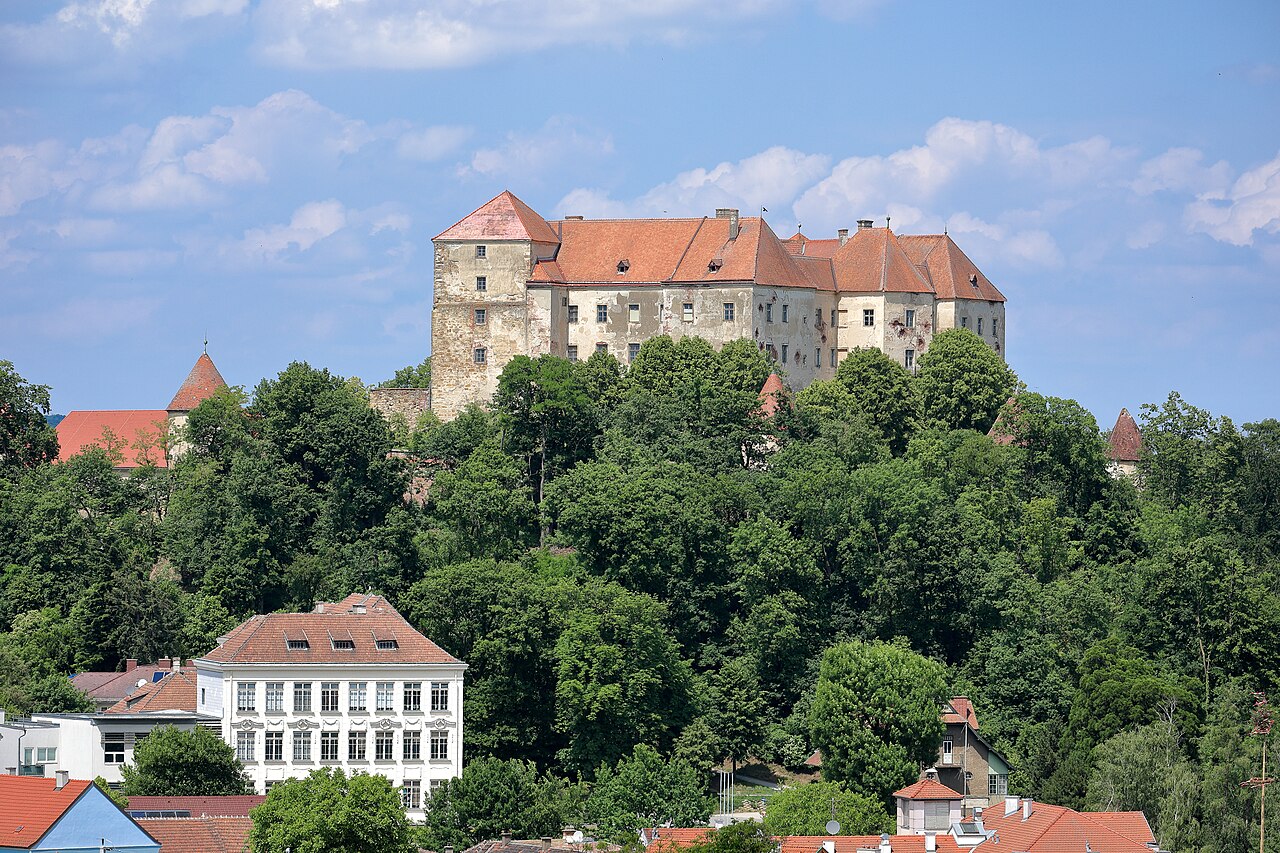
Wasserburg Castle
Wasserburg Castle is a historic medieval estate located in Sankt Pölten, Austria, with origins dating back to around 1185. The castle's first documented owner was the aristocrat Dietmar von Wasserburg, marking the beginning of a lineage that shaped much of its early history. Throughout the High Medieval period, the castle passed through several noble families, each leaving their mark on its development and legacy.
The early history and noble ownership
The castle remained in the possession of the von Wasserburg family until the 13th century. Among the most notable figures was Heinrich von Wasserburg, who was connected by marriage to the famous minnesinger Ulrich von Lichtenstein. Ulrich von Lichtenstein is historically recognized not only for his poetic contributions but also for his reputed role in the liberation of King Richard the Lionheart during the king's imprisonment in Austria. This connection highlights the castle's ties to significant medieval European events.
In 1238, ownership transferred to Otto von Haslau, a nobleman who held the estate briefly before it passed through marriage to the aristocratic Puchberger family. This transition reflects the common medieval practice of consolidating power and property through strategic marriages.
Later medieval and early modern period
During the 14th century, the von Toppel family inhabited Wasserburg Castle. However, by 1515, the estate was acquired by Christoph von Zinzendorf, who incorporated it into the extensive holdings of the Zinzendorf family. The Zinzendorfs used Wasserburg as their ancestral home and main family estate for over four centuries, underscoring the castle's importance as a noble residence and estate center.
The Zinzendorf legacy and cultural contributions
One of the most remarkable figures linked to the castle was Count Heinrich von Baudissin-Zinzendorf, who adopted the Zinzendorf name and crest in the early 19th century. Originating from Holstein in Germany, he introduced the Protestant tradition of the Christmas tree to Austria. It is said that the Christmas tree displayed at Wasserburg in 1827 was the first of its kind in the Austrian Empire, marking an important cultural moment.
20th-century history and modern use
In 1912, the castle was sold to Count Heinrich Fuenfkirchen. During the Great War (World War I), Wasserburg Castle served as a recreational home for soldiers returning from the front, illustrating its adaptive use during times of conflict.
Later, in 1923, the estate was purchased by Count Carl Hugo Seilern and Aspang, whose family retains ownership to this day. This continuity of noble ownership is relatively rare and adds to the castle's historical significance.
Contemporary function and preservation
Today, Wasserburg Castle is available for rental, offering visitors a chance to experience a medieval noble estate firsthand. It also hosts a yoga center, blending historical ambiance with modern wellness practices. The castle's preservation allows for public engagement with its rich heritage while maintaining its structural integrity and historical character.
Architectural features and style
Although detailed architectural descriptions are limited, Wasserburg Castle, built around the late 12th century, exhibits characteristics typical of High Medieval hill castles. Its strategic location and defensive structures reflect the medieval emphasis on fortification and noble residence. The castle likely features elements such as stone walls, towers, fortified gates, and a courtyard, consistent with castles of its era and class.
The castle's continuous occupation and modifications over centuries suggest a blend of medieval architectural styles, with possible later renovations reflecting evolving tastes and defensive needs. The long tenure of the Zinzendorf family likely influenced the estate's development, including interior and exterior adaptations suitable for noble living.
Historical significance in the region
Wasserburg Castle holds a notable place in the history of Lower Austria, particularly in the Sankt Pölten region. Its connections to prominent noble families and historical figures link it to broader European medieval and early modern narratives. The castle's survival through centuries of political and social change adds to its cultural heritage value.
Visiting and cultural experience
Visitors to Wasserburg Castle can explore its historic grounds and experience its unique atmosphere. While it functions primarily as a private estate and rental venue, the availability of the castle for events and wellness activities provides a diverse cultural experience. The castle's setting in the Austrian countryside offers scenic views and a glimpse into medieval aristocratic life.
The castle's association with the introduction of the Christmas tree tradition in Austria adds a festive historical dimension, attracting interest during the holiday season. Its role during World War I as a soldiers' recreation home also contributes to its layered historical narrative.
Frequently asked questions (FAQ)
- When was Wasserburg Castle originally built?
- Wasserburg Castle was originally built around 1185 during the High Medieval period.
- Who was the first known owner of Wasserburg Castle?
- The first documented owner of Wasserburg Castle was the aristocrat Dietmar von Wasserburg.
- What is the historical significance of Ulrich von Lichtenstein in relation to Wasserburg Castle?
- Ulrich von Lichtenstein, a famous minnesinger connected by marriage to the von Wasserburg family, is noted for his reputed role in the liberation of King Richard the Lionheart during his Austrian imprisonment.
- Can visitors rent Wasserburg Castle for events or stays?
- Yes, Wasserburg Castle is available for rental, offering a unique historical venue for events and private stays.
- What cultural tradition is associated with Wasserburg Castle in the 19th century?
- The Protestant tradition of the Christmas tree was introduced to Austria at Wasserburg Castle by Count Heinrich von Baudissin-Zinzendorf in 1827.
- Is Wasserburg Castle open to the public for tours?
- Wasserburg Castle primarily functions as a private estate and rental venue, so public tours may be limited or by arrangement.
Information
Sources & official resources
Verify the information above using these authoritative references.
Loading map...
Visitor reviews
No reviews yet. Been here? Write the first review and help other travelers!
Write the first reviewVisited this castle? Share your experience
Your review helps other travelers and adds first-hand knowledge to our encyclopedia.