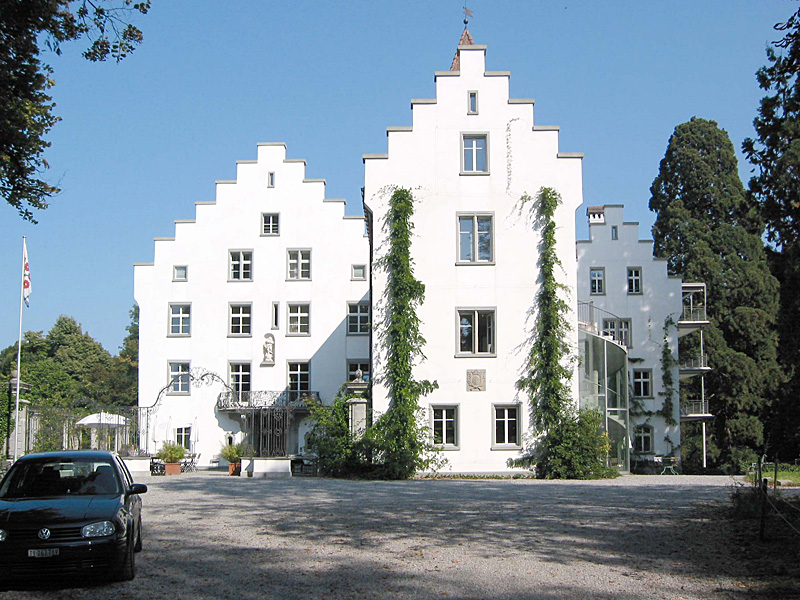
Wartensee Castle
Wartensee Castle, located in Rorschacherberg, Switzerland, is a notable example of a high medieval residential tower that has evolved through centuries of ownership and architectural transformation. Its origins date back to 1243, when the western tower was constructed by Ritter Heinrich von Wartensee, serving as a fortified residence typical of the period. This tower formed the core of the castle complex and reflects the defensive and domestic architecture of the High Middle Ages.
Medieval foundations and early history
The castle's initial construction as a residential tower was characteristic of the era's fortified dwellings, designed both for habitation and defense. The tower's strategic position allowed control over the surrounding landscape, which was crucial during a time of frequent regional conflicts and feudal disputes. In 1377, through marriage, ownership of the castle passed to the Blarer brothers, Walter and Diethelm, from St. Gallen. The Blarer family maintained possession of Wartensee for over three centuries, until 1719, indicating the castle's sustained importance as a noble residence and symbol of local power.
Architectural evolution and 19th-century modifications
Although the castle's medieval origins are central to its identity, significant modifications were undertaken in the 19th century. The current appearance of Wartensee Castle largely results from alterations carried out between 1843 and 1853 by Robert Lucas Pearsall de Willsbridge, an English composer who acquired the property. Pearsall's involvement introduced elements reflecting the tastes and sensibilities of the period, blending the medieval structure with 19th-century architectural styles. These changes likely included renovations to the interior and exterior to adapt the castle for modern residential use, while preserving its historic character.
19th-century architectural style and impact
The alterations by Pearsall de Willsbridge were not purely restorative but also stylistic, possibly incorporating aspects of the Romantic movement, which favored medieval revival aesthetics. This period saw many historic buildings in Europe adapted with a renewed appreciation for their medieval heritage, often adding picturesque features, decorative details, and improved comfort. Wartensee Castle's transformation reflects this trend, balancing preservation with contemporary needs.
Current use and preservation status
Today, Wartensee Castle operates as a hotel, allowing visitors to experience its historic ambiance firsthand. The adaptation of the castle into hospitality use demonstrates a successful example of heritage conservation combined with practical modern function. The castle's well-preserved medieval tower alongside 19th-century modifications offers guests a unique atmosphere that bridges centuries of history.
Historical significance and cultural heritage
Wartensee Castle stands as a testament to the region's medieval past and the evolution of noble residences in Switzerland. Its continuous occupation and adaptation reveal the changing social and architectural trends from the High Middle Ages through the 19th century. The castle's connection to the Blarer family and later to an English cultural figure enriches its historical narrative, linking local and international heritage.
Architectural features and layout
The castle's core feature is the western tower, originally constructed as a fortified residential structure. Typical of high medieval architecture, this tower would have included thick stone walls, narrow windows for defense, and limited access points. Over time, the castle complex likely expanded to include additional living quarters, service buildings, and defensive elements such as battlements or curtain walls, although specific details are less documented.
Defensive and residential elements
The tower's design reflects the dual purpose of medieval castles as both strongholds and noble homes. Defensive features would have included crenellations and possibly a moat or protective ditch, while residential aspects focused on comfort and status display through halls and chambers. The 19th-century renovations might have enhanced these residential qualities, adapting the interior for more modern living standards.
Visiting wartensee castle
As a functioning hotel, Wartensee Castle offers a distinctive experience for visitors interested in medieval architecture and history. Guests can enjoy the castle's historic ambiance while benefiting from contemporary amenities. The castle's location in Rorschacherberg provides scenic views of the surrounding Swiss landscape, making it an attractive destination for cultural tourism.
Accessibility and visitor information
Visitors interested in exploring Wartensee Castle should check availability for accommodations or events hosted at the site. While the castle functions primarily as a hotel, its historic areas may be accessible for tours or special occasions. The surrounding region offers additional attractions, including natural landscapes and nearby towns with rich cultural offerings.
Frequently asked questions (FAQ)
- How do I get to Wartensee Castle?
- Wartensee Castle is located in Rorschacherberg, Switzerland, and is easily accessible by car or public transportation. If you're traveling by train, the nearest station is Rorschach, from which you can take a short bus ride or enjoy a scenic walk to the castle.
- What is the historical significance of Wartensee Castle?
- Wartensee Castle dates back to the 13th century and has played a vital role in the region's history. It was originally built as a strategic fortress and has witnessed numerous historical events, contributing to its importance in Swiss heritage.
- When was Wartensee Castle built?
- Wartensee Castle was constructed in the early 13th century, with its foundations laid around 1250. Over the centuries, it has undergone several renovations and restorations, preserving its historical architecture while adapting to modern needs.
- Can I visit Wartensee Castle year-round?
- Yes, Wartensee Castle is open for visitors throughout the year, but hours may vary seasonally. It's advisable to check the official website for the most current opening hours and any special events that might affect access.
- Why is Wartensee Castle considered an architectural gem?
- Wartensee Castle showcases a blend of medieval and Renaissance architectural styles, characterized by its robust stone construction and intricate detailing. The castle's towers and walls offer stunning views of Lake Constance and the surrounding landscape, making it a picturesque site.
- Is it possible to host events at Wartensee Castle?
- Yes, Wartensee Castle offers facilities for hosting various events, including weddings, corporate gatherings, and private celebrations. The enchanting surroundings and historical ambiance make it a unique venue for special occasions.
- What are the ticket prices for visiting Wartensee Castle?
- Ticket prices for Wartensee Castle vary based on age and type of visit. Generally, adult tickets are priced modestly, with discounts available for children and seniors, making it accessible for families and groups.
- What is the best time to visit Wartensee Castle?
- The best time to visit Wartensee Castle is during the spring and early fall when the weather is pleasant and the gardens are in full bloom. These seasons offer an ideal backdrop for exploring the castle and enjoying the panoramic views of the surrounding area.
- Are there any nearby attractions to visit while at Wartensee Castle?
- Yes, there are several attractions near Wartensee Castle, including the beautiful Lake Constance, hiking trails, and charming towns such as Rorschach. Visitors can also explore local museums and enjoy regional cuisine at nearby restaurants.
Information
Website
Visit websiteSources & official resources
Verify the information above using these authoritative references.
Loading map...
Visitor reviews
No reviews yet. Been here? Write the first review and help other travelers!
Write the first reviewVisited this castle? Share your experience
Your review helps other travelers and adds first-hand knowledge to our encyclopedia.