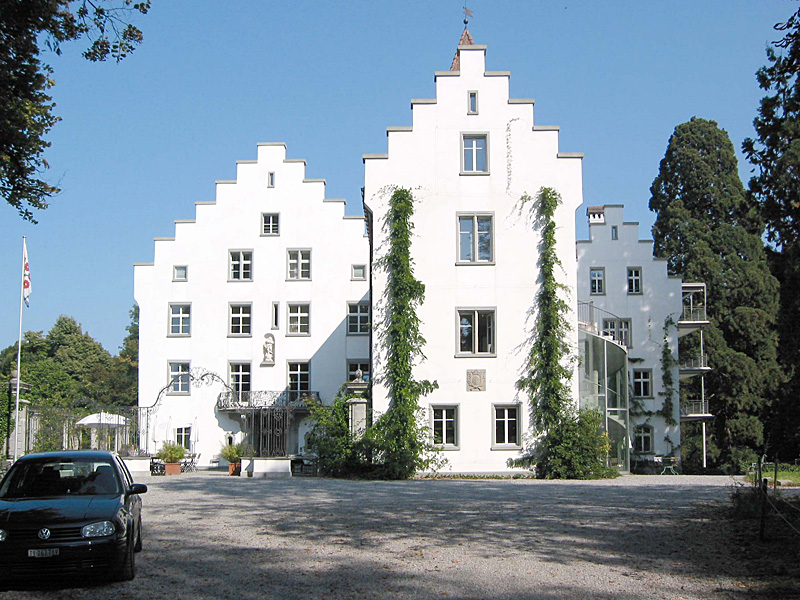
Grimmenstein Castle Ruin
Grimmenstein Castle ruin stands prominently above the town of St. Margrethen in Switzerland, offering a compelling glimpse into medieval fortification and ecclesiastical power in the early 13th century. Founded by Abbot Berchtold von Falkenstein of the Abbey of St. Gallen, the castle was originally constructed as a strategic hilltop fortress, capitalizing on natural elevation to oversee and control the surrounding landscape. This location provided both defensive advantages and a symbol of the Abbey's territorial influence during the High Medieval period.
Constructed in the first half of the 13th century, Grimmenstein Castle functioned through a dynamic historical timeline marked by shifting ownership and roles. Its early purpose was closely tied to the Abbey's religious and administrative authority, but by the 14th century, it became infamous as a refuge for robber knights. These knights operated outside the law, engaging in banditry and disrupting regional stability, a reflection of the broader feudal conflicts and power struggles of medieval Europe.
The architectural design of a medieval hill castle
The castle exemplifies the typical characteristics of a hill castle, constructed primarily from locally sourced stone to maximize durability and defensive capability. The elevated site above St. Margrethen offered natural surveillance and protection, essential for medieval fortifications. Among the surviving structures is a fragment of a residential tower, dating back to the original 13th-century construction phase. This tower features a high entrance on its first floor, a defensive architectural element designed to impede attackers by requiring removable ladders for access during sieges.
The tower's side facing potential attackers was heavily fortified, emphasizing the defensive priorities of the era. The castle's layout also included a cistern for water storage, critical for sustaining inhabitants during prolonged sieges or droughts. Remnants of walls from other buildings reveal the complex's spatial organization, indicating a multifunctional fortress that combined residential, defensive, and logistical functions.
Defensive features and fortifications
Grimmenstein Castle's defensive design incorporated thick stone walls, battlements, and strategic positioning to exploit the natural topography. The use of a high entrance on the tower was a common medieval tactic to enhance security. The castle's elevated location not only provided a commanding view but also made direct assaults more challenging for attackers.
Historical significance and turbulent past
Throughout the 14th century, the castle's reputation as a stronghold for robber knights marked a turbulent chapter in its history. These knights disrupted trade routes and local governance, contributing to regional instability. The castle's role during this period reflects the broader feudal conflicts and lawlessness that characterized parts of medieval Europe.
In 1416, the castle was deliberately destroyed through a process known as slighting, aimed at preventing its further military use. This decisive act ended the castle's active role in regional power struggles. Following its destruction, Grimmenstein Castle was never rebuilt, and over time, it fell into ruin. The stones of the castle were repurposed for other construction projects, further diminishing the physical remains.
Archaeological efforts and modern restoration
Interest in preserving Grimmenstein Castle's remains emerged in the 20th century, with archaeological excavations conducted between 1936 and 1938. These efforts documented the site's historical and architectural significance, providing valuable insights into its construction and use. The excavations also helped stabilize the ruins, preventing further deterioration.
More recently, restoration work began in 2023 on one of the surviving tower fragments. Plans are underway to continue restoring the surrounding walls and additional building remains in 2024. These conservation efforts aim to preserve the castle's character and provide a tangible connection to its medieval past, enhancing its value as a cultural heritage site and tourist attraction.
Preservation challenges and future prospects
The castle's condition as a ruin presents unique challenges for preservation, including weathering and the impact of previous quarrying activities that removed much of the original stonework. Restoration focuses on stabilizing existing masonry and reconstructing key elements to prevent further loss. The ongoing work reflects a commitment to safeguarding this emblematic hill castle for future generations.
The castle's role in regional heritage and tourism
Today, Grimmenstein Castle ruin serves as an important historical landmark in the region of St. Margrethen. Its elevated position and preserved fragments attract visitors interested in medieval history and castle architecture. The site offers educational opportunities through guided tours and interpretive displays, highlighting the castle's ecclesiastical origins, military functions, and the dramatic events that shaped its history.
As restoration progresses, the castle is poised to become a more accessible and engaging destination, contributing to local cultural tourism and community identity. Its story embodies the complex interplay of religious authority, feudal conflict, and architectural ingenuity that defines much of Switzerland's medieval heritage.
Frequently asked questions (FAQ)
- When was Grimmenstein Castle built and by whom?
- Grimmenstein Castle was built in the early 13th century by Abbot Berchtold von Falkenstein of the Abbey of St. Gallen, reflecting its ecclesiastical origins.
- What architectural features remain visible at the castle ruins?
- Visitors can see the remains of a residential tower with a high entrance, fragments of walls, and a cistern, showcasing typical medieval hill castle defensive and functional elements.
- Why was Grimmenstein Castle destroyed?
- The castle was deliberately destroyed in 1416 to prevent its further use as a stronghold, particularly due to its association with robber knights who disrupted regional stability.
- What restoration efforts have been made on the castle?
- Archaeological excavations took place between 1936 and 1938, and recent restoration began in 2023 focusing on the tower fragment, with plans to restore walls and other structures continuing in 2024.
- Can visitors access the castle ruins today?
- The castle ruins are accessible to the public, offering an opportunity to explore medieval architecture and enjoy panoramic views, though facilities may be limited due to its ruinous state.
Information
Website
Visit websiteSources & official resources
Verify the information above using these authoritative references.
Loading map...
Visitor reviews
No reviews yet. Been here? Write the first review and help other travelers!
Write the first reviewVisited this castle? Share your experience
Your review helps other travelers and adds first-hand knowledge to our encyclopedia.