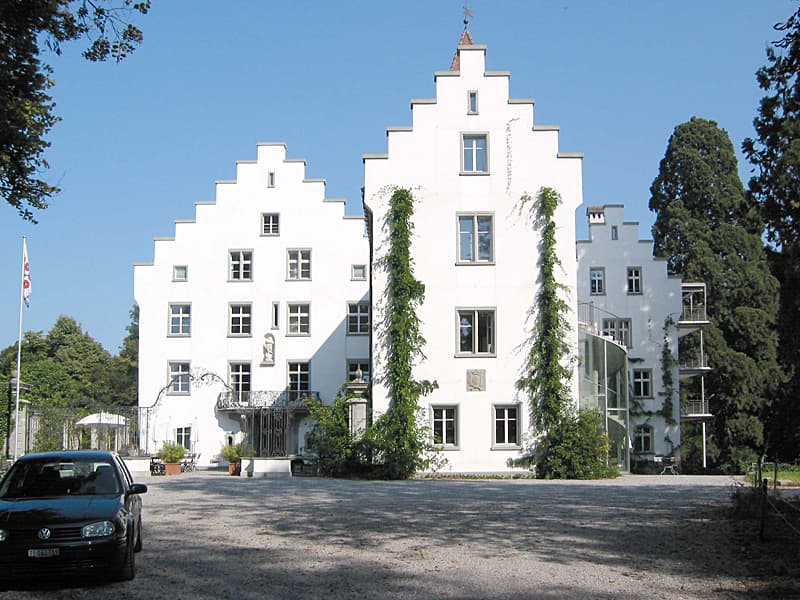
Wartegg castle and park — Switzerland castle

Wartegg castle and park

Wartegg Castle and park in Switzerland
Renaissance (15th–17th c.)

Wartegg Castle is a notable example of a Renaissance hill castle located in Switzerland. Constructed in the 16th century, this castle embodies architectural elements typical of the Renaissance period, reflecting the transition from medieval fortifications to more residential and representational structures.

Historical context and construction

The castle was built during a time when the Renaissance style was spreading through Europe, influencing castle design with an emphasis on symmetry, proportion, and the incorporation of classical elements. Wartegg Castle was strategically positioned on a hill, providing defensive advantages as well as commanding views of the surrounding landscape. This location typifies the hill castle classification, where elevation was used both for defense and status.

While specific details about the original builders and owners remain limited, the castle's construction in the 16th century places it firmly within the Renaissance era, a period marked by significant cultural and architectural developments in Switzerland and across Europe.

Architectural features

The castle's Renaissance architecture is characterized by its balanced proportions and the use of ornamental elements that were innovative at the time. Typical features include decorative stonework, arched windows, and the integration of residential comfort alongside fortification.

Its layout likely includes a central courtyard surrounded by living quarters and defensive walls, a common design in Renaissance castles. The castle's walls and towers would have been adapted to accommodate the evolving military technology of the period, such as the use of gunpowder weapons, though details specific to Wartegg Castle's defensive adaptations are scarce.

The park and landscape

Wartegg Castle is also renowned for its surrounding parklands, which complement the castle's historical and aesthetic value. The park likely features landscaped gardens, walking paths, and possibly water features, reflecting Renaissance ideals of harmony between architecture and nature.

Preservation and current condition

The castle is currently classified as a hill castle and retains much of its Renaissance character. While detailed information on its preservation status is limited, it is understood to be in a well-preserved or partially restored condition, maintaining both its architectural integrity and its role as a cultural landmark.

Visiting Wartegg Castle

Visitors to Wartegg Castle can appreciate not only the architectural features of the 16th-century Renaissance castle but also the tranquil beauty of its historic park. The site offers insights into the evolution of castle architecture during the Renaissance and the integration of natural landscapes in castle design.

While specific visitor information such as opening hours and ticket prices is not widely documented, prospective visitors should check local resources or tourism offices for the most current details.

Frequently asked questions (FAQ)

How do I get to Wartegg Castle and Park?
Wartegg Castle and Park is located in Switzerland and is easily accessible by public transport. You can take a train to the nearest station and then use a local bus or taxi to reach the castle. Additionally, there are parking facilities available for those who prefer to drive.
What is the historical significance of Wartegg Castle?
Wartegg Castle dates back to the 13th century and has played a vital role in the region's history. It has served various purposes over the centuries, including as a noble residence and a military fortress. Today, it stands as a testament to medieval architecture and Swiss heritage.
When was Wartegg Castle built?
Wartegg Castle was originally constructed in the 13th century, with significant renovations occurring in the following centuries. Its architecture reflects the styles and customs of the time, showcasing the evolution of castle design through the ages. The castle's preservation allows visitors to step back in time and appreciate its historical value.
Can I visit Wartegg Castle with my family?
Absolutely! Wartegg Castle is a family-friendly destination, offering various activities and guided tours suitable for visitors of all ages. The surrounding park is perfect for children to explore and enjoy outdoor activities while learning about the castle's history.
Why is the architecture of Wartegg Castle noteworthy?
The architecture of Wartegg Castle is noteworthy due to its blend of medieval and Renaissance styles, showcasing the craftsmanship of the time. The castle features impressive stonework, elegant towers, and beautifully landscaped gardens that enhance its charm. Visitors can appreciate the unique design elements that reflect the cultural influences of different historical periods.
Is it possible to host events at Wartegg Castle?
Yes, Wartegg Castle offers a stunning backdrop for various events, including weddings, corporate gatherings, and private parties. The castle's picturesque setting and elegant interiors make it a popular choice for special occasions. Interested parties should contact the castle management for availability and booking details.
What are the opening hours for Wartegg Castle?
Wartegg Castle is typically open to visitors from April to October, with varying hours depending on the season. It's recommended to check the official website for the most current opening times before planning your visit. Guided tours are often available during these hours, providing an enriching experience.
What are the ticket prices for visiting Wartegg Castle?
Ticket prices for Wartegg Castle vary based on age and group size, with discounts often available for children, students, and seniors. It is advisable to check the official website for the latest pricing information and any special promotions. Purchasing tickets in advance can help ensure a smooth visit.
When is the best time to visit Wartegg Castle?
The best time to visit Wartegg Castle is during the spring and summer months when the weather is pleasant, and the gardens are in full bloom. This season offers the opportunity to enjoy outdoor activities and events held in the park. However, autumn can also be beautiful, with stunning foliage surrounding the castle.
Are there nearby attractions to visit after Wartegg Castle?
Yes, there are several nearby attractions worth exploring after your visit to Wartegg Castle. The surrounding region features beautiful hiking trails, lakes, and other historical sites that provide a rich cultural experience. Be sure to check local guides for recommendations on additional places to visit in the area.

Photo gallery

Wartegg castle and park
Click to view

Photo by Martin Sauter•CC BY-SA 3.0

1 photo • Click any image to view in full screen

Information

Hill Castle

Loading map...

Visitor reviews

No reviews yet. Been here? Write the first review and help other travelers!

Write the first review

Visited this castle? Share your experience

Your review helps other travelers and adds first-hand knowledge to our encyclopedia.

Write a review

(5/5)

0/2000 characters

Your review will be visible after admin approval

Nearby castles

0.8 km

Wartensee Castle

Rorschacherberg, Switzerland

Wartensee Castle, located in Rorschacherberg, Switzerland, is a notable example of a high medieval residential tower that has evolved through centuries of ownership and architectural transformation. Its origins date back to 1243, when the western tower was constructed by Ritter Heinrich von Wartensee, serving as a fortified residence typical of the period. This tower formed the core of the castle complex and reflects the defensive and domestic architecture of the High Middle Ages. Medieval foundations and early history The castle's initial construction as a residential tower was characteristic of the era's fortified dwellings, designed both for habitation and defense. The tower's strategic position allowed control over the surrounding landscape, which was crucial during a time of frequent regional conflicts and feudal disputes. In 1377, through marriage, ownership of the castle passed to the Blarer brothers, Walter and Diethelm, from St. Gallen. The Blarer family maintained possession of Wartensee for over three centuries, until 1719, indicating the castle's sustained importance as a noble residence and symbol of local power. Architectural evolution and 19th-century modifications Although the castle's medieval origins are central to its identity, significant modifications were undertaken in the 19th century. The current appearance of Wartensee Castle largely results from alterations carried out between 1843 and 1853 by Robert Lucas Pearsall de Willsbridge, an English composer who acquired the property. Pearsall's involvement introduced elements reflecting the tastes and sensibilities of the period, blending the medieval structure with 19th-century architectural styles. These changes likely included renovations to the interior and exterior to adapt the castle for modern residential use, while preserving its historic character. 19th-century architectural style and impact The alterations by Pearsall de Willsbridge were not purely restorative but also stylistic, possibly incorporating aspects of the Romantic movement, which favored medieval revival aesthetics. This period saw many historic buildings in Europe adapted with a renewed appreciation for their medieval heritage, often adding picturesque features, decorative details, and improved comfort. Wartensee Castle's transformation reflects this trend, balancing preservation with contemporary needs. Current use and preservation status Today, Wartensee Castle operates as a hotel, allowing visitors to experience its historic ambiance firsthand. The adaptation of the castle into hospitality use demonstrates a successful example of heritage conservation combined with practical modern function. The castle's well-preserved medieval tower alongside 19th-century modifications offers guests a unique atmosphere that bridges centuries of history. Historical significance and cultural heritage Wartensee Castle stands as a testament to the region's medieval past and the evolution of noble residences in Switzerland. Its continuous occupation and adaptation reveal the changing social and architectural trends from the High Middle Ages through the 19th century. The castle's connection to the Blarer family and later to an English cultural figure enriches its historical narrative, linking local and international heritage. Architectural features and layout The castle's core feature is the western tower, originally constructed as a fortified residential structure. Typical of high medieval architecture, this tower would have included thick stone walls, narrow windows for defense, and limited access points. Over time, the castle complex likely expanded to include additional living quarters, service buildings, and defensive elements such as battlements or curtain walls, although specific details are less documented. Defensive and residential elements The tower's design reflects the dual purpose of medieval castles as both strongholds and noble homes. Defensive features would have included crenellations and possibly a moat or protective ditch, while residential aspects focused on comfort and status display through halls and chambers. The 19th-century renovations might have enhanced these residential qualities, adapting the interior for more modern living standards. Visiting wartensee castle As a functioning hotel, Wartensee Castle offers a distinctive experience for visitors interested in medieval architecture and history. Guests can enjoy the castle's historic ambiance while benefiting from contemporary amenities. The castle's location in Rorschacherberg provides scenic views of the surrounding Swiss landscape, making it an attractive destination for cultural tourism. Accessibility and visitor information Visitors interested in exploring Wartensee Castle should check availability for accommodations or events hosted at the site. While the castle functions primarily as a hotel, its historic areas may be accessible for tours or special occasions. The surrounding region offers additional attractions, including natural landscapes and nearby towns with rich cultural offerings.

High Medieval (11th–13th c.)
Details
6.9 km

Grimmenstein Castle Ruin

St. Margrethen, Switzerland

Grimmenstein Castle ruin stands prominently above the town of St. Margrethen in Switzerland, offering a compelling glimpse into medieval fortification and ecclesiastical power in the early 13th century. Founded by Abbot Berchtold von Falkenstein of the Abbey of St. Gallen, the castle was originally constructed as a strategic hilltop fortress, capitalizing on natural elevation to oversee and control the surrounding landscape. This location provided both defensive advantages and a symbol of the Abbey's territorial influence during the High Medieval period. Constructed in the first half of the 13th century, Grimmenstein Castle functioned through a dynamic historical timeline marked by shifting ownership and roles. Its early purpose was closely tied to the Abbey's religious and administrative authority, but by the 14th century, it became infamous as a refuge for robber knights. These knights operated outside the law, engaging in banditry and disrupting regional stability, a reflection of the broader feudal conflicts and power struggles of medieval Europe. The architectural design of a medieval hill castle The castle exemplifies the typical characteristics of a hill castle, constructed primarily from locally sourced stone to maximize durability and defensive capability. The elevated site above St. Margrethen offered natural surveillance and protection, essential for medieval fortifications. Among the surviving structures is a fragment of a residential tower, dating back to the original 13th-century construction phase. This tower features a high entrance on its first floor, a defensive architectural element designed to impede attackers by requiring removable ladders for access during sieges. The tower's side facing potential attackers was heavily fortified, emphasizing the defensive priorities of the era. The castle's layout also included a cistern for water storage, critical for sustaining inhabitants during prolonged sieges or droughts. Remnants of walls from other buildings reveal the complex's spatial organization, indicating a multifunctional fortress that combined residential, defensive, and logistical functions. Defensive features and fortifications Grimmenstein Castle's defensive design incorporated thick stone walls, battlements, and strategic positioning to exploit the natural topography. The use of a high entrance on the tower was a common medieval tactic to enhance security. The castle's elevated location not only provided a commanding view but also made direct assaults more challenging for attackers. Historical significance and turbulent past Throughout the 14th century, the castle's reputation as a stronghold for robber knights marked a turbulent chapter in its history. These knights disrupted trade routes and local governance, contributing to regional instability. The castle's role during this period reflects the broader feudal conflicts and lawlessness that characterized parts of medieval Europe. In 1416, the castle was deliberately destroyed through a process known as slighting, aimed at preventing its further military use. This decisive act ended the castle's active role in regional power struggles. Following its destruction, Grimmenstein Castle was never rebuilt, and over time, it fell into ruin. The stones of the castle were repurposed for other construction projects, further diminishing the physical remains. Archaeological efforts and modern restoration Interest in preserving Grimmenstein Castle's remains emerged in the 20th century, with archaeological excavations conducted between 1936 and 1938. These efforts documented the site's historical and architectural significance, providing valuable insights into its construction and use. The excavations also helped stabilize the ruins, preventing further deterioration. More recently, restoration work began in 2023 on one of the surviving tower fragments. Plans are underway to continue restoring the surrounding walls and additional building remains in 2024. These conservation efforts aim to preserve the castle's character and provide a tangible connection to its medieval past, enhancing its value as a cultural heritage site and tourist attraction. Preservation challenges and future prospects The castle's condition as a ruin presents unique challenges for preservation, including weathering and the impact of previous quarrying activities that removed much of the original stonework. Restoration focuses on stabilizing existing masonry and reconstructing key elements to prevent further loss. The ongoing work reflects a commitment to safeguarding this emblematic hill castle for future generations. The castle's role in regional heritage and tourism Today, Grimmenstein Castle ruin serves as an important historical landmark in the region of St. Margrethen. Its elevated position and preserved fragments attract visitors interested in medieval history and castle architecture. The site offers educational opportunities through guided tours and interpretive displays, highlighting the castle's ecclesiastical origins, military functions, and the dramatic events that shaped its history. As restoration progresses, the castle is poised to become a more accessible and engaging destination, contributing to local cultural tourism and community identity. Its story embodies the complex interplay of religious authority, feudal conflict, and architectural ingenuity that defines much of Switzerland's medieval heritage.

High Medieval (11th–13th c.)
Details
8.1 km

Arbon Castle

Arbon, Switzerland

Arbon Castle stands as a remarkable historical monument in the town of Arbon, Switzerland, embodying a rich legacy that spans from the Roman era through the medieval period to modern times. The castle's origins are intricately linked to the ancient Roman fortress known as Arbor Felix, established around 250 AD. This fortress served as a strategic military stronghold during the height of the Roman Empire's presence in the region. Following the Roman withdrawal south of the Alps circa 400 AD, the site was abandoned but later reoccupied and transformed during the early medieval period. By the early 8th century, the site had become part of the Frankish realm, with a castle likely constructed for the Frankish royal family. Around 700 AD, the ownership of Arbon and its castle transferred to the Diocese of Constance, marking the beginning of ecclesiastical oversight. The castle was managed by a bailiff, reflecting its role as an administrative center within the church's territorial domain. Medieval architectural evolution The most ancient part of the extant Arbon Castle is a 13th-century residential tower, which may have been erected upon much older foundations potentially dating back to the Frankish or Roman periods. The tower's lower walls are notably thick, reaching up to 3.2 meters, underscoring its defensive purpose and robust construction. Inside, visitors can find two Romanesque fireplaces, exemplifying the architectural style prevalent in medieval Europe between the 11th and 13th centuries, characterized by rounded arches and solid, functional design. Early 16th-century transformation Between 1515 and 1520, the castle underwent significant renovation under the direction of Bishop Hugo von Hohenlandenberg. This reconstruction transformed the original tower into a U-shaped building, adding an upper story, decorative gables, and a hip roof with slopes on all sides. Importantly, the outer walls were realigned to rest precisely on the northwest corner of the ancient Roman fortress, symbolically and physically connecting the medieval structure to its Roman predecessor. This phase of construction reflects the late medieval architectural sensibilities, blending functionality with aesthetic enhancements. Industrial adaptation and modern preservation In the 19th century, Arbon Castle shifted from a feudal residence to an industrial site. From 1822 to 1907, it housed the Stoffel silk ribbon weaving company, illustrating the adaptive reuse of medieval structures during the industrial revolution. Subsequently, in 1911, the castle became part of the enterprise of Adolph Saurer, founder of Adolph Saurer AG, who utilized the castle and its surroundings for workshops dedicated to mechanical experimentation and production of motors, trucks, and machinery. In 1944, the city of Arbon acquired the castle, initiating renovations and expansions that preserved its historical fabric while adapting it for public use. Since 1967, the castle has housed the Historisches Museum Arbon (Arbon History Museum), serving as a cultural and educational center that showcases the region's rich history from Roman times through the modern era. Architectural features and historical significance The castle's enduring 13th-century tower remains a focal point, with its thick masonry walls and Romanesque interior elements providing tangible links to the medieval past. The deliberate alignment of the castle's walls over the Roman fortress foundations highlights the site's continuous strategic importance over centuries. The castle's transformation from a military stronghold to an ecclesiastical center, then to an industrial hub, and finally to a museum encapsulates the dynamic history of Arbon itself. Visitors to Arbon Castle can explore a site where multiple layers of history converge, from the Roman military architecture of Arbor Felix to the medieval residential and defensive structures, and later industrial adaptations. The castle stands as a testament to the region's evolving political, economic, and cultural landscape. Preservation and current condition Today, the castle is well preserved, with significant restoration efforts maintaining its structural integrity and historical character. The integration of the castle into the museum complex ensures ongoing conservation and public engagement, allowing visitors to appreciate both its architectural grandeur and its historical narratives. Visiting arbon castle The Historisches Museum Arbon offers a unique opportunity to experience the castle's storied past firsthand. Exhibits cover the Roman origins of the site, the medieval transformations, and the industrial era, providing a comprehensive understanding of the castle's role in regional history. The museum's location within the castle walls enhances the visitor experience, immersing guests in the authentic atmosphere of this historic hill castle. Arbon Castle's location in the picturesque town of Arbon, near Lake Constance, makes it accessible for tourists interested in Swiss history, medieval architecture, and cultural heritage. The castle's hilltop position offers scenic views and a tangible connection to centuries of European history.

High Medieval (11th–13th c.)
Details

