Warsaw Barbican
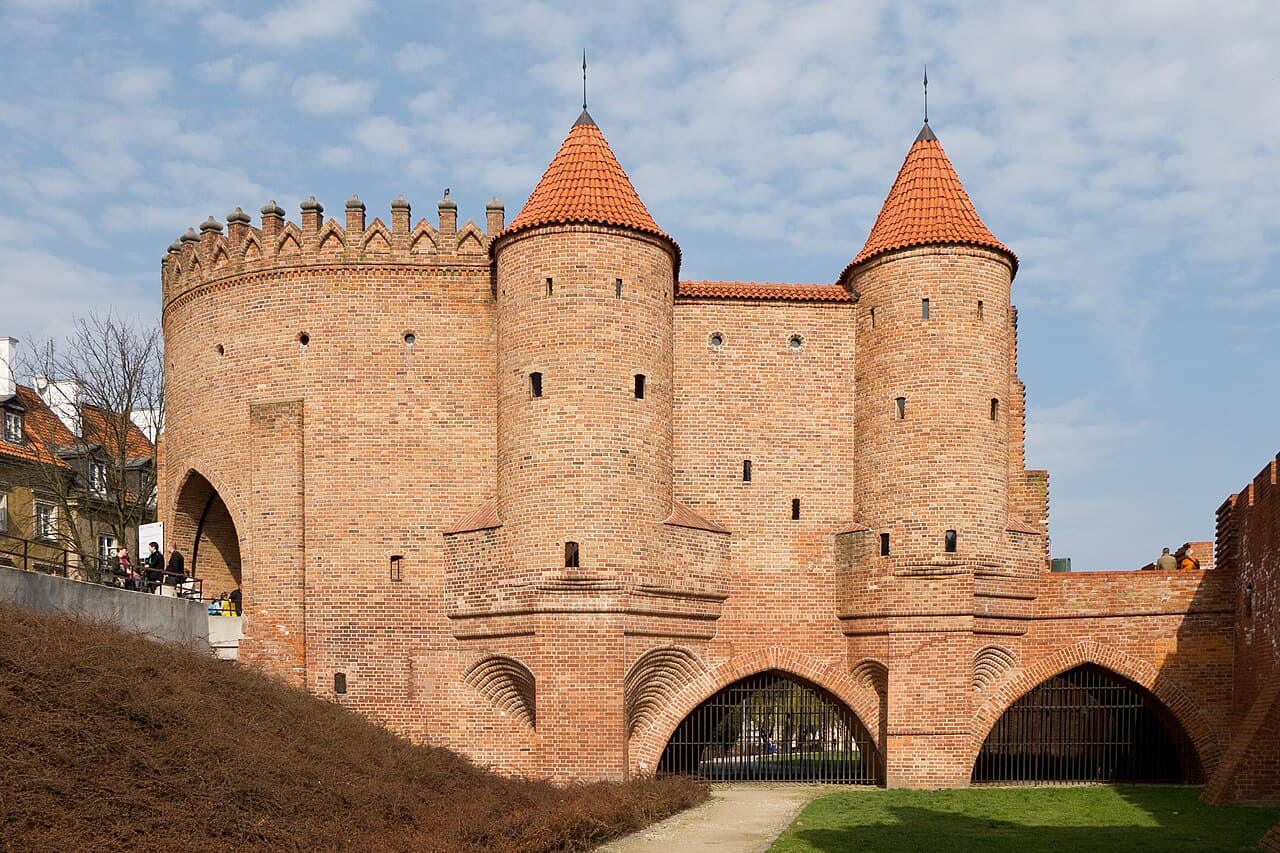
The Warsaw Barbican (Polish: barbakan warszawski) stands as a significant example of Renaissance military architecture in Poland. Constructed in the 16th century, this bastioned fortress was an integral part of Warsaw's extensive defensive system, designed to protect the city from invading forces. It is one of the few surviving fragments of the original fortifications that once encircled Warsaw, linking the Old Town and New Town districts. Today, it attracts numerous visitors interested in the city's medieval and Renaissance heritage.
Historical context and strategic importance
During the Renaissance period, the evolution of artillery necessitated new fortification designs. The Warsaw Barbican was built as a response to these military advancements, incorporating bastions and thick walls to withstand cannon fire. As a semicircular fortified outpost, the barbican served as a critical defensive structure guarding one of the main entrances to the city. It was part of the larger Warsaw city walls complex, which included gates, towers, and ramparts.
The barbican's position between the Old Town and New Town was strategic, controlling access and providing a defensive stronghold against attackers. Its design allowed defenders to cover the approach with crossfire, making it difficult for enemies to breach the city's defenses.
Architectural features and design
The Warsaw Barbican is characterized by its semi-circular shape and thick brick walls reinforced with bastions that protrude outward, enabling defenders to fire upon attackers from multiple angles. The structure includes arrow slits and embrasures designed for artillery and firearms, reflecting the adaptation of medieval fortifications to Renaissance warfare.
The barbican's walls are punctuated by turrets and defensive galleries that provided protected positions for soldiers. The entrance was heavily fortified, often featuring a drawbridge and portcullis to control access. The use of red brick is typical of Polish Renaissance military architecture, lending the barbican its distinctive appearance.
Construction techniques
Builders employed advanced masonry techniques of the time, combining brick and stone to create robust walls capable of resisting artillery bombardment. The walls are notably thick, with angled bastions designed to deflect cannonballs. The barbican was integrated with the city walls to create a continuous defensive line.
Warsaw barbican in later history
Over the centuries, the Warsaw Barbican witnessed numerous conflicts, including the Swedish Deluge in the 17th century and later wars that shaped Poland's history. Despite damage and partial demolitions, it survived better than many other fortifications, although it fell into disrepair in the 19th and early 20th centuries.
During World War II, much of Warsaw was destroyed, but the barbican was partially restored in the post-war period as part of efforts to preserve Warsaw's historic heritage. Today, it stands as a well-preserved monument and a symbol of the city's resilience.
Current status and tourism
The Warsaw Barbican is currently well preserved and functions as a popular tourist attraction. Visitors can explore its ramparts, walk along the defensive walls, and learn about its role in Warsaw's military history through informational displays. Its location near the bustling Old Town Market Square makes it easily accessible.
The site hosts cultural events and exhibitions, enhancing its role as a living monument to Warsaw's past. The barbican's architecture and history attract scholars, photographers, and history enthusiasts alike.
Visiting information
The barbican is open to the public year-round, with no entrance fee, making it an accessible historical site. Guided tours are available in multiple languages, providing detailed insights into its construction and historical significance. The best time to visit is during spring and summer when the weather is favorable for walking tours.
Frequently asked questions (FAQ)
- What is the historical significance of the Warsaw Barbican?
- The Warsaw Barbican is a rare surviving example of Renaissance bastioned fortifications in Poland, originally built to defend the city against artillery attacks.
- Can I visit the Warsaw Barbican year-round?
- Yes, the Warsaw Barbican is open to visitors throughout the year with free access, making it an accessible historical site.
- Where is the Warsaw Barbican located in Warsaw?
- It is situated between the Old Town and New Town districts, near the Old Town Market Square, providing easy access for tourists.
- What architectural features make the Warsaw Barbican unique?
- Its semicircular shape, thick brick walls, bastions, arrow slits, and defensive galleries reflect Renaissance military architecture adapted to cannon warfare.
- Are there guided tours available at the Warsaw Barbican?
- Yes, guided tours are offered in multiple languages, providing detailed information about its history and architecture.
Photo gallery

Information
Opening hours
Open year-round, free access
Ticket prices
Free
Current owner
City of Warsaw
Loading map...
Visitor reviews
No reviews yet. Been here? Write the first review and help other travelers!
Write the first reviewVisited this castle? Share your experience
Your review helps other travelers and adds first-hand knowledge to our encyclopedia.