Fort Legionow
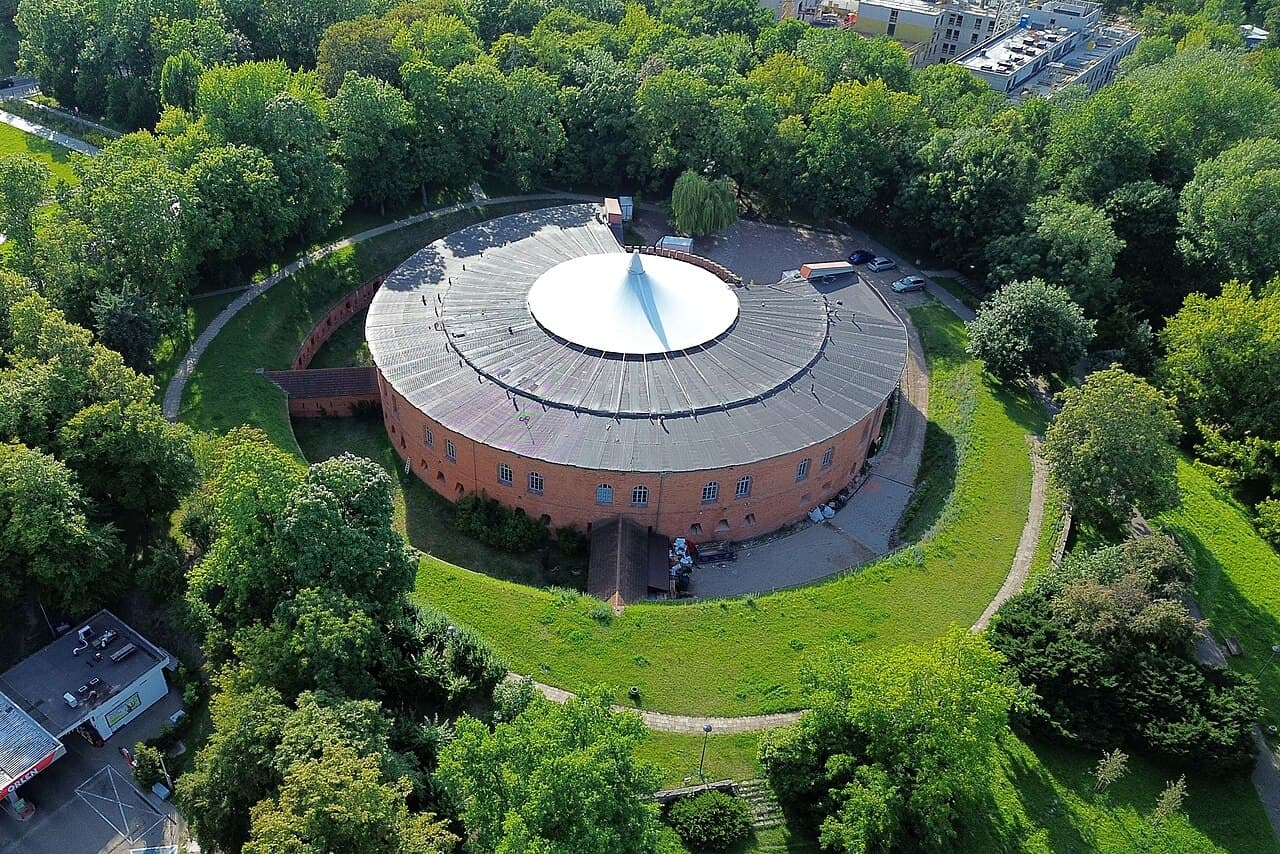
Fort Legionow, constructed between 1852 and 1854, is a significant example of a bastioned fortress located on the southern foreland of the Warsaw Citadel in Poland. Its strategic position was chosen to guard the citadel from the side of the New Town and to defend the seasonal bridge over the Vistula River, an important crossing point. The fort's original design featured a distinctive three-storey artillery turret surrounded by a fortified ditch with three cofferdams and a gallery in the counterscarp, reflecting the military engineering principles of the mid-19th century.
Architectural design and defensive features
The fort's architecture is notable for its complex underground system, a rarity among Warsaw's fortifications, which earned it the description of having a "mountainous" nature. This underground network included tunnels and chambers designed to protect troops and munitions from artillery bombardment and provide secure communication routes within the fort. The fortified ditch and cofferdams enhanced its defensive capabilities by preventing enemy forces from easily approaching the walls.
Modernization and enhancements
Between 1866 and 1874, Fort Legionow underwent significant modernization to adapt to evolving military technology and tactics. A new battery emplacement shaped like the letter “L” was constructed between the bastion and the Vistula River. This emplacement included two emergency brick shelters and a brick battery designed to control the riverbed, demonstrating the fort's role in river defense and artillery control. These enhancements reflected the shift towards more permanent and resilient fortifications in response to advances in artillery.
Historical significance and military use
Fort Legionow played a role in the Warsaw Uprising of 1944, enduring fierce fighting particularly around the nearby Polish Security Printing Works. Despite the intense conflict, the fort survived the uprising, a testament to its robust construction and strategic importance. After World War II, the fort continued to serve military purposes, maintaining its relevance in Poland's defense infrastructure during the post-war period.
Post-war period and current status
Following its military use, the fort was transferred to private ownership in 1999. It is currently owned by the prominent Warsaw restaurateur family, Agnieszka and Marcin Kreglicki. Today, Fort Legionow remains one of the three surviving fortifications arranged around the Warsaw Citadel, distinguished by its unique underground structures and well-preserved bastioned features. Its preservation offers valuable insight into 19th-century military architecture and the defensive strategies employed in Warsaw during a turbulent historical era.
Location and accessibility
Situated in Warsaw, the capital city of Poland, Fort Legionow is part of the broader defensive network that once protected the city. Its proximity to the Vistula River and the New Town area underscores its strategic importance in controlling access routes and river crossings. While privately owned, the fort's historical and architectural significance makes it a point of interest for those studying military fortifications and Polish history.
Frequently asked questions (FAQ)
- What is the historical significance of Fort Legionow?
- Fort Legionow, built in the 19th century, served as a key defensive structure in Warsaw during various military conflicts. Its strategic location allowed it to play an important role in the defense against invasions, particularly during World War I and World War II. Today, it stands as a testament to Poland's military history and architectural heritage.
- When was Fort Legionow constructed?
- Fort Legionow was constructed between 1886 and 1892 as part of the Warsaw Fortress system. It was designed to protect the city from potential threats and has since undergone several renovations to preserve its historical integrity. Its construction reflects the military architecture of the time, showcasing the strategic importance placed on fortification.
- Can I visit Fort Legionow?
- Yes, Fort Legionow is open to visitors, and guided tours are available to provide deeper insights into its history and architecture. Visitors can explore both the exterior and select interior areas of the fort, allowing for a comprehensive understanding of its significance. Be sure to check the official website for any special events or restrictions before your visit.
- What are the opening hours for Fort Legionow?
- Fort Legionow is typically open from Tuesday to Sunday, with varying hours depending on the season. During peak tourist season, the fort may have extended hours to accommodate more visitors. It is advisable to check the official website for the most current opening hours before planning your visit.
- Is it possible to access Fort Legionow by public transport?
- Yes, Fort Legionow is accessible by public transport, including buses and trams from various parts of Warsaw. The nearest public transport stops are within a short walking distance from the fort, making it easy to reach for visitors. For the most convenient route, consider using local transportation apps or maps.
- What is the best time to visit Fort Legionow?
- The best time to visit Fort Legionow is during the spring and early autumn months when the weather is mild and pleasant for outdoor exploration. This allows visitors to enjoy the scenic surroundings and take part in any special events that may be occurring. Summer can be quite busy, so visiting during off-peak times may enhance your experience.
- Are there any nearby attractions to visit after Fort Legionow?
- Yes, there are several nearby attractions that visitors can explore after visiting Fort Legionow, including the Warsaw Uprising Museum and the Vistula Boulevards. These sites offer a rich insight into Warsaw's history and culture. Additionally, the beautiful parks surrounding the fort provide excellent opportunities for relaxation and recreation.
- What are the ticket prices for visiting Fort Legionow?
- Ticket prices for Fort Legionow are generally affordable, with discounts available for students, seniors, and groups. Children under a certain age may enter for free, making it a great family-friendly destination. For the most accurate pricing information, be sure to check the official website prior to your visit.
Photo gallery

Information
Loading map...
Visitor reviews
No reviews yet. Been here? Write the first review and help other travelers!
Write the first reviewVisited this castle? Share your experience
Your review helps other travelers and adds first-hand knowledge to our encyclopedia.