Warblington Castle
Warblington Castle is a historic site located east of the town of Havant in Hampshire, England. Originally established as a manor house in the 11th or 12th century, it evolved through centuries of ownership and architectural transformation into a fortified residence with significant Tudor-era features. Though much of the original structure is lost, the surviving elements offer valuable insight into medieval and early modern English manorial architecture.
Early history and medieval origins
The origins of Warblington Castle trace back to the high medieval period, initially functioning as a manor house. The estate was first associated with Thomas Monthermer, who in 1340 is believed to have obtained a license to crenelate, a royal permission allowing the fortification of his manor. This license effectively transformed Warblington from a simple manor into a defensible castle, marked by battlements and fortified walls. However, despite this status, the castle remained relatively modest and was not a major military stronghold.
During the 15th century, the manor passed through several noble families, eventually coming into the possession of Richard Neville, 16th Earl of Warwick, a key figure in the Wars of the Roses. By this time, Warblington Castle had fallen into a state of neglect, reflecting the shifting political and military priorities of the period.
Tudor reconstruction and architectural features
The most significant phase of Warblington Castle's development occurred in the early 16th century. In 1513, King Henry VIII granted the castle to Margaret Pole, Countess of Salisbury, a prominent noblewoman with close ties to the royal family. She undertook a substantial rebuilding of the manor, transforming it into a moated Tudor manor house. This reconstruction introduced characteristic Tudor architectural elements, including brick construction and ornamental gatehouses.
The surviving remains today primarily consist of an early Tudor brick octagonal turret rising four stories high. This turret was part of the castle's gatehouse complex, serving both defensive and symbolic functions. The moat surrounding the manor was a typical feature of Tudor manors, providing both protection and a status symbol.
The cotton family and royal connections
In 1551, King Henry VIII granted Warblington Castle to Sir Richard Cotton, whose family maintained ownership through much of the 16th and early 17th centuries. The castle was notable for receiving visits from several members of the royal family during this period, underscoring its status as a significant noble residence rather than a military fortress.
The english civil war and decline
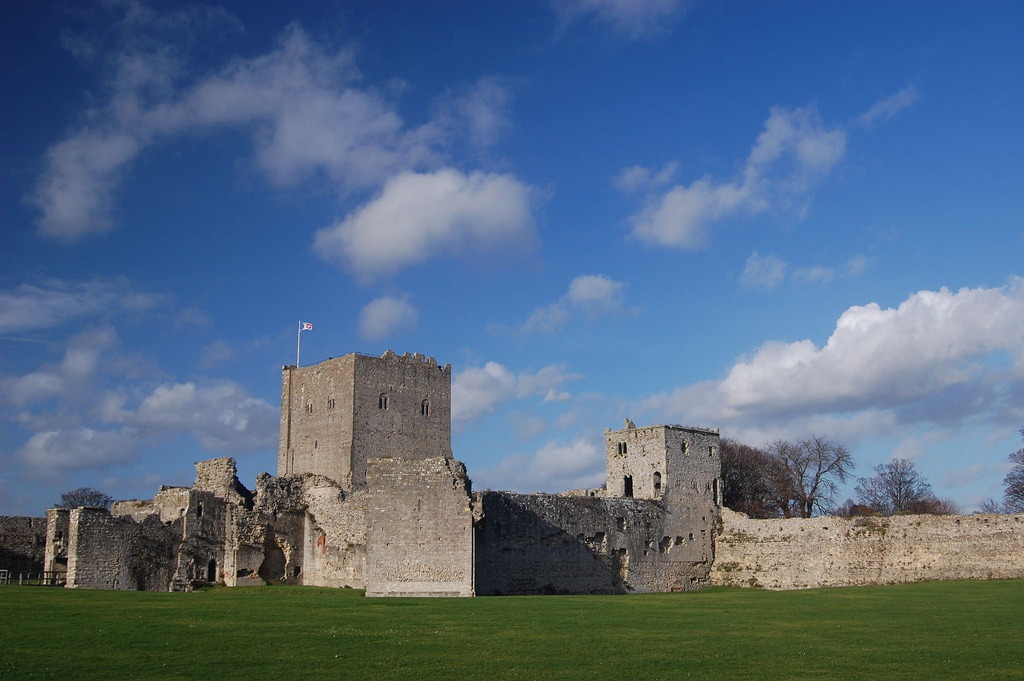
Warblington Castle's fortunes declined sharply during the English Civil War. The Cotton family were Royalists, and in 1644, Parliamentarian forces slighted the castle to prevent its use as a military stronghold. This deliberate damage led to the loss of much of the castle's structure, leaving only fragments such as the gatehouse turret intact.
Following the war, the castle was not restored to its former grandeur and gradually fell into ruin. Today, Warblington Castle stands as a partially preserved relic of Tudor manorial architecture, offering a glimpse into the region's layered history.
Current status and accessibility
Warblington Castle is situated on private farmland and is not open to public access. However, the remaining gatehouse turret is visible from nearby public roads, allowing visitors to appreciate its distinctive Tudor brickwork and octagonal design. The site is valued for its architectural and historical significance, representing the evolution of English manor houses from medieval fortifications to Renaissance residences.
Frequently asked questions (FAQ)
- How do I get to Warblington Castle?
- Warblington Castle is located in Havant, United Kingdom. It is easily accessible by car, with parking available nearby, and is also served by public transport, including local buses and the train station in Havant, which is just a short walk away.
- What is the historical significance of Warblington Castle?
- Warblington Castle dates back to the 13th century and is notable for its role in the defense of the region during various conflicts. It has been associated with several prominent historical figures and events, making it an important site for understanding local history.
- When was Warblington Castle built?
- Warblington Castle was originally built in the 13th century, around the year 1230. Over the centuries, it has undergone various modifications and restorations, reflecting the architectural styles and needs of different eras.
- Can I visit Warblington Castle?
- Yes, Warblington Castle is open to the public, and visitors can explore its grounds and view the remains of the structure. Guided tours may be available on certain days, providing deeper insights into its history and architecture.
- Why is Warblington Castle considered an important architectural site?
- Warblington Castle showcases medieval architectural styles and features that reflect the design principles of its time. Its ruins offer a glimpse into the construction techniques and defensive strategies used during the Middle Ages.
- Is it possible to host events at Warblington Castle?
- Yes, Warblington Castle offers options for hosting events, including weddings and private gatherings. However, it is advisable to contact the management directly for details regarding availability, capacity, and any specific requirements.
- What are the opening hours for Warblington Castle?
- Warblington Castle is typically open to visitors from 10 AM to 5 PM, but hours may vary depending on the season or special events. It’s best to check the official website or contact local tourism information for the most current opening times.
- What is the best time to visit Warblington Castle?
- The best time to visit Warblington Castle is during the spring and summer months when the weather is pleasant, and the gardens are in full bloom. Additionally, local events and guided tours are more frequent during this period, enhancing the visitor experience.
- Are there any nearby attractions to Warblington Castle?
- Yes, there are several nearby attractions, including the picturesque Hayling Island and the historic town of Havant. Visitors can also explore local parks and nature reserves, making for a great day out in the area.
- What are the ticket prices for visiting Warblington Castle?
- Admission to Warblington Castle is generally free, but there may be a fee for guided tours or special events. It’s advisable to check the official website for any updates on pricing or special offers before your visit.
Loading map...
Visitor reviews
No reviews yet. Been here? Write the first review and help other travelers!
Write the first reviewVisited this castle? Share your experience
Your review helps other travelers and adds first-hand knowledge to our encyclopedia.