Southsea Castle
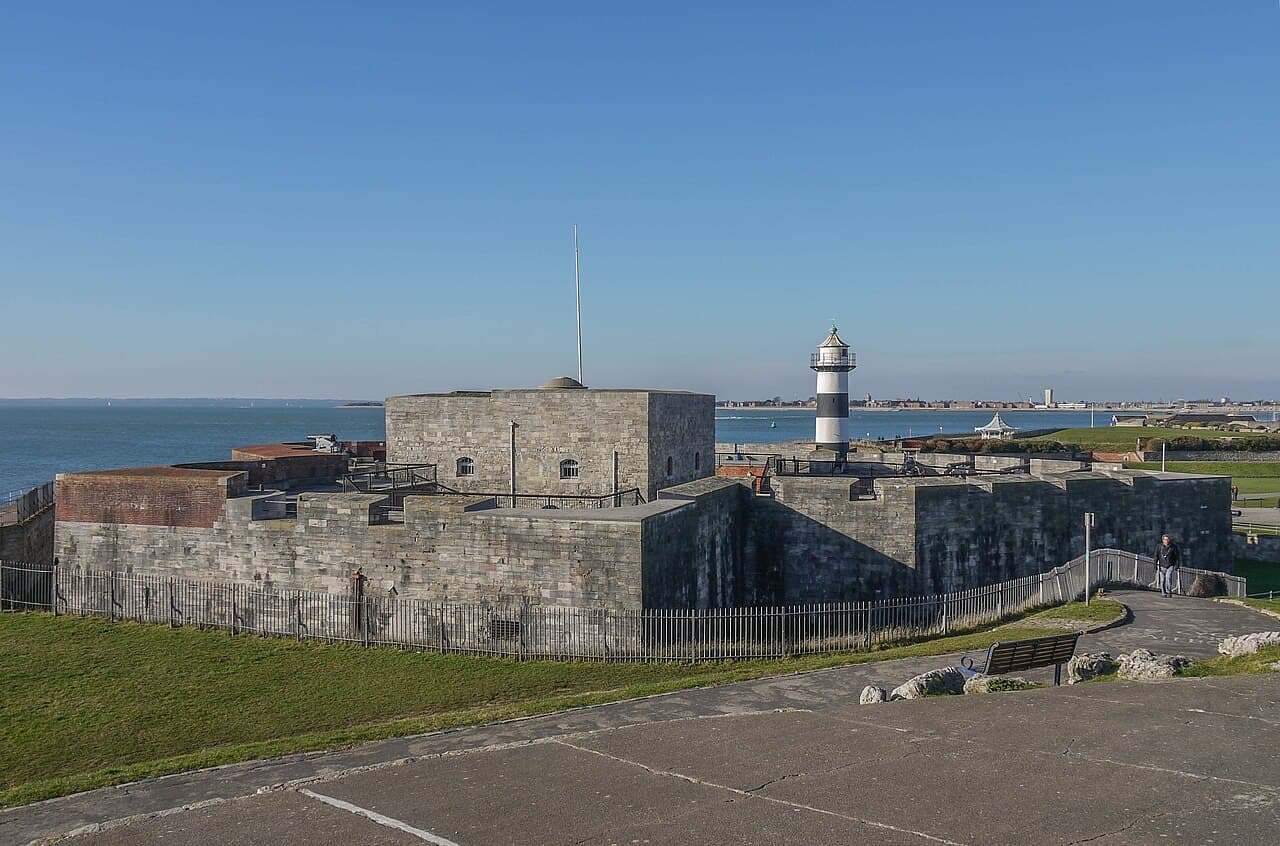
Southsea Castle, located on Portsea Island in Hampshire, England, is a prominent example of Renaissance military architecture in the United Kingdom. Originally constructed in 1544 under the orders of King Henry VIII, it was part of a strategic network known as the King's Device programme designed to protect England from potential invasions by France and the Holy Roman Empire. The castle’s location on the eastern approach to Portsmouth made it a critical defensive position guarding the Solent, a vital waterway leading to one of England’s most important naval ports.
Architectural design and early construction
The original design of Southsea Castle reflects the early adoption of the trace italienne style of fortification, a revolutionary approach to military architecture popular on the European continent during the Renaissance. The castle featured a square central keep, flanked by two rectangular gun platforms positioned to the east and west, and two angled bastions at the front and rear. This layout allowed for effective artillery defense, enabling cannon fire to cover all approaches and minimize blind spots.
The castle’s robust design was depicted in the famous Cowdray engraving of the Battle of the Solent in 1545, which shows King Henry VIII visiting the castle during the conflict. This engraving is an important historical record illustrating the castle’s strategic significance during the mid-16th century.
Historical military engagements and modifications
Southsea Castle played a defensive role during the English Civil War, notably in 1642 when it was stormed by Parliamentary forces. Despite suffering from several serious fires over the centuries, the castle remained operational and underwent significant expansions and upgrades to keep pace with evolving military technology and threats.
In the 1680s, the castle was expanded under the direction of Sir Bernard de Gomme, a notable military engineer of the period. These enhancements improved the fortifications to better resist artillery attacks and adapt to new warfare tactics.
Following a period of neglect in the 18th century, the castle was redesigned again in 1814 during the Napoleonic Wars. This redesign included modernizing the defenses to counter the threat posed by Napoleon’s forces.
19th-century expansions and Victorian-era upgrades
In the mid-19th century, Southsea Castle was briefly used as a military prison during the 1840s. Subsequently, additional gun batteries were constructed on the east and west sides during the 1850s and 1860s. These upgrades were part of a broader effort to strengthen coastal defenses amid fears of a renewed French invasion.
Throughout the 19th century, the castle’s defenses were continually enhanced, reflecting the changing nature of artillery and naval warfare. These improvements ensured Southsea Castle remained a key element in the defense of Portsmouth and the surrounding region.
20th-century military role and transition to heritage site
Southsea Castle continued to serve a defensive role into the 20th century, including during the First World War when it formed part of the coastal defense system protecting Portsmouth. However, the interwar years saw some of its fortifications decommissioned as military technology advanced and threats evolved.
During the Second World War, Southsea Castle was involved in Operation Grasp, the British seizure of French naval vessels in Portsmouth Harbour following the fall of France in 1940. This operation underscored the castle’s ongoing strategic importance even in the modern era.
By 1960, the castle had become obsolete as a military installation and was sold to Portsmouth City Council. It was subsequently restored to its pre-1850 appearance, preserving its historical architecture and making it accessible to the public as a tourist attraction. Visitor numbers have been strong, with over 90,000 recorded from 2011 to 2012.
Architectural features and visitor experience
Today, visitors to Southsea Castle can explore its well-preserved ramparts, gun platforms, and bastions, gaining insight into 16th-century fortification techniques and the evolution of coastal defenses. The castle’s location offers panoramic views of the Solent and Portsmouth Harbour, enhancing its appeal as a heritage site.
The castle’s museum exhibits provide detailed information about its history, military significance, and architectural development. Educational programs and reenactments also help bring the site’s rich past to life for visitors of all ages.
Frequently asked questions (FAQ)
- How do I get to Southsea Castle?
- Southsea Castle is located on Portsea Island in Portsmouth, Hampshire. It is accessible by car, public transport, and on foot from central Portsmouth.
- What is the best time to visit Southsea Castle?
- The castle is open year-round, but the best time to visit is during spring and summer when the weather is favorable for exploring the outdoor fortifications and enjoying views of the Solent.
- Can I explore the castle’s gun platforms and bastions?
- Yes, visitors can freely explore the castle’s gun platforms, bastions, and ramparts, which are well preserved and offer a hands-on experience of Renaissance military architecture.
- Is Southsea Castle wheelchair accessible?
- Due to its historic structure and terrain, Southsea Castle has limited wheelchair accessibility. Visitors with mobility concerns are advised to contact the site in advance for assistance and information.
- Are there guided tours available at Southsea Castle?
- Guided tours are offered seasonally and provide in-depth historical and architectural insights. Check the castle’s official website or visitor center for tour schedules.
Photo gallery

Information
Current owner
Portsmouth City Council
Loading map...
Visitor reviews
No reviews yet. Been here? Write the first review and help other travelers!
Write the first reviewVisited this castle? Share your experience
Your review helps other travelers and adds first-hand knowledge to our encyclopedia.