Warangal Fort
Warangal Fort is a significant historical bastioned fortress located in the Warangal District of Telangana, India. It served as the capital of the Kakatiya dynasty and later the Musunuri Nayakas. The fort complex dates back to at least the 12th century, marking it as a key medieval stronghold in South India.
Historical significance and background
Warangal Fort was the political and military center of the Kakatiya dynasty, which ruled large parts of present-day Telangana and Andhra Pradesh from the 12th to the 14th centuries. The fort's strategic location and formidable defenses made it a vital bastion against invasions. After the decline of the Kakatiyas, the fort was controlled by the Musunuri Nayakas, who played a role in regional resistance against the Delhi Sultanate.
Architectural features and layout
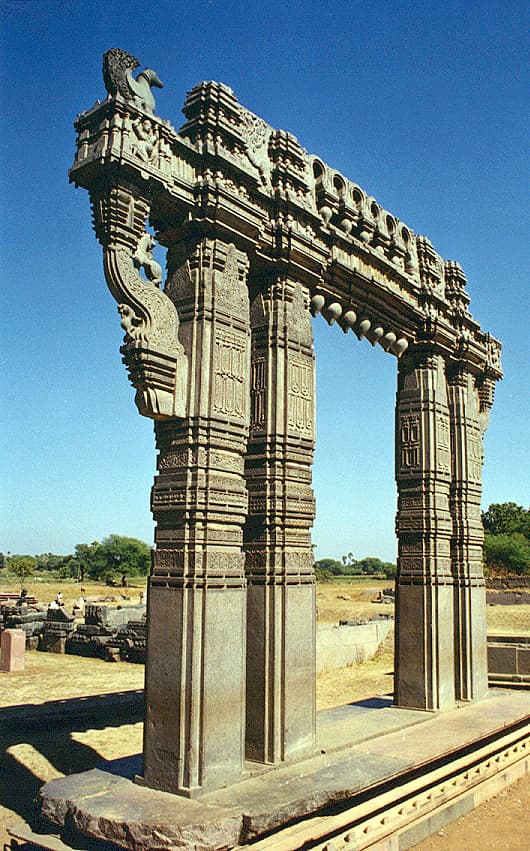
The fort is renowned for its impressive four monumental gates, locally known as the Kakatiya Kala Thoranam. These intricately carved stone arches are emblematic of Kakatiya architecture and originally served as entrances to a large Shiva temple complex that once stood within the fort. The gates feature elaborate sculptures and motifs characteristic of the period.
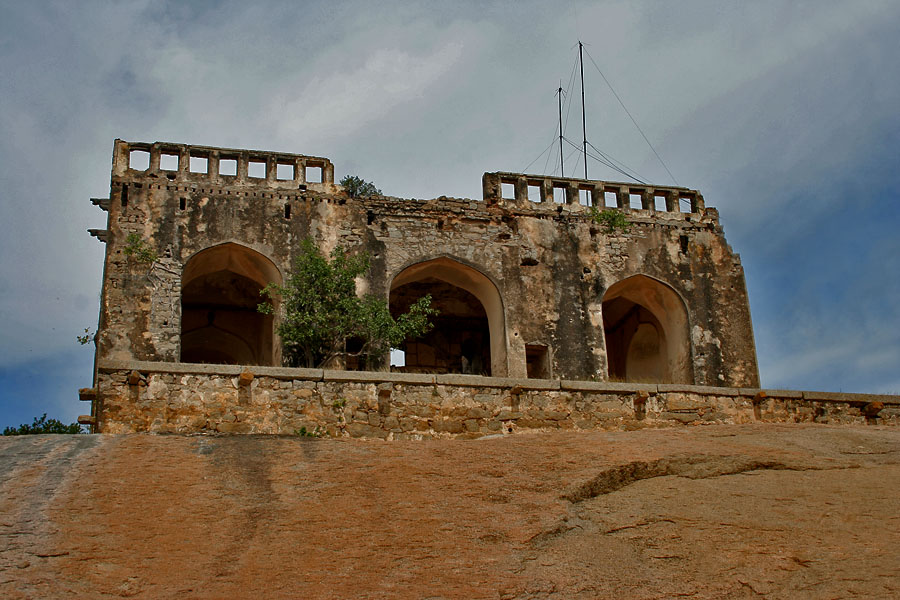
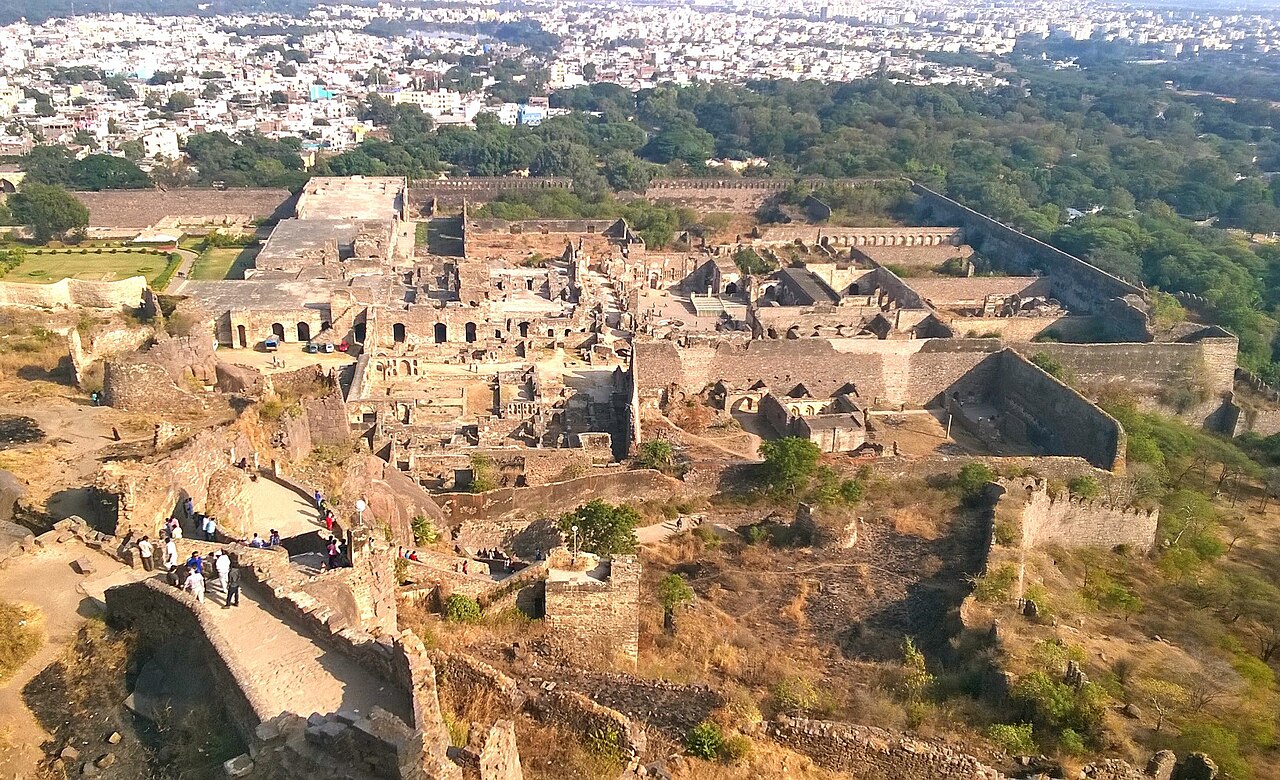
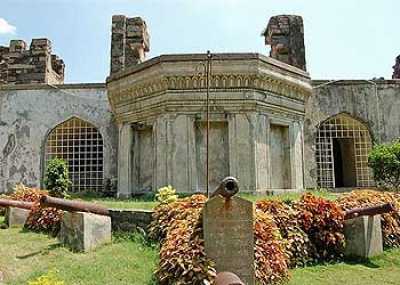
Warangal Fort is classified as a bastioned fortress, featuring robust defensive walls reinforced with bastions at intervals. The fortifications include massive stone ramparts and moats designed to withstand sieges. The central area, known as Orugallu Fort, was the core citadel and housed royal and administrative buildings.
Orugallu Fort and Shiva temple complex
The Orugallu Fort was the heart of the Warangal Fort complex. It was the site of the great Shiva temple, which, although now largely in ruins, was once a grand religious center. The fort's gates and many stone carvings are remnants of this temple's grandeur.
Cultural and symbolic importance
The Kakatiya Kala Thoranam gates have transcended their original architectural function to become a cultural symbol of Telangana. After the bifurcation of Andhra Pradesh, the arch was officially adopted into the emblem of Telangana, symbolizing the region's rich heritage and identity.
Warangal Fort is recognized for its cultural value and was included in the tentative list of UNESCO World Heritage Sites in 2010, highlighting its importance as a heritage monument worth preserving and studying.
Current condition and preservation
Today, Warangal Fort stands as a partially preserved monument. While much of the original temple complex is in ruins, the gates and fort walls remain prominent features. Conservation efforts have focused on maintaining the structural integrity of the gates and ramparts to protect this heritage site.
Visiting Warangal Fort
The fort is accessible to visitors year-round, offering a glimpse into the architectural ingenuity of the Kakatiya period. Tourists can explore the massive gates, the remains of the temple, and the fortifications. The site provides valuable insights into medieval Indian fort construction and regional history.
Frequently asked questions (FAQ)
- How do I get to Warangal Fort?
- Warangal Fort is located in Warangal, India, which is well-connected by road and rail. You can reach the fort easily by hiring a taxi or using public transport from nearby cities like Hyderabad, which is approximately 150 kilometers away.
- What is the historical significance of Warangal Fort?
- Warangal Fort is a UNESCO World Heritage Site known for its rich history, dating back to the 12th century when it served as the capital of the Kakatiya dynasty. The fort showcases the architectural brilliance of the era and is a testament to the region's historical and cultural heritage.
- When was Warangal Fort built?
- Warangal Fort was originally constructed in the 12th century, with significant expansions and renovations occurring over the following centuries. The fort's impressive structures, including the iconic entrance gate and temples, reflect the architectural style of the Kakatiya period.
- Can I explore the fort on my own?
- Yes, visitors can explore Warangal Fort independently, as there are no strict guided tours required. However, hiring a local guide can enhance your experience by providing in-depth historical insights and interesting stories about the fort's past.
- Why is the architecture of Warangal Fort unique?
- The architecture of Warangal Fort is unique due to its intricate carvings and the use of local granite, which showcases the craftsmanship of the Kakatiya dynasty. The fort features remarkable structures like the Thousand Pillar Temple and the beautiful Warangal Gate, which highlight the artistic and engineering techniques of the time.
- Is it possible to visit Warangal Fort year-round?
- Yes, Warangal Fort is open to visitors throughout the year. However, the best time to visit is between October and March, when the weather is cooler and more pleasant for exploring the fort and its surroundings.
- What are the ticket prices for visiting Warangal Fort?
- As of now, the entry fee for Warangal Fort is quite nominal, making it accessible for all visitors. There may be separate charges for photography and guided tours, so it's advisable to check the official site or local information before your visit.
- What are the opening hours of Warangal Fort?
- Warangal Fort is open to visitors from morning until evening, typically from 9 AM to 5 PM. It's recommended to arrive early to enjoy the fort and its scenic surroundings without the crowds.
- Are there any nearby attractions to visit?
- Yes, there are several nearby attractions to explore, including the Thousand Pillar Temple and the Warangal Lake. These sites complement a visit to Warangal Fort and provide a deeper insight into the region's history and culture.
Photo gallery

Photo by Skorthiw at English Wikipedia•Public domain
Information
Loading map...
Visitor reviews
No reviews yet. Been here? Write the first review and help other travelers!
Write the first reviewVisited this castle? Share your experience
Your review helps other travelers and adds first-hand knowledge to our encyclopedia.