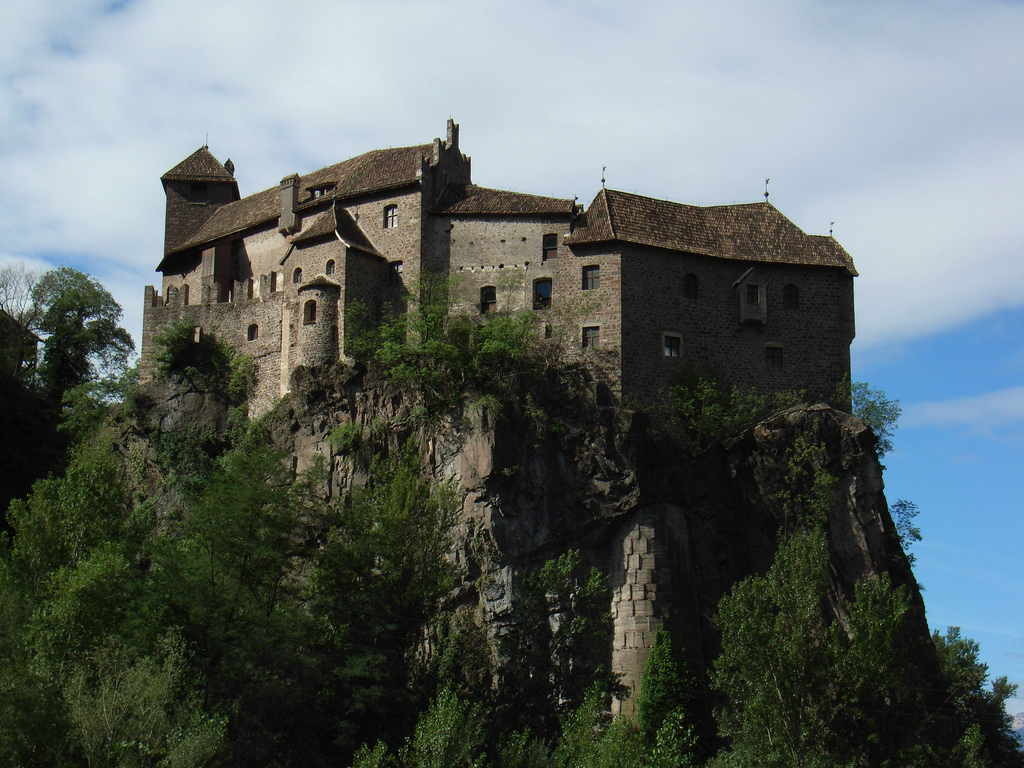
Wangen-Bellermont Castle

Wangen-Bellermont Castle in Bolzano, Italy
Bolzano, Italy
High Medieval (11th–13th c.)
Well Preserved

Wangen-Bellermont Castle, also known as Castel Vanga, is a significant high medieval fortress located near Bolzano, Italy. Constructed between 1209 and 1237 by the brothers Albero and Berchtold von Wangen, the castle occupies a relatively remote site, reflecting its strategic defensive purpose during the high medieval period. Its location provided control over the surrounding territory in the South Tyrol region, a key area during the Middle Ages.

Historical background and construction

The castle was initiated in 1209, with construction continuing over several decades until around 1237. The founders, the von Wangen brothers, were members of a noble family influential in the region. The castle's establishment corresponds with the period of territorial consolidation and feudal power struggles common in the 13th century. Its remote setting was typical for fortifications intended to guard important routes and assert dominance over local lands.

Restorations and ownership history

Wangen-Bellermont Castle underwent two major restorations, first in 1277 and later in the 18th century. The 1277 restoration likely addressed structural repairs and updates following medieval conflicts or natural decay. The 18th-century restoration would have adapted the castle to the needs or tastes of that era, possibly including modifications to living quarters or defensive features.

Throughout its history, the castle has remained privately owned and inhabited, which has contributed to its preservation. Unlike many medieval castles that fell into ruin, Wangen-Bellermont has retained its residential function, allowing continuous maintenance and care.

Architectural features and style

The castle exemplifies high medieval architecture typical of the South Tyrol region, with robust stone walls, defensive towers, and a compact layout designed for fortification. Its construction reflects the military and residential needs of the time, combining strong defensive elements with habitable spaces.

The castle's design includes thick curtain walls that would have provided protection against siege weaponry. Defensive towers positioned at strategic points enhanced its ability to monitor and defend the surrounding area. The layout likely features a central courtyard, living quarters, and service buildings arranged to maximize defense and functionality.

Location and strategic importance

Situated near Bolzano, the castle's remote location was chosen for its natural defensive advantages, such as elevation and difficult access routes. This positioning allowed control over nearby trade and military routes, important in the feudal power dynamics of medieval Tyrol.

Current condition and accessibility

Today, Wangen-Bellermont Castle is well preserved thanks to its continuous use and the restorations it has undergone. As a privately owned and inhabited property, it is not generally open to the public, which limits visitor access but helps maintain its condition.

The castle stands as a rare example of a medieval fortress that has retained its residential purpose into the modern era. Its preservation offers valuable insights into medieval construction techniques and noble life in the South Tyrol region.

Significance in regional heritage

Wangen-Bellermont Castle holds cultural and historical importance as part of the medieval heritage of South Tyrol. It represents the architectural and feudal history of the area and contributes to understanding the region's development during the Middle Ages.

The castle's enduring presence enriches the local landscape and serves as a tangible connection to the medieval past, complementing other historical sites in and around Bolzano.

Frequently asked questions (FAQ)

Is Wangen-Bellermont Castle open to the public for visits?
Wangen-Bellermont Castle is privately owned and inhabited, so it is generally not open to the public. Visitors can view the castle from the outside but access to the interior is restricted.
When was Wangen-Bellermont Castle originally built?
The castle was constructed between 1209 and 1237 by the brothers Albero and Berchtold von Wangen during the high medieval period.
What architectural style characterizes Wangen-Bellermont Castle?
The castle features high medieval Gothic architectural elements, including thick stone walls and defensive towers typical of hill castles in the region.
What restorations has Wangen-Bellermont Castle undergone?
The castle was restored twice, first in 1277 and later in the 18th century, which helped preserve its structure and adapt it for continued habitation.
Where is Wangen-Bellermont Castle located?
Wangen-Bellermont Castle is located near Bolzano in the South Tyrol region of northern Italy, positioned on a hill for strategic defense.

Information

Hill Castle

Current owner

Private owner

Loading map...

Visitor reviews

No reviews yet. Been here? Write the first review and help other travelers!

Write the first review

Visited this castle? Share your experience

Your review helps other travelers and adds first-hand knowledge to our encyclopedia.

Write a review

(5/5)

0/2000 characters

Your review will be visible after admin approval

Nearby castles

1.1 km

Rafenstein Castle

Bolzano, Italy

Rafenstein Castle, known locally as Castel or Burg Rafenstein, is a striking medieval ruin perched on a rocky hill northwest of the city of Bolzano in the South Tyrol province of the Trentino-Alto Adige region in northern Italy. This historic fortress stands at an elevation of 692 meters above sea level, overlooking the Talvera and Sarntal valleys, commanding strategic views that were vital for controlling trade routes between northern and southern Europe during the Middle Ages. Constructed in the early 13th century by Prince-Bishop Friedrich von Wangen of Trento, the castle was originally built to assert the bishopric's sovereignty over Bolzano and to monitor the important commercial road passing through the area. The initial medieval complex consisted of a great hall, a low donjon, and a circular defensive wall, reflecting typical high medieval fortification principles designed to balance residential comfort with military defense. Historical development and ownership The earliest documented mention of Rafenstein dates to 1217, identifying it as a fief under the Bishop of Trento, with a castellan named Albert von Rafenstein overseeing the castle's operations. Throughout the 13th century, ownership shifted among several noble families, including Berthold Schwab von Bozen and Morandin von Bozen, before coming under the control of the brothers Friedrich and Beral von Wangen. In 1277, the castle was nearly destroyed during a siege by Meinhard II, Count of Tyrol, amid regional power struggles. This event marked a significant turning point, as the castle was subsequently rebuilt and expanded in the 14th century by Konrad Schinlein. Restoration efforts focused on the palas (main residential building) and the ring wall, reinforcing the castle's defensive capabilities. Ownership continued to change hands through the 14th and 15th centuries, passing to Francisk von Auer (ennobled as von Rafenstain), the Goldecker family, and later the Weineck family. Around 1500, the Gerstel family took possession and undertook extensive renovations and expansions that lasted until 1544, enhancing both the castle's living quarters and fortifications. In the latter half of the 16th century, the castle saw further ownership transitions, including Daniel von Spaur in 1563, Franz Wettin in 1585, and finally the Wolkenstein family in 1599. Under the Wolkensteins, Rafenstein underwent significant modernization to adapt to evolving military technology, including the addition of a chapel near the main tower and strengthening of bastions. Marx Sittich von Wolkenstein, a notable owner in the early 17th century, resided at Rafenstein and contributed to its cultural heritage by compiling a detailed regional description and establishing a cabinet of curiosities featuring exotic artifacts such as a Nile crocodile skeleton. Despite these enhancements, the castle was abandoned by 1620, and its importance declined over the following centuries. Architectural features and renovations Original medieval structures The castle's earliest structures featured thick, whitewashed stone walls two to three meters thick, typical of high medieval fortifications. The palas, located in the southeast corner, served as the main residence and administrative center. It was surrounded by a defensive ring wall that enclosed the inner courtyard and was anchored by a tower to the north, providing a strong defensive perimeter. 14th-century additions During the 14th century, the castle was expanded to include an outer ward known as a zwinger, designed to trap attackers between defensive walls. A gate tower and a southern wing were added, improving both the defensive and domestic capabilities of the complex. These enhancements reflected the castle's ongoing military significance during the late medieval period. 16th-century transformations The most significant architectural evolution occurred in the 16th century when the castle was transformed into a late Gothic fortress. The ring walls between the palas and the northern tower were converted into two-story buildings, and an additional two-story structure was built along the northern wall between the tower and entrance gate. A new outer ring wall was constructed, featuring four round bastions designed to deflect artillery fire, and a Renaissance-style gate tower was introduced. The main tower was heightened in the early 1600s, with enlarged windows that shifted the structure's focus from purely military defense to greater residential comfort and light. The southern wing was also enhanced with the addition of a chapel, reflecting the castle's dual role as a fortress and noble residence. Decline, damage, and archaeological discoveries Despite its robust construction and strategic location, Rafenstein Castle suffered significant damage during the Napoleonic Wars. In 1797, French artillery bombardment severely damaged the northeast corner, which remains in ruins today, contributing to the castle's romantic silhouette as a partially preserved ruin. Following this damage, the castle was gradually abandoned throughout the 19th century. It fell into disrepair until the late 19th century when it was donated to the city of Bolzano in 1893. Archaeological excavations conducted between 2008 and 2014 uncovered important structural and decorative elements, including medieval kitchens, whitewashed wall surfaces, and Renaissance marble friezes and columns. Excavations also revealed the skeleton of a French soldier in the northeast ruins, corroborating historical accounts of the 1797 siege. These findings have enriched understanding of the castle's military history and domestic life. Current condition and visitor information Today, Rafenstein Castle stands as a romantic hill castle ruin that has undergone extensive stabilization and partial restoration. While the site is now accessible to the public, visits are supervised due to the delicate condition of the ruins and the steep, narrow access roads. The castle features a small museum within the gate tower that displays artifacts discovered during archaeological work, including uniform buttons and a detailed model of the castle as it appeared in the late medieval period. Nearby, the "Schloss Rafenstein" restaurant offers visitors traditional South Tyrolean cuisine, enhancing the cultural experience of the site. Access to the castle is possible via a steep, winding road from Bolzano or a gentler path from the nearby town of Jenesien. The site remains a popular destination for those interested in medieval history, architecture, and stunning panoramic views of the surrounding Alpine landscape.

High Medieval (11th–13th c.)
Details
1.4 km

Ried Castle

Bolzano, Italy

Ried Castle stands as a modest yet historically significant hill castle located near Bolzano in the South Tyrol region of Italy. Constructed around 1200, this high medieval fortress was strategically positioned at the entrance to the Sarntal valley, serving both defensive and administrative roles throughout its long history. Despite its relatively small size, the castle's architectural evolution and historical associations reflect the complex political and social dynamics of the Tyrolean region during the Middle Ages and beyond. Early history and construction The origins of Ried Castle trace back to the early 13th century, with the earliest documentary evidence dating to 1225, mentioning a ministerial named Heinrich de Riade. The castle was initially built as a fortified stronghold to control access to the Sarntal valley, a vital route in the region. Around 1250, significant expansions were undertaken, including the addition of residential buildings, a fortified outer enclosure known as a zwinger, and a chapel, which underscored the castle's growing importance as a local seat of power. Architectural features from the 13th century The 13th-century expansions introduced key architectural elements that define the castle's layout today. The residential quarters provided living spaces for the noble occupants and their retinue. The zwinger served as an outer ward between the main curtain walls and an additional defensive wall, designed to trap and expose attackers, enhancing the castle's defenses. The chapel within the complex catered to the spiritual needs of the inhabitants, reflecting the integral role of religion in medieval noble life. Ownership and political significance By the late 13th century, Ried Castle was owned by the von Wangen family, a noble lineage influential in the region. In 1307, the castle was sold to the wife of Duke Otto of Carinthia-Tyrol, marking its integration into the broader Tyrolean ducal holdings. Subsequently, the fortress functioned as a regional administrative center under the Tyrolean-Habsburg rule, with officials such as Lenhart Ortwegker managing the estate in the 15th century. The castle as a customs post and noble residence At the dawn of the 16th century, Emperor Maximilian I repurposed the castle as a customs post along the newly established road through the Sarntal valley. Ownership transferred to the Liechtenstein family by 1509, and later to Christoph Khuepacher in 1549, an imperial secretary to Emperor Maximilian II. Khuepacher was ennobled with the right to append "von und zu Ried" to his name and granted an enhanced coat of arms. His descendants rose to the rank of Freiherren (barons) von Kuepach zu Ried. Refuge for a displaced ruler In the late 16th century, the castle provided refuge to Petre Şchiopul, the last voivode (prince) of Wallachia, who fled advancing Ottoman forces. Şchiopul died while in sanctuary at Ried Castle and was buried in the Franciscan church in Bolzano. Remarkably, throughout its history, the castle was never captured by force, highlighting its defensive effectiveness. 19th and 20th-century restoration and cultural context During the 19th century, the Freiherren von Ingram family acquired the castle and undertook restoration efforts that enhanced its medieval character. These restorations aimed to preserve the structure's historical essence while accentuating its castle-like appearance. In the early 20th century, under the Fascist regime's campaign to Italianize Germanic place names, the castle was renamed Castel Novale by Ettore Tolomei. Historical events in the 20th century Ried Castle was designated as the intended endpoint for the 1921 Bolzano fair procession. However, the march was halted due to violent confrontations known as the Bozen Bloody Sunday, a significant event in the region's turbulent history during the post-World War I period. Architectural layout and current condition Set within a small basin at the entrance to the Sarntal valley, Ried Castle occupies a strategic position. Historically, the Talfer river flowed along the castle's right bank, effectively surrounding it with water and classifying it as a water castle. Today, the river lies approximately twenty meters away due to natural course changes. Defensive structures and residential elements The castle's defensive system includes the curtain walls, the zwinger outer ward, and the original moat area. The residential quarters remain a central feature, illustrating the dual military and domestic functions of the fortress. The chapel within the complex continues to be a notable architectural and historical element. Restoration impact and preservation Restoration work by the Freiherren von Ingram in the 19th century contributed significantly to the castle's well-preserved state. These efforts enhanced the medieval character without compromising the authenticity of the structure. The castle retains its original coat of arms motif, featuring a black rooster on a golden background, symbolizing the identity of its early lords. Access and ownership today Currently, Ried Castle is privately owned and not open to the public. Its preservation as a largely intact medieval fortress offers valuable insight into the region's history and medieval architecture, even though direct visitation is restricted. The castle remains an important cultural landmark within the South Tyrol area.

High Medieval (11th–13th c.)
Details
1.8 km
Runkelstein Castle — Italy castle

Runkelstein Castle

Bolzano, Italy

Runkelstein Castle, also known as Castel Roncolo, is a remarkable medieval fortress perched on a rocky spur overlooking the city of Bolzano in the Trentino-Alto Adige region of Italy. Constructed in 1237 by the brothers Friedrich and Beral von Wangen, the castle stands as a testament to the turbulent history and rich cultural heritage of the region during the High Medieval period. Its strategic location provided both defensive advantages and control over the surrounding territory, making it a significant stronghold in the area. Throughout its history, Runkelstein Castle underwent multiple phases of construction, expansion, and restoration, reflecting the changing needs and tastes of its various owners. The castle is particularly renowned for its exceptional collection of secular frescoes, which are among the most important and well-preserved examples of medieval mural art in Europe. These frescoes depict a variety of themes, including courtly life, chivalric romance, and legendary tales such as the story of Tristan and Isolde and the Arthurian Round Table. Early history and original construction The origins of Runkelstein Castle date back to the early 13th century when Alderich, Prince-Bishop of Trent, granted permission to the von Wangen brothers to build a fortress on the rocky outcrop known as Runchenstayn. The initial structure was designed primarily as a defensive stronghold, featuring typical medieval fortification elements such as thick stone walls, a keep, and battlements. The castle's Romanesque architectural elements from this period are still visible in parts of the surviving structure. In 1274, the castle suffered damage during a siege led by Meinhard II of Tirol amid his conflict with Heinrich, Prince-Bishop of Trent. After his victory, Meinhard II entrusted the castle to Gottschalk Knoger of Bozen, marking a shift in control that would influence the castle's subsequent development. The vintler family and the flourishing of fresco art In the late 14th century, the castle entered a new phase under the ownership of the wealthy Vintler brothers, Niklaus and Franz, prominent merchants from Bolzano. Their acquisition of Runkelstein Castle in 1385 was unusual for merchants at the time, as castles were typically the domain of nobility. This purchase reflected their rising social status and influence, particularly Niklaus, who served as a counselor and financier to Leopold III, Duke of Austria. The Vintler brothers undertook extensive renovations and expansions, including the construction of a new defensive wall, a moat, and additional chambers. Most notably, in 1390, they commissioned the building of the "Casa d'Estate" (Summer House), which became the centerpiece for the castle's famous frescoes. These murals, painted both inside and on the exterior walls, depict a rich tapestry of secular themes, including the romantic legend of Tristan and Isolde by Gottfried von Straßburg and one of the earliest surviving depictions of the Arthurian Round Table. These frescoes are exceptional for their vivid colors, detailed narrative scenes, and insight into medieval courtly culture. Architectural features added by the vintlers A new defensive wall and moat enhanced the castle's fortifications. A cistern was installed to ensure a reliable water supply during sieges. The Summer House featured spacious halls adorned with frescoes, serving as a residence and a symbol of the Vintlers' wealth and taste. Additional rooms and chambers were constructed to improve the castle's habitability and status. Conflicts and ownership changes in the 15th and 16th centuries The early 15th century brought political turmoil to Runkelstein Castle. In 1407, a conflict erupted between Frederick IV, Duke of Austria, and the Tyrolean nobility, including the Vintler family. The castle was besieged during these hostilities. Niklaus Vintler, allied with the noble faction known as the Hawk League, suffered significant losses, including his wealth and possessions. His brother Franz, who sided with the Duke, retained ownership of the castle until it eventually passed to Sigismund, Archduke of Austria. Under the Habsburgs, the castle saw further renovations ordered by Emperor Maximilian I, who valued the fortress for its strategic and symbolic importance. Maximilian furnished his apartments and commissioned restoration of the frescoes, also prominently displaying his coat of arms throughout the castle. Around 1500, the castle was granted to his vassal Georg von Frundsberg, with a vicar appointed to manage its upkeep. In 1520, a catastrophic explosion of the powder magazine in the tower caused significant damage to the outer walls, entrance, and the Eastern Palace, destroying the tower itself. This event marked the beginning of the castle's decline, as it was neglected in the following decades. Later history, decline, and romantic rediscovery Following the explosion and subsequent neglect, Runkelstein Castle changed hands several times. In 1530, it was bestowed by King Ferdinand I to Sigmund von Brandis, Knight Commander of Bozen. Later, the castle returned to the control of the Prince-Bishops of Trent, who granted it as a fief to the Counts of Lichtenstein-Kastelkorn. A fire in 1672 destroyed the Eastern Palace, which was never rebuilt, further contributing to the castle's ruinous state. By the 18th century, the castle was in grave decay. However, during the 19th century Romanticism movement, Runkelstein Castle was rediscovered and celebrated as a symbol of medieval chivalry and art. German writer Johann Joseph von Görres was among the first to visit, inspiring a wave of artists and intellectuals, including those connected to King Ludwig I of Bavaria. The castle's fortunes improved when Johann Salvator Archduke of Austria purchased it in 1880 and gifted it to Emperor Franz Josef in 1882. The emperor commissioned the renowned architect Friedrich von Schmidt to undertake a comprehensive restoration, which included careful preservation of the frescoes. In 1893, the castle was donated to the city of Bolzano, ensuring its protection and public accessibility. Architectural highlights and frescoes Runkelstein Castle is distinguished by its blend of Romanesque and Gothic architectural elements. The castle complex includes defensive walls, a moat, a cistern, various residential buildings, and the famous Summer House, which serves as a gallery for the frescoes. The frescoes are the castle's defining feature. They are unique for their secular themes, which contrast with the predominantly religious art of the period. Scenes depict courtly love, chivalric adventures, and legendary narratives, providing invaluable insight into medieval culture and values. The depiction of the Arthurian Round Table is particularly significant as one of the earliest visual representations of this iconic legend. Preservation and current status Today, Runkelstein Castle is well preserved thanks to multiple restoration campaigns, most recently in the late 1990s. It functions as a cultural monument and museum, attracting visitors interested in medieval history, art, and architecture. The castle's frescoes remain a highlight for scholars and tourists alike, celebrated for their artistic quality and historical importance. Visitors can explore the castle's courtyards, halls, and towers, gaining a vivid sense of medieval life and the artistic achievements of the period. The site also hosts exhibitions and cultural events, further enriching its role as a vibrant heritage landmark in the heart of Bolzano.

High Medieval (11th–13th c.)
Details