Walmer Castle
Walmer Castle is a significant historic fortress located near the Kentish seaside town of Walmer, England. Constructed between 1539 and 1540 under the orders of King Henry VIII, it was part of the strategic Device programme designed to protect the English coast from the threat of invasion by France and the Holy Roman Empire during the post-medieval Tudor period. This artillery fort was built to defend the vital Downs anchorage off the Kent coast, an important naval area for controlling English waters.
Origins and military purpose
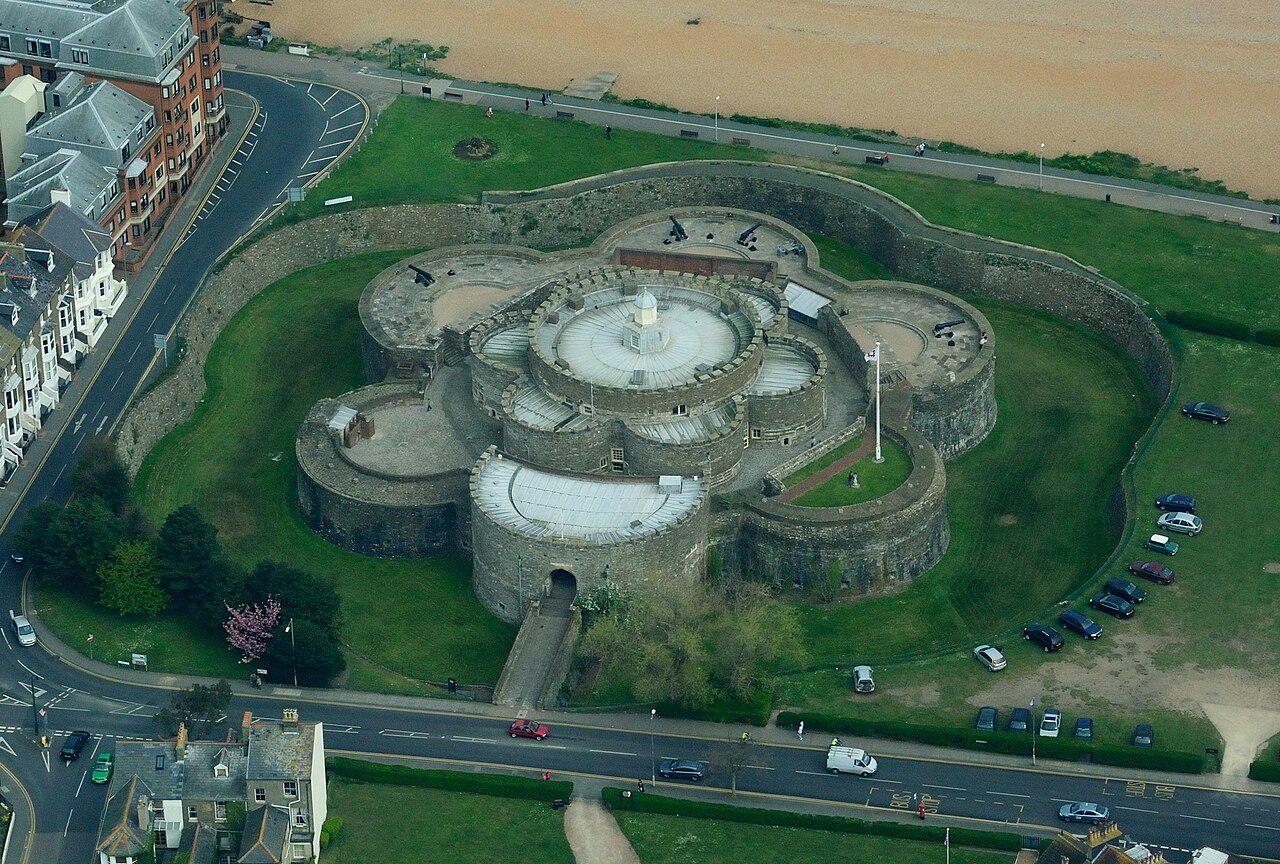
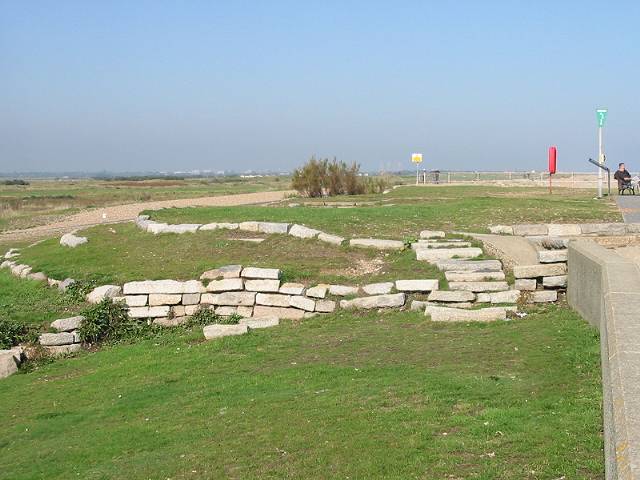
The castle was one of a series of fortifications known as Device Forts or Henrician castles, constructed along the southern coast of England between 1539 and 1547. These forts represented a new approach to coastal defense, emphasizing artillery placement and low-profile fortifications designed to withstand cannon fire. Walmer Castle was built alongside Deal Castle and the now lost Sandown Castle to form a defensive network guarding the Downs anchorage.
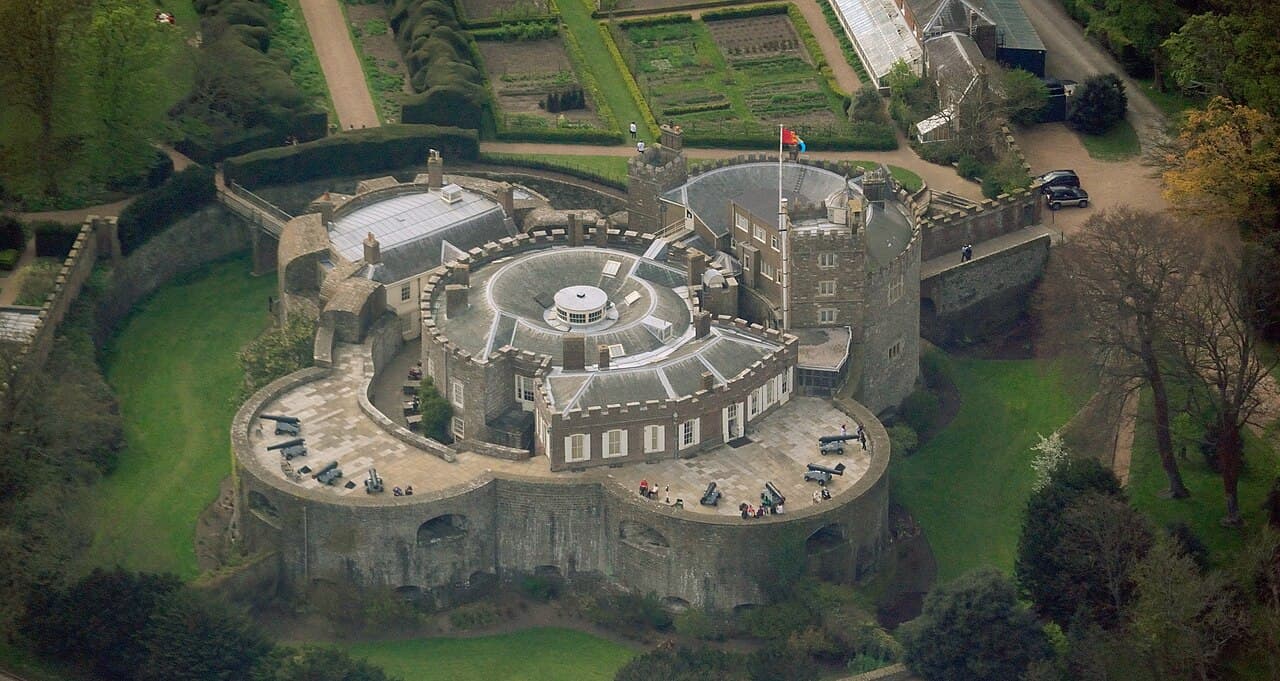
Walmer is characterized by its roughly square plan, measuring approximately 167 feet (51 meters) on each side, with a central circular keep about 83 feet (25 meters) across. The keep is surrounded by four circular bastions, one of which serves as the main gatehouse. The castle was originally moated, enclosed by thick curtain walls up to 15 feet (4.6 meters) thick, reflecting its defensive design.
The fort was designed primarily for artillery defense, featuring three levels of gun positions. The upper floors contained 39 embrasures for cannon, while the basement had 31 gun loops for handheld firearms such as muskets and arquebuses. The embrasures were widely splayed to allow a broad field of fire, and the interior included smoke vents to facilitate effective artillery use. Some bastions were reinforced by filling in to create solid platforms for heavy guns, notably the north and east bastions.
Role during the English Civil War and later military use
During the Second English Civil War in 1648, Walmer Castle was seized by Royalist insurgents, who held the fortress for several months before it was retaken by Parliamentary forces. This siege caused significant damage, necessitating repairs and maintenance. The castle continued to serve military purposes during the Dutch Wars in the mid-17th century, protecting shipping and maintaining coastal security.
By the late 17th century, advances in military technology and changes in warfare rendered Walmer and its sister castles obsolete as defensive structures. In 1708, the castle was transformed into the official residence of the Lord Warden of the Cinque Ports, a prestigious position overseeing key port towns along England's southeastern coast.
Transformation into a residence and political significance
Throughout the 18th and 19th centuries, Walmer Castle underwent extensive modifications to convert it from a military fortress into a stately home. Notable Lords Warden such as the Duke of Dorset, William Pitt the Younger, the Duke of Wellington, and Lord Granville adapted the castle to suit residential needs, adding living accommodations, gardens, and modern comforts.
William Pitt the Younger, appointed Lord Warden in 1792, expanded the castle's grounds by leasing adjacent land and improved the estate's landscaping. His niece, Lady Hester Stanhope, lived at Walmer from 1803 until 1806 and contributed to garden enhancements. The Duke of Wellington regularly stayed at the castle during his tenure as Lord Warden from 1829 to 1853, even lending it to Queen Victoria and Prince Albert for a month in 1842.
The last major alterations were commissioned by the second Earl Granville, Lord Warden from 1865 to 1891, who engaged architect George Devey to extend the accommodation and restore earlier garden works. The castle's transition from fortress to residence reflects broader shifts in British coastal defense and aristocratic life.
Architecture and interior features
Walmer Castle's architecture is distinctive for its circular keep and four semicircular bastions, designed to maximize artillery coverage. The castle's walls are remarkably thick, built to withstand cannon fire, with embrasures and gun loops arranged for overlapping fields of fire. The moat, once a defensive feature, has been drained and landscaped into gardens.
The interior spaces have been adapted over centuries. The central keep now serves as a tea room for visitors. The southern bastion contains several notable rooms, including the Hall Room, the Sackville and Willingdon Rooms—which house a museum dedicated to William Pitt the Younger—and the Lucas Room, featuring mid-19th-century décor and memorabilia related to the Duke of Wellington.
The upper floors contain private apartments used by successive Lords Warden, including the Duke of Wellington's Room and chambers favored by Pitt for their warmth. A corridor built by Pitt connects the north and south sections through the keep, facilitating internal movement.
Some rooms date from the 1730s, such as the Dining Room, Drawing Room, and Ante Room, which feature distinctive pink and purple window glass. These colored panes, originally thought to protect eyesight, likely served as status symbols and decorative elements.
Gardens and grounds
Walmer Castle is set within approximately 32 acres (13 hectares) of gardens and parkland. The grounds include formal gardens, park areas, and woodland features. The soil's chalk base creates a maritime microclimate conducive to diverse plantings.
Key garden features include the Queen Mother's Garden, designed in 1997 by Penelope Hobhouse to commemorate Queen Elizabeth the Queen Mother's 95th birthday. This garden features a 92-foot (28 meter) long pool, a viewing mound, and a classical pavilion.
Other garden elements include restored glasshouses used as cold greenhouses, the Broadwalk—a 262-foot (80 meter) yew-lined path known as the "Cloud Hedge"—and the Oval Lawn, planted with lime and yew trees. Italianate terraces by landscape gardener William Masters provide formal structure, while a paddock with Holm oaks and a woodland hollow called the Glen add varied natural spaces.
The approach to the castle through Castle Meadow, bordered by Holm oaks planted in the 1860s, enhances the site's historic and natural ambiance.
Current status and visitor information
Today, Walmer Castle is managed by English Heritage and functions as a popular tourist attraction. Visitors can explore the castle's historic interiors, gardens, and exhibitions showcasing its rich military and residential history. The castle offers a unique glimpse into Tudor coastal defense, the English Civil War, and the lives of prominent political figures who made it their home.
Walmer Castle is open to the public for a fee, providing educational and cultural experiences in a well-preserved historic setting. It is often visited alongside nearby Deal Castle, offering a comprehensive view of Tudor artillery fortifications along the Kent coast.
Frequently asked questions (FAQ)
- When was Walmer Castle built and for what purpose?
- Walmer Castle was built between 1539 and 1540 by King Henry VIII as part of the Device programme to defend the English coast against invasion threats from France and the Holy Roman Empire.
- What architectural features make Walmer Castle unique?
- Walmer Castle features a circular keep surrounded by four semicircular bastions, thick curtain walls, and multiple artillery embrasures designed for overlapping fields of fire, reflecting its role as an artillery fort.
- Who were some notable residents of Walmer Castle?
- Notable residents include William Pitt the Younger, the Duke of Wellington, and Lord Granville, all of whom served as Lords Warden of the Cinque Ports and adapted the castle as a residence.
- Can visitors explore the gardens at Walmer Castle?
- Yes, visitors can explore extensive gardens including the Queen Mother's Garden designed by Penelope Hobhouse, Italianate terraces, and woodland areas within the 32-acre grounds.
- Is Walmer Castle still a military site?
- No, Walmer Castle was decommissioned as a military fortification in 1904 and is now managed by English Heritage as a historic site and tourist attraction.
Photo gallery

Information
Opening hours
10:00-17:00, daily
Ticket prices
£12 adult, £6 child
Current owner
English Heritage
Website
Visit websiteAddress
Kingsdown Rd, Walmer, Kent, United Kingdom
Sources & official resources
Verify the information above using these authoritative references.
Loading map...
Visitor reviews
No reviews yet. Been here? Write the first review and help other travelers!
Write the first reviewVisited this castle? Share your experience
Your review helps other travelers and adds first-hand knowledge to our encyclopedia.