Deal Castle
Deal Castle is a remarkable example of a 16th-century Henrician artillery fortification located in the coastal town of Deal, Kent, England. Constructed between 1539 and 1540 under the orders of King Henry VIII, it was part of a strategic defensive network known as the King's Device programme, designed to protect England from the threat of invasion by France and the Holy Roman Empire. This network included a chain of coastal forts, often referred to as the Device Forts or Henrician castles, built along vulnerable points of the English coastline.
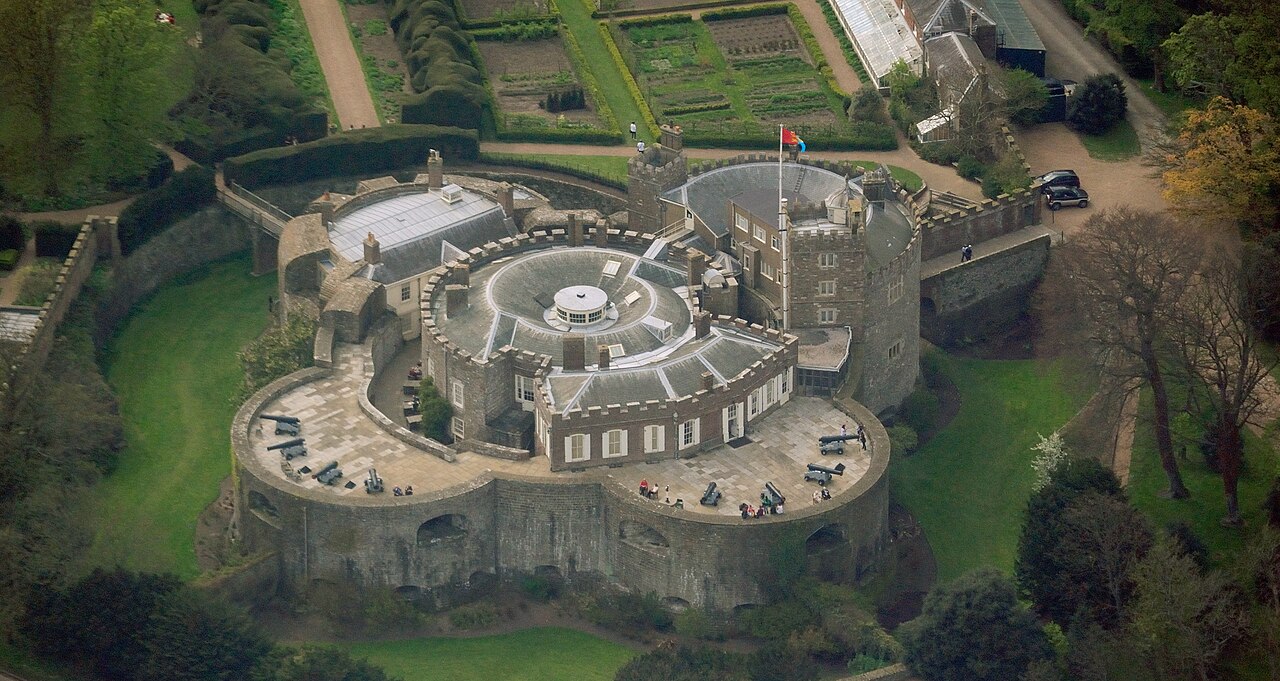
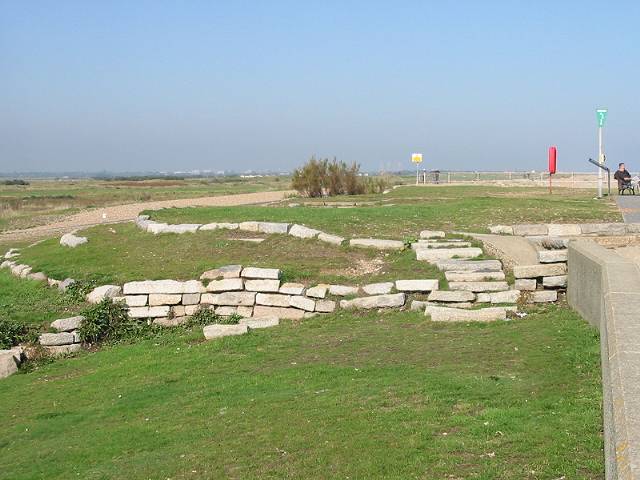
The castle was strategically positioned to guard the Downs anchorage, an important sheltered area off the Kent coast used by the English navy and merchant vessels. Together with Walmer Castle to the south and the now-lost Sandown Castle to the north, Deal formed a critical defensive triangle securing this maritime zone. Its location near the beachfront allowed it to control naval traffic and deter hostile fleets.
Historical context and construction
The impetus for Deal Castle's construction arose from Henry VIII's break with the Catholic Church in 1533 and the subsequent political fallout, including alliances formed against England by France and Spain. In response to this imminent threat of invasion, Henry VIII initiated a comprehensive coastal defense strategy in 1539, commissioning the building of 17 forts along the English coast. The construction of Deal Castle was financed in part by the dissolution of monasteries, which provided both funds and building materials such as Kentish ragstone, Caen stone, and timber.
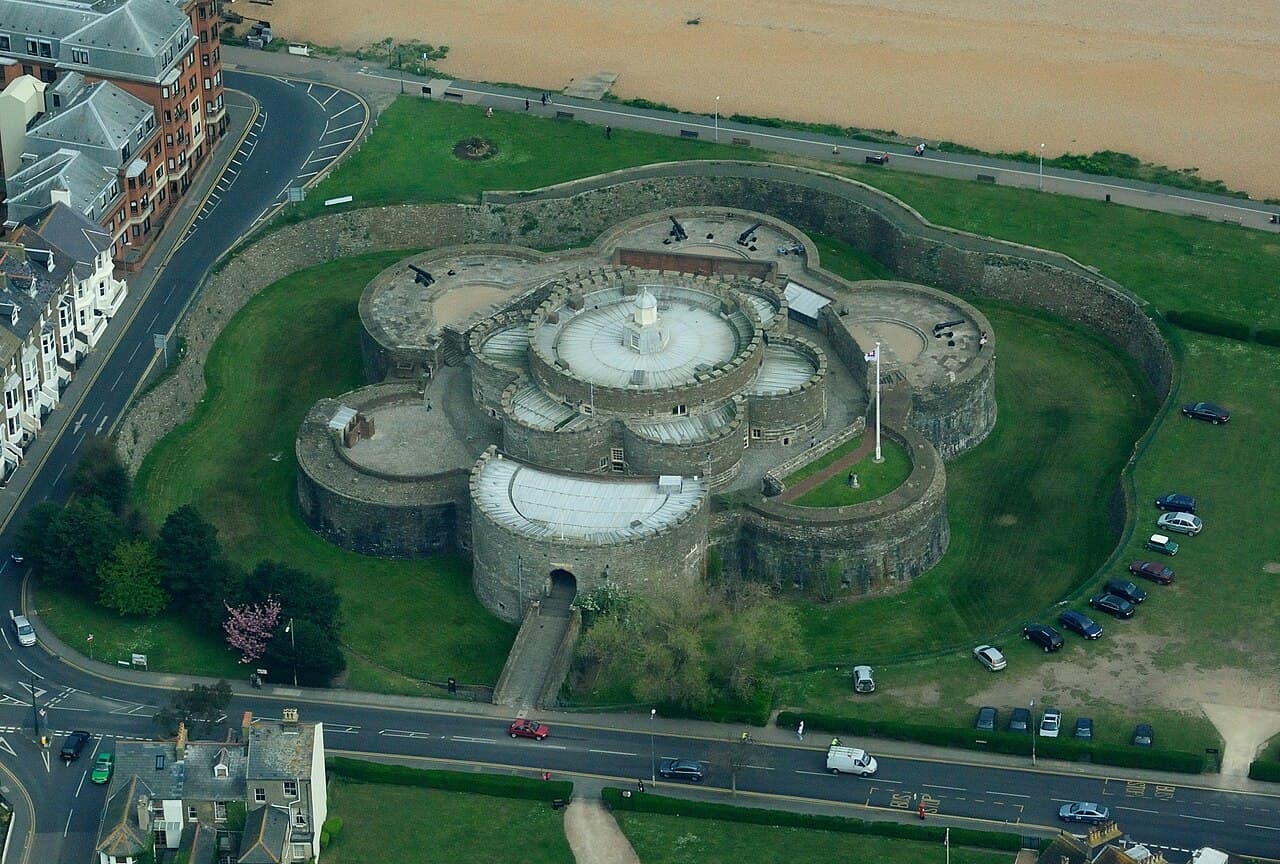
Deal Castle's design reflects the transitional military architectural style of the Renaissance period, blending traditional medieval defensive features with innovations suited to artillery warfare. The castle features a distinctive circular keep approximately 86 feet (26 meters) in diameter, surrounded by two concentric rings of six semi-circular bastions each. This unique layout provided a total of 66 firing positions for artillery, making it one of the most heavily armed forts of its time. The bastions and walls were constructed with thick stone and brickwork, designed to absorb and deflect cannon fire.
Architectural features and layout
Deal Castle occupies roughly 0.85 acres (0.34 hectares) with dimensions of about 234 by 216 feet (71 by 66 meters). The structure is surrounded by a dry moat approximately 20 meters (66 feet) wide and 5 meters (16 feet) deep, lined with stone and originally crossed by a stone causeway and drawbridge. Today, a wooden bridge replaces the drawbridge, but the original lifting mechanisms remain visible.
The castle's defensive design includes an inner circular keep encircled by six inner bastions and an outer ring of six outer bastions, all semi-circular in shape. The western bastion served as the gatehouse, featuring original iron-studded wooden doors, five murder-holes for dropping projectiles on attackers, and a portcullis for added security.
The walls are constructed from a combination of locally sourced Kentish ragstone, bricks, and repurposed Caen stone from dissolved monasteries. The bastion walls are notably thick, measuring about 15 feet (4.6 meters), to withstand artillery bombardment. The castle was designed with four levels of artillery positions, including 66 embrasures for heavy guns on the upper floors and 53 gunloops in the basement for handguns to defend the base of the walls.
Ventilation was a critical feature, with the interior designed to clear smoke from the firing of artillery. The gatehouse and bastions provided comprehensive coverage of the surrounding moat and approaches. A passage known as "the Rounds" runs along the outside of the outer bastions, linking handgun positions that cover the moat's base.
Interior spaces and modifications
Inside the keep, a central spiral staircase connects the basement, ground floor, and first floor. The ground floor was divided by radial walls to house the garrison and includes original ovens and a fireplace. The first floor served as the captain's quarters, largely remodeled in the 1720s but retaining some Tudor-era features. Atop the keep sits a wooden lantern structure containing a bell cast in 1655 and early 18th-century graffiti.
During the 18th and 19th centuries, the original gun embrasures in the keep were converted into sash windows, and battlements were added in 1732 in a style meant to evoke medieval fortifications. The gatehouse once overlooked a walled garden, now mostly lost. The moat’s drawbridge was replaced by a modern wooden bridge, though the original drawbridge's lifting openings remain visible.
Military history and later use
After the initial threat of invasion passed, Deal Castle remained an active military fortification through several centuries. It was strengthened in 1558 during renewed French threats and inspected by Queen Elizabeth I in 1573. The castle played a role during the Spanish Armada crisis in 1588, remaining a key coastal defense.
By the early 17th century, the castle suffered damage from coastal erosion and storms, requiring repairs. During the English Civil Wars, it changed hands multiple times: seized by Parliamentarian forces in 1642, captured by Royalists in 1648 during the Second Civil War, and retaken by Parliamentarians after a siege that caused significant damage.
Following the civil wars, Deal Castle was repaired and maintained through the Anglo-Dutch Wars and equipped with heavier artillery during the Napoleonic Wars. In the 18th and 19th centuries, it was adapted to serve as a residence for the castle captain, a largely honorary position by then. Notable captains such as Sir John Norris and Lord Carrington contributed to these adaptations.
In 1904, the War Office declared the castle obsolete for defense. It was opened to the public when not in military use. During World War II, the captain's quarters were destroyed by German bombing, and the castle was used as an artillery observation post with naval guns installed nearby.
Post-war, the castle ceased to be a residence and underwent government-led restoration in the 1950s to become a tourist attraction. The honorary captaincy was revived in 1972 and is currently held by the Commandant General Royal Marines. Today, Deal Castle is managed by English Heritage as a scheduled monument and cultural heritage site, attracting thousands of visitors annually.
Architectural significance and legacy
Deal Castle represents an important transitional design in English military architecture, bridging medieval fortification concepts with Renaissance innovations tailored for artillery warfare. Its concentric circular bastion layout was innovative for its time, allowing overlapping fields of fire and comprehensive defense coverage.
Despite its strengths, the castle had some vulnerabilities, including its relatively high profile and curved surfaces that presented challenges for defense against sustained artillery attack. Nevertheless, its robust construction and extensive artillery positions made it a formidable coastal fortress.
The reuse of monastic materials and the integration of both traditional and new defensive features illustrate the adaptive strategies of Tudor military engineering. The castle’s preservation and restoration highlight its cultural and historical importance as a symbol of England’s maritime defense heritage.
Frequently asked questions (FAQ)
- What is the historical significance of Deal Castle?
- Deal Castle, built in the 16th century under the orders of Henry VIII, was designed to protect the realm from invasion and to control shipping in the English Channel. Its strategic location and robust architecture made it a vital fortress during various conflicts, including the English Civil War. Today, it stands as a remarkable example of Tudor military architecture and is a testament to England's naval history.
- When was Deal Castle built?
- Deal Castle was constructed between 1539 and 1540 as part of Henry VIII's defensive strategy against potential invasions from France and Spain. The castle's design reflects Renaissance military architecture, showcasing the importance of coastal defenses during that period.
- Can I visit Deal Castle year-round?
- Yes, Deal Castle is open to visitors throughout the year, although opening hours may vary by season. It is advisable to check the official website for the latest information on opening times and any special events that may be taking place during your visit.
- What are the ticket prices for Deal Castle?
- Tickets for Deal Castle are reasonably priced, with discounts available for children, seniors, and families. Visitors can purchase tickets at the entrance or online, and there are often special offers for groups or during specific times of the year.
- What are the opening hours of Deal Castle?
- Deal Castle typically opens at 10:00 AM and closes at 5:00 PM during the peak season, with reduced hours in the winter months. It is recommended to verify the specific hours before your visit, as they can vary according to the time of year or special events.
- Is Deal Castle accessible for visitors with disabilities?
- Yes, Deal Castle aims to be accessible for all visitors, with provisions in place for those with mobility challenges. This includes accessible entrances and pathways, although some areas may have limited access due to the castle's historical structure. It's best to contact the site in advance for detailed accessibility information.
- When is the best time to visit Deal Castle?
- The best time to visit Deal Castle is during the spring and summer months when the weather is typically mild and pleasant. Additionally, these seasons often feature a variety of events and activities that enhance the visitor experience. Early mornings or late afternoons during weekdays can also help you avoid crowds.
- What are some nearby attractions to Deal Castle?
- In addition to Deal Castle, visitors can explore the charming coastal town of Deal, which offers beautiful beaches, shops, and restaurants. Nearby attractions include Walmer Castle and Gardens, a historic residence of the Lord Warden of the Cinque Ports, and the Dover Castle, renowned for its impressive history and architecture.
Photo gallery

Information
Sources & official resources
Verify the information above using these authoritative references.
Loading map...
Visitor reviews
No reviews yet. Been here? Write the first review and help other travelers!
Write the first reviewVisited this castle? Share your experience
Your review helps other travelers and adds first-hand knowledge to our encyclopedia.