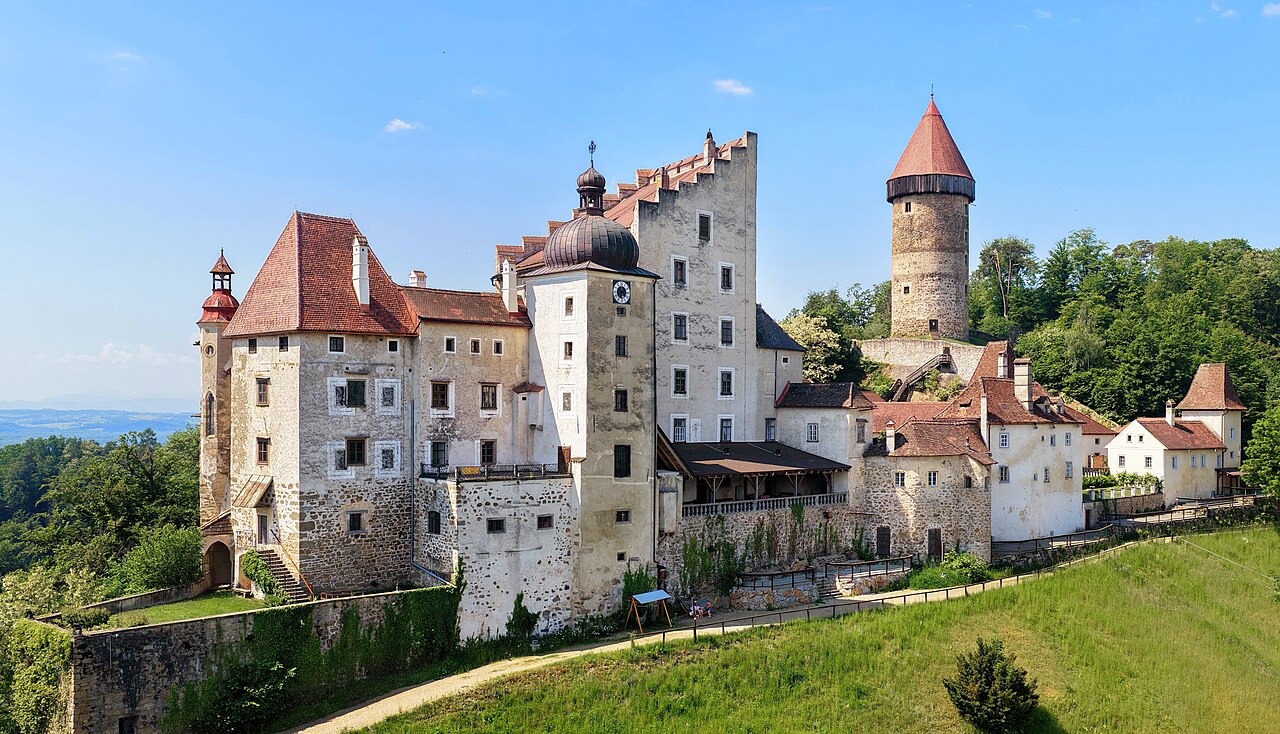
Wallsee Castle
Wallsee Castle stands on a historically significant site in Wallsee, Austria, originally the location of an ancient Roman camp. The castle's foundations reflect a long history of occupation and strategic importance, with the current structure dating back to the late 14th century. It was constructed under the direction of Heinrich VI von Wallsee, a member of the noble Wallsee family, who established the castle as a fortified residence and stronghold during the Late Medieval period.
Historical background and origins
The site of Wallsee Castle has been significant since antiquity due to its strategic position along the Danube River, a vital trade and military route. The original Roman camp served as a military base to control and monitor river traffic and protect the empire’s northern frontier. The medieval castle was built atop these ancient remains, incorporating the advantageous location into its defensive design.
Constructed in the 14th century, Wallsee Castle was initially a fortified residence for the Wallsee family, who were influential nobles in the region. The castle played a role in regional defense and administration during a period marked by frequent conflicts and territorial disputes in Austria.
Architectural features and layout
The castle exhibits characteristics typical of Late Medieval fortress architecture. It was designed primarily for defense, featuring robust stone walls and likely included a keep or central tower, which served as the last line of defense and the lord’s residence. While detailed architectural plans are not widely published due to the castle's private ownership, it is understood that the castle's design incorporated elements such as battlements, arrow slits, and possibly a moat or other water defenses, common in castles of this period to deter attackers.
Over the centuries, the castle would have undergone modifications to adapt to changing military technologies and residential needs, including the addition of more comfortable living quarters and possibly Renaissance or Baroque stylistic updates, although the core medieval structure remains dominant.
Ownership history and significance
In 1859, Wallsee Castle entered the possession of Archduchess Marie Valerie, the youngest daughter of Emperor Franz Joseph I and Empress Elisabeth of Austria. Marie Valerie married Archduke Franz Salvator, and the castle became part of their family estate. This connection to the Habsburg dynasty adds a layer of imperial significance to the castle’s history.
The castle remains in the hands of the descendants of Archduchess Marie Valerie and Archduke Franz Salvator, preserving its status as a private family residence. Due to this private ownership, Wallsee Castle is not open to the public, limiting detailed architectural study and tourism.
Preservation and current status
Wallsee Castle is classified as well preserved, maintaining much of its historical structure. Its continued private ownership has both protected it from public overexposure and limited broader access for cultural and historical appreciation. The castle's maintenance by the family ensures that the building remains intact, preserving its medieval character and the legacy of its noble and imperial associations.
While not accessible for regular visits, Wallsee Castle remains a notable example of a Late Medieval castle in Austria with a direct link to both medieval nobility and the Habsburg imperial family.
Information
Sources & official resources
Verify the information above using these authoritative references.
Loading map...
Visitor reviews
No reviews yet. Been here? Write the first review and help other travelers!
Write the first reviewVisited this castle? Share your experience
Your review helps other travelers and adds first-hand knowledge to our encyclopedia.