Walls of Ston
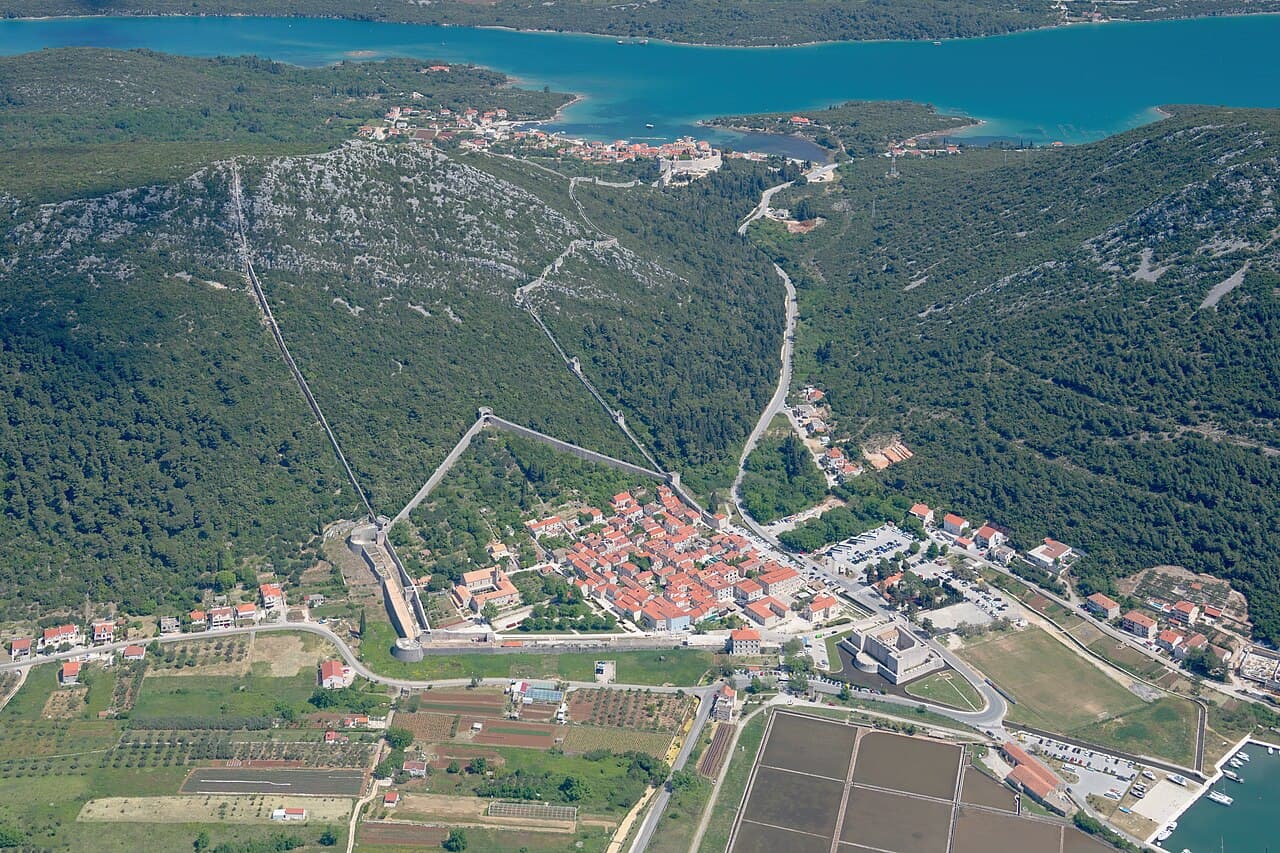
The Walls of Ston (Croatian: Stonske zidine) represent one of the most extensive and well-preserved bastioned fortress systems in Europe. Located in southern Croatia, these defensive stone walls originally stretched over 7 kilometres (4.3 miles), encircling and protecting the historic city of Ston and its valuable salt pans. Their construction began in 1358 during the Late Medieval period under the Republic of Ragusa, a maritime city-state that prioritized the defense of its economic assets and territorial integrity.
Historical background and strategic importance
The Walls of Ston were built primarily to safeguard the city of Ston and its saltworks, which were a critical source of wealth for the Republic of Ragusa. Salt was a precious commodity in medieval Europe, and control over its production and trade was vital. The fortifications also served to protect the narrow isthmus connecting the Pelješac peninsula to the mainland, a strategic land route essential for commerce and military movements.
Construction began in the mid-14th century, reflecting the growing need for robust defense mechanisms amid regional conflicts and the threat of Ottoman expansion. The walls were continuously maintained and expanded over the centuries, with significant enhancements in the 15th and early 16th centuries. A notable feature is the Field Gate (Poljska vrata), which bears a Latin inscription dated 1506, marking a period of renovation and strengthening of the fortifications.
Architectural features and design
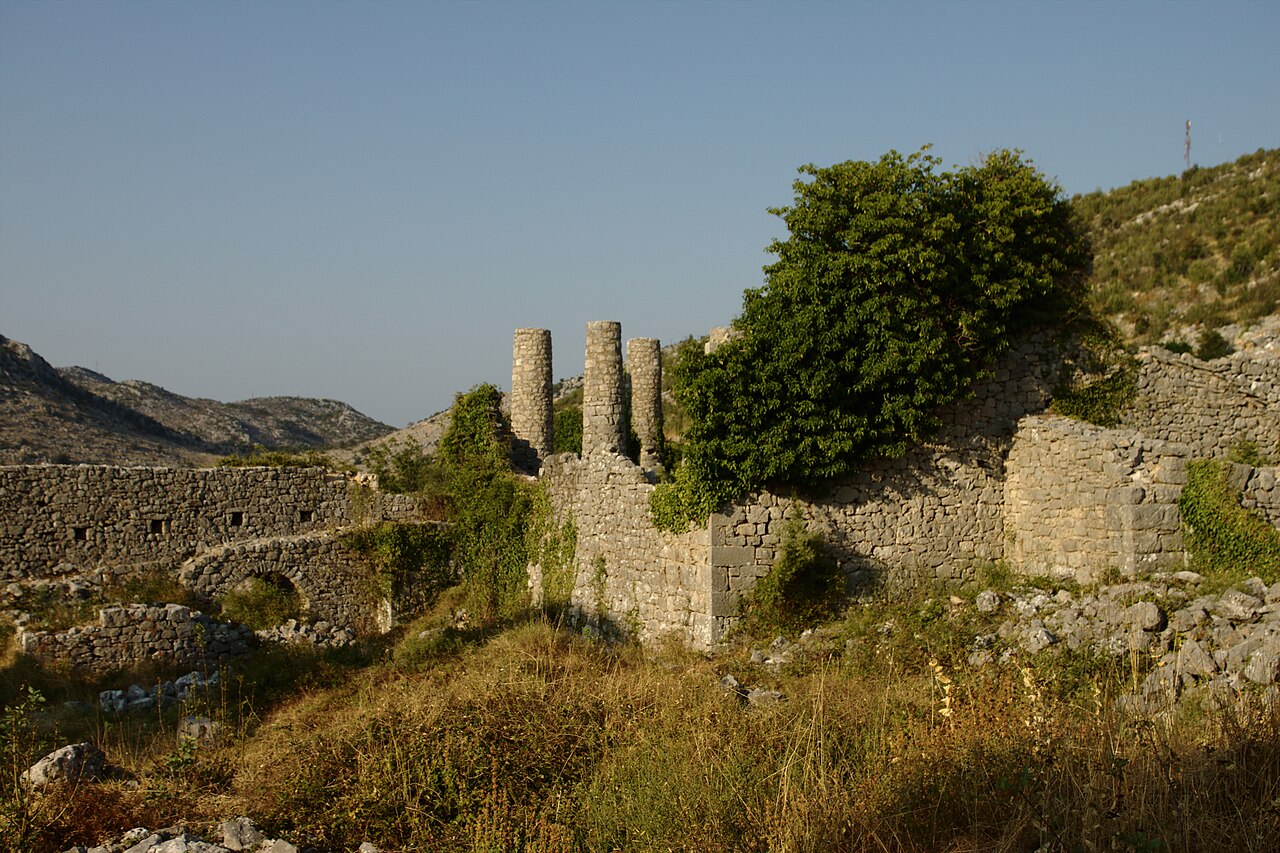
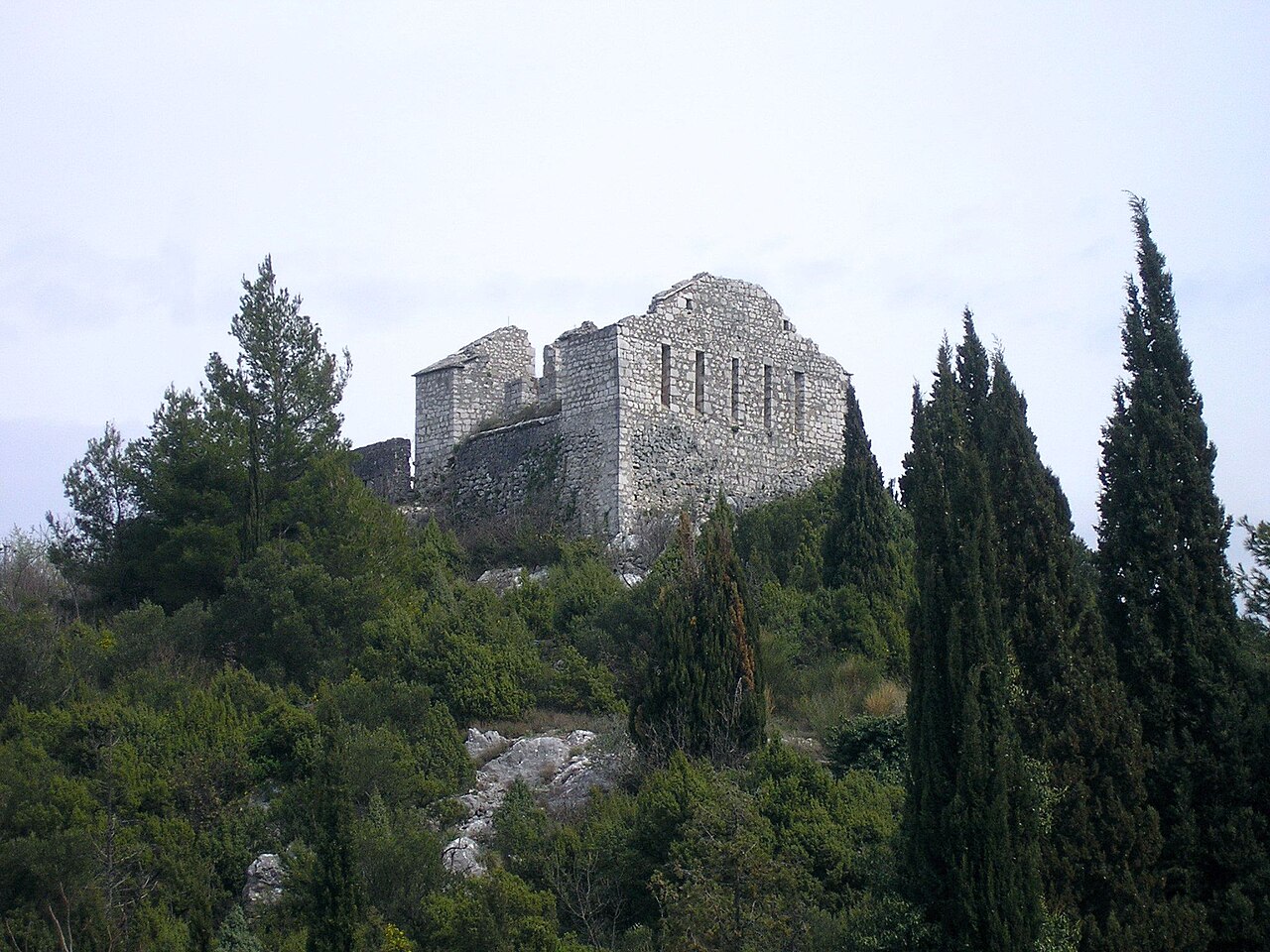
The Walls of Ston are a prime example of medieval military architecture adapted to the local terrain and evolving warfare technology. The walls incorporate a series of bastions, towers, and fortified gates designed to provide overlapping fields of fire and to withstand prolonged sieges. Their bastioned design allowed defenders to cover the walls with crossfire, reducing blind spots and enhancing the defensive capability against attackers.
The fortifications include multiple defensive layers, with a main wall complemented by a secondary wall and a moat in some sections. The walls are constructed from local limestone, carefully cut and fitted to create a robust barrier. The height and thickness of the walls varied depending on the location and the perceived threat level, with some sections rising up to 7 meters high.
Key architectural elements include:
- Bastions: These angular projections allowed defenders to fire along the adjacent walls and protect the fortress from scaling attempts.
- Towers: Positioned at intervals, towers served as lookout points and strongholds for archers and artillery.
- Gates: The Field Gate and other entrances were heavily fortified with portcullises and defensive chambers.
- Moats and ditches: In some areas, natural and artificial moats enhanced the defensive perimeter.
Preservation and cultural significance
Today, the Walls of Ston are among the longest preserved fortification systems in the world, often referred to as the "European Great Wall of China" due to their impressive scale and historical importance. The walls stand as a testament to the engineering skills and strategic foresight of the Republic of Ragusa during the medieval period.
The site attracts numerous visitors interested in medieval history, architecture, and Croatian heritage. Restoration efforts have been undertaken to preserve the walls and make them accessible to the public, allowing for walking tours along the ramparts that offer panoramic views of the surrounding landscape, including the Adriatic Sea and the Pelješac peninsula.
The walls not only symbolize the military and economic strength of the Republic of Ragusa but also contribute to the cultural identity of the region. They are protected as a cultural monument and are part of the broader historical landscape of Dalmatia.
Visiting the walls of ston
Visitors to the Walls of Ston can explore extensive sections of the fortress system, including the bastions, towers, and gates. The walking path along the walls provides a unique perspective on medieval fortification techniques and offers spectacular views of the Adriatic coastline and the nearby salt pans.
The site is open year-round, with the best visiting times during spring and autumn when the weather is mild. Guided tours are available, providing detailed historical context and architectural insights. Visitors should wear comfortable footwear due to uneven terrain and varying wall heights.
Nearby attractions
The town of Ston itself is notable for its medieval architecture, including churches and old town walls. The nearby salt pans remain operational and are among the oldest in Europe. The Pelješac peninsula offers additional attractions such as vineyards, beaches, and hiking trails, making the area a rich destination for cultural and natural tourism.
Architectural legacy and influence
The Walls of Ston exemplify the adaptation of bastioned fortress design principles in a coastal Mediterranean context. Their construction reflects the transition from high medieval fortifications to early modern military architecture, incorporating advances that addressed the increasing use of artillery.
The successful integration of natural landscape features with man-made defenses demonstrates a sophisticated understanding of terrain and military engineering. The walls influenced later fortification projects in the region and remain a valuable study subject for historians and architects interested in medieval and Renaissance military structures.
Frequently asked questions (FAQ)
- How do I get to the Walls of Ston?
- The Walls of Ston are located in the town of Ston on the Pelješac peninsula in southern Croatia. They are accessible by car or bus from Dubrovnik, which is about 50 kilometers away.
- What is the best time to visit the Walls of Ston?
- The best time to visit is during spring and autumn when the weather is mild and suitable for walking along the walls. Summers can be hot and crowded, while winters may be less accessible due to weather conditions.
- Is it possible to walk along the entire length of the Walls of Ston?
- While not all sections are open to the public, a significant portion of the walls is accessible for walking tours. Visitors can explore bastions, towers, and gates, enjoying panoramic views of the Adriatic Sea and the surrounding landscape.
- Are there guided tours available at the Walls of Ston?
- Yes, guided tours are offered that provide historical background and architectural insights, enhancing the visitor experience. These tours can be arranged locally in Ston or through tour operators in Dubrovnik.
- What is the historical significance of the Walls of Ston?
- The Walls of Ston were built to protect the valuable salt pans and the city of Ston, which were crucial to the wealth and defense of the Republic of Ragusa during the Late Medieval period. They represent one of the longest and best-preserved medieval fortification systems in Europe.
Photo gallery

Information
Loading map...
Visitor reviews
No reviews yet. Been here? Write the first review and help other travelers!
Write the first reviewVisited this castle? Share your experience
Your review helps other travelers and adds first-hand knowledge to our encyclopedia.