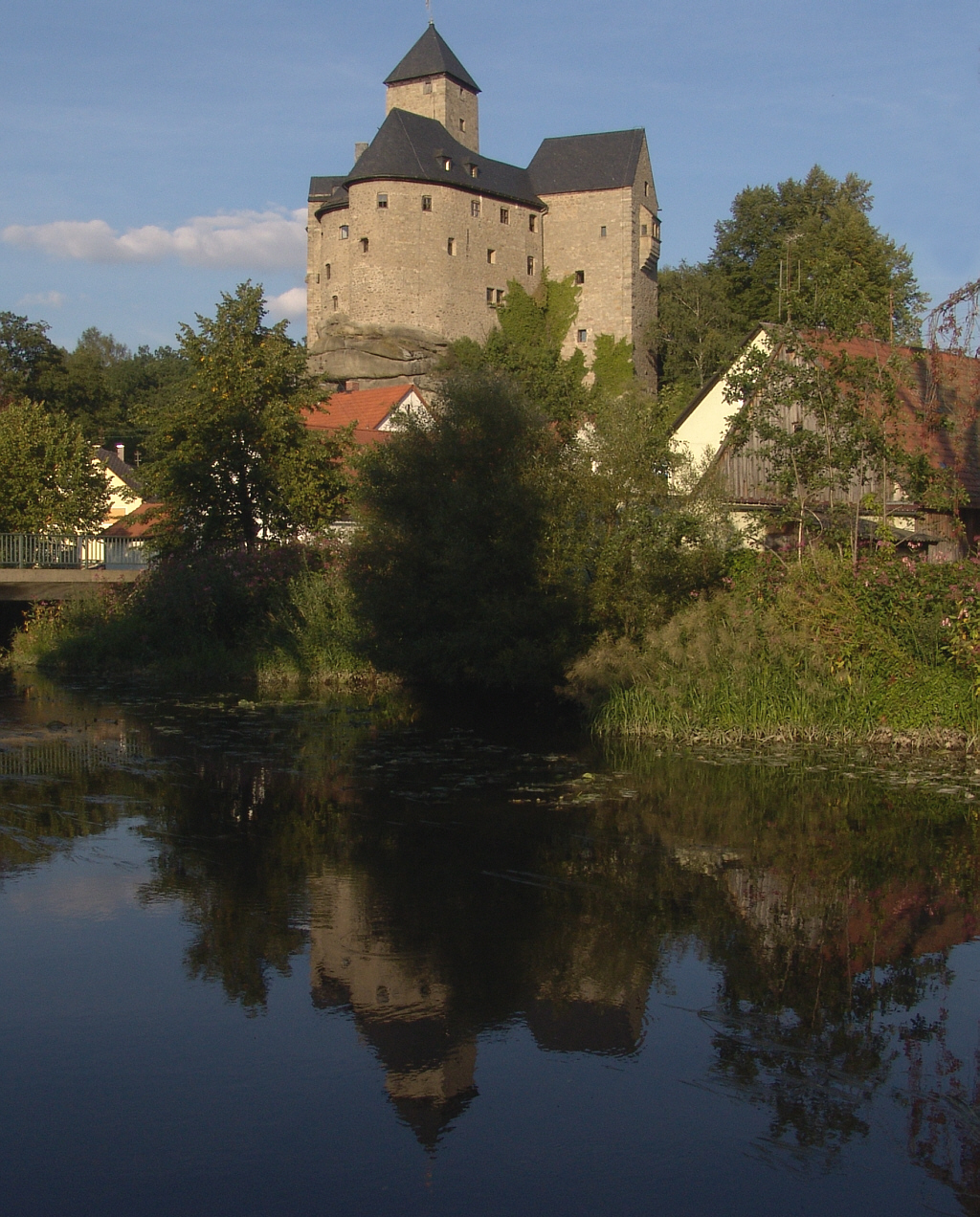
Waldershof Castle

Waldershof Castle in Bavaria, Germany
Waldershof, Germany
High Medieval (11th–13th c.)
Partially Preserved

Waldershof Castle is a historic fortress located in the town of Waldershof in Bavaria, Germany. Constructed originally in the 13th century, this castle reflects the architectural and feudal developments of the high medieval period. Its early history is closely tied to the landgraves of Leuchtenberg, who donated the castle to the Waldsassen monastery in 1263, marking an important transition in its ownership and function.

Medieval origins and early ownership

The castle's initial purpose was likely as a fortified residence and administrative center for the local nobility. After the donation to the Waldsassen monastery, the castle was pledged to the Hirschberg family, a noble lineage that played a significant role in the region's governance. This transfer of control was common in medieval Germany, where castles often changed hands through pledges, donations, or feudal arrangements.

Architectural expansions and modifications

In 1471, Waldershof Castle underwent significant expansion. This phase likely included strengthening of the defensive structures, enlargement of living quarters, and possible addition of new architectural elements typical of the late medieval period. Such expansions were often driven by the need to adapt to evolving military technologies and to reflect the status of the castle's occupants.

Structural features

While detailed architectural records are limited, the castle originally featured typical high medieval defensive elements such as thick stone walls, battlements, and possibly a moat or ditches. The expansion in the late 15th century might have introduced more comfortable residential spaces alongside fortified areas, balancing defense with domestic needs.

Role as a judicial residence

From the late medieval period until the secularization of 1803, Waldershof Castle served as a residence for judges. This function highlights the castle's administrative importance in the region, acting as a center for legal authority and governance. The judicial use would have necessitated certain interior modifications to accommodate courtrooms and official chambers.

Historical context and significance

Waldershof Castle's history reflects broader trends in Bavarian and German medieval history, including the interplay between noble families, monastic institutions, and secular authorities. Its endurance through centuries of political and social change underscores its strategic and administrative value.

Current condition and preservation

The castle remains a notable historic site in Waldershof, although detailed information about its current physical condition is limited. It is likely that the structure has undergone various restorations to preserve its medieval character and to maintain its role as a cultural landmark.

Visiting information and cultural heritage

Waldershof Castle is part of the region's rich cultural heritage, attracting visitors interested in medieval architecture and Bavarian history. While specific visitor amenities and opening hours are not widely documented, the castle contributes to the local tourism landscape and offers insights into the feudal past of the area.

Frequently asked questions

  • When was Waldershof Castle built? Waldershof Castle was originally constructed in the 13th century during the high medieval period.
  • What was the castle's original purpose? It served as a fortified noble residence and administrative center before becoming a judicial residence.
  • Who owned the castle historically? Initially owned by the landgraves of Leuchtenberg, it was donated to Waldsassen monastery and pledged to the Hirschberg family.
  • What architectural style characterizes the castle? The castle features high medieval defensive architecture with expansions reflecting late medieval influences.
  • Is the castle open to visitors? Specific visiting hours are not well documented, but it is recognized as a cultural heritage site in Waldershof.

Frequently asked questions (FAQ)

What is Waldershof Castle known for?
Waldershof Castle is known for its stunning medieval architecture and rich history dating back to the 13th century. It has served various purposes over the centuries, including as a noble residence and a center for local governance, reflecting the area's historical significance.
When was Waldershof Castle built?
Waldershof Castle was originally constructed in the early 13th century, with significant renovations and expansions occurring in the following centuries. Its architecture showcases various styles, making it a fascinating site for history enthusiasts.
How do I get to Waldershof Castle?
Waldershof Castle is easily accessible by car or public transport from nearby cities. If you're traveling by train, the nearest station is just a short bus ride away, making it convenient for visitors to explore the castle and its surroundings.
What are the opening hours for Waldershof Castle?
Waldershof Castle typically opens to visitors from 9 AM to 5 PM daily, although hours may vary seasonally. It's advisable to check the official website for any changes or special events before planning your visit.
Can I take guided tours of Waldershof Castle?
Yes, guided tours are available and provide an in-depth look at the castle's history, architecture, and the surrounding area. These tours are a great way to enhance your experience and learn more about this historical landmark.
Is it possible to host events at Waldershof Castle?
Yes, Waldershof Castle offers facilities for hosting various events, including weddings and corporate gatherings. The picturesque setting and historical ambiance make it a unique choice for memorable occasions.
What is the best time to visit Waldershof Castle?
The best time to visit Waldershof Castle is during the spring and fall when the weather is mild, and the surrounding landscapes are particularly beautiful. Additionally, visiting during these seasons can help you avoid the summer crowds.
Are there any nearby attractions to Waldershof Castle?
Yes, there are several nearby attractions, including the charming town of Waldershof and various hiking trails in the surrounding countryside. Visitors can also explore other historical sites and museums that enrich the cultural experience of the region.
What are the ticket prices for Waldershof Castle?
Ticket prices for Waldershof Castle are usually modest, with discounts available for children, seniors, and groups. It’s recommended to check the official website for the latest pricing and any special offers.

Information

Hill Castle

Loading map...

Visitor reviews

No reviews yet. Been here? Write the first review and help other travelers!

Write the first review

Visited this castle? Share your experience

Your review helps other travelers and adds first-hand knowledge to our encyclopedia.

Write a review

(5/5)

0/2000 characters

Your review will be visible after admin approval

Nearby castles

14.9 km

Thierstein Castle

Thierstein, Germany

Thierstein Castle stands as a remarkable example of a medieval hill castle strategically perched on a narrow basalt ridge approximately 615 meters above sea level in the municipality of Thierstein, Bavaria, Germany. Constructed in the early 14th century by Albrecht VI of Wildstein, this fortress played a significant role in the administration and defense of the surrounding region through the Late Medieval period. The castle's origins are closely tied to the noble Nothafft family, who established it as the seat of their authority following Albrecht VI's appointment as imperial forest master by King Heinrich VII in 1310. This position gave the family jurisdiction over the imperial forests of the historical Egerland region, making Thierstein Castle a vital administrative center. However, the castle's ownership and strategic importance evolved considerably over the centuries, reflecting the turbulent political landscape of the region. Historical ownership and political significance Initially controlled by the Nothafft family, the castle's fortunes shifted when King Johann of Bohemia granted the office of forest master to the nearby city of Eger in 1340. This act sparked prolonged disputes between the Nothaffts and the city, eventually leading to the family's loss of the castle and adjacent market town by the late 14th century. Subsequently, ownership passed to Margrave Wilhelm I of Meissen and later, from 1415 onwards, to the Burgraves of Nuremberg, members of the powerful House of Hohenzollern. The Hohenzollerns appointed bailiffs to manage the castle and its lands, maintaining its role as a defensive and administrative stronghold. During the Bavarian War of 1462, the castle's bailiff, Friedrich von Dobeneck, took the drastic measure of setting fire to the village beneath the castle to prevent enemy forces from using it as a fortified position. This event underscores the castle's military significance in regional conflicts. Architectural features and defensive structures Thierstein Castle was constructed as a hill castle utilizing the natural basalt ridge for defense, enhanced by man-made fortifications. A prominent feature is the cylindrical bergfried or keep, which rises approximately 24 meters and was positioned on the castle's most vulnerable side to serve as a lookout and last line of defense. This bergfried is one of the best-preserved elements of the castle and exemplifies typical Late Medieval military architecture. The castle complex originally included an inner bailey surrounded by residential buildings and an outer bailey separated by a neck ditch, which functioned as a formidable defensive barrier. The outer curtain wall, which also served as a zwinger—a narrow enclosed killing ground between walls—was designed to hinder attackers and protect the inner sanctum. Although much of the curtain wall has been lost, surviving fragments reveal the layered defensive strategy employed by the builders. Castle layout and strategic location Positioned on a narrow ridge oriented northeast, the castle's natural topography was exploited to create a defensible site. The main access was protected by a neck ditch cutting off the castle from the landward side, making direct assault difficult. A second neck ditch once separated the outer bailey from the inner bailey but was filled in during the 19th century. The elevated position afforded commanding views over the Fichtel Mountains and the Egerland region, allowing early detection of approaching forces and control over important trade and military routes. Military engagements and decline Thierstein Castle's military history includes occupation by Bohemian troops in 1553 during the Second Margrave War, illustrating its strategic importance in regional power struggles. By the early 17th century, the castle's military relevance diminished, leading Margrave Georg Friedrich of Brandenburg to order its abandonment in 1603 in favor of a new administrative building outside the village of Thierstein. Despite this, the castle was maintained through necessary repairs during the Thirty Years' War to serve as a refuge and grain storage facility. In 1703, amid the War of the Spanish Succession, the castle was briefly refortified, but its final destruction came in 1725 when a devastating fire consumed both the castle and the adjacent market town. This event marked the end of Thierstein Castle as a functional fortress. Present condition and preservation Today, Thierstein Castle exists as a ruin, with its most striking remnant being the towering bergfried. The remains of the residential buildings within the inner bailey still stand, with some walls reaching up to three stories in height, providing valuable insights into the castle's original scale and domestic arrangements. The curtain walls of the outer bailey survive only in fragments, but they hint at the castle's complex defensive design. Access to the ruins is controlled, requiring a key, which helps preserve the delicate remains while allowing visitors to experience the site firsthand. The castle's location and ruins offer spectacular views of the surrounding landscape, connecting visitors with the region's rich medieval heritage. Historical documentation and cultural significance Numerous historical drawings and images dating from the early 17th to the late 18th century document the castle's gradual decay, providing invaluable visual records that aid modern understanding of its architecture and history. Thierstein Castle remains an important cultural monument, reflecting the complex feudal and military history of Bavaria and the broader Germanic territories during the Late Medieval and early modern periods. Its architectural features, strategic location, and layered history make it a subject of interest for historians, archaeologists, and castle enthusiasts alike. The castle's story exemplifies the evolution of medieval fortifications in response to changing political and military needs and the eventual decline of such strongholds in the face of modern warfare and administrative reforms.

Late Medieval (14th–15th c.)
Details
15.4 km

Waldeck Castle Ruins

Kemnath, Germany

Waldeck Castle, located near Kemnath in Bavaria, Germany, stands as a significant relic of High Medieval fortifications dating back to the 12th century. First mentioned in 1124, the castle was originally under the control of the Landgraves of Leuchtenberg, a noble family influential in the region during the Middle Ages. In 1283, ownership transferred to Duke Ludwig of Bavaria, marking a shift in regional power dynamics and the castle's strategic importance.Medieval origins and architectural featuresThe castle was constructed as a hill castle, leveraging the natural elevation to enhance its defensive capabilities. Its architecture reflected the typical High Medieval style, characterized by robust stone walls, towers, and a fortified keep that served as the last line of defense. The layout included a courtyard surrounded by battlements and gatehouses, designed to withstand sieges and provide secure residence for the ruling nobility.Over time, the castle underwent modifications to adapt to evolving military technologies and political circumstances, although much of its original structure was altered or destroyed in later conflicts.Historical conflicts and declineWaldeck Castle played a notable role during the Spanish War of Succession in the early 18th century. In October 1704, it was besieged and captured by imperial troops. Following its capture, Emperor Joseph I ordered the castle's demolition to prevent its future military use. Despite this, the castle was partially rebuilt, reflecting its continued local significance.However, the castle's fortunes declined further when it was severely damaged by fire in 1794. This event left the structure in ruins, marking the end of its use as a defensive stronghold or noble residence.Preservation and archaeological effortsSince 1982, extensive excavation and restoration work has been undertaken to preserve the ruins of Waldeck Castle. These efforts have aimed to stabilize remaining walls, uncover buried foundations, and provide historical interpretation for visitors. The site today offers insights into medieval castle construction, regional history, and the impact of early modern warfare on fortifications.Visitors can explore the remains of the stone curtain walls, fragments of the gatehouse, and the outlines of former towers. Interpretive signage and guided tours often highlight the castle's strategic role in Bavarian history and its architectural evolution.Location and accessibilityWaldeck Castle ruins are situated on a prominent hill near the town of Kemnath in the Upper Palatinate region of Bavaria. The site is accessible by local roads and is a popular destination for history enthusiasts and hikers. Its elevated position provides panoramic views of the surrounding landscape, enhancing the visitor experience.The castle's location within Bavaria places it among a network of medieval fortifications that illustrate the region's complex feudal history and its strategic importance in Central Europe.

High Medieval (11th–13th c.)
Details
17.7 km
Falkenberg Castle — Germany castle

Falkenberg Castle

Falkenberg (Oberpfalz), Germany

Falkenberg Castle, located in the municipality of Falkenberg in Oberpfalz, Germany, is a remarkable example of a hill castle with a history spanning over a millennium. Founded probably between 895 and 898 AD, the castle's earliest mentions appear in 1154, indicating its longstanding importance in the region. The castle’s strategic position atop a granite hill, formed by the distinctive Falkenberger granite with its characteristic "Wollsackverwitterung" weathering, provided a natural defensive advantage that medieval builders skillfully enhanced with robust fortifications. Medieval origins and early history The origins of Burg Falkenberg trace back to the early medieval period, with archaeological evidence of masonry dating to the 11th century. The castle was initially associated with the local noble Falkenberger family, whose name it bears. The first indirect documentary reference to the castle comes from 1154, mentioning a figure named "Pilegrin de Valkenberch," which suggests a well-established fortress or settlement by that time. Ownership of the castle changed hands several times during the medieval era. In 1280, it passed to the influential Leuchtenberg family, and around 1300 it was acquired by the Cistercian Waldsassen Abbey. This transition reflects the common medieval practice of religious institutions gaining control over strategic estates, combining spiritual and temporal power. By the late 15th century, Burg Falkenberg served not only as a defensive stronghold but also as a residence. After 1486, Abbot Udalrich II Birker of the Cistercian order chose the castle as his retirement home, highlighting its role beyond purely military functions. Architectural features and castle layout The castle complex is built directly on the granite outcrop, integrating the natural rock formations into its defensive design. The hallmark of the fortress is its bergfried, a tall, slender tower typical of medieval German castles, used for surveillance and defense. Although partially dismantled in 1809—when about one-third of its height was removed to supply stone for local construction—the remaining structure still dominates the site. Surrounding the bergfried are remnants of medieval defensive walls and buildings, which reveal multiple phases of construction and adaptation over the centuries. Archaeological investigations have identified traces of a former outer bailey, an additional courtyard that would have housed service buildings and provided a further defensive layer, though it no longer survives above ground. The castle’s position on the granite hill not only offered a commanding view of the surrounding landscape but also leveraged the natural terrain to enhance its fortifications, making it a formidable stronghold in its time. Historical events and ownership changes Throughout its history, Falkenberg Castle witnessed significant historical events and changes in ownership that reflect the broader political and religious shifts in the region. After the Cistercian period, in 1571 the castle came under the control of the Electorate of the Palatinate, marking a shift from ecclesiastical to secular governance. During the Thirty Years' War in the 17th century, the castle was besieged and captured by Swedish forces led by General Hans Christoff von Königsmarck. This event was part of the widespread conflict that devastated much of Central Europe. The siege and subsequent conquest left the castle in ruins, signaling the end of its military significance. In the early 19th century, following the secularization policies of 1803, the castle became property of the Kingdom of Bavaria. This transition led to structural changes, including the partial dismantling of the bergfried in 1809 to provide building materials for the local parsonage. 20th-century restoration and modern use After centuries of decay, the castle found a new chapter in the 20th century when Friedrich-Werner Graf von der Schulenburg, a notable German diplomat and participant in the Operation Valkyrie plot against Adolf Hitler, purchased the property as his retirement home. Between 1936 and 1939, Schulenburg undertook a meticulous restoration of the castle, guided by historical paintings and documents to revive its medieval character. Schulenburg's involvement in the resistance against the Nazi regime led to his execution in 1944. During World War II, the castle was confiscated by the Gestapo and used as a detention site for prisoners from the Flossenbürg concentration camp, adding a somber chapter to its history. After the war, the Schulenburg family regained ownership. In 2008, the municipality of Falkenberg acquired the castle from the heirs, initiating comprehensive modernization and conservation efforts. The castle reopened in 2015 as a cultural and tourist site, featuring a museum dedicated to Schulenburg's life and the castle's multifaceted history. Today, Falkenberg Castle offers visitors a unique experience with its museum, hotel accommodations in eight individually designed rooms, a restaurant, and a large knight’s hall for events and conferences. These modern adaptations respect the castle’s heritage while providing contemporary amenities. Cultural and natural significance The castle’s location on the distinctive granite hill is not only architecturally significant but also environmentally notable. The geological formation known as "Wollsackverwitterung" creates a natural monument that complements the cultural heritage of the site. This unique combination of natural and historical elements has earned Falkenberg Castle protected status as an architectural and natural monument. Preservation efforts continue to balance the castle’s historical integrity with its role as a living cultural venue. The castle’s museum educates visitors about its medieval origins, ecclesiastical connections, military history, and 20th-century restoration, ensuring that the legacy of Falkenberg Castle remains vibrant and accessible.

Early Medieval (5th–10th c.)
Details