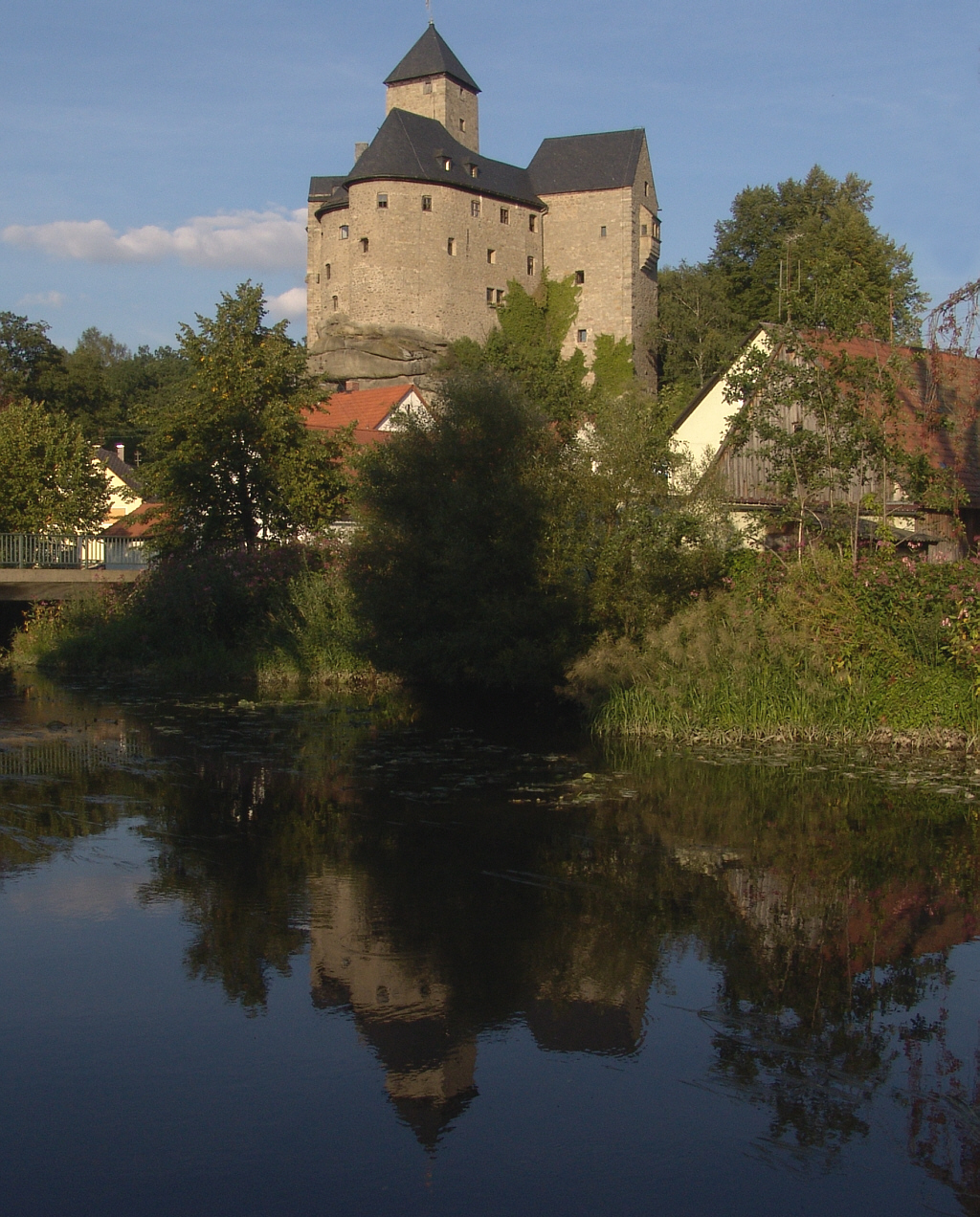
Waldeck Castle Ruins

Waldeck castle ruins in kemnath, germany
Kemnath, Germany
High Medieval (11th–13th c.)

Waldeck Castle, located near Kemnath in Bavaria, Germany, stands as a significant relic of High Medieval fortifications dating back to the 12th century. First mentioned in 1124, the castle was originally under the control of the Landgraves of Leuchtenberg, a noble family influential in the region during the Middle Ages. In 1283, ownership transferred to Duke Ludwig of Bavaria, marking a shift in regional power dynamics and the castle's strategic importance.

Medieval origins and architectural features

The castle was constructed as a hill castle, leveraging the natural elevation to enhance its defensive capabilities. Its architecture reflected the typical High Medieval style, characterized by robust stone walls, towers, and a fortified keep that served as the last line of defense. The layout included a courtyard surrounded by battlements and gatehouses, designed to withstand sieges and provide secure residence for the ruling nobility.

Over time, the castle underwent modifications to adapt to evolving military technologies and political circumstances, although much of its original structure was altered or destroyed in later conflicts.

Historical conflicts and decline

Waldeck Castle played a notable role during the Spanish War of Succession in the early 18th century. In October 1704, it was besieged and captured by imperial troops. Following its capture, Emperor Joseph I ordered the castle's demolition to prevent its future military use. Despite this, the castle was partially rebuilt, reflecting its continued local significance.

However, the castle's fortunes declined further when it was severely damaged by fire in 1794. This event left the structure in ruins, marking the end of its use as a defensive stronghold or noble residence.

Preservation and archaeological efforts

Since 1982, extensive excavation and restoration work has been undertaken to preserve the ruins of Waldeck Castle. These efforts have aimed to stabilize remaining walls, uncover buried foundations, and provide historical interpretation for visitors. The site today offers insights into medieval castle construction, regional history, and the impact of early modern warfare on fortifications.

Visitors can explore the remains of the stone curtain walls, fragments of the gatehouse, and the outlines of former towers. Interpretive signage and guided tours often highlight the castle's strategic role in Bavarian history and its architectural evolution.

Location and accessibility

Waldeck Castle ruins are situated on a prominent hill near the town of Kemnath in the Upper Palatinate region of Bavaria. The site is accessible by local roads and is a popular destination for history enthusiasts and hikers. Its elevated position provides panoramic views of the surrounding landscape, enhancing the visitor experience.

The castle's location within Bavaria places it among a network of medieval fortifications that illustrate the region's complex feudal history and its strategic importance in Central Europe.

Frequently asked questions (FAQ)

What is the historical significance of Waldeck Castle Ruins?
Waldeck Castle Ruins, located in Kemnath, Germany, dates back to the 13th century and played a vital role in the regional defense during the Middle Ages. The castle was strategically built on a hilltop, providing a commanding view of the surrounding area, which was crucial for monitoring invaders and controlling trade routes.
When was Waldeck Castle constructed?
Waldeck Castle was constructed in the early 13th century, with its origins tracing back to 1230. Over the centuries, it underwent various modifications and expansions, reflecting the architectural styles of different periods until its decline in the late 17th century.
Can I visit Waldeck Castle Ruins?
Yes, Waldeck Castle Ruins is open to visitors who wish to explore its historical grounds. While the castle is in ruins, it offers a unique glimpse into medieval architecture and stunning views of the surrounding landscape.
What are the opening hours for Waldeck Castle Ruins?
Waldeck Castle Ruins is generally open to visitors year-round, but specific opening hours may vary depending on the season. It is advisable to check local tourism websites or contact the local tourist information center for the most accurate and up-to-date information.
Is it possible to access Waldeck Castle Ruins with a wheelchair?
Access to Waldeck Castle Ruins can be challenging due to its hillside location and uneven terrain. While some areas may be navigable, it is recommended to contact the local tourism office for detailed accessibility information and assistance.
What is the best time to visit Waldeck Castle Ruins?
The best time to visit Waldeck Castle Ruins is during the spring and early autumn when the weather is mild and the surrounding nature is in full bloom. These seasons also provide excellent visibility and a more pleasant experience for exploring the ruins.
Are there nearby attractions to visit along with Waldeck Castle Ruins?
Yes, the area around Waldeck Castle Ruins offers several attractions, including the picturesque town of Kemnath, the scenic hiking trails in the surrounding hills, and other historical sites. Visitors can also enjoy local cuisine in nearby restaurants, enhancing their overall experience.
How much does it cost to enter Waldeck Castle Ruins?
Entry to Waldeck Castle Ruins is typically free; however, some guided tours may incur a small fee. It's always best to check local information for any special events or guided tour prices that may apply during your visit.

Loading map...

Visitor reviews

No reviews yet. Been here? Write the first review and help other travelers!

Write the first review

Visited this castle? Share your experience

Your review helps other travelers and adds first-hand knowledge to our encyclopedia.

Write a review

(5/5)

0/2000 characters

Your review will be visible after admin approval

Nearby castles

15.4 km

Waldershof Castle

Waldershof, Germany

Waldershof Castle is a historic fortress located in the town of Waldershof in Bavaria, Germany. Constructed originally in the 13th century, this castle reflects the architectural and feudal developments of the high medieval period. Its early history is closely tied to the landgraves of Leuchtenberg, who donated the castle to the Waldsassen monastery in 1263, marking an important transition in its ownership and function. Medieval origins and early ownership The castle's initial purpose was likely as a fortified residence and administrative center for the local nobility. After the donation to the Waldsassen monastery, the castle was pledged to the Hirschberg family, a noble lineage that played a significant role in the region's governance. This transfer of control was common in medieval Germany, where castles often changed hands through pledges, donations, or feudal arrangements. Architectural expansions and modifications In 1471, Waldershof Castle underwent significant expansion. This phase likely included strengthening of the defensive structures, enlargement of living quarters, and possible addition of new architectural elements typical of the late medieval period. Such expansions were often driven by the need to adapt to evolving military technologies and to reflect the status of the castle's occupants. Structural features While detailed architectural records are limited, the castle originally featured typical high medieval defensive elements such as thick stone walls, battlements, and possibly a moat or ditches. The expansion in the late 15th century might have introduced more comfortable residential spaces alongside fortified areas, balancing defense with domestic needs. Role as a judicial residence From the late medieval period until the secularization of 1803, Waldershof Castle served as a residence for judges. This function highlights the castle's administrative importance in the region, acting as a center for legal authority and governance. The judicial use would have necessitated certain interior modifications to accommodate courtrooms and official chambers. Historical context and significance Waldershof Castle's history reflects broader trends in Bavarian and German medieval history, including the interplay between noble families, monastic institutions, and secular authorities. Its endurance through centuries of political and social change underscores its strategic and administrative value. Current condition and preservation The castle remains a notable historic site in Waldershof, although detailed information about its current physical condition is limited. It is likely that the structure has undergone various restorations to preserve its medieval character and to maintain its role as a cultural landmark. Visiting information and cultural heritage Waldershof Castle is part of the region's rich cultural heritage, attracting visitors interested in medieval architecture and Bavarian history. While specific visitor amenities and opening hours are not widely documented, the castle contributes to the local tourism landscape and offers insights into the feudal past of the area. Frequently asked questions When was Waldershof Castle built? Waldershof Castle was originally constructed in the 13th century during the high medieval period. What was the castle's original purpose? It served as a fortified noble residence and administrative center before becoming a judicial residence. Who owned the castle historically? Initially owned by the landgraves of Leuchtenberg, it was donated to Waldsassen monastery and pledged to the Hirschberg family. What architectural style characterizes the castle? The castle features high medieval defensive architecture with expansions reflecting late medieval influences. Is the castle open to visitors? Specific visiting hours are not well documented, but it is recognized as a cultural heritage site in Waldershof.

High Medieval (11th–13th c.)
Details
16.6 km

Burg Parkstein

Parkstein, Germany

Burg Parkstein stands as a significant medieval fortress ruin located in the municipality of Parkstein in Bavaria, Germany. This hill castle was strategically constructed atop a prominent basalt cone, providing commanding views over the surrounding landscape and making it one of the largest fortifications in the historical northern Bavarian region known as the Nordgau. The castle's origins trace back to the early medieval period, with the earliest documented mention occurring in 1052, when it suffered a destructive fire. This early record highlights the castle's longstanding role in regional defense and administration. The castle's site is steeped in local legend, which recounts that its location was chosen following a hunting expedition by an imperial party. During a boar hunt, the distinctive basalt hill was spotted, inspiring the decision to build a spur castle here to capitalize on the natural defensive advantages offered by the steep, rocky terrain. This choice reflects medieval strategic thinking, where natural topography was integral to fortification design. Historical ownership and political significance Throughout its history, Burg Parkstein experienced multiple changes in ownership, reflecting the shifting political landscape of the Holy Roman Empire. Initially, it served as the residence of the ministeriales, unfree knights who administered the castle on behalf of the Counts of Sulzbach, the original lords of the region. By the 12th century, the castle came under the control of Emperor Frederick Barbarossa, a notable figure in medieval German history. By 1251, ownership transferred to Duke Otto II of Bavaria. Subsequently, the fortress passed to the Imperial City of Nuremberg, the Kingdom of Bohemia, the noble Leuchtenberg family, and ultimately the powerful Wittelsbach dynasty. This succession of rulers underscores the castle's strategic and administrative importance in the region. From 1421 to 1714, the castle was governed as part of a unique condominium arrangement called the Parkstein-Weiden joint office, jointly administered by the Electorate of Brandenburg and the Electoral Palatinate. During this period, the Brandenburg share passed to the Duchy of Palatinate-Neuburg in 1505 and later to Palatinate-Sulzbach in 1615. Meanwhile, in 1623, Wolfgang Wilhelm of Palatinate-Neuburg acquired the Electoral Palatinate's portion. This complex political arrangement illustrates the castle's continued relevance in territorial governance. Decline and partial demolition The castle gradually fell into disuse and ruin, particularly during the Thirty Years' War (1618–1648), which wrought widespread devastation across Central Europe. By the mid-18th century, significant demolition began. In 1756, the castle's powder tower, constructed from finely cut ashlar stones, was dismantled, and its materials were repurposed to build the parish church tower in Weiden, a nearby town. This early example of material reuse reflects practical responses to the castle's obsolescence. Following a major fire in 1835 that devastated much of Parkstein town, the remaining castle ruins were further cannibalized for building materials during the town's reconstruction. Today, only fragments of the once extensive fortress remain, scattered along the steep basalt slope. A chapel built in 1851 now occupies the summit where the castle once stood, serving as a landmark and memorial to the site's historical significance. Architectural features and archaeological significance Burg Parkstein was originally constructed as a spur castle, utilizing the natural defensive advantages of the steep basalt cone. The fortress featured robust stone walls and defensive structures, including the notable powder tower made from precisely cut ashlar masonry, which was a hallmark of quality medieval construction. The elevated position allowed for surveillance and protection of the surrounding territory. Archaeological investigations at the site have revealed evidence of an earlier hill settlement from the Urnfield period, a late Bronze Age culture known for its characteristic burial urns. These findings indicate that the basalt hill held strategic and possibly ritual significance long before the medieval castle was built. The medieval castle's remains have been partially excavated, confirming the presence of fortified structures, although detailed architectural plans and interior layouts remain limited in the historical record. Today, the ruins of Burg Parkstein are protected as cultural monuments, preserving both the medieval fortress and the earlier archaeological layers beneath. Visitors can explore the scattered remains along the challenging ascent, gaining insight into the site's layered history and its role in regional defense and governance. Visiting burg parkstein While the castle remains are largely in ruins and not fully restored, the site offers a unique experience for visitors interested in medieval history and archaeology. The steep climb up the basalt hill rewards visitors with panoramic views of the Bavarian landscape and a tangible connection to centuries of history. The chapel built in 1851 at the summit provides a focal point and a place for reflection on the site's past. Interpretive signage and local guides often provide context about the castle's historical significance, ownership changes, and architectural features. The site is accessible year-round, though visitors should be prepared for a moderately challenging hike due to the natural terrain. Nearby towns such as Weiden offer additional cultural and historical attractions, making Burg Parkstein a valuable destination for those exploring northern Bavaria.

Early Medieval (5th–10th c.)
Details
19.9 km
Falkenberg Castle — Germany castle

Falkenberg Castle

Falkenberg (Oberpfalz), Germany

Falkenberg Castle, located in the municipality of Falkenberg in Oberpfalz, Germany, is a remarkable example of a hill castle with a history spanning over a millennium. Founded probably between 895 and 898 AD, the castle's earliest mentions appear in 1154, indicating its longstanding importance in the region. The castle’s strategic position atop a granite hill, formed by the distinctive Falkenberger granite with its characteristic "Wollsackverwitterung" weathering, provided a natural defensive advantage that medieval builders skillfully enhanced with robust fortifications. Medieval origins and early history The origins of Burg Falkenberg trace back to the early medieval period, with archaeological evidence of masonry dating to the 11th century. The castle was initially associated with the local noble Falkenberger family, whose name it bears. The first indirect documentary reference to the castle comes from 1154, mentioning a figure named "Pilegrin de Valkenberch," which suggests a well-established fortress or settlement by that time. Ownership of the castle changed hands several times during the medieval era. In 1280, it passed to the influential Leuchtenberg family, and around 1300 it was acquired by the Cistercian Waldsassen Abbey. This transition reflects the common medieval practice of religious institutions gaining control over strategic estates, combining spiritual and temporal power. By the late 15th century, Burg Falkenberg served not only as a defensive stronghold but also as a residence. After 1486, Abbot Udalrich II Birker of the Cistercian order chose the castle as his retirement home, highlighting its role beyond purely military functions. Architectural features and castle layout The castle complex is built directly on the granite outcrop, integrating the natural rock formations into its defensive design. The hallmark of the fortress is its bergfried, a tall, slender tower typical of medieval German castles, used for surveillance and defense. Although partially dismantled in 1809—when about one-third of its height was removed to supply stone for local construction—the remaining structure still dominates the site. Surrounding the bergfried are remnants of medieval defensive walls and buildings, which reveal multiple phases of construction and adaptation over the centuries. Archaeological investigations have identified traces of a former outer bailey, an additional courtyard that would have housed service buildings and provided a further defensive layer, though it no longer survives above ground. The castle’s position on the granite hill not only offered a commanding view of the surrounding landscape but also leveraged the natural terrain to enhance its fortifications, making it a formidable stronghold in its time. Historical events and ownership changes Throughout its history, Falkenberg Castle witnessed significant historical events and changes in ownership that reflect the broader political and religious shifts in the region. After the Cistercian period, in 1571 the castle came under the control of the Electorate of the Palatinate, marking a shift from ecclesiastical to secular governance. During the Thirty Years' War in the 17th century, the castle was besieged and captured by Swedish forces led by General Hans Christoff von Königsmarck. This event was part of the widespread conflict that devastated much of Central Europe. The siege and subsequent conquest left the castle in ruins, signaling the end of its military significance. In the early 19th century, following the secularization policies of 1803, the castle became property of the Kingdom of Bavaria. This transition led to structural changes, including the partial dismantling of the bergfried in 1809 to provide building materials for the local parsonage. 20th-century restoration and modern use After centuries of decay, the castle found a new chapter in the 20th century when Friedrich-Werner Graf von der Schulenburg, a notable German diplomat and participant in the Operation Valkyrie plot against Adolf Hitler, purchased the property as his retirement home. Between 1936 and 1939, Schulenburg undertook a meticulous restoration of the castle, guided by historical paintings and documents to revive its medieval character. Schulenburg's involvement in the resistance against the Nazi regime led to his execution in 1944. During World War II, the castle was confiscated by the Gestapo and used as a detention site for prisoners from the Flossenbürg concentration camp, adding a somber chapter to its history. After the war, the Schulenburg family regained ownership. In 2008, the municipality of Falkenberg acquired the castle from the heirs, initiating comprehensive modernization and conservation efforts. The castle reopened in 2015 as a cultural and tourist site, featuring a museum dedicated to Schulenburg's life and the castle's multifaceted history. Today, Falkenberg Castle offers visitors a unique experience with its museum, hotel accommodations in eight individually designed rooms, a restaurant, and a large knight’s hall for events and conferences. These modern adaptations respect the castle’s heritage while providing contemporary amenities. Cultural and natural significance The castle’s location on the distinctive granite hill is not only architecturally significant but also environmentally notable. The geological formation known as "Wollsackverwitterung" creates a natural monument that complements the cultural heritage of the site. This unique combination of natural and historical elements has earned Falkenberg Castle protected status as an architectural and natural monument. Preservation efforts continue to balance the castle’s historical integrity with its role as a living cultural venue. The castle’s museum educates visitors about its medieval origins, ecclesiastical connections, military history, and 20th-century restoration, ensuring that the legacy of Falkenberg Castle remains vibrant and accessible.

Early Medieval (5th–10th c.)
Details