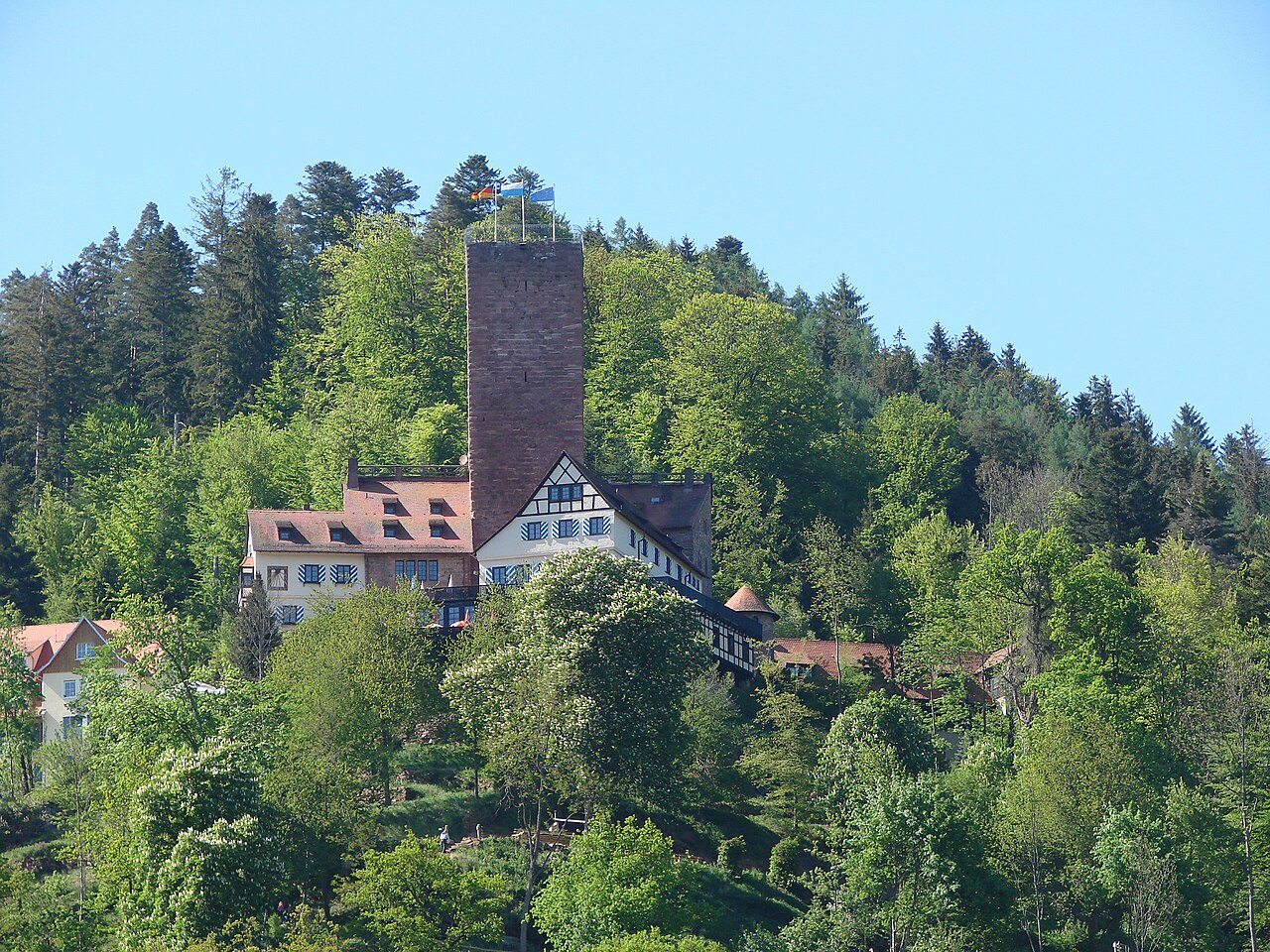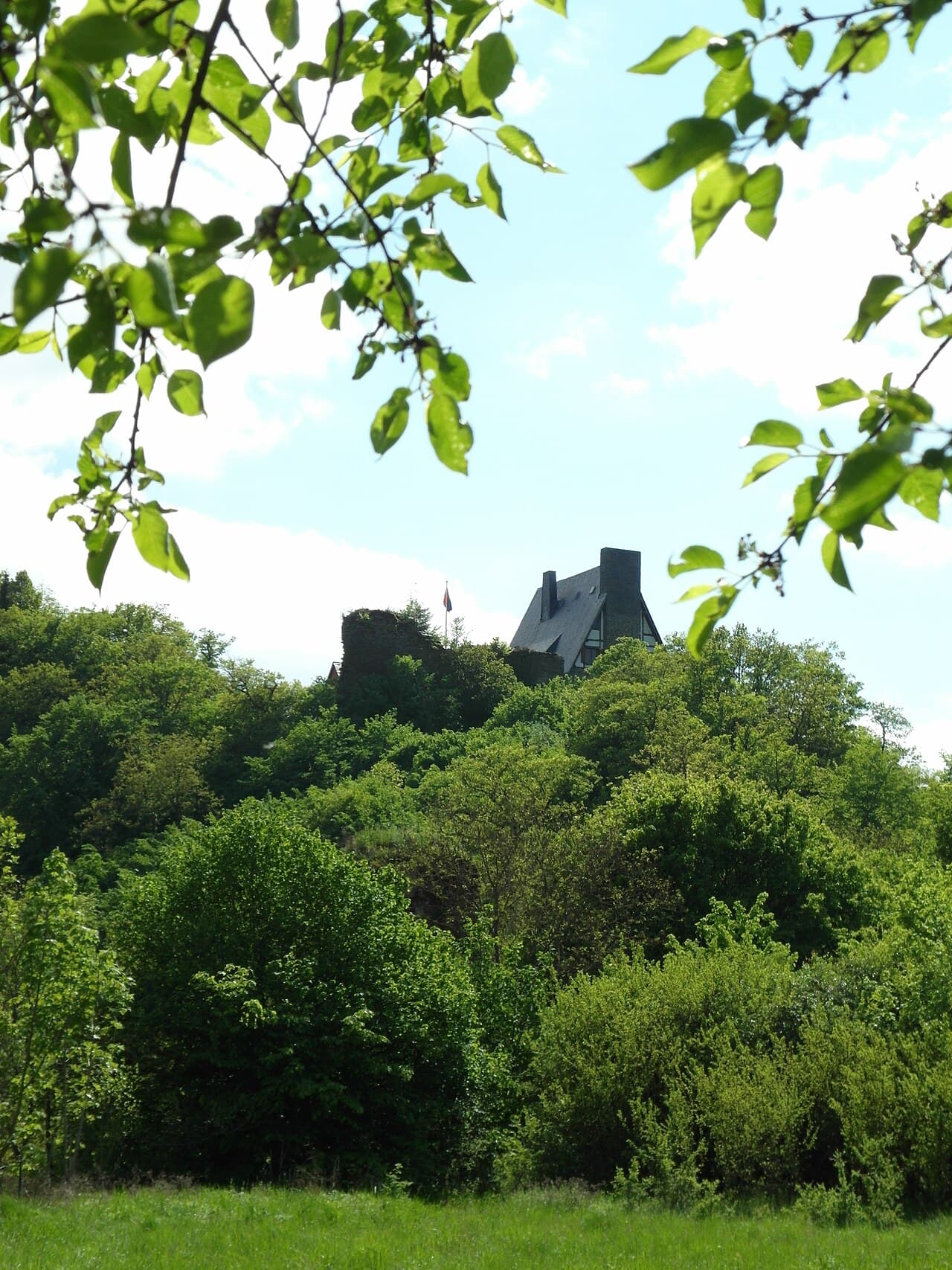
Waldeck Castle
Waldeck Castle, also known as the Waldeck Ruins, is a significant medieval fortress complex perched above the Nagold valley near the town of Calw in Germany. This castle complex, dating primarily from the 13th century, offers a remarkable glimpse into the architectural and feudal history of the region. Constructed by the noble Lords of Waldeck, whose lineage is first documented in 1140, the site reflects the strategic importance of hilltop fortifications in medieval German territories.
The earliest known figure associated with the castle is Ortwin von Waldeck, appearing in historical records in the early 12th century. Archaeological evidence indicates that the oldest surviving structures date from around 1200, situating the castle firmly within the High Medieval period. The castle was built as a hill castle, utilizing the natural rocky outcrop to maximize defense and visibility over the surrounding valley and trade routes.
Historical development and feudal conflicts
During the 13th century, the Lords of Waldeck expanded their influence significantly, benefiting from nearby silver mines at Neubulach. This wealth allowed them to fortify their stronghold extensively. However, this rise in power also led to conflicts with their feudal overlords, the Counts of Hohenberg.
The late 13th century saw the castle become a focal point of military disputes. The Counts of Hohenberg besieged the Waldeck castles twice, in 1279 and again in 1284. The second siege, supported by King Rudolf of Habsburg, resulted in the destruction of the castles. After this, Albrecht von Hohenberg assumed control and rebuilt the castle, appointing the Waldeck family as stewards rather than lords. These stewards later allied with the powerful Lords of Baden, defeating the Hohenbergs in 1287 and gaining significant noble freedoms and autonomy.
Extinction of the waldeck family and subsequent ownership
The Waldeck lineage eventually became extinct, with the last family members dying out in 1417 and again in 1553. Following this, control of the castle passed to the Duchy of Württemberg. Historical documents and archaeological evidence reveal that there were five castles on the same mountain ridge, including the main Waldeck site and three additional 13th-century castles nearby. One of these was likely a separate tower located on a rock outcrop west of the main ruins.
Architectural features and castle complex layout
The Waldeck Ruins comprise a compact group of medieval stone structures spread across a rocky spur approximately 180 meters in length. The ruins include the foundations of a residential building and the base of a bergfried, a tall defensive tower typical of German castles, which served primarily as a stronghold rather than living quarters.
The masonry is notable for its use of rusticated ashlar masonry (known in German as Buckelquaderwerk), characterized by squared stones with raised, roughened faces that give the walls a distinctive textured appearance. This technique was common in the 13th century and is evident throughout the castle remains.
Surrounding the core structures are fortified outer works forming a unified defensive system. Archaeological studies have identified multiple construction phases in these outer defenses, demonstrating the castle's adaptation and expansion from the late Middle Ages into the early modern period.
Defensive structures and strategic location
The castle's elevated position at about 410 meters above sea level provided commanding views over the Nagoldtal valley and nearby settlements such as Kohlerstal. This strategic location was crucial for controlling regional trade routes and mining operations.
The bergfried, as the main tower, was a key defensive feature, designed to serve as a last refuge during sieges. The surrounding walls and outer works included battlements and gatehouses, although only foundations and masonry fragments remain today. The cluster of castles on the ridge created a formidable defensive network, unusual for the region and period.
Decline, destruction, and archaeological significance
While most of the castles on the ridge were abandoned by the 15th century, the main Waldeck site was expanded and inhabited until the 17th century. It likely suffered its final destruction in 1688 during the Nine Years’ War (Palatinate War of Succession), when French troops devastated many fortifications across the region.
Today, the ruins are partially overgrown by mixed forest but remain accessible to visitors on foot. The remains are fragmentary, consisting mainly of foundation walls and masonry fragments, with no surviving decorative elements or inscriptions. Despite this, the site holds great archaeological importance for understanding the phased construction, use, and decline of a complex multi-castle system spanning from the medieval into the early modern era.
Excavations have confirmed the existence of multiple castles clustered on the ridge, supporting historical accounts of five castles atop the mountain. The identification of a separate tower on a rock outcrop further enriches the understanding of the site's defensive strategy and architectural complexity.
Visiting waldeck castle ruins
Visitors to the Waldeck Castle ruins can explore the remains situated on a steep ridge at an elevation of approximately 410 meters. The site offers scenic views of the Nagold valley and surrounding forested landscape. While the ruins are largely fragmentary, they provide valuable insight into medieval castle construction and feudal history in southwestern Germany.
The ruins are accessible by footpaths and are a point of interest for history enthusiasts, archaeologists, and hikers alike. Due to the partial overgrowth and the fragmentary nature of the remains, visitors are encouraged to wear suitable footwear and exercise caution while exploring the site.
Frequently asked questions (FAQ)
- How do I get to Waldeck Castle ruins?
- Waldeck Castle ruins are located near Calw in Baden-Württemberg, Germany. They are accessible by hiking trails from nearby towns, with footpaths leading up to the ruins on the hilltop.
- What is the historical significance of Waldeck Castle?
- Waldeck Castle was a strategic medieval hill castle built by the Lords of Waldeck in the 13th century. It played a key role in regional feudal conflicts and controlled important trade routes and mining areas.
- Can I visit the ruins of Waldeck Castle year-round?
- Yes, the ruins are open to visitors year-round as they are outdoor sites. However, access may be more challenging in winter due to weather conditions, so it is advisable to visit during milder seasons.
- What architectural features are notable at Waldeck Castle?
- Notable features include the foundations of a bergfried (main defensive tower), rusticated ashlar masonry typical of the 13th century, and fortified outer works that formed a complex defensive system.
- Is there an entrance fee to visit Waldeck Castle ruins?
- There is no entrance fee to visit the Waldeck Castle ruins, as the site is open and accessible to the public without charge.
Photo gallery

Information
Website
Visit websiteSources & official resources
Verify the information above using these authoritative references.
Loading map...
Visitor reviews
No reviews yet. Been here? Write the first review and help other travelers!
Write the first reviewVisited this castle? Share your experience
Your review helps other travelers and adds first-hand knowledge to our encyclopedia.