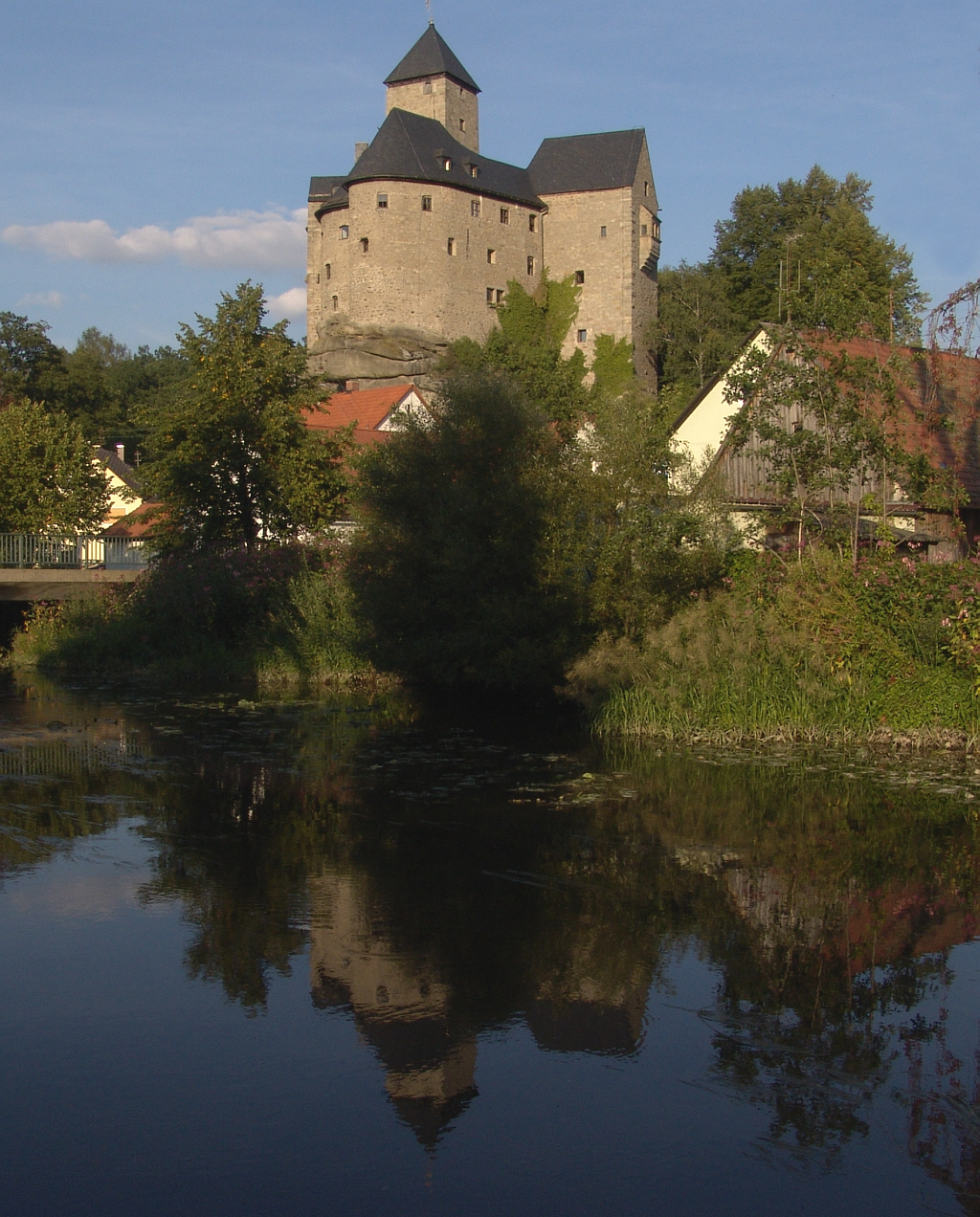
Burg Parkstein
Burg Parkstein stands as a significant medieval fortress ruin located in the municipality of Parkstein in Bavaria, Germany. This hill castle was strategically constructed atop a prominent basalt cone, providing commanding views over the surrounding landscape and making it one of the largest fortifications in the historical northern Bavarian region known as the Nordgau. The castle's origins trace back to the early medieval period, with the earliest documented mention occurring in 1052, when it suffered a destructive fire. This early record highlights the castle's longstanding role in regional defense and administration.
The castle's site is steeped in local legend, which recounts that its location was chosen following a hunting expedition by an imperial party. During a boar hunt, the distinctive basalt hill was spotted, inspiring the decision to build a spur castle here to capitalize on the natural defensive advantages offered by the steep, rocky terrain. This choice reflects medieval strategic thinking, where natural topography was integral to fortification design.
Historical ownership and political significance
Throughout its history, Burg Parkstein experienced multiple changes in ownership, reflecting the shifting political landscape of the Holy Roman Empire. Initially, it served as the residence of the ministeriales, unfree knights who administered the castle on behalf of the Counts of Sulzbach, the original lords of the region. By the 12th century, the castle came under the control of Emperor Frederick Barbarossa, a notable figure in medieval German history.
By 1251, ownership transferred to Duke Otto II of Bavaria. Subsequently, the fortress passed to the Imperial City of Nuremberg, the Kingdom of Bohemia, the noble Leuchtenberg family, and ultimately the powerful Wittelsbach dynasty. This succession of rulers underscores the castle's strategic and administrative importance in the region.
From 1421 to 1714, the castle was governed as part of a unique condominium arrangement called the Parkstein-Weiden joint office, jointly administered by the Electorate of Brandenburg and the Electoral Palatinate. During this period, the Brandenburg share passed to the Duchy of Palatinate-Neuburg in 1505 and later to Palatinate-Sulzbach in 1615. Meanwhile, in 1623, Wolfgang Wilhelm of Palatinate-Neuburg acquired the Electoral Palatinate's portion. This complex political arrangement illustrates the castle's continued relevance in territorial governance.
Decline and partial demolition
The castle gradually fell into disuse and ruin, particularly during the Thirty Years' War (1618–1648), which wrought widespread devastation across Central Europe. By the mid-18th century, significant demolition began. In 1756, the castle's powder tower, constructed from finely cut ashlar stones, was dismantled, and its materials were repurposed to build the parish church tower in Weiden, a nearby town. This early example of material reuse reflects practical responses to the castle's obsolescence.
Following a major fire in 1835 that devastated much of Parkstein town, the remaining castle ruins were further cannibalized for building materials during the town's reconstruction. Today, only fragments of the once extensive fortress remain, scattered along the steep basalt slope. A chapel built in 1851 now occupies the summit where the castle once stood, serving as a landmark and memorial to the site's historical significance.
Architectural features and archaeological significance
Burg Parkstein was originally constructed as a spur castle, utilizing the natural defensive advantages of the steep basalt cone. The fortress featured robust stone walls and defensive structures, including the notable powder tower made from precisely cut ashlar masonry, which was a hallmark of quality medieval construction. The elevated position allowed for surveillance and protection of the surrounding territory.
Archaeological investigations at the site have revealed evidence of an earlier hill settlement from the Urnfield period, a late Bronze Age culture known for its characteristic burial urns. These findings indicate that the basalt hill held strategic and possibly ritual significance long before the medieval castle was built. The medieval castle's remains have been partially excavated, confirming the presence of fortified structures, although detailed architectural plans and interior layouts remain limited in the historical record.
Today, the ruins of Burg Parkstein are protected as cultural monuments, preserving both the medieval fortress and the earlier archaeological layers beneath. Visitors can explore the scattered remains along the challenging ascent, gaining insight into the site's layered history and its role in regional defense and governance.
Visiting burg parkstein
While the castle remains are largely in ruins and not fully restored, the site offers a unique experience for visitors interested in medieval history and archaeology. The steep climb up the basalt hill rewards visitors with panoramic views of the Bavarian landscape and a tangible connection to centuries of history. The chapel built in 1851 at the summit provides a focal point and a place for reflection on the site's past.
Interpretive signage and local guides often provide context about the castle's historical significance, ownership changes, and architectural features. The site is accessible year-round, though visitors should be prepared for a moderately challenging hike due to the natural terrain. Nearby towns such as Weiden offer additional cultural and historical attractions, making Burg Parkstein a valuable destination for those exploring northern Bavaria.
Frequently asked questions (FAQ)
- How do I get to Burg Parkstein?
- Burg Parkstein is located in the municipality of Parkstein in Bavaria, Germany. Visitors can reach the site by car or public transport to Parkstein, followed by a hike up the basalt hill where the castle ruins are situated.
- What is the historical significance of Burg Parkstein?
- Burg Parkstein was a major medieval fortress with origins dating back to 1052. It played a key role in regional defense and governance, changing hands among notable rulers including Emperor Frederick Barbarossa and the Wittelsbach dynasty.
- Can I explore the ruins of Burg Parkstein?
- Yes, visitors can explore the fragmented ruins scattered along the basalt slope. While the castle is largely in ruins and not fully restored, the site offers panoramic views and insight into medieval fortification.
- Is there any archaeological importance to the site?
- Archaeological excavations have uncovered evidence of an earlier hill settlement from the Urnfield period beneath the medieval layers, highlighting the site's long-term strategic and cultural significance.
- When is the best time to visit Burg Parkstein?
- The site is accessible year-round, but spring through early autumn offers the most pleasant weather for hiking and exploring the ruins on the basalt hill.
Information
Loading map...
Visitor reviews
No reviews yet. Been here? Write the first review and help other travelers!
Write the first reviewVisited this castle? Share your experience
Your review helps other travelers and adds first-hand knowledge to our encyclopedia.