Vyshnivets Palace
Vyshnivets Palace stands as a remarkable testament to the layered history of Ukraine's western borderlands, embodying centuries of architectural evolution, noble prestige, and strategic military significance. Located in the town of Vyshnivets, the palace complex occupies a commanding position on a high escarpment overlooking the Horyn River gorge, a site chosen originally for its defensive advantages. The palace's rich narrative begins in the medieval period and unfolds through Renaissance fortifications, Baroque transformations, and modern restorations, making it a captivating subject for enthusiasts of castle architecture and Eastern European history.
The origins of Vyshnivets Palace trace back to the late 14th century, specifically to 1395, when Prince Dmytro Koribut established the first fortification on this strategic hill. This early castle was a crucial stronghold designed to protect the western frontier of the Polish-Lithuanian Commonwealth from frequent incursions by Tatar and Ottoman forces. Over the following centuries, the fortress underwent significant expansions and fortification upgrades, reflecting the turbulent geopolitical climate and advances in military architecture.
Medieval origins and renaissance fortifications
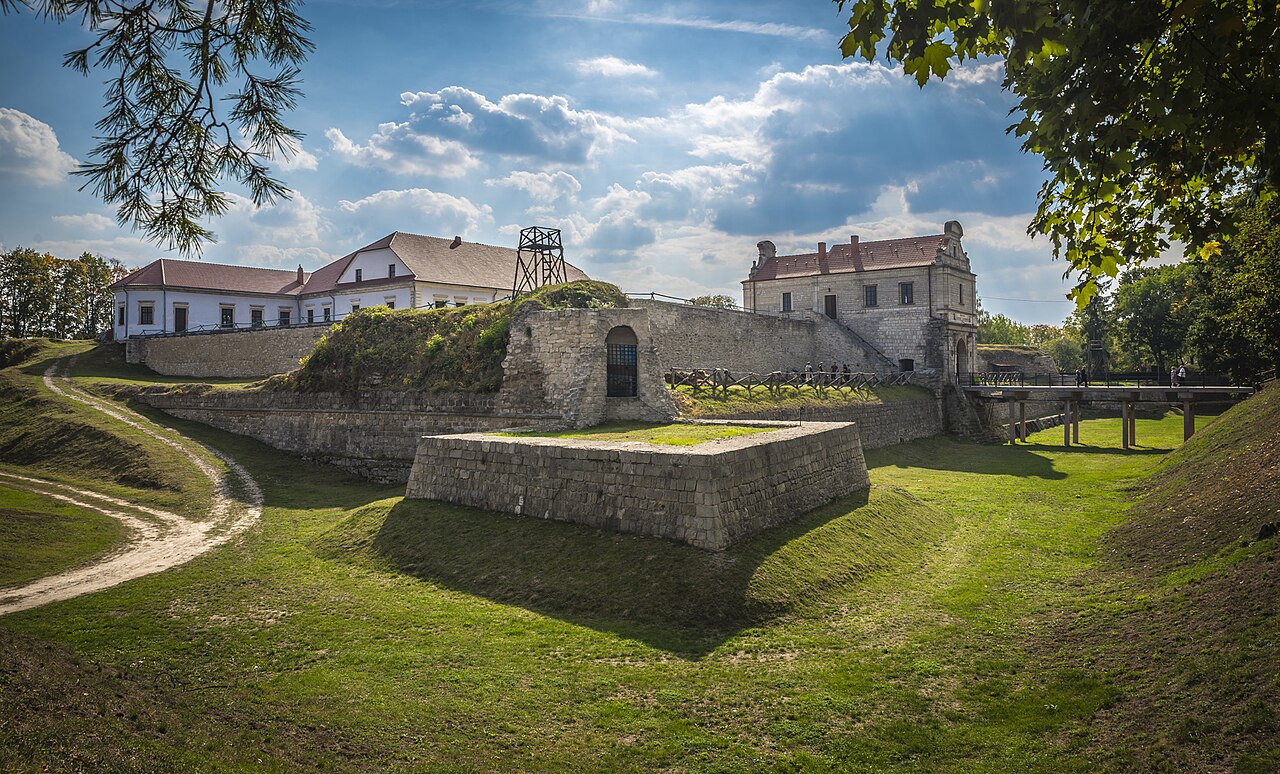
The initial fortress was characterized by a square layout typical of Renaissance military architecture, featuring bastions at each corner to better withstand artillery attacks, a design element introduced during the 1640 modernization under the leadership of Jeremi Vyshnevetsky. Jeremi, a notable military leader and member of the Vyshnevetsky family, not only enhanced the castle's defensive capabilities but also integrated a Carmelite monastery within the complex, underscoring the intertwining of religious and military functions.
The castle's strategic importance was severely tested during the Polish-Turkish War in the late 17th century. In 1675, the fortress endured an intense eleven-day siege by Ottoman forces. Despite the defenders' valiant resistance, the castle fell, resulting in significant casualties among the local nobility and extensive structural damage. This event marked a pivotal moment in the castle's history, leading to restoration efforts in the early 18th century, notably in 1705, which aimed to repair and maintain its defensive role.
Baroque transformation and noble residence
The 18th century brought a profound transformation to Vyshnivets, shifting its identity from a purely military fortress to a noble residence that combined defensive features with the elegance of a palace. In the 1730s, Michał Serwacy Vyshnevetsky commissioned architect Jakub Daprès Blange to design a new palace that embodied this duality. The resulting structure is a harmonious blend of late Baroque and Classicist architectural styles, arranged in a symmetrical U-shaped plan that emphasized both grandeur and balance.
The palace's main body is two stories tall and elongated, flanked by side wings rising an additional level, creating a distinctive silhouette. A central projecting risalit forms the grand entrance, crowned by an ornate triangular pediment adorned with intricate stucco work. These architectural features not only enhanced the palace's aesthetic appeal but also served as symbols of the Vyshnevetsky family's status and cultural aspirations.
Interior layout and artistic collections
The interior was meticulously designed to reflect the refined tastes and wealth of its owners. The ground floor featured a central vestibule with staircases leading to the upper levels, connecting to a salon and a series of interconnected halls arranged to form a mirrored gallery. This gallery was a showcase for the family's extensive collection of portraits, sculptures, antique furniture, and Dutch tiles, highlighting their patronage of the arts and commitment to cultural enrichment.
By the 19th century, the palace housed an impressive private library of approximately 21,000 volumes, along with decorative tableware and a notable collection of weapons. These treasures attracted visitors such as the French novelist Honoré de Balzac, who in 1848 famously dubbed Vyshnivets the "Little Versailles," a testament to its opulence and cultural significance.
Religious and landscape elements
Integral to the palace complex was the Ascension Church, originally built in 1530 and serving as the burial vault for the princely Vyshnevetsky family. The church was rebuilt in conjunction with the palace renovations, maintaining its spiritual and dynastic importance within the estate. Its presence highlights the close relationship between religious devotion and noble identity during the castle's evolution.
The palace grounds are enhanced by an English-style landscaped park established in the 18th century by the gardener Mikler. Renowned as one of the finest in the Volhynia region, the park added a natural elegance to the fortress-palace complex, providing a serene counterpoint to the martial architecture.
Monumental entrance gates designed to resemble ancient triumphal arches once marked the approach to Vyshnivets Palace, reinforcing its grandeur and noble prestige. These gates, alongside the bastion fortifications that extend from the corners of the site, preserve the martial character of the complex despite its residential transformation.
Modern history and preservation efforts
The palace's story continued into the modern era, with ownership passing through several hands, including the industrialist Pavel Demidov, who initiated reconstruction efforts under architect Vladyslav Horodecki. The 20th century brought significant challenges, as the palace suffered damage during both World War I and World War II, particularly in 1944 amid intense fighting.
Postwar restoration in the 1950s and 1960s repurposed the palace for educational and cultural uses, although much of the original interior decoration was lost. In 1963, Vyshnivets Palace was officially recognized as a protected architectural monument, ensuring its preservation for future generations.
Since 2005, the palace and its surrounding park have been part of the National Reserve “Castles of Ternopil Region”, with major restoration work completed by 2014. These efforts have focused on stabilizing the structure, restoring key architectural elements, and promoting the site as a cultural and historical landmark, thus safeguarding the legacy of Vyshnivets Palace as a symbol of Ukraine's rich aristocratic and military heritage.
Architectural significance
Vyshnivets Palace exemplifies the evolution of castle architecture from medieval fortifications to aristocratic palaces that blend defensive and residential functions. Its bastion fortifications reflect the adaptation of Renaissance military innovations, while its later Baroque and Classicist elements showcase the cultural and aesthetic priorities of the nobility in the 18th century. The harmonious integration of religious, residential, and defensive structures within a single complex makes Vyshnivets a unique and valuable example of Eastern European castle architecture.
Visitor experience
Today, visitors to Vyshnivets Palace can explore the preserved architectural features, including the grand facade with its ornate pediment, the bastion walls, and the beautifully landscaped park. The site offers insights into the historical conflicts that shaped the region, the cultural achievements of its noble owners, and the architectural trends that influenced its development. The palace remains a poignant reminder of the complex history of Ukraine's borderlands and the enduring legacy of its aristocratic families.
Frequently asked questions (FAQ)
- When was Vyshnivets Palace originally built?
- Vyshnivets Palace originated as a fortification in 1395, established by Prince Dmytro Koribut to defend the region against Tatar and Turkish raids.
- What architectural styles are featured in Vyshnivets Palace?
- The palace features a blend of late Baroque and Classicist architectural styles, combined with Renaissance military fortifications from earlier periods.
- What significant historical events affected Vyshnivets Palace?
- The palace endured a critical siege by Ottoman forces in 1675 during the Polish-Turkish War, resulting in extensive damage and loss of life.
- Is Vyshnivets Palace open to visitors today?
- Vyshnivets Palace is part of the National Reserve 'Castles of Ternopil Region' and is accessible to visitors interested in exploring its historical and architectural heritage.
- What notable collections were housed in Vyshnivets Palace?
- The palace once housed an extensive private collection including around 600 portraits, sculptures, Dutch tiles, antique furniture, and a library of about 21,000 volumes.
Information
Sources & official resources
Verify the information above using these authoritative references.
Loading map...
Visitor reviews
No reviews yet. Been here? Write the first review and help other travelers!
Write the first reviewVisited this castle? Share your experience
Your review helps other travelers and adds first-hand knowledge to our encyclopedia.