Zbarazh Castle
Zbarazh Castle stands as a remarkable example of early 17th-century military architecture in Ukraine, embodying the sophisticated European "palazzo in fortezza" concept that integrates a noble residence within a fortified stronghold. Located in the town of Zbarazh, the castle occupies a strategic defensive position on Zamkova Hill, surrounded by natural barriers including marshes, forests, ponds, and the steep banks of the Hnizna River. This site has witnessed centuries of turbulent history, evolving from a wooden fortress into a stone bastion fortress designed to withstand the era's advancing artillery warfare.
Early fortifications and historical context
The origins of Zbarazh Castle trace back to the late 14th century, when the Ruthenian princes established a wooden stronghold on the site known as Kniazha Hora or Prince's Hill. Founded in 1393 by Prince Dmytro Koribut, this initial fortification was constructed primarily of wood and earthworks. Its location was chosen for natural defensive advantages, yet it faced repeated destruction during raids by the Crimean Tatars in 1474 and again in 1598. These attacks underscored the region's vulnerability to incursions from the steppe and highlighted the need for a more resilient fortress.
Construction of the stone fortress (1626–1631)
The transformation of Zbarazh Castle into a stone fortress began in the early 17th century under the patronage of Krzysztof Zbaraski, a notable Polish nobleman. Between 1626 and 1631, the castle was rebuilt as a modern bastion fortress, reflecting the latest European military architectural principles aimed at resisting artillery sieges. The design was crafted by the renowned Italian architect Vincenzo Scamozzi, whose treatise on universal architecture influenced many fortifications of the period. Construction was overseen by Venetian military engineer Andrea del Aqua, with probable contributions from Dutch engineer Henryk van Peene.
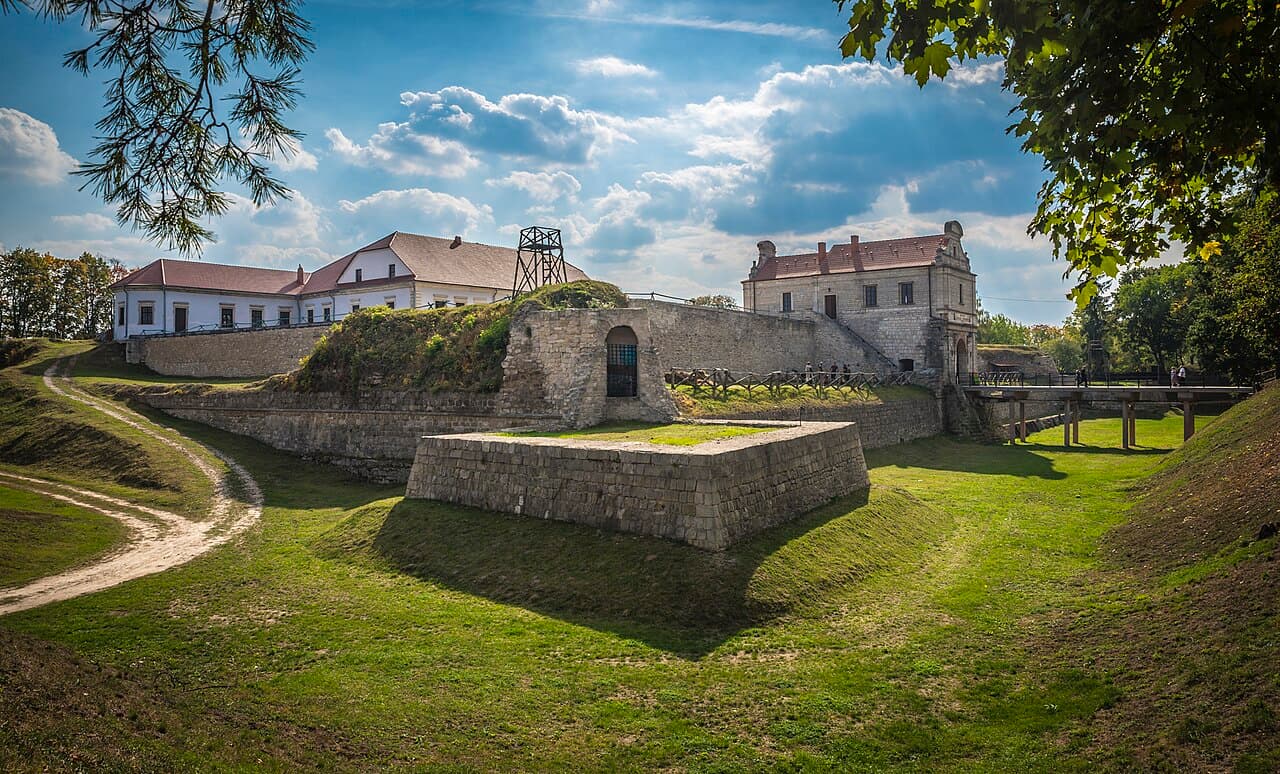
The resulting structure featured a square plan enclosing a rectangular courtyard where the noble palace was situated. The palace itself is a two-story masonry building combining simplified Renaissance style with early Baroque elements. Its plastered walls are adorned with rusticated stonework at the corners, topped by a gabled roof. The entrance is marked by a balcony supported on stone consoles, aligned axially with the gatehouse to create a formal and imposing approach.
Fortifications and defensive features
Zbarazh Castle's fortifications include four pentagonal bastions at each corner, partially preserved up to the height of the connecting curtain walls. These bastions were connected by tunnels allowing defenders to move safely during attacks. The castle walls are robust, approximately 175 centimeters thick on the second floor and 105 centimeters at the basement level, constructed from hewn sandstone with a sturdy stone base and brick upper sections. Casemated curtain walls with steep vertical slopes, known as escarpments, protect the walls and are characteristic of 17th-century bastion fortresses designed to withstand artillery fire.
Surrounding the castle is a broad moat about 40 meters wide, filled with water supplied by an intricate hydraulic system. Beyond the moat, defensive earthworks include a large rampart approximately 23 meters wide and a tall escarped bulwark rising about 12 meters, reinforcing the castle’s defenses on its most vulnerable sides. These extensive earthworks, combined with the natural terrain, made Zbarazh Castle a formidable defensive position in its time.
Historical significance and military engagements
Throughout its history, Zbarazh Castle played a crucial role in the defense of the region within the Polish–Lithuanian Commonwealth. Initially held by the Zbaraski family, the castle later passed to the influential Wiśniowiecki family, notably under Jeremi Wiśniowiecki, a powerful magnate and military leader.
One of the castle’s most significant military tests came during the Cossack uprising of 1649, led by Bohdan Khmelnytsky. The castle endured a prolonged siege by Cossack forces allied with Crimean Tatars, demonstrating its strategic importance and the effectiveness of its fortifications. Later, in 1675, the fortress was captured and burned by Ottoman and Tatar forces commanded by Ibrahim Shishman Pasha, leading to severe damage and marking the decline of its military function.
Post-military history and restoration efforts
Following the destruction in the late 17th century, Zbarazh Castle gradually transitioned from a military fortress to a noble residence and palace. It remained in aristocratic hands, eventually belonging to the Potocki family until the mid-19th century. During this period, the site saw a shift in use, including the establishment of a sugar factory managed by General Bem, reflecting changing economic and social conditions.
In 1896, a fire damaged the castle palace, and during the interwar period of the 1920s and 1930s, Polish reserve officers initiated reconstruction efforts with plans to convert the castle into an educational gymnasium. However, these plans were interrupted by the outbreak of World War II.
Under Soviet control, the castle’s dark cellars were repurposed by the NKVD as prison cells, where many prisoners suffered and died. Their remains were clandestinely disposed of in the castle’s well, which was later sealed with concrete. After Ukraine gained independence in the early 1990s, local communities recovered and respectfully reburied these remains.
Modern preservation and museum function
Since 1994, Zbarazh Castle has functioned as a local history museum and forms part of the State Historic Architectural Reserve of Zbarazh. It became central to the National Reserve of castles of Ternopil Oblast in 2005. Extensive restoration projects have been undertaken to preserve the castle’s structural integrity and historical character. A full restoration was completed in 2019, followed by repairs to the entrance bridge and inner moat walls between 2021 and 2022.
Today, the castle hosts exhibitions featuring archaeological artifacts from the Paleolithic era through the Bronze and Iron Ages, including items from the Trypillian culture and the medieval Kyivan Rus’ period. The museum’s collections also include numismatic items, paper currency, ethnographic materials, sacred art, folk crafts, and works by local artists such as Volodymyr Lipyichuk and Taras Levkiv. These holdings, totaling approximately 50,000 items, offer a comprehensive view of the region’s cultural and historical heritage.
Architectural highlights and interior features
The castle’s interior courtyard once housed the noble palace, a two-story building blending Renaissance and early Baroque architectural styles. The palace’s plastered walls feature rusticated stonework at the corners, and the gabled roof adds a distinctive silhouette to the structure. The axial alignment of the palace entrance with the gatehouse creates a formal and imposing approach to the complex.
Within the castle, arched chambers now serve as exhibition halls, displaying collections of historical arms and wooden sculptures crafted by students of the renowned sculptor Ivan Pinzel. A reconstructed torture chamber in the castle’s damp cellars includes working replicas of period instruments, such as a "witch’s chair" used approximately 300 years ago, illustrating the darker aspects of the castle’s history.
Strategic location and natural defenses
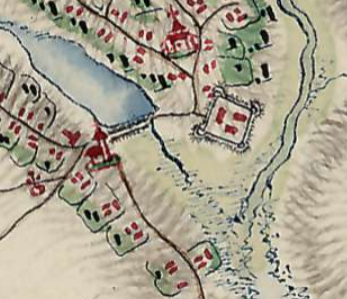
Strategically positioned on Zamkova Hill, the castle benefits from natural defenses including marshy terrain, forests, and water bodies that surround it on multiple sides. The steep riverbanks of the Hnizna River and a deep ravine further protect the site, complementing the man-made fortifications. This combination of natural and constructed defenses made Zbarazh Castle a formidable stronghold against invaders during its peak.
Cultural significance and heritage value
Zbarazh Castle stands as a testament to the military and architectural ingenuity of the early 17th century in Eastern Europe. Its preservation and transformation into a museum ensure that the castle remains a vital cultural monument, reflecting the complex history of the region. The castle’s role in significant historical events, its architectural features, and its extensive collections contribute to its status as a key heritage site in Ukraine.
Frequently asked questions (FAQ)
- How do I get to Zbarazh Castle?
- Zbarazh Castle is located in the town of Zbarazh, Ternopil Oblast, Ukraine. It is accessible by local roads and public transportation from nearby cities such as Ternopil.
- What are the opening hours of Zbarazh Castle?
- The castle is open daily from 10:00 to 17:00, allowing visitors to explore the museum and grounds throughout the week.
- What architectural styles are present in Zbarazh Castle?
- Zbarazh Castle features a blend of Renaissance and early Baroque architectural styles, reflecting its construction period in the early 17th century.
- Can I visit the torture chamber in Zbarazh Castle?
- Yes, visitors can explore a reconstructed torture chamber located in the castle’s cellars, which includes working replicas of period instruments based on historical designs.
- Is Zbarazh Castle wheelchair accessible?
- Due to the castle’s historic structure and terrain, wheelchair access is limited. Visitors with mobility concerns are advised to contact the museum in advance for assistance.
- What exhibits can I see at Zbarazh Castle museum?
- The museum houses extensive collections including archaeological artifacts from the Paleolithic to medieval periods, historical arms, wooden sculptures, numismatics, ethnographic materials, and works by local artists.
Photo gallery

Information
Opening hours
10:00-17:00, daily
Ticket prices
€3 adult, €1.5 child
Current owner
State Historic Architectural Reserve of Zbarazh
Loading map...
Visitor reviews
No reviews yet. Been here? Write the first review and help other travelers!
Write the first reviewVisited this castle? Share your experience
Your review helps other travelers and adds first-hand knowledge to our encyclopedia.