Kremenets Castle
Kremenets Castle stands prominently on Bona Hill in the town of Kremenets, Ukraine, representing a significant medieval hill castle with a rich history spanning nearly a millennium. Originally established as a fortified settlement known as a detinets by the people of ancient Rus', it played a crucial defensive role in the volatile borderlands of Eastern Europe. The castle's strategic location atop a limestone hill provided commanding views of the surrounding terrain, making it a key military and administrative center throughout its existence.
Early history and medieval resilience
The earliest written record of Kremenets Castle dates to around 1064, marking it as one of the longstanding fortifications of the region. During the 13th century, the castle was a focal point of military conflicts, notably withstanding an unsuccessful siege by Hungarian King Andrew II in 1226. Remarkably, it was among the very few Rus' fortresses to resist the devastating Mongol invasion led by Batu Khan in 1240–1241, surviving when much of the surrounding territory was overrun. Despite this resilience, the fortress was dismantled in 1261 under orders from Prince Vasylko Romanovich, complying with demands from the Mongol commander Burundai.
Renaissance revival and military significance
In the following century, the castle experienced a significant revival under the Lithuanian-Ruthenian rulers such as Lubart-Dmytro, Vytautas, and Švitrigaila. It evolved not only as a military bastion but also as a residence for local governors, known as starosts. A notable historical episode was the imprisonment of Švitrigaila in the castle tower from 1409 to 1418, underscoring its role in regional power struggles.
By 1536, the castle became the property of Queen Bona Sforza of the Polish–Lithuanian Commonwealth. Under her patronage, the fortress underwent extensive renovation, incorporating Renaissance architectural features and modernized defenses. These enhancements reflected contemporary military advancements and the aesthetic trends of the period.
The castle's military importance continued into the mid-17th century, enduring attacks during the 1648 Cossack uprising led by Maksym Kryvonis. Despite successful defense efforts, the fortress gradually lost strategic value and ceased to be reconstructed thereafter.
Architectural features and fortifications
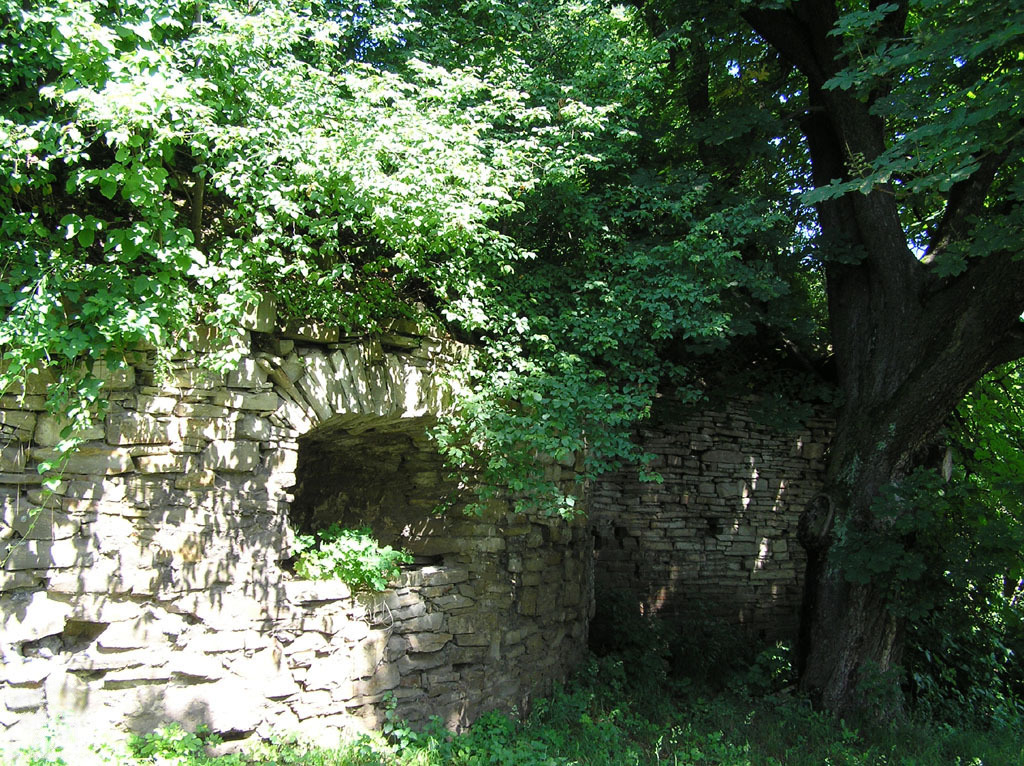
Kremenets Castle occupies a roughly rectangular plateau measuring approximately 65 meters wide by 135 meters long atop Bona Hill. The defensive walls, constructed primarily from locally quarried limestone, reach heights between 8 and 12 meters and thicknesses of 2 to 3 meters, exemplifying robust medieval fortification techniques designed to withstand prolonged sieges.
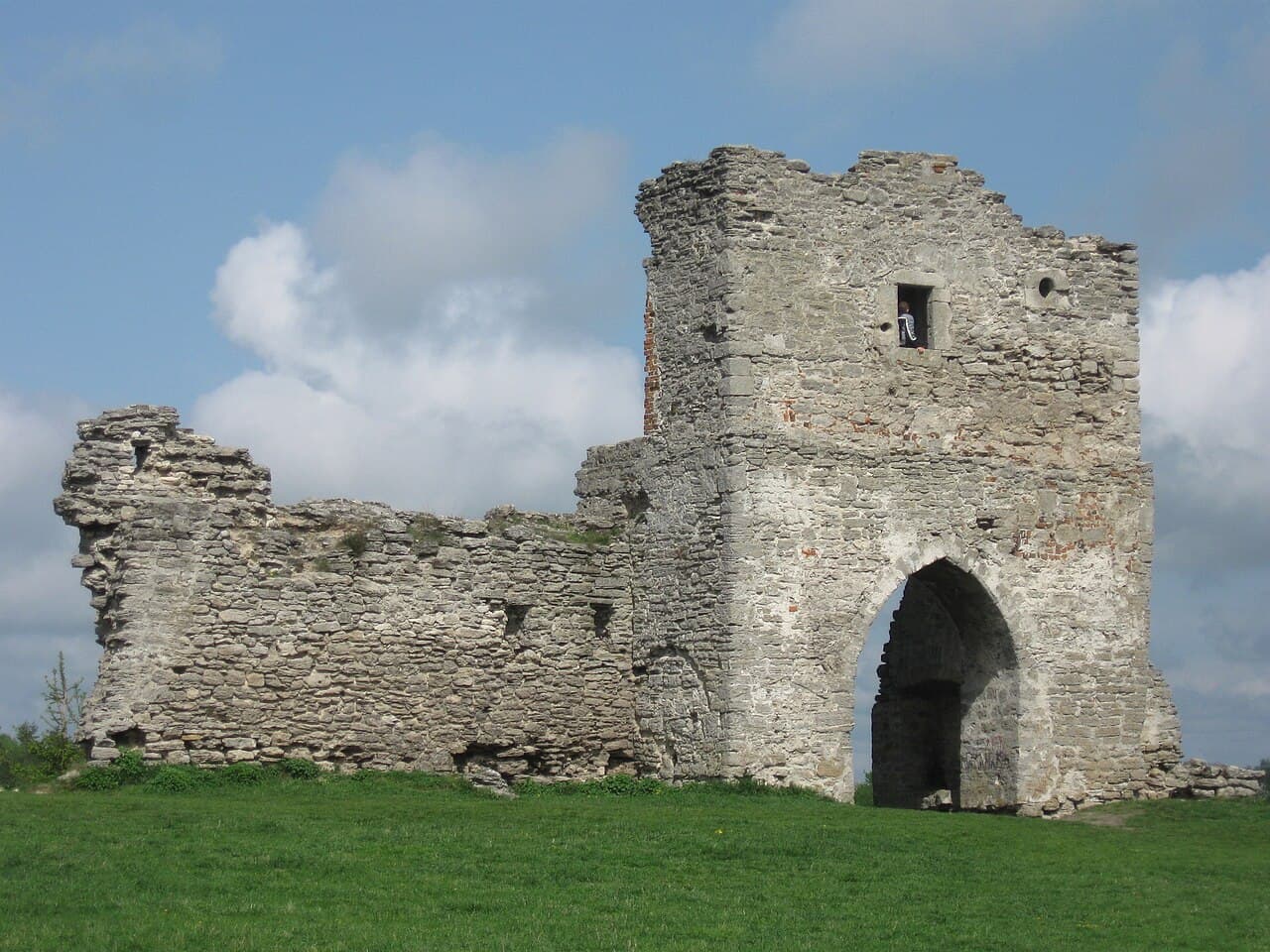
The western fortification is dominated by a distinctive square, two-story gate tower known as the portal tower, featuring a characteristic Gothic-style arch that reflects Western European stylistic influences. This tower served as the main entrance to the castle complex, controlling access and defense.
Nearby stands the well-preserved triple-level tower referred to as "over the new house". This tower's design reveals multipurpose usage: the ground floor functioned as storage, the second level provided residential quarters, and the roof was equipped for mounting cannons, adapting to evolving military technologies.
The castle's fortifications include crenellated parapets that offered protective cover for archers and later cannon operators, along with a covered gallery featuring gun ports, enabling defenders to fire artillery along the ramparts effectively. On the northern side, near the neighboring Chercha mount, two massive stone bastions provided additional defensive depth, complemented by a moat that hindered enemy assaults.
Internal structures and daily life
Within the fortified area, archaeological excavations have uncovered the remains of approximately thirty-four wooden structures belonging to well-off townspeople, indicating a vibrant community living within the castle walls. The compound also included the princely palace, soldiers' barracks, a guardhouse (gaubtvahta), a bakery, a dungeon, and the religious building of St. Michael’s Church. These facilities illustrate the castle's dual military and civilian functions, supporting governance, defense, and daily life.
Initial construction began with wooden palisades during the 13th century, which were later replaced by enduring stone walls. A well, started in the 16th century, was intended to secure a reliable water supply during sieges, though it remained unfinished.
Modern preservation and cultural significance
Today, Kremenets Castle preserves key elements such as the western gate tower, sections of the outer walls, and the tower over the new house. The site features two commemorative plaques that recognize its status as an architectural monument and memorialize its historic defense against Batu Khan’s forces, connecting visitors with the fortress's storied past.
In the 20th century, archaeological investigations in the 1970s revealed important insights into the castle's structure and historical function. More recently, restoration efforts initiated in 2011 by local authorities aim to stabilize and preserve the ruins. A symbolic highlight occurred in 2021 when a 35-meter-high flagpole flying the Ukrainian flag was erected on the castle hill, marking a record height and reinforcing the site's national pride.
Originally, the hill was treeless, causing rockfalls that damaged nearby homes. Subsequent planting of trees on the slopes stabilized the terrain, protecting the local community and enhancing the castle's natural setting.
Kremenets Castle remains a powerful testament to the turbulent history of the borderlands involving Poland, Lithuania, Hungary, and the Mongol Tatars. Its enduring presence offers invaluable insights into medieval military architecture, regional politics, and cultural heritage in Ukraine.
Frequently asked questions (FAQ)
- When was Kremenets Castle originally built?
- Kremenets Castle was first mentioned in historical records around 1064, with initial fortifications dating to the early medieval period of ancient Rus'. The main stone structures were developed during the 13th century.
- What architectural style characterizes Kremenets Castle?
- The castle prominently features Gothic architectural elements, especially visible in the western gate tower with its Gothic-style arch, alongside Renaissance influences from later renovations under Queen Bona Sforza.
- Can visitors explore the castle ruins today?
- Yes, visitors can explore the ruins of Kremenets Castle, including the preserved gate tower and sections of the defensive walls. Restoration efforts have been ongoing since 2011 to maintain the site.
- Why is Kremenets Castle historically significant?
- Kremenets Castle is historically significant for its resilience during the Mongol invasion, its role as a military and administrative center in Eastern Europe, and its architectural evolution reflecting Gothic and Renaissance styles.
- What notable events took place at Kremenets Castle?
- Notable events include the unsuccessful siege by Hungarian King Andrew II in 1226, the imprisonment of Švitrigaila from 1409 to 1418, and its defense against Cossack attacks in 1648.
Photo gallery

Information
Current owner
Municipality
Loading map...
Visitor reviews
No reviews yet. Been here? Write the first review and help other travelers!
Write the first reviewVisited this castle? Share your experience
Your review helps other travelers and adds first-hand knowledge to our encyclopedia.