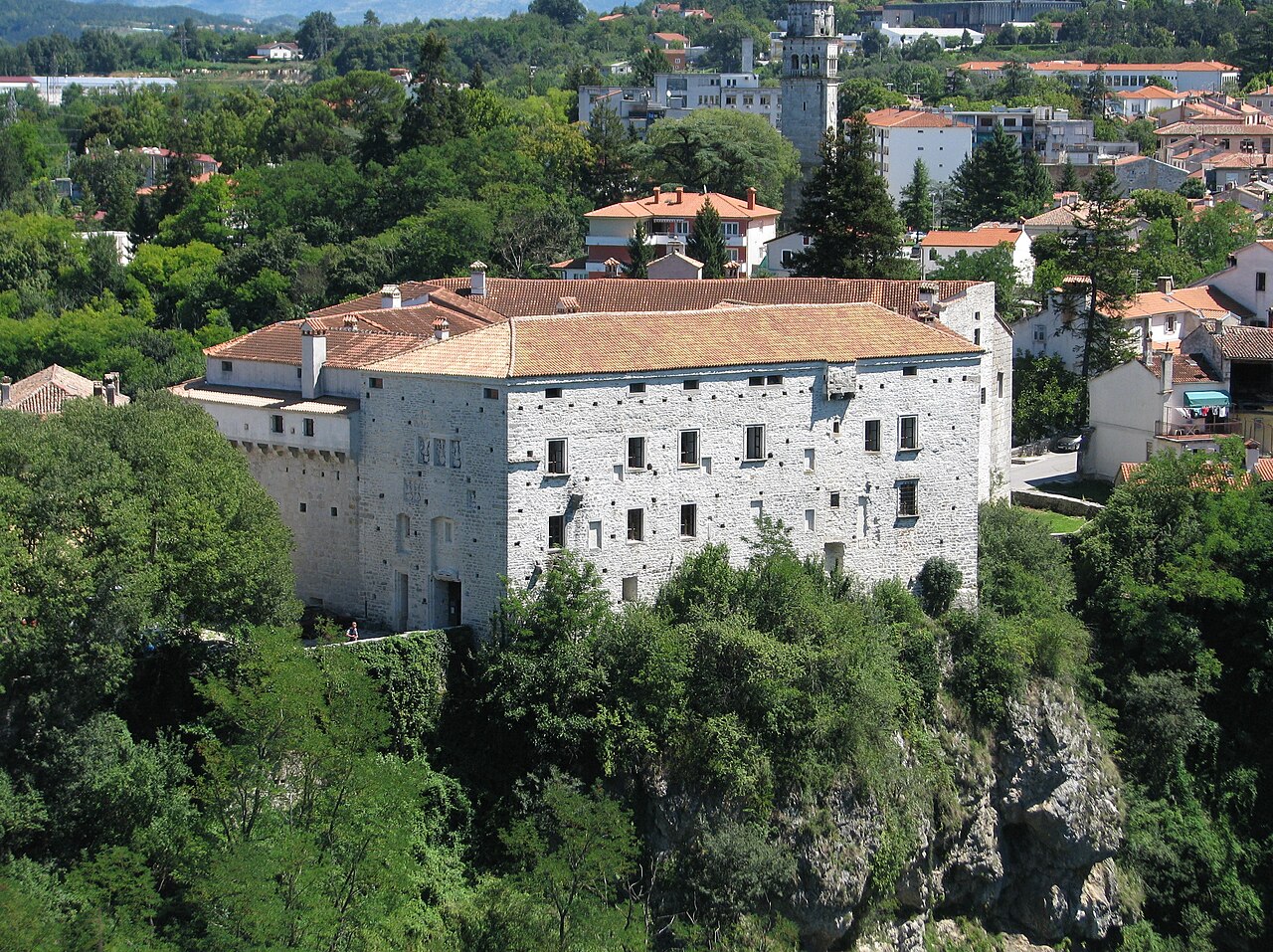
Vrsar Castle
Vrsar castle stands as a significant historical monument in the coastal town of Vrsar, Croatia. Originally established as a residence for the bishop of Poreč, who governed the area from the 6th century until 1778, the castle reflects centuries of architectural evolution and regional history. Though its origins trace back to medieval times, the castle underwent substantial alterations in the 17th century when it was remodeled in the Baroque style, blending medieval fortification features with Renaissance and Baroque aesthetics.
Historical background and ecclesiastical significance
The castle's initial role was as a fortified episcopal palace, serving as the administrative and residential seat for the bishops who wielded both spiritual and temporal power over Vrsar and its surroundings. This dual role was common in medieval Europe, where bishops often held feudal lordship. The castle's location on a prominent hill overlooking the town and the Adriatic Sea underscored its strategic and symbolic importance.
In 1778, following the establishment of Venetian rule, the castle was secularized and taken from the Church's control. This marked a significant shift in its function and ownership, as the Venetian Republic reorganized territorial governance. Subsequently, in the 19th century, the castle entered private hands under the Vergottini family, which maintained it as a residential property.
Architectural features and modifications
Medieval origins and layout
The core structure of Vrsar castle is medieval, characterized by robust stone walls and a commanding position typical of defensive hilltop castles. Its design includes thick fortification walls, narrow windows for defense, and a compact footprint suited to its original purpose as a stronghold and bishop's residence.
Baroque transformation in the 17th century
The substantial remodeling in the 17th century introduced Baroque architectural elements, which softened the fortress-like appearance with more decorative features. This included the addition of ornamental facades, larger windows, and interior refurbishments that reflected the tastes and status of its ecclesiastical occupants. The Baroque influence is evident in the castle's elegant proportions and some of its interior detailing, which contrasted with the austerity of the medieval structure.
Location and visual prominence
Vrsar castle dominates the townscape, visible from multiple vantage points including the eastern entrance to the town, the open sea, and the nearby island of Sveti Juraj. Its elevated position not only provided defensive advantages but also made it a landmark for sailors and visitors approaching the town. The castle remains the tallest and largest historical building in Vrsar, contributing significantly to the town's cultural heritage and identity.
Modern history and current status
After centuries of ecclesiastical and noble ownership, the castle was renovated in 2001 to preserve its structural integrity and historical character. Today, it serves as a privately owned residential property, no longer accessible to the public but maintained as an important piece of Vrsar's architectural legacy. The renovation respected the castle's historical layers, preserving both its medieval and Baroque features.
Architectural and cultural significance
Vrsar castle exemplifies the evolution of a medieval fortress into a Baroque residence, reflecting the broader historical changes in the region from ecclesiastical rule to Venetian secular governance. Its preservation offers insight into the architectural trends and social history of Istria and the Adriatic coast. The castle's commanding presence and historical associations make it a key landmark in Croatian cultural heritage.
Frequently asked questions (FAQ)
- What is the historical significance of Vrsar Castle?
- Vrsar Castle, dating back to the 12th century, served as a strategic fortification against invasions and played a crucial role in the defense of the region. Its rich history is intertwined with the development of Vrsar and the surrounding areas, making it a significant landmark in Croatian heritage.
- When was Vrsar Castle built?
- The construction of Vrsar Castle began in the early 12th century, with various modifications and expansions occurring in subsequent centuries. This long history has contributed to its unique architectural style, blending different influences from various periods.
- What are the opening hours for Vrsar Castle?
- Vrsar Castle is typically open to visitors from 9 AM to 5 PM, but hours may vary during the off-peak season. It’s advisable to check the official website or local tourist information for the most up-to-date opening times before planning your visit.
- Can I access Vrsar Castle with a wheelchair?
- While Vrsar Castle is a historical site, access can be challenging due to its ancient architecture and uneven pathways. However, efforts have been made to improve accessibility, and it’s best to contact the site beforehand to inquire about specific accommodations for visitors with mobility needs.
- Is it possible to take guided tours of Vrsar Castle?
- Yes, guided tours are available at Vrsar Castle, offering visitors an in-depth look at its history, architecture, and significance. These tours are led by knowledgeable guides and can enhance your understanding of this fascinating historical site.
- What is the best time to visit Vrsar Castle?
- The best time to visit Vrsar Castle is during the spring and early autumn months when the weather is pleasant and the tourist crowds are smaller. This allows for a more enjoyable experience as you explore the castle and surrounding areas.
- Are there any nearby attractions to visit after Vrsar Castle?
- Yes, there are several attractions near Vrsar Castle, including beautiful beaches, the picturesque old town of Vrsar, and the Lim Fjord. Visitors can enjoy a variety of activities like hiking, swimming, and exploring local restaurants and shops.
- What are the ticket prices for Vrsar Castle?
- Ticket prices for Vrsar Castle are generally affordable, with discounts available for students and seniors. It’s recommended to check the official website for current pricing and any special promotions that may be offered during your visit.
Information
Loading map...
Visitor reviews
No reviews yet. Been here? Write the first review and help other travelers!
Write the first reviewVisited this castle? Share your experience
Your review helps other travelers and adds first-hand knowledge to our encyclopedia.