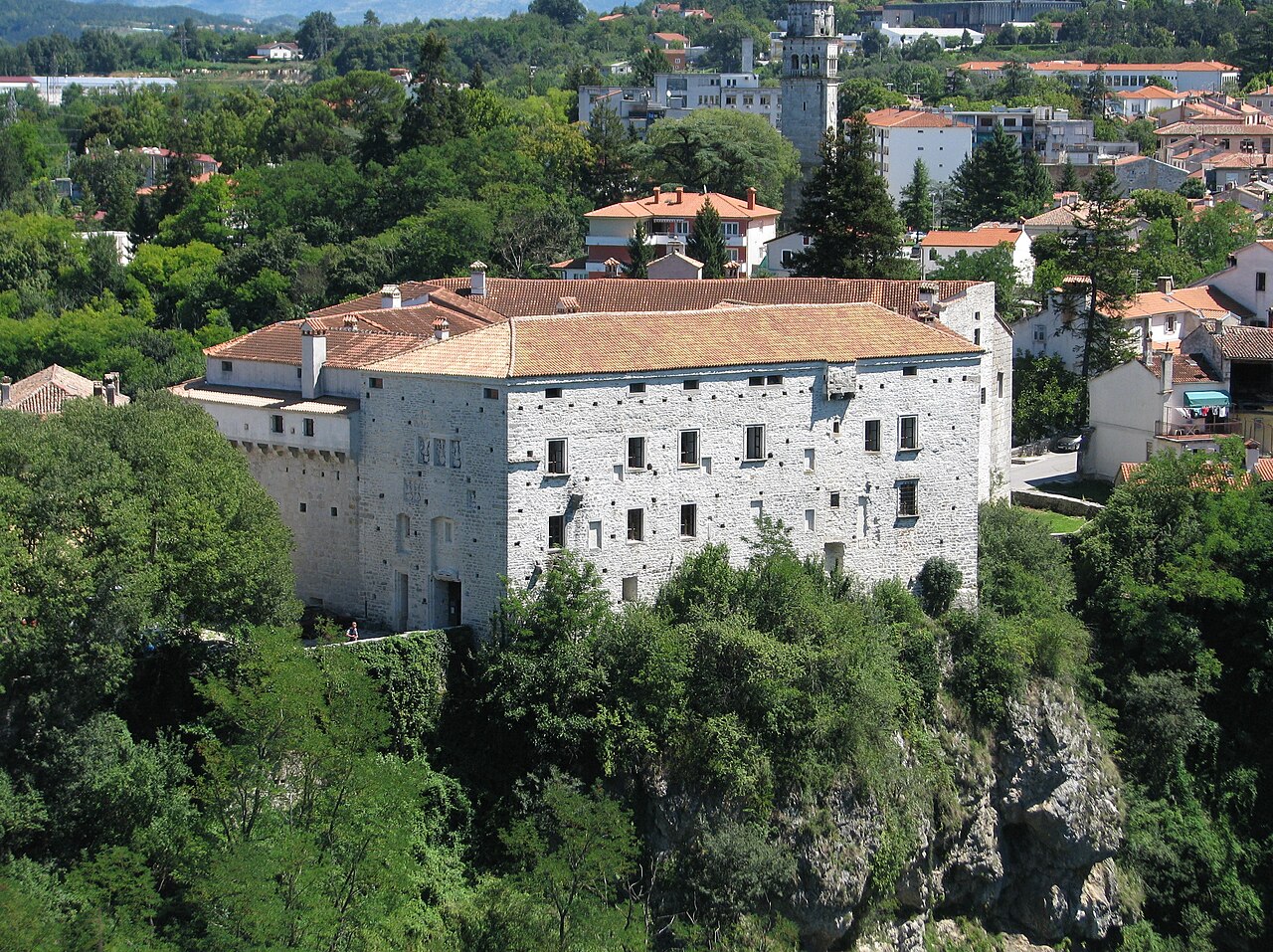
Dvigrad Castle Ruins
Dvigrad castle ruins stand as a significant historical site near Kanfanar, Croatia, representing the remains of a medieval fortified town with origins dating back to the 9th century AD. Originally, the site comprised two settlements: Moncastello and Castel Parentino. The name "Dvigrad" itself means "two towns," reflecting this dual foundation. The ruins visible today correspond primarily to Moncastello, the northern town, while Castel Parentino was abandoned in the 10th century, likely due to shifting political and military circumstances.
The first recorded mention of Dvigrad was in 879 AD, when it came under the authority of the Patriarch of Aquileia. However, archaeological and historical evidence suggests the site had been inhabited much earlier, as part of the Roman provincial network. The strategic location of Dvigrad made it an important fortified settlement throughout the Early medieval period.
Historical context and political changes
During the Middle Ages, Dvigrad experienced various shifts in control. It eventually fell under the rule of the Counts of Gorizia. In the turbulent conflicts involving the Republic of Venice and the Genoese, Dvigrad suffered significant damage. The Genoese, fighting against Venetian interests, destroyed many towns in Istria, including Dvigrad. This warfare likely led to the permanent abandonment of Castel Parentino, while Moncastello was renovated and continued to function as a fortified town.
The 16th century brought renewed conflict between Venice and Austria, marking a period of instability. These conflicts coincided with devastating plague epidemics and outbreaks of malaria, which severely impacted the population. By 1630, most inhabitants had left Dvigrad, relocating to the nearby town of Kanfanar. Only a few impoverished families remained, and by 1650, church records indicate just three families were still present. The Church of St. Sophia, a central feature of the town, was abandoned around this time, accelerating the town's decline.
Architectural features and town layout
The ruins of Dvigrad today reveal a well-preserved example of a medieval town castle. The settlement was enclosed by two concentric rings of defensive town walls, connected by a main town gate. There are three surviving defensive towers, strategically positioned to protect the settlement. This fortification system reflects typical medieval military architecture designed to withstand sieges and raids.
Dominating the site is the Church of St. Sophia, situated on the highest point within the town. This church occupies the same location as an earlier Early Christian place of worship. The present structure, built in the 13th century, features a fascinating three-nave Romanesque design, characteristic of the period's ecclesiastical architecture. The church's robust construction and style underline its importance as a spiritual and communal center.
In front of the church lies the main town square and the town palace, which served as the administrative heart of Dvigrad. The western part of the town was designated for military quarters, housing soldiers and defensive personnel. The southwestern area contained craftsmen's workshops, reflecting the town's economic activities. The remaining space was occupied by residential houses for ordinary citizens, illustrating a typical medieval urban layout with functional zoning.
Defensive structures
The two rings of walls provided layered protection, a common feature in medieval fortifications to slow down attackers and provide fallback positions. The three towers offered vantage points for surveillance and defense, allowing defenders to cover the approaches to the gates and walls effectively. The main gate was a critical choke point, fortified to control access and enhance security.
Religious and civic buildings
The Church of St. Sophia not only served religious functions but was also a symbol of the town's identity and resilience. Its Romanesque architecture includes characteristic rounded arches, thick walls, and sturdy pillars supporting the three naves. The adjacent town palace likely housed local governance and administrative offices, emphasizing the town's organized civic structure.
Decline and abandonment
The combination of military conflicts, disease outbreaks, and economic decline led to Dvigrad's gradual abandonment. The plague and malaria epidemics of the 16th and 17th centuries decimated the population, prompting survivors to seek safer and more prosperous locations. By the mid-17th century, Dvigrad was largely deserted, with only a few families remaining until even those eventually left.
Today, the ruins of Dvigrad provide valuable insights into medieval urban planning, defensive architecture, and the historical dynamics of Istria. The site attracts historians, archaeologists, and visitors interested in exploring a well-preserved example of a fortified medieval town.
Preservation and current status
The remains of Dvigrad are classified as ruins, yet they are remarkably intact considering their age and history of conflict. Conservation efforts have aimed to stabilize the structures and make the site accessible for educational and touristic purposes. Visitors can explore the defensive walls, towers, church, and remnants of the town palace, gaining a tangible sense of medieval life in this part of Croatia.
Located near Kanfanar in the Istria region, Dvigrad is an important cultural heritage site that illustrates the complex history of territorial control, warfare, and settlement patterns in the Adriatic region.
Frequently asked questions (FAQ)
- How do I get to Dvigrad Castle Ruins?
- Dvigrad Castle Ruins is located near Kanfanar in Croatia, easily accessible by car. There is parking available near the site, and public transport options are limited, so driving is the most convenient way to visit.
- What is the historical significance of Dvigrad Castle?
- Dvigrad Castle is a medieval site with a rich history dating back to the 12th century. It was once a thriving town and an important fortress, showcasing the architectural styles and social structures of the time.
- When was Dvigrad Castle abandoned?
- Dvigrad Castle was abandoned in the 17th century due to a series of plagues and conflicts that led to the decline of its population. Today, the ruins stand as a testament to its historical importance and the challenges faced by its inhabitants.
- Can I enter the ruins of Dvigrad Castle?
- Yes, visitors can explore the ruins of Dvigrad Castle, which offers a glimpse into its past. However, be cautious as some areas may be uneven or crumbling, so appropriate footwear is recommended.
- Why is Dvigrad Castle a popular tourist attraction?
- Dvigrad Castle is popular for its stunning views of the surrounding countryside and its fascinating history. The ruins provide a unique opportunity for exploration and photography, attracting history enthusiasts and nature lovers alike.
- Is it possible to visit Dvigrad Castle year-round?
- Yes, Dvigrad Castle Ruins can be visited year-round, but the best times are in spring and early autumn when the weather is pleasant. During the summer months, it can get quite busy, so plan your visit accordingly.
- What are the opening hours for Dvigrad Castle Ruins?
- Dvigrad Castle Ruins are generally open to visitors during daylight hours, but it's advisable to check local resources for specific opening times as they may vary seasonally. Always plan ahead to ensure you make the most of your visit.
- Are there any nearby attractions to see after visiting Dvigrad Castle?
- Yes, nearby attractions include the charming town of Kanfanar and the picturesque Lim Fjord. Additionally, the coastal towns of Rovinj and Poreč are not far away, offering further opportunities for exploration and relaxation.
- What are the ticket prices for Dvigrad Castle?
- Access to Dvigrad Castle Ruins is typically free, allowing visitors to enjoy the historical site without an entrance fee. However, be sure to check for any special events or guided tours that may have associated costs.
Information
Loading map...
Visitor reviews
No reviews yet. Been here? Write the first review and help other travelers!
Write the first reviewVisited this castle? Share your experience
Your review helps other travelers and adds first-hand knowledge to our encyclopedia.