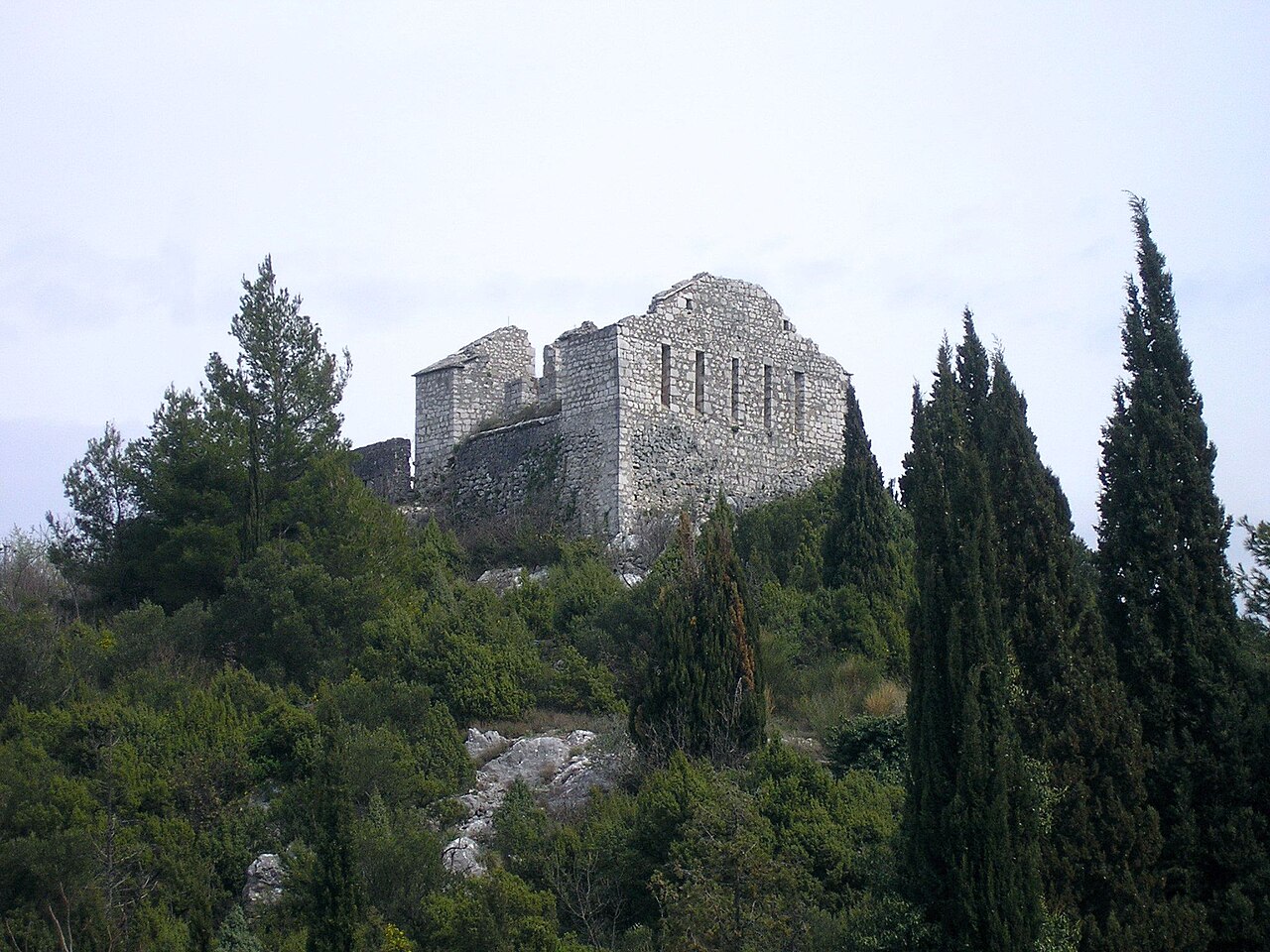
Vrgorac Castle
Vrgorac Castle, locally known as Tvrđava Gradina, is a notable late medieval fortress situated above the town of Vrgorac in the Split-Dalmatia County of Croatia. The name "Gradina" is a common Croatian term for a fortified settlement, and in this context, it refers to the castle, which played a significant role in regional defense during the turbulent 15th century.
The castle was constructed in the first half of the 15th century by the local noble and warlord Pavao Jurjević. Its primary purpose was to protect the county of Gorska from the advancing Ottoman Empire and to control the vital traffic routes between the interior regions and the Dalmatian coast. The strategic placement of the castle on elevated terrain allowed for effective surveillance and defense against invaders.
Architectural features and defensive structures
The original castle complex was designed as a hill castle with robust defensive walls and towers typical of late medieval fortifications. The layout included a central courtyard surrounded by fortified walls, providing both residential and military functions. The castle's position above the town gave it a commanding view of the surrounding landscape, essential for early warning and defense.
Following the Ottoman conquest in 1493, the fortress was adapted to meet the needs of its new rulers. The Ottomans established it as a local seat of government, reinforcing its military capabilities. A significant addition was the construction of the Avala Tower, a round tower located on a hill east and below the main castle. This tower was strategically placed to control the access path to the castle, enhancing its defensive perimeter and making the fortress nearly impregnable.
During Ottoman rule, several square tower houses were also built in the town below the castle. These structures served both residential and defensive purposes, reflecting the Ottoman architectural influence in the region.
Historical transitions and cultural significance
The Ottoman period lasted until 1690, when the Ottomans were expelled from Vrgorac. Subsequently, the castle came under the control of the Republic of Venice. The Venetians made their own modifications, including the construction of a small chapel inside the castle dedicated to St. Anthony the Abbot. The castle remained garrisoned during this period, maintaining its military relevance.
With the advent of the Austro-Hungarian rule over Bosnia and Herzegovina starting in 1878, the castle's military importance declined. Advances in military technology and changes in political boundaries rendered such fortifications less critical, leading to its gradual abandonment as a defensive structure.
Current condition and visitor information
Today, Vrgorac Castle stands as a well-preserved ruin accessible to the public. Visitors can reach the castle via a narrow, rocky path that takes approximately 15 minutes from the nearest road. The site offers a glimpse into the region's medieval and Ottoman past, with visible remains of the castle walls and towers.
While the main castle area is freely accessible, the Ottoman Avala Tower remains closed to visitors, preserving its structural integrity. The castle's elevated position provides scenic views of the surrounding landscape, making it a popular destination for history enthusiasts and hikers alike.
Architectural style and classification
Vrgorac Castle is classified as a hill castle typical of the late medieval period. Its architectural style reflects the defensive needs of the era, with thick stone walls, battlements, and strategically placed towers. The later Ottoman modifications introduced elements characteristic of their military architecture, including the round Avala Tower and fortified residential buildings in the nearby town.
Frequently asked questions (FAQ)
- What is Vrgorac Castle known for?
- Vrgorac Castle is known for its rich history and stunning architecture that dates back to the Middle Ages. It served as a strategic military fortification and residence, reflecting the cultural heritage of the region and offering insights into the historical significance of Croatia.
- When was Vrgorac Castle built?
- Vrgorac Castle was built in the 15th century, during a time of political turmoil in the region. Its construction was aimed at providing defense against invaders and showcasing the power of the local nobility.
- What are the opening hours for Vrgorac Castle?
- Vrgorac Castle is typically open to visitors from 10 AM to 6 PM during the summer months. However, it's advisable to check ahead for any seasonal changes in opening hours or special events that may affect accessibility.
- Can I visit Vrgorac Castle year-round?
- Yes, Vrgorac Castle is open for visitors year-round, although the best time to visit is during the spring and autumn months when the weather is pleasant. Winter visits can be less crowded, but some areas may be less accessible due to weather conditions.
- Is it possible to take guided tours of Vrgorac Castle?
- Yes, guided tours are available at Vrgorac Castle, providing in-depth insights into its history and architecture. These tours are conducted by knowledgeable guides who can enhance your experience with interesting anecdotes and historical context.
- What are the ticket prices for visiting Vrgorac Castle?
- Ticket prices for Vrgorac Castle are quite reasonable, typically ranging from 5 to 10 euros per person. Discounts may be available for groups, students, and seniors, making it an affordable option for history enthusiasts.
- Are there nearby attractions to visit when I go to Vrgorac Castle?
- Yes, there are several nearby attractions worth exploring, including the charming town of Vrgorac itself and the stunning natural landscapes of the surrounding area. Visitors can also enjoy local restaurants and shops that highlight the region's culture.
- How do I get to Vrgorac Castle?
- Vrgorac Castle is easily accessible by car, located just off the main roads connecting major cities in Croatia. Public transportation options may be limited, so it’s recommended to plan your visit with a personal vehicle or consider local taxi services.
- Why is Vrgorac Castle important to Croatian history?
- Vrgorac Castle holds significant importance in Croatian history as a symbol of medieval power and defense mechanisms against invasions. It embodies the architectural style and social structure of its time, making it a valuable site for understanding Croatia's historical narrative.
Loading map...
Visitor reviews
No reviews yet. Been here? Write the first review and help other travelers!
Write the first reviewVisited this castle? Share your experience
Your review helps other travelers and adds first-hand knowledge to our encyclopedia.