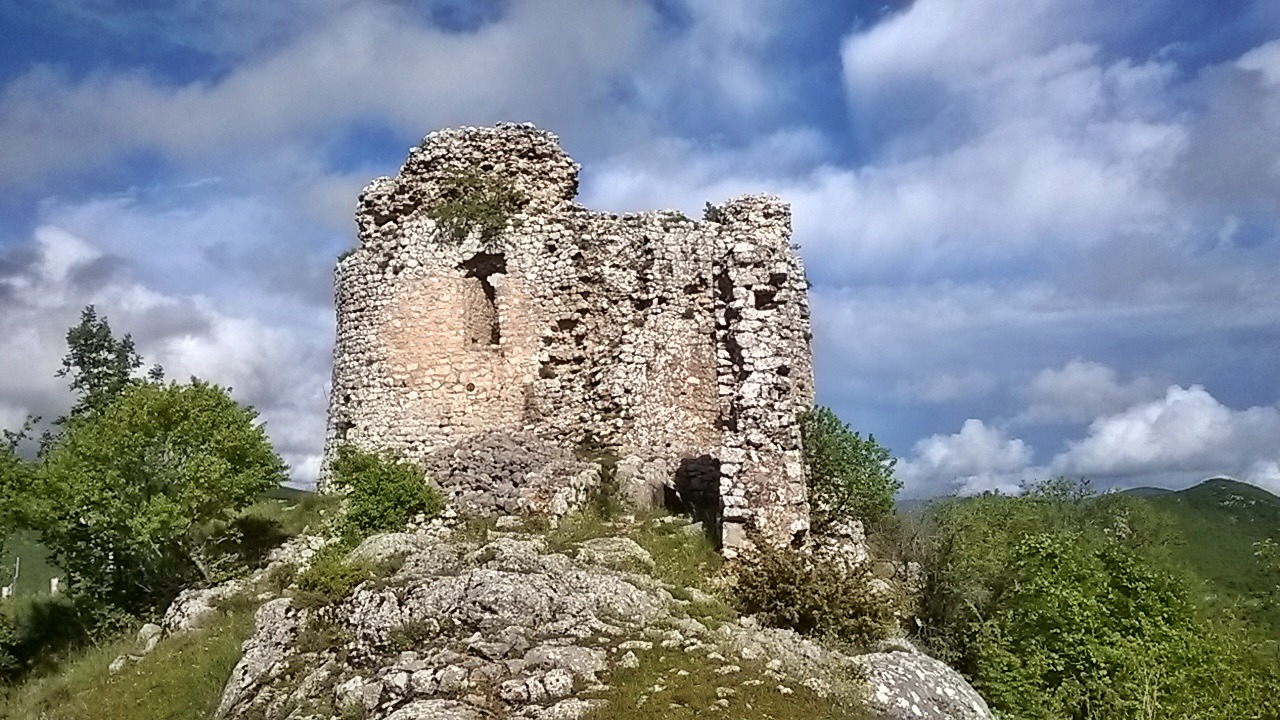
Topana Castle
Topana Castle, locally known as Tvrđava Topana, is a remarkable historic fortress perched above the town of Imotski in the Split-Dalmatia County of Croatia. This castle occupies a naturally defensive position atop a cliff flanked by two deep sinkholes, a location that has been of strategic importance since prehistoric times. The site originally hosted a hill fort long before the castle's construction, demonstrating its enduring military significance.
Early history and strategic location
The natural geography of the site is striking; the castle is situated between two profound sinkholes, which provided formidable natural defenses. One of these sinkholes, the eastern one, was partially filled during the 1970s to accommodate a football stadium, yet the dramatic landscape remains a defining feature of the castle's setting. The presence of a prehistoric hill fort indicates that this location was valued for defense and surveillance long before the medieval period.
The earliest documented mention of a castle at Imotski dates back to the 10th century, referenced by the Byzantine Emperor Constantine VII Porphyrogenitus. This suggests that the original fortress was likely constructed by the Byzantines on the foundations of the earlier fortifications, marking Topana Castle as an important stronghold during the Early Medieval period.
Medieval construction and the Nelipčić family
The current ruins primarily date from a later phase of construction in the 13th and 14th centuries, when the castle was under the control of the Nelipčić family, a noble Croatian lineage. During this time, the castle was expanded and fortified to meet the defensive needs of the region, reflecting the turbulent political landscape of medieval Dalmatia. The architecture from this period likely included robust curtain walls, defensive towers, and battlements designed to withstand siege warfare.
Ottoman conquest and transformation
In 1493, the castle fell to the Ottoman Empire, which marked a significant shift in its function and architecture. The Ottomans made Topana their regional administrative center, adapting and reconstructing the fortress to suit their military and administrative requirements. The castle's name, Topana, is derived from the Turkish word for a place where cannons are kept, indicating its role as an artillery bastion during Ottoman rule. This period saw the introduction of cannon emplacements and other modifications to accommodate gunpowder weaponry, reflecting the changing nature of warfare.
Venetian restoration and decline
After nearly 230 years under Ottoman control, the fortress was handed over to the Venetian Republic in 1717. The Venetians undertook significant restoration and strengthening works to reinforce the castle's defenses. However, with the diminishing Ottoman threat by the late 18th century, the strategic importance of Topana Castle waned. By 1816, the fortress was abandoned, leading to its gradual decline and ruin.
Legend and cultural significance
A local legend tells that the border between the Ottoman Empire and the Venetian Republic was established by firing a cannonball from Topana Castle down into the fields below. This historic border now corresponds to the modern boundary between Croatia and Bosnia and Herzegovina. The castle's location and history symbolize the cultural and political crossroads of the region.
Today, Topana Castle is freely accessible to visitors and is a popular site for its panoramic views, especially overlooking the nearby Blue Lake (Modro Jezero) sinkhole to the west. The castle ruins provide a striking backdrop for cultural events held during the summer months, enhancing its role as a heritage landmark.
Architectural features and surroundings
The fortress dominates the landscape near the slopes of the Blue Lake, a natural karst phenomenon famous for its stunning beauty. Within the castle's environs lies a small church dedicated to Our Lady of the Angels, the patron of the Imotski borderland, underscoring the site's spiritual as well as military significance. The castle's defensive walls, towers, and battlements, though partially ruined, still convey the strength and strategic design that characterized its centuries of use.
Topana Castle's architecture reflects a blend of influences from its Byzantine origins through its medieval Croatian enhancements, Ottoman modifications, and Venetian restorations. This layered history is visible in the masonry styles, defensive adaptations, and the layout of the fortress, making it an invaluable site for understanding the military architecture of the Dalmatian hinterland.
Visiting Topana Castle
Visitors to Topana Castle can explore the ruins freely, enjoying sweeping views of Imotski and the Blue Lake. The site is favored for hiking and photography, and its cultural events provide a lively connection to the region's heritage. The castle's elevated position offers a unique vantage point to appreciate the natural and historical landscape of southern Croatia.
Frequently asked questions (FAQ)
- How do I get to Topana Castle in Imotski?
- Topana Castle is located on a cliff above the town of Imotski in Split-Dalmatia County, Croatia. It is accessible by foot via marked hiking trails from the town center, offering a scenic ascent to the ruins.
- What is the historical significance of Topana Castle?
- Topana Castle has strategic importance dating back to the 10th century Byzantine period. It served as a military fortress for the Nelipčić family, the Ottoman Empire, and later the Venetian Republic, reflecting the region's complex history.
- Can I visit the ruins of Topana Castle for free?
- Yes, Topana Castle ruins are freely accessible to the public. Visitors can explore the site and enjoy panoramic views without an entrance fee.
- What architectural styles are visible at Topana Castle?
- The castle exhibits a blend of architectural influences from its Byzantine origins, medieval Croatian fortifications, Ottoman artillery adaptations, and Venetian restorations, visible in its masonry and defensive structures.
- When is the best time to visit Topana Castle?
- The best time to visit Topana Castle is during the spring and summer months when the weather is favorable for hiking and outdoor cultural events are held at the site.
Information
Loading map...
Visitor reviews
No reviews yet. Been here? Write the first review and help other travelers!
Write the first reviewVisited this castle? Share your experience
Your review helps other travelers and adds first-hand knowledge to our encyclopedia.