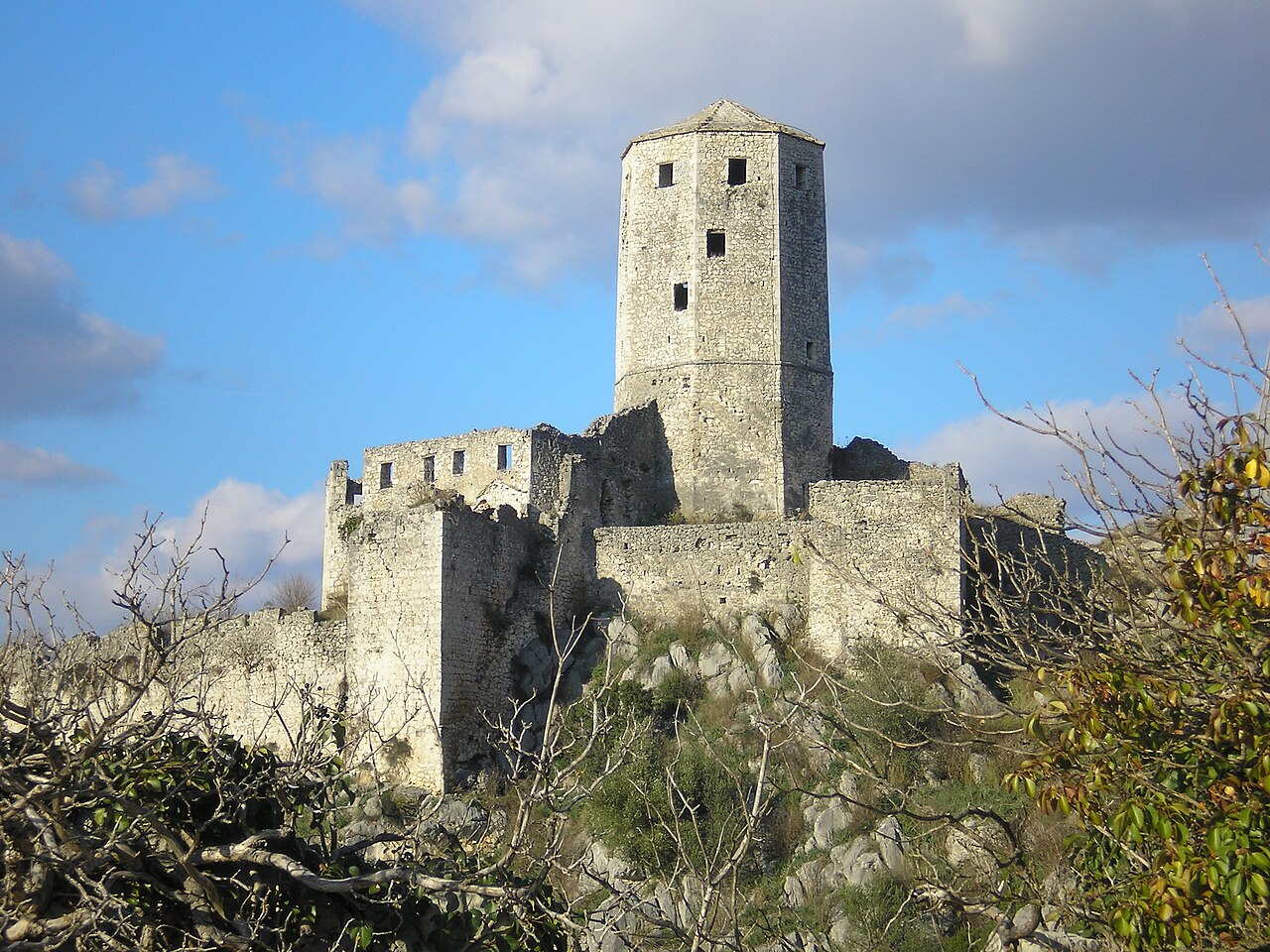
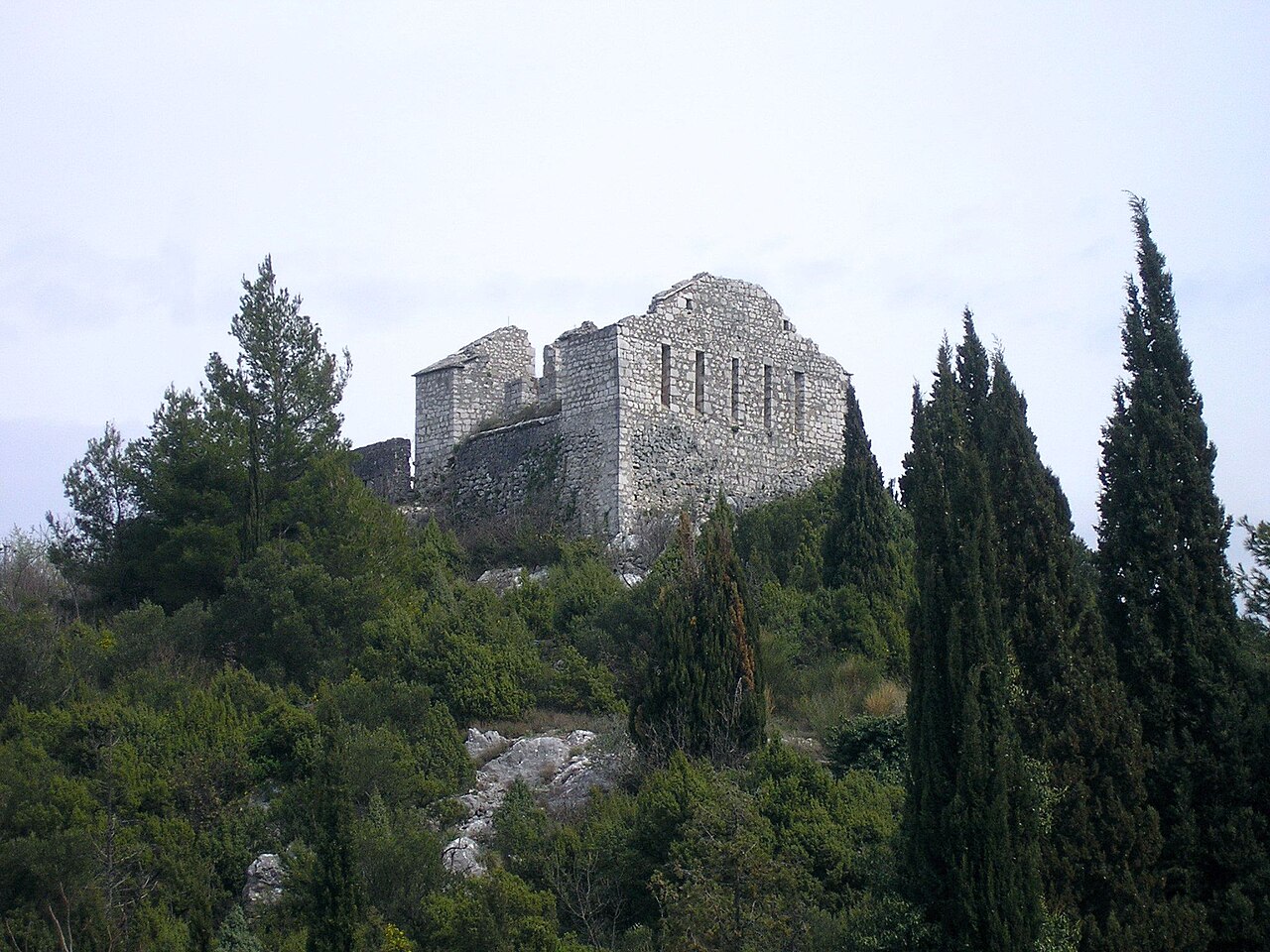
Fortress of Herzog Stjepan Vukčić Kosača
The Fortress of Herceg Stjepan in Ljubuški, Bosnia and Herzegovina, stands as a significant medieval stronghold in the western region of Herzegovina. Also known as the Old Town Ljubuški, this fortress crowns the karst hill Buturovica at an elevation of 396 meters above sea level. Its strategic location near the town of Ljubuški and accessibility via a modern macadam road make it a popular destination for visitors exploring the cultural and natural heritage of Herzegovina and nearby Croatia.
Constructed in the 15th century, the fortress is closely associated with Herceg Stjepan Vukčić Kosača, a powerful nobleman from the influential Kosača family. He was among the most dominant figures in the region during the late medieval period. The fortress served as one of his residences, built amid familial disputes with his sons, notably Vladislav, who aligned himself with the Republic of Dubrovnik. This internal conflict led Herceg Stjepan to establish his stronghold at Ljubuški, where Vladislav's attempts to seize the fortress were unsuccessful.
Architectural layout and features
The fortress complex is divided into two primary sections: the original medieval core and the later ottoman additions surrounding it. The medieval part, located at the center, retains remnants of fortified walls, towers, and residential buildings that illustrate the defensive and domestic architecture of the period. The fortress's position on a steep karst hill provided natural defensive advantages, supplemented by robust stone construction typical of late medieval fortifications.
The Ottoman section, built after the fortress's capture by the Ottoman Empire shortly after its construction, expanded the complex's defensive capabilities. This part includes additional walls and structures that reflect Ottoman military architectural influences, marking the fortress's role as a border stronghold between Ottoman territories and the neighboring Croatian lands.
Historical significance and events
The fortress's history is intertwined with the turbulent political landscape of 15th-century Herzegovina. Herceg Stjepan Vukčić Kosača was a key figure in the region's power struggles, and the fortress symbolized his authority and territorial control. After its construction, the fortress was soon occupied by the Ottoman army, who utilized it as a frontier post against Croatia.
Throughout its active use, the fortress witnessed numerous military engagements and served as a critical defensive outpost. Its strategic importance declined in the 19th century, leading to its abandonment in 1835. Despite this, the fortress remains an important cultural and historical monument, reflecting the complex history of Herzegovina during the late medieval and early Ottoman periods.
Surrounding environment and tourism
The fortress is situated in an area rich with natural and cultural attractions. Nearby are the Kravica and Koćuša waterfalls, renowned for their scenic beauty and popular among tourists. The region also includes Međugorje, a significant destination for Catholic pilgrims worldwide. Traditional restaurants and local hospitality add to the appeal for visitors.
The accessibility of the fortress via a new macadam road makes it a convenient site for day trips organized from Herzegovina and Croatia. Visitors can explore the well-preserved medieval ruins and Ottoman structures while enjoying the natural landscape and cultural sites nearby.
Preservation and current condition
Today, the fortress is classified as partially preserved, with visible remnants of its medieval and Ottoman phases. The central medieval section retains some old constructions that provide insight into the architectural styles and defensive strategies of the 15th century. The Ottoman additions surrounding the fortress further illustrate the site's layered history.
Efforts to maintain and promote the fortress as a heritage site continue, supported by local authorities and cultural organizations. Its status as a historical monument attracts scholars, tourists, and pilgrims, contributing to the cultural landscape of Herzegovina.
Frequently asked questions (FAQ)
- What is the historical significance of the Fortress of Herzog Stjepan Vukčić Kosača?
- The fortress is a significant historical landmark in Bosnia and Herzegovina, representing the power of Herzegovina during the 15th century. It was named after Stjepan Vukčić Kosača, a nobleman who played a crucial role in the region's history.
- When was the Fortress of Herzog Stjepan Vukčić Kosača built?
- The fortress was constructed in the mid-15th century, around the year 1450. It served as a defensive structure and a residence for the nobleman, showcasing the architectural style of the period.
- Can I visit the Fortress of Herzog Stjepan Vukčić Kosača?
- Yes, visitors are welcome to explore the fortress and its historical grounds. It offers a glimpse into the medieval past of the region, making it a great destination for history enthusiasts.
- What are the opening hours for the fortress?
- The fortress is typically open to visitors from 9 AM to 5 PM, but it is advisable to check for any seasonal changes in opening hours. Special arrangements may be available for group visits or educational tours.
- Is it possible to access the fortress by public transportation?
- Yes, the fortress is accessible by public transportation from nearby cities. Local buses run regularly to Ljubuški, and from there, it’s a short walk to the fortress.
- What is the best time to visit the Fortress of Herzog Stjepan Vukčić Kosača?
- The ideal time to visit is during the spring and early fall when the weather is mild and pleasant. These seasons also provide a beautiful backdrop for exploring the fortress and its surroundings.
- Are there any nearby attractions to explore while visiting the fortress?
- Yes, nearby attractions include the beautiful Kravice Waterfalls, the historic town of Ljubuški, and various hiking trails in the region. These sites enhance your visit and provide additional cultural and natural experiences.
- What are the ticket prices for visiting the fortress?
- Currently, the ticket price for adults is around 5 BAM, while discounts may be available for students and seniors. It’s best to check the official website or local tourism information for the most up-to-date pricing.
Information
Loading map...
Visitor reviews
No reviews yet. Been here? Write the first review and help other travelers!
Write the first reviewVisited this castle? Share your experience
Your review helps other travelers and adds first-hand knowledge to our encyclopedia.