Vranov Castle
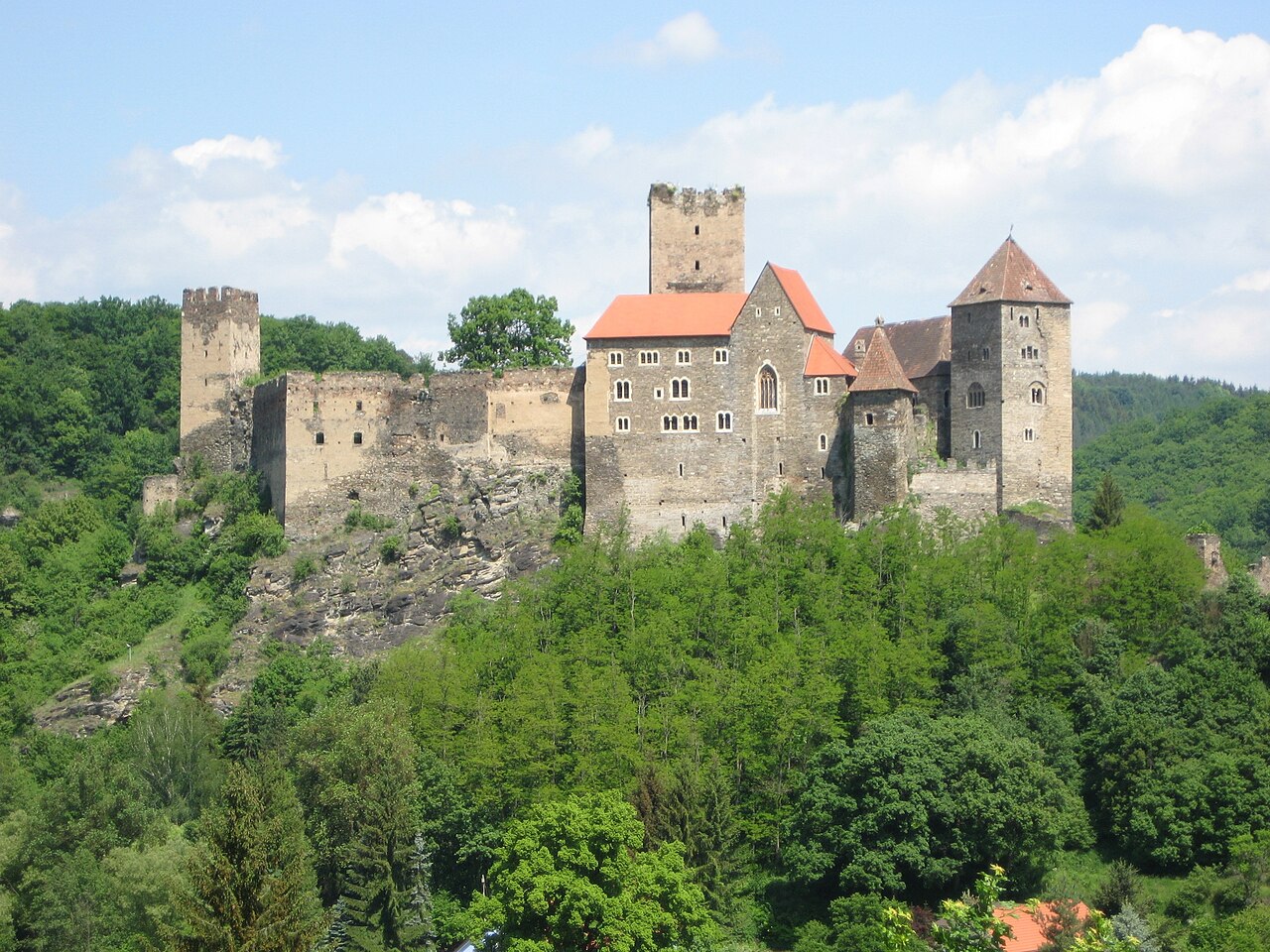
Vranov Castle, perched on a steep sandstone cliff overlooking the Jizera River in the Czech Republic, is a remarkable example of a hill castle combining medieval military architecture with 19th-century romantic commemorative elements. Established in the early 15th century, this fortress was strategically built to defend regional borders and later transformed into a unique pantheon honoring European military leaders and cultural figures.
The medieval origins and strategic significance
Documentary evidence places the founding of Vranov Castle around 1414, attributed to Henning von Waldstein of the German Bohemian nobility. The castle's primary function was to serve as a military stronghold during the turbulent period of the Hussite Wars, acting as a bastion against the Hussite movement active in the region. Its location atop a precipitous sandstone rock formation provided natural defensive advantages, with sheer cliffs on nearly all sides, making it a formidable fortress.
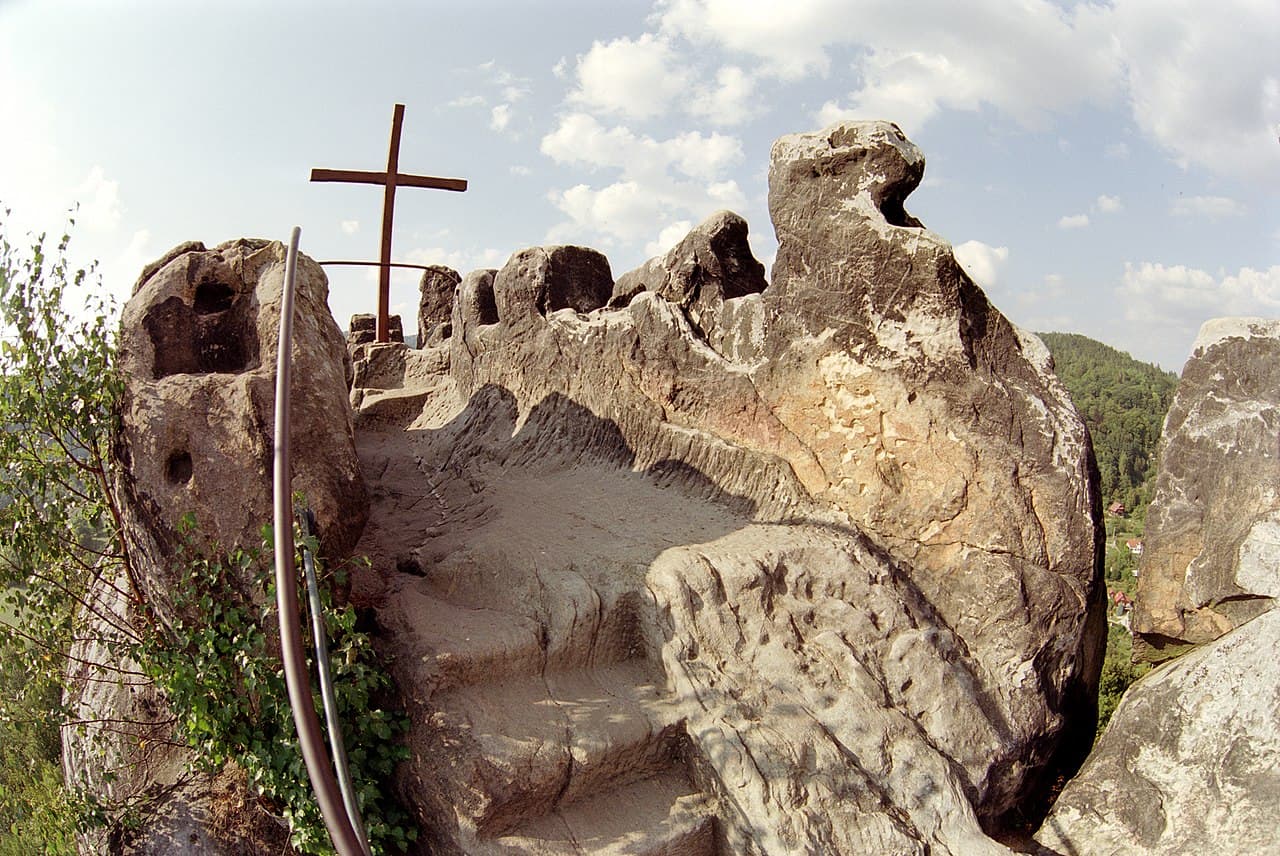
The castle's layout was ingeniously integrated with the natural topography. The extensive use of sandstone rock carving created a labyrinthine network of chambers, stairways, and passages directly within the stone. This technique allowed for efficient use of the terrain, with wooden structures supplementing the stonework, as evidenced by numerous beam sockets carved into the rock walls. The castle's well, also hewn from stone, ensured a reliable water supply during sieges.
Architectural features and defensive design
Vranov Castle's design reflects typical medieval military architecture adapted to its unique geological setting. The fortress extended approximately 400 meters along the rock outcrop, making it the largest known rock castle in Bohemia. Access was controlled through two fortified gates, and a wooden tower once stood on the highest rock block, dominating the complex and serving as a lookout point.
The domestic buildings within the castle were primarily wooden, with only the cellars carved into the rock surviving to the present day. This combination of materials was common in hill castles of the period, balancing defensive needs with practical living arrangements. The castle's defensive capabilities were enhanced by the vertical sandstone formations surrounding it, which acted as natural walls against attackers.
Historical ownership and decline
Throughout the 15th century, Vranov Castle remained under the control of the Waldstein family, notably under Heníček von Waldstein between 1453 and 1487, marking the castle's peak operational period. However, by the end of the century, the fortress had lost much of its strategic importance, leading to its abandonment around 1500.
In 1538, the estate was acquired by Jan of Vartemberk, who showed little interest in restoring the castle. Consequently, the fortress gradually fell into ruin. This decline was typical of many medieval castles rendered obsolete by advances in military technology and changing political landscapes during the early modern period.
19th-century romantic transformation and the pantheon
The castle's fortunes changed dramatically in the early 19th century when Franz Zacharias Römisch, a textile manufacturer and owner of the nearby Malá Skála estate, undertook a significant romantic reconstruction. Between 1803 and 1826, Römisch transformed the ruins into a unique pantheon inspired by the Walhalla memorial in Germany, dedicated to heroic figures and military leaders from various European nations.
This pantheon commemorates the coalition forces that fought against Napoleon during the Napoleonic Wars, featuring busts and inscriptions honoring rulers such as Alexander I of Russia, Emperor Francis I of Austria, and King Frederick William III of Prussia, as well as generals like Schwarzenberg and Blücher. Although the original sculptures have not survived, the niches and chambers designed to house them remain prominent features of the site.
Inscriptions carved into the sandstone cliffs surrounding the castle include German-language aphorisms, philosophical sayings, and poetry, notably the final stanza from Friedrich Schiller's play "Das Mädchen von Orleans." These texts reflect the cultural and historical significance attributed to the site during the romantic period.
The neo-gothic hunting lodge and summit cross
Completing the romantic transformation, a neo-Gothic hunting lodge was constructed in 1826 within the castle courtyard. Designed to resemble a small chapel, this building adds a picturesque architectural element to the site and serves as a place for visitors to rest. The highest point of the castle grounds is marked by a summit cross, offering panoramic views of the nearby Suché skály rock formations, integrating natural beauty with historical commemoration.
Cultural and heritage significance
Vranov Castle stands as a unique monument that encapsulates both the military and cultural history of the region. Its evolution from a 15th-century fortress to a 19th-century romantic pantheon illustrates changing attitudes toward heritage and memory. The site is a testament to the complex history of Bohemia, reflecting periods of conflict, noble ownership, decline, and eventual romantic revival.
Today, the castle ruins, along with the pantheon and neo-Gothic lodge, attract visitors interested in medieval architecture, military history, and romantic-era memorial art. The extensive network of rock-carved chambers and inscriptions offers a rare glimpse into the past, while the panoramic views highlight the castle's commanding position in the landscape.
Archaeological investigations and preservation
Archaeological studies have confirmed the predominant construction and occupation of Vranov Castle during the 15th century. While earlier fortifications on the site cannot be definitively confirmed, the surviving rock carvings, ruins, and inscriptions provide valuable insights into the castle's historical phases. Preservation efforts focus on maintaining the structural integrity of the sandstone formations and protecting the inscriptions from weathering.
Visiting vranov castle today
Visitors to Vranov Castle can explore the extensive rock-carved chambers, the pantheon with its historic inscriptions, and the neo-Gothic hunting lodge. The site offers educational opportunities through its rich historical narrative and architectural features. The panoramic views from the summit cross and lookout points provide memorable experiences for tourists and history enthusiasts alike.
The castle's unique combination of medieval fortification and romantic memorial makes it a significant cultural landmark in the Czech Republic, offering insights into both the martial and artistic heritage of the region.
Frequently asked questions (FAQ)
- How do I get to Vranov Castle?
- Vranov Castle is located near the village of Malá Skála in the Liberec Region of Czechia. It is accessible by local roads and hiking trails from Malá Skála, with parking available nearby for visitors.
- What is the historical significance of Vranov Castle?
- Vranov Castle was built in the early 15th century as a military fortress during the Hussite Wars and later transformed into a romantic pantheon commemorating European military leaders from the Napoleonic Wars.
- Can I visit the neo-Gothic hunting lodge at the castle?
- Yes, the neo-Gothic hunting lodge built in 1826 is accessible to visitors and offers a picturesque spot for rest and reflection within the castle grounds.
- When is the best time to visit Vranov Castle?
- The best time to visit Vranov Castle is during the warmer months from late spring to early autumn when the weather is favorable for exploring the rock formations and enjoying panoramic views.
- Are there guided tours available at Vranov Castle?
- Guided tours may be available seasonally or by arrangement. Visitors should check local tourist information centers in Malá Skála for current offerings and schedules.
Photo gallery

Photo by No machine-readable author provided. Olaf1541 assumed (based on copyright claims).•CC BY 2.5
Information
Sources & official resources
Verify the information above using these authoritative references.
Loading map...
Visitor reviews
No reviews yet. Been here? Write the first review and help other travelers!
Write the first reviewVisited this castle? Share your experience
Your review helps other travelers and adds first-hand knowledge to our encyclopedia.