Burg Šenkenberk
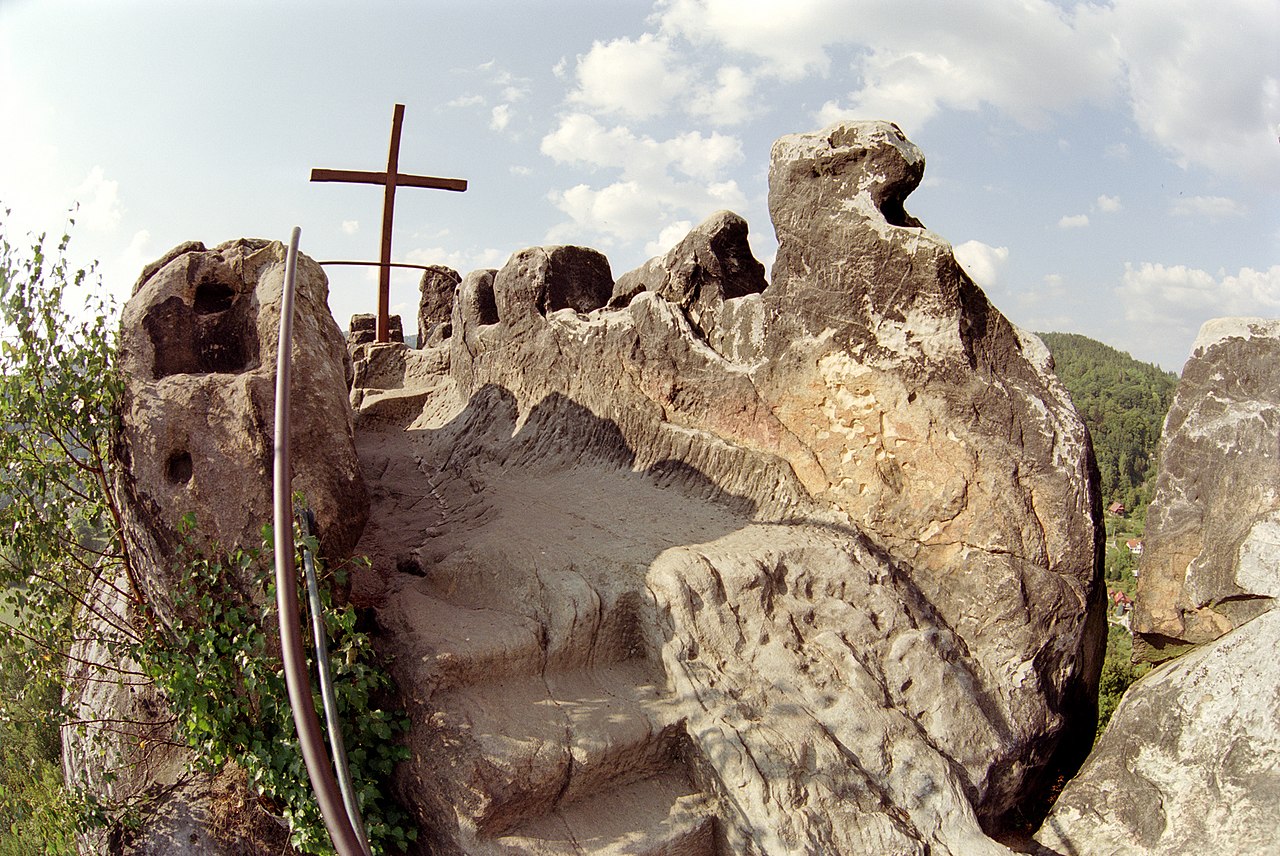
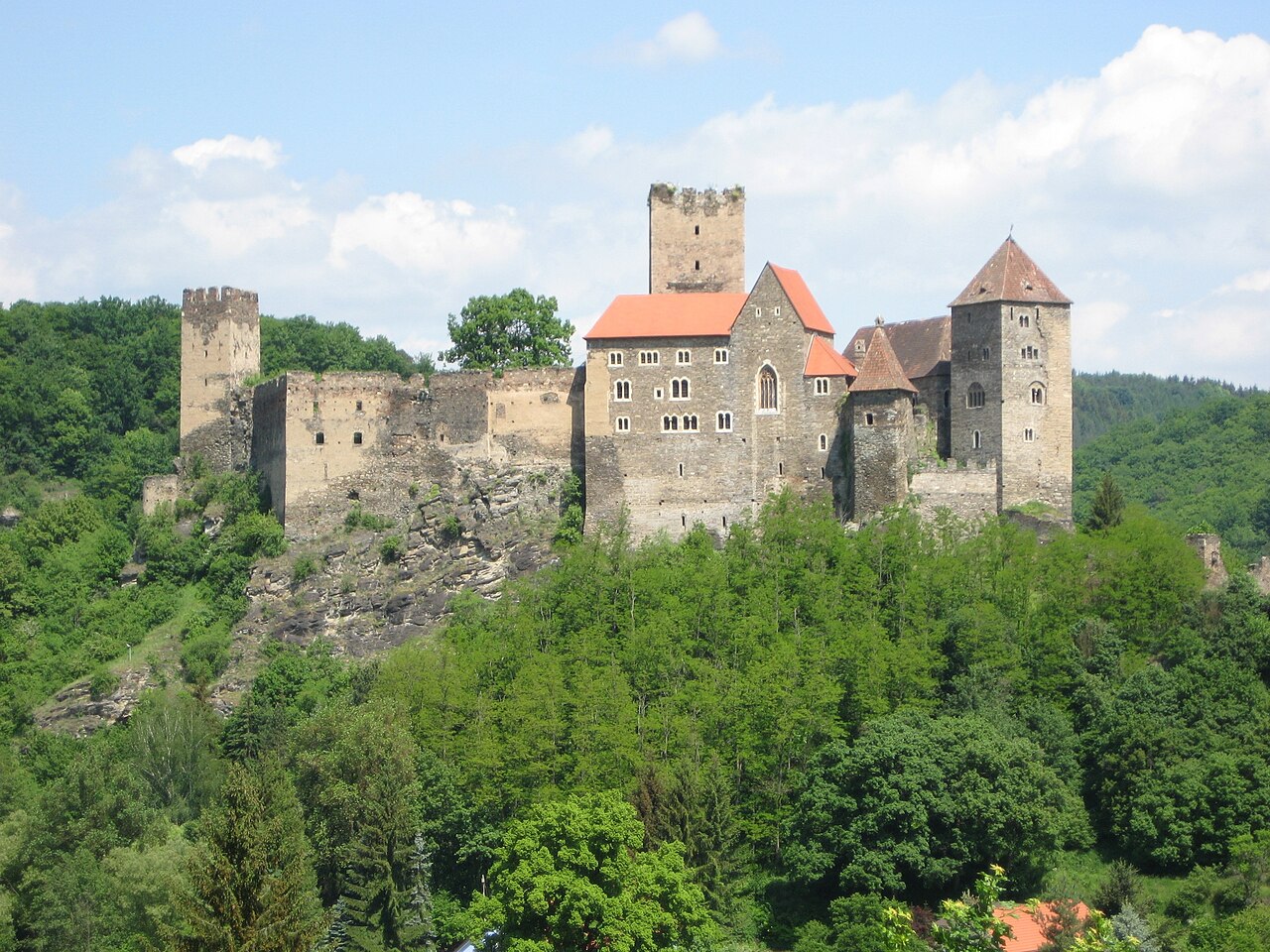
Burg Šenkenberk stands as a compelling example of a medieval hill castle ruin nestled in the village of Šumná, Czechia. Constructed in the 13th century, the castle reflects the strategic and architectural ingenuity of the period, positioned on a rocky spur at an elevation of 412 meters above sea level. Its location was carefully chosen to maximize natural defenses, with the Plenkovický potok stream curving around three sides and the Vlkov pond to the south, creating natural barriers that enhanced its fortification.
The castle's origins are closely tied to the Austrian noble family known as the Pincern or Schenk family, who established themselves in this border region during the 13th century. The earliest probable record of Burg Šenkenberk dates back to 1247, although the first confirmed mention appears in 1325. This document records King John of Luxembourg granting permission to Hrut of Rukštejn to sell the village of Chlupice to Jindřich of Šenkenberk, a member of the Jíkva family. It is believed that Jindřich acquired the castle through marriage, marking the beginning of the Jíkva family's long association with the site.
Historical ownership and significance
Throughout the 14th and 15th centuries, Burg Šenkenberk saw a succession of owners, reflecting the complex feudal relationships and political dynamics of the region. In 1353, Jindřich's sons, Markvart and Protiva, sold shares of the castle to other local nobles, including Jindřich Přibík of Jíkva. By the early 15th century, the castle had come under the authority of the Moravian margrave. In 1406, Jobst of Luxembourg sold the castle to Přech of Kojetice, who later gave it as a dowry to his wife, Kateřina.
The castle's ownership continued to change hands, with Osvald of Eitzing documented as the holder in 1436, when King Sigismund confirmed his possession. However, by 1517, Burg Šenkenberk had fallen into ruin. Michal of Eitzing sold the damaged property to Adam of Bačkovice, signaling the end of its active use as a fortress.
Destruction and archaeological insights
Archaeological research indicates that Burg Šenkenberk likely suffered destruction during the mid-15th century, a period marked by the Hussite Wars and various feudal conflicts in the region. The castle's strategic location made it a target during these turbulent times. The nearby village of Šenkenberk was abandoned by 1549, underscoring the decline of the area as a defensive and residential hub.
Since May 3, 1958, the ruins of Burg Šenkenberk have been legally protected as a cultural monument, preserving its historical legacy and architectural remnants for future generations.
Architectural features and layout
Burg Šenkenberk exemplifies the hill castle typology with a distinct two-part design that integrates natural and man-made defenses. The castle's layout consists of a trapezoidal main castle core linked to an outer courtyard, or bailey, also trapezoidal in shape. These two sections were separated by a deep and wide neck ditch, approximately nine meters across and one and a half meters deep, serving as a formidable defensive barrier.
The main castle enclosure measures 32 meters along its front, with the southern side extending roughly 29.5 meters and the western façade, perched on a rocky outcrop, measuring about 18.5 meters. A diagonal connecting wall of about 31 meters crosses between the castle areas, enhancing the fortress's structural integrity and defense.
Among the surviving structures, the northern corner stands out with wall remains reaching up to 3.6 meters in height. Traces of the outer walls mark the perimeter, along with remnants of the palas—the residential and representative quarters of the castle. These features highlight the dual function of Burg Šenkenberk as both a military stronghold and noble residence.
Defensive landscape and natural fortifications
The castle's eastern side is protected by a deep defensive ditch separating it from the adjacent ridge, while natural valleys created by the Plenkovický potok provide protection along the north, south, and west. This combination of natural terrain and constructed defenses significantly limited access routes, making the castle a challenging target for attackers.
Cultural heritage and preservation
Today, the ruins of Burg Šenkenberk remain a protected cultural monument, reflecting its importance in Czech medieval history and architecture. The site offers valuable insights into medieval construction techniques and the strategic considerations of castle builders in border regions during the High and Late Medieval periods.
Visitors to the site can explore the remnants of the castle's walls, ditches, and palas, gaining an appreciation for the scale and complexity of this once formidable fortress. The preservation efforts ensure that Burg Šenkenberk continues to be an important landmark for historical study and cultural tourism in Czechia.
Overall, Burg Šenkenberk stands as a testament to the dynamic history of the region, illustrating the interplay of noble families, military conflict, and architectural adaptation over several centuries. Its ruins provide a tangible connection to the medieval past and the enduring legacy of castle fortifications in Central Europe.
Frequently asked questions (FAQ)
- What is the historical significance of Burg Šenkenberk?
- Burg Šenkenberk, dating back to the 13th century, is a remarkable example of medieval architecture in Czechia. It served as a strategic fortress and residence, reflecting the region's turbulent past and the power struggles of noble families.
- When was Burg Šenkenberk built?
- Burg Šenkenberk was constructed in the 13th century, specifically around 1240. Its long history has seen various renovations and expansions, which showcase different architectural styles over the centuries.
- What are the opening hours of Burg Šenkenberk?
- Burg Šenkenberk is typically open to visitors from 10 AM to 5 PM during the summer months and has reduced hours in the winter. It is advisable to check the official website for any seasonal changes or special closures before planning your visit.
- Can I visit Burg Šenkenberk with children?
- Yes, Burg Šenkenberk is family-friendly and welcomes visitors of all ages. There are various activities and guided tours designed to engage children and help them learn about the castle's history.
- Is it possible to explore the interior of Burg Šenkenberk?
- Yes, visitors can explore both the exterior and selected interior areas of Burg Šenkenberk. Guided tours provide insights into the castle's history and architecture, making for an enriching experience.
- What is the best time to visit Burg Šenkenberk?
- The best time to visit Burg Šenkenberk is during the spring and summer months when the weather is pleasant and the surrounding landscapes are lush. Additionally, many events and festivals take place during this time, enhancing the visitor experience.
- Are there any nearby attractions to Burg Šenkenberk?
- Yes, there are several nearby attractions, including scenic hiking trails and other historical sites such as the town of Šumná. Visitors can also explore local wineries and enjoy the beautiful Czech countryside.
- How much are the ticket prices for Burg Šenkenberk?
- Ticket prices for Burg Šenkenberk are generally affordable, with discounts available for students and seniors. It's best to check the official website for current pricing and any special offers before your visit.
- How do I get to Burg Šenkenberk?
- Burg Šenkenberk is accessible by car or public transport, with nearby bus services connecting it to major towns in the region. Detailed directions can be found on the castle's official website to help plan your journey.
Information
Loading map...
Visitor reviews
No reviews yet. Been here? Write the first review and help other travelers!
Write the first reviewVisited this castle? Share your experience
Your review helps other travelers and adds first-hand knowledge to our encyclopedia.