Vorst Castle
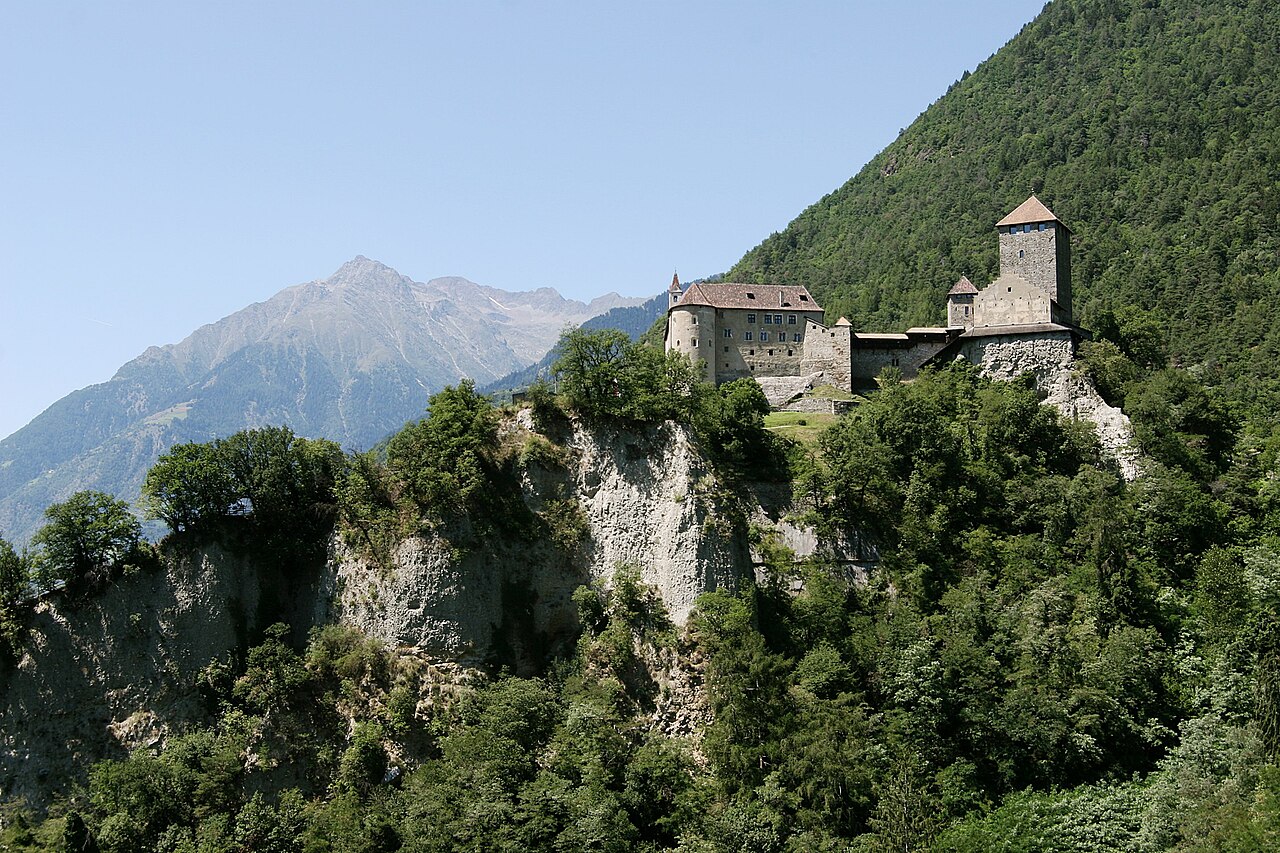
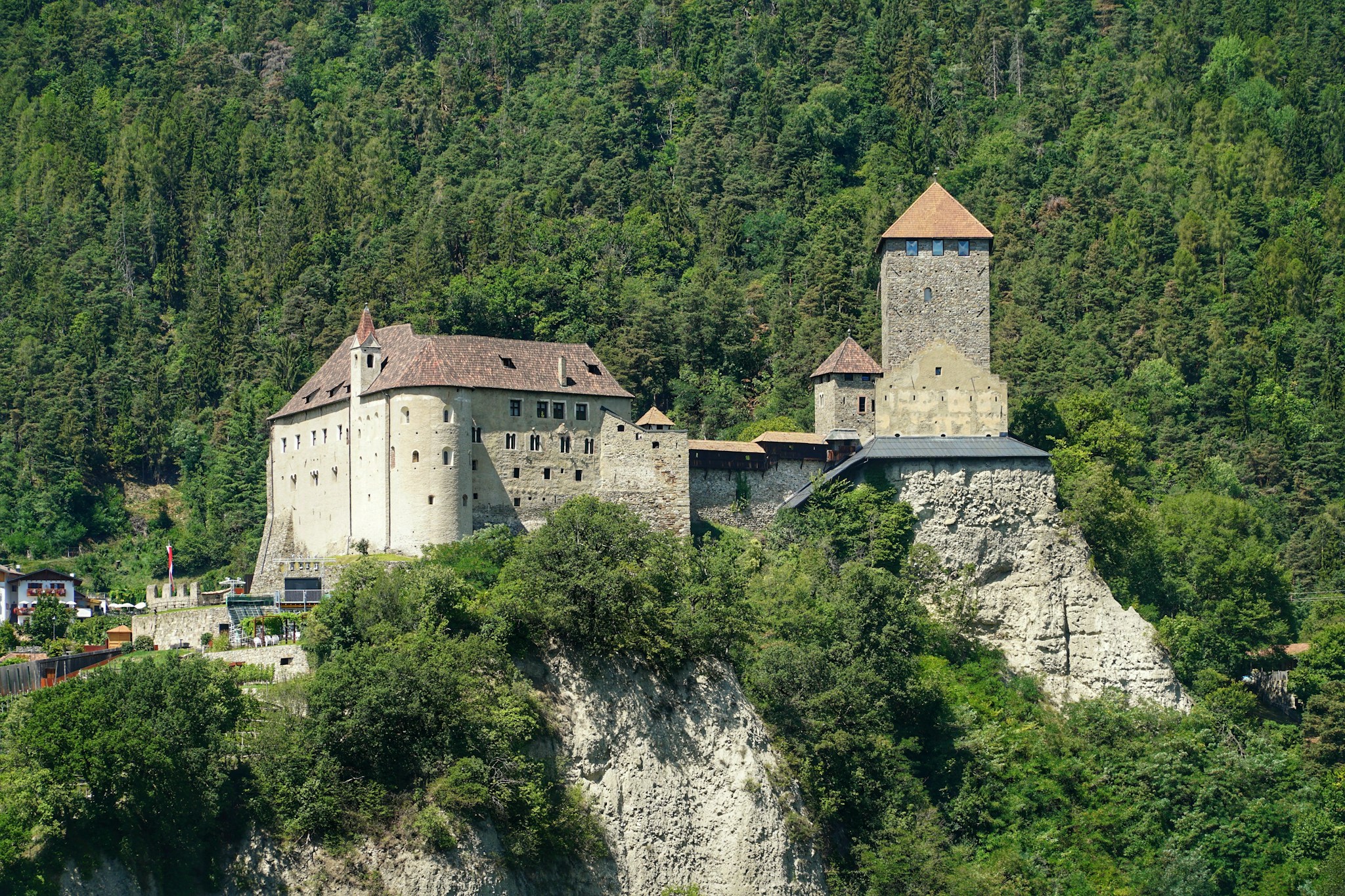
Vorst Castle, located in the municipality of Lagundo (Algund) in South Tyrol, Italy, is a striking example of a high medieval hill castle built in the late 13th century. Perched on a small rocky hill about 350 meters above sea level on the right bank of the Adige River, the castle commands a scenic yet strategic position overlooking the valley. Its long and varied history reflects the complex feudal relationships and noble family alliances of medieval and early modern Tyrol.
Constructed during the high medieval period, Vorst Castle was originally established as a fortified residence and administrative center. Its architecture features a classic bergfried (a tall defensive tower typical of medieval castles), a residential wing, and a chapel arranged around an inner courtyard, adapted to the natural rocky outcrop on which it stands. The castle’s layout demonstrates a blend of military and residential functions, characteristic of the era’s fortified noble estates.
Ownership of Vorst Castle passed through several prominent families, including the Vorst, Gomion, Enn, and Starkenberg lineages. The earliest known administrator was Ulrich von Vorst, a Tyrolean ministerial who governed the castle in the early 14th century. Following his death in 1302, the castle was inherited by Albert von Camian, who adopted the name von Vorst after receiving the fief in 1311. Albert and his wife Floridiana von Schlandersberg were notable patrons of the nearby St. Nikolaus church in Merano, endowing an altar and providing religious benefices, underscoring the castle’s role in local ecclesiastical affairs.
Historical significance and noble lineage
The von Vorst family had connections to the noble Counts of Eschenlohe, with historical suggestions that Albert von Vorst and Heinrich von Eschenloch may have been illegitimate sons of the Tyrolean ruler Meinhard II. This connection highlights the castle’s embeddedness in the region’s aristocratic power networks.
Ownership transitioned through marriage when Floridiana von Schlandersberg wed Wilhelm von Enn in 1338, initiating the von Enn family's tenure. By 1395, the castle passed to Sigismund von Starkenberg and his wife Osanna von Enns, aligning the estate with the Elefantenbund, a noble alliance. However, the alliance’s suppression by Duke Frederick IV of Tyrol led to the confiscation of the castle from the Starkenbergs, reflecting the volatile political landscape of the region.
In the late 15th century, the castle came under the ownership of Burghard von Brandis and later Wolfhard Fuchs von Fuchsberg, whose tenure gave rise to the alternate name Neufuchsberg. The Brandis family regained control in 1519 and maintained it until 1860. Notably, in 1814, Joseph Count von Brandis converted the fief into a hereditary estate subject to land taxation, marking a shift in the castle’s feudal status.
Military events and challenges
One of the castle’s most notable historical events was the siege of 1423 by Duke Frederick the Empty-Pocket. During this siege, the renowned minstrel Oswald von Wolkenstein was imprisoned in the castle’s dungeons for several months, linking the castle to broader cultural history. Despite its imposing position, Vorst Castle’s military significance was limited compared to larger fortresses, serving more as a noble residence and administrative center.
The castle suffered a major setback in 1803 when a fire destroyed large parts of the structure and interiors, including the valuable Gothic altar in the chapel. Restoration efforts were undertaken by Alois von Schrott and later by Giovanni Troyer, who adapted the castle for use as a historic hotel, though this function has since ceased.
Architectural features and layout
Vorst Castle’s architecture is emblematic of high medieval fortifications adapted to a hilltop setting. The castle includes a five-story bergfried, which served as a lookout and last defensive refuge. The residential wing and the curvilinear palace reflect adaptations to the terrain and the evolving needs of noble residence rather than purely military defense.
The castle’s chapel, dedicated to the apostles Peter and Paul, is notable for its polygonal choir end and a Gothic net rib vault ceiling, a sophisticated stonework technique creating an intricate web-like pattern. This chapel was the site of four Quatember masses annually and a foundation mass on the eve of the feast day of its patrons, highlighting its religious importance within the castle complex.
The spacious inner courtyard served as the central open area, surrounded by the main buildings. Despite the 1803 fire, fragments of original furnishings and paintings from the 17th and 18th centuries remain, offering insights into the castle’s historical interior decoration.
Later uses and preservation
In the 19th and 20th centuries, ownership of Vorst Castle passed through various noble families, including the d’Andriano, Fuchs, and Brandis families. The current owners, the Fuchs family, are also proprietors of the nearby Forst brewery, and parts of the castle have been repurposed to support beer production activities, demonstrating adaptive reuse of historic structures.
Today, Vorst Castle is protected as a monument, recognizing its architectural and historical significance. Although the castle is not open to the public, its preservation ensures that this remarkable example of medieval hill castle architecture endures as a testament to the region’s feudal and cultural history.
Vorst Castle’s enduring presence on the landscape of South Tyrol offers a window into the complex interplay of noble power, architectural evolution, and regional history from the high medieval period through modern times.
Frequently asked questions (FAQ)
- What is the historical significance of Vorst Castle?
- Vorst Castle, located in Lagundo, Italy, dates back to the 13th century and is a prime example of medieval architecture in the region. The castle has played a vital role in the history of South Tyrol, serving as a noble residence and a strategic fortress throughout its existence.
- When was Vorst Castle built?
- Vorst Castle was constructed in the early 1200s, making it one of the oldest fortifications in the area. Over the centuries, it has undergone various renovations, preserving its historical essence while adapting to changing architectural styles.
- What are the opening hours for Vorst Castle?
- Vorst Castle is open to visitors from April to October, typically from 9 AM to 6 PM. However, it's advisable to check the official website for any seasonal changes or special holiday hours before planning your visit.
- Can I access Vorst Castle with public transport?
- Yes, Vorst Castle is accessible by public transport. Visitors can take local buses from nearby towns, and there are signposted walking routes that lead directly to the castle, making it convenient for those using public transportation.
- What is the best time to visit Vorst Castle?
- The best time to visit Vorst Castle is during the spring (April to June) and early fall (September to October) when the weather is mild, and the surrounding landscapes are particularly beautiful. These seasons also tend to attract fewer tourists, allowing for a more peaceful experience.
- Is there an admission fee to visit Vorst Castle?
- Yes, there is a small admission fee to enter Vorst Castle, which helps maintain the site and its grounds. Ticket prices are typically around 5 euros for adults, with discounts available for students and children.
- What nearby attractions can I explore after visiting Vorst Castle?
- After exploring Vorst Castle, visitors can enjoy the stunning gardens of the nearby Trauttmansdorff Castle, which showcases diverse plant species and breathtaking views of the Dolomites. Additionally, the charming town of Lagundo offers lovely walking trails and local eateries for a delightful experience.
- How do I get guided tours of Vorst Castle?
- Guided tours of Vorst Castle can be arranged through the castle's official website or at the entrance. These tours typically provide in-depth insights into the history and architecture of the castle, enriching your visit with expert knowledge.
Information
Sources & official resources
Verify the information above using these authoritative references.
Loading map...
Visitor reviews
No reviews yet. Been here? Write the first review and help other travelers!
Write the first reviewVisited this castle? Share your experience
Your review helps other travelers and adds first-hand knowledge to our encyclopedia.