Tyrol Castle
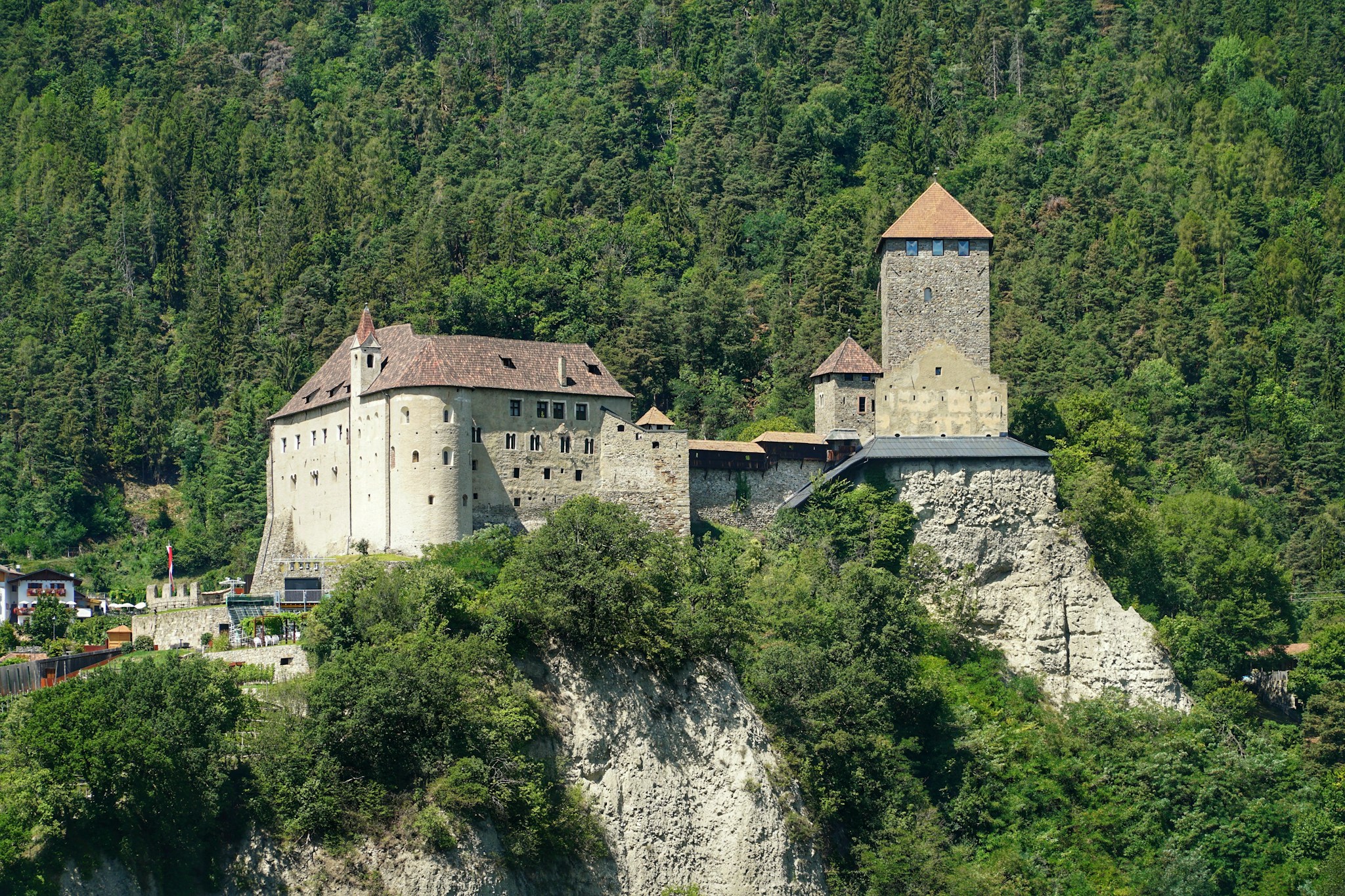
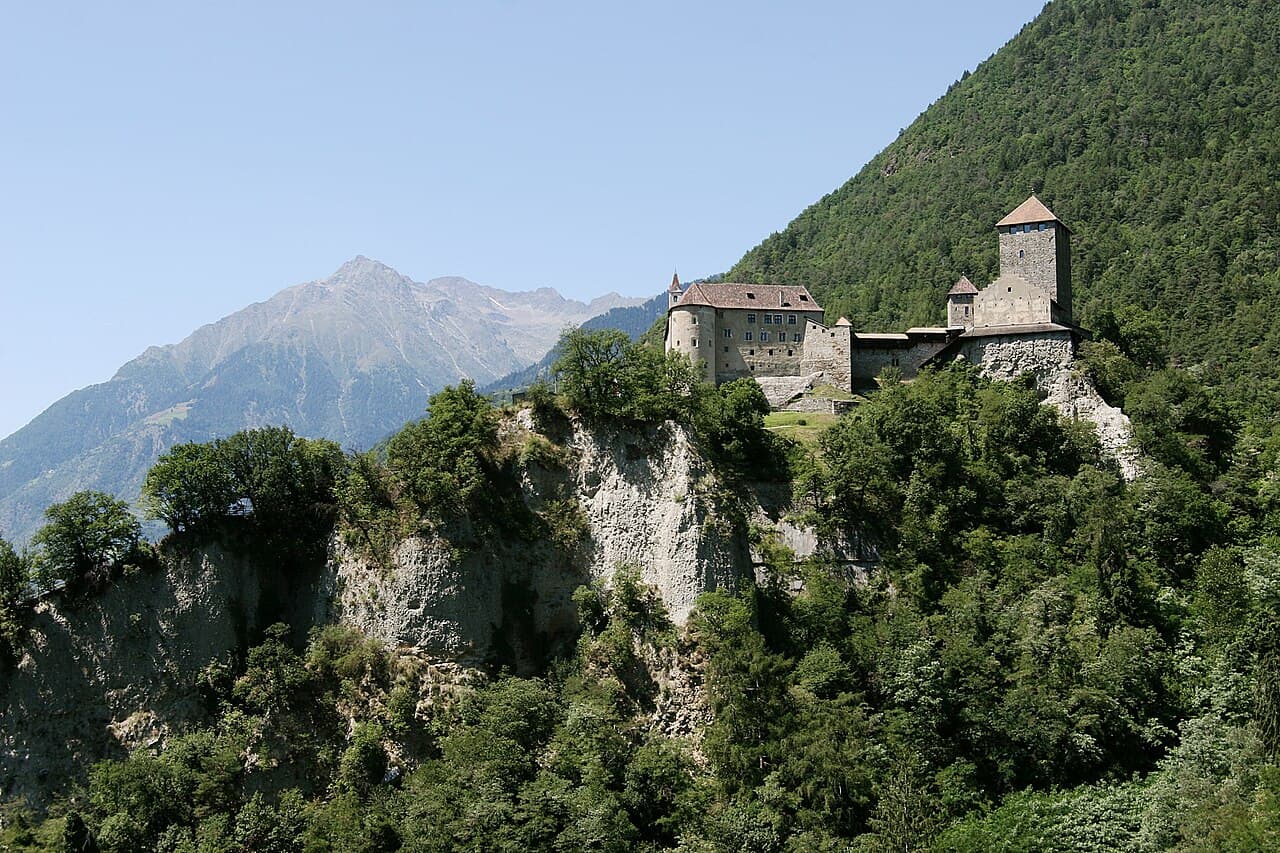
Tyrol Castle, also known as Schloss Tirol in German and Castel Tirolo in Italian, stands as a monumental symbol of the Tyrol region's history and heritage. Perched on a steep moraine hill in the municipality of Tirolo near Merano, South Tyrol, Italy, this hill castle was the ancestral seat of the Counts of Tyrol and gave the entire region its name. The castle's strategic location on a naturally defensible elevation has made it a significant site since ancient times, with archaeological evidence revealing continuous human occupation from prehistoric periods through the early Christian era.
Archaeological excavations on the castle hill have uncovered a wealth of artefacts and a field of graves dating back to the early Middle Ages. Notably, researchers discovered the remains of an early Christian church with three apses, highlighting the site's religious importance during late antiquity and the early medieval period. This church, along with earlier Roman residential structures converted for worship, illustrates the site's long-standing spiritual and communal significance before the castle's construction.
Early construction and medieval expansions
The first fortified castle at Tyrol was built before 1100 AD, marking the beginning of its role as a noble residence and military stronghold. The castle underwent several significant construction phases, reflecting the evolving needs and ambitions of its rulers. Around 1139-1140, a major expansion included the erection of the imposing bergfried, a tall defensive tower with walls over five meters thick at the base. This tower, originally three stories high, was a key defensive feature designed to protect the castle and assert the power of the Counts of Tyrol.
In the second half of the 13th century, under the rule of Count Meinhard II of Gorizia-Tyrol, the castle saw further extensive construction. This phase included the building of the south and east palaces (palas), the chapel, and underground structures beneath the main buildings. The castle's layout, centered around a courtyard, was enhanced with residential and defensive buildings that reflected the architectural styles and fortification techniques of the High Medieval period.
Historical significance and political role
Tyrol Castle was the political and administrative heart of the County of Tyrol for several centuries. The Counts of Tyrol, originally a Bavarian noble family, established an autonomous territory within the southern Duchy of Bavaria, which was officially recognized as the County of Tyrol in the 13th century. The castle symbolized their sovereignty and served as the seat of government until 1420, when the administrative center was moved to Innsbruck by the Habsburg archduke Frederick IV, seeking better transport and communication routes north of the Brenner Pass.
The castle also played a critical role during military conflicts. In 1347, Countess Margaret of Tyrol, granddaughter of Meinhard II, successfully defended the castle against a siege by the forces of King Charles IV of Luxembourg. This event underscored the castle's strategic importance and the resilience of its defenders. Following the extinction of the male line of the Meinhardiner family in 1335, control of Tyrol shifted between the Luxembourgers and the Wittelsbachs before ultimately passing to the Habsburg dynasty in 1363.
Architectural features and artistic heritage
The castle's architecture is a testament to its layered history, combining Romanesque and Gothic elements with later neo-Gothic restorations. The bergfried remains a dominant feature, having been heightened during restoration work between 1902 and 1904, which used stones salvaged from a nearby medieval farmstead destroyed by fire. This restoration was led by the architect Friedrich von Schmidt, who aimed to preserve the castle's historic character while reinforcing its defensive structures.
The castle chapel is renowned for its frescoes and originally housed a Gothic winged altar attributed to the artist Hans Klocker. The altar's shrine is now preserved in the Tiroler Landesmuseum Ferdinandeum, with a faithful replica displayed in the chapel. Additionally, the castle features two richly decorated Romanesque portals adorned with opulent marble sculptures depicting legendary creatures, religious motifs, and intricate geometric patterns. Scholars debate whether these portals were repurposed from the earlier three-apse church or commissioned by Count Albert III of Tyrol.
Despite suffering partial destruction by fire in 1302 and erosion that caused the collapse of a 13th-century palace into the nearby Köstengraben gorge, much of the castle's medieval masonry has been preserved. The combination of original medieval fabric and 19th-century neo-Gothic additions creates a unique architectural ensemble that reflects the castle's long and varied history.
Decline, restoration, and modern use
After the administrative seat moved to Innsbruck, Tyrol Castle gradually fell into disuse. By the late 15th century, it was largely uninhabited and parts of the structure were quarried for building materials. The castle's decline continued until the 19th century, when renewed interest in medieval architecture led to extensive restoration efforts.
Under the guidance of Friedrich von Schmidt, the castle underwent a significant neo-Gothic restoration, including the rebuilding and heightening of the bergfried in 1904. These efforts helped preserve the castle as a cultural monument and prevented further deterioration.
Today, Tyrol Castle houses the South Tyrolean Museum of History, established in the early 1980s and expanded in 2003 to include the South Tyrolean Museum of Culture and Regional History. The museum showcases the rich history, culture, and art of the Tyrol region, making the castle a vibrant center for heritage tourism.
The knappenloch tunnel and falconry center
Among the castle's notable features is the "Knappenloch" tunnel, constructed in 1682 to improve access to the castle grounds. Commissioned by the Tyrolean administrator Jakob Andrä Vogelmayr, the tunnel bears an inscription honoring Emperor Leopold I. This engineering feat reflects the ongoing importance of the site even after its political decline.
Adjacent to the castle is a falconry and bird care center, which includes a nursing ward for birds of prey. This facility highlights the castle's historical association with falconry, a noble sport and hunting practice that was popular among the Tyrolean aristocracy.
Architectural layout and defensive features
The castle's layout is typical of a High Medieval hill castle, with a central courtyard surrounded by a complex of residential, defensive, and religious buildings. The south and east palaces (palas) provided living quarters for the nobility, while the chapel served spiritual needs. Beneath the main buildings lie underground structures containing remnants of early medieval fortifications and churches, underscoring the site's long history of occupation and defense.
The bergfried stands out as a key defensive tower, its massive walls designed to withstand sieges and attacks. Its restoration in the early 20th century preserved its imposing silhouette and reinforced its historical significance. The castle walls, battlements, and gates further enhanced the site's defensibility, controlling access and providing vantage points over the surrounding landscape.
Despite the ravages of time and natural erosion, Tyrol Castle remains a well-preserved example of medieval fortification architecture. Its blend of original and restored elements offers visitors a tangible connection to the region's feudal past and architectural heritage.
Frequently asked questions (FAQ)
- How do I get to Tyrol Castle?
- Tyrol Castle is located in the municipality of Tirolo near Merano, South Tyrol, Italy. It is accessible by car and public transport, with parking available nearby and walking paths leading up to the castle hill.
- What are the opening hours of Tyrol Castle?
- The castle and the South Tyrolean Museum of History are generally open daily from 10:00 to 17:00, but it is advisable to check the official website for seasonal variations and special closures.
- Is there an entrance fee to visit Tyrol Castle?
- Yes, visitors typically pay an entrance fee to access the castle and museum. Prices vary, with discounts available for children, seniors, and groups. Check the museum's website for current ticket prices.
- What is the historical significance of Tyrol Castle?
- Tyrol Castle was the ancestral seat of the Counts of Tyrol and the political center of the County of Tyrol until 1420. It played a key role in regional governance and defense, including a notable siege in 1347.
- Can I see medieval frescoes and Romanesque portals at Tyrol Castle?
- Yes, the castle chapel contains valuable medieval frescoes and two Romanesque portals with intricate marble sculptures depicting legendary creatures and religious themes.
- Is Tyrol Castle accessible for visitors with mobility issues?
- The castle is situated on a steep hill, which may pose challenges for visitors with mobility impairments. However, some areas of the museum are accessible, and assistance can be requested. Visitors are advised to contact the museum in advance for specific accessibility information.
Photo gallery

Information
Sources & official resources
Verify the information above using these authoritative references.
Loading map...
Visitor reviews
No reviews yet. Been here? Write the first review and help other travelers!
Write the first reviewVisited this castle? Share your experience
Your review helps other travelers and adds first-hand knowledge to our encyclopedia.