Brunnenburg
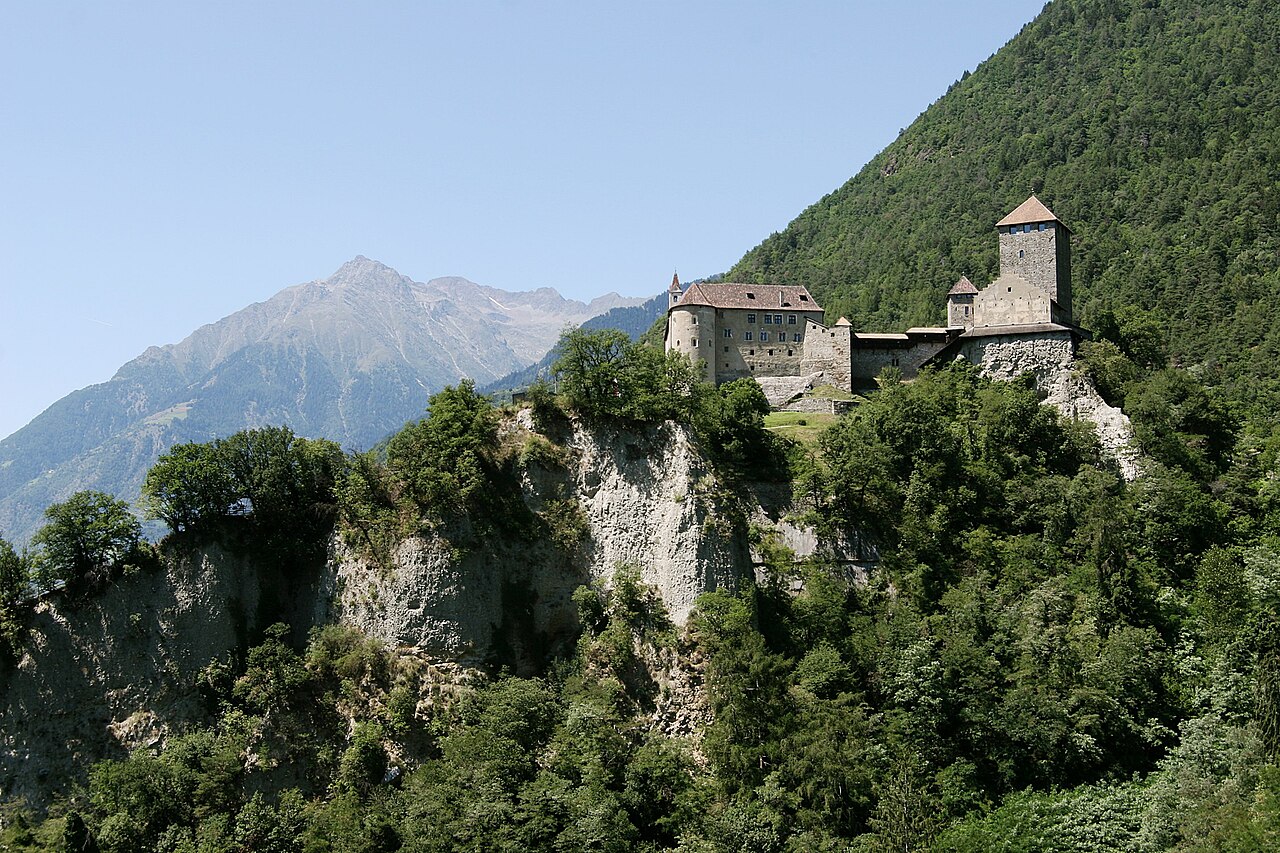
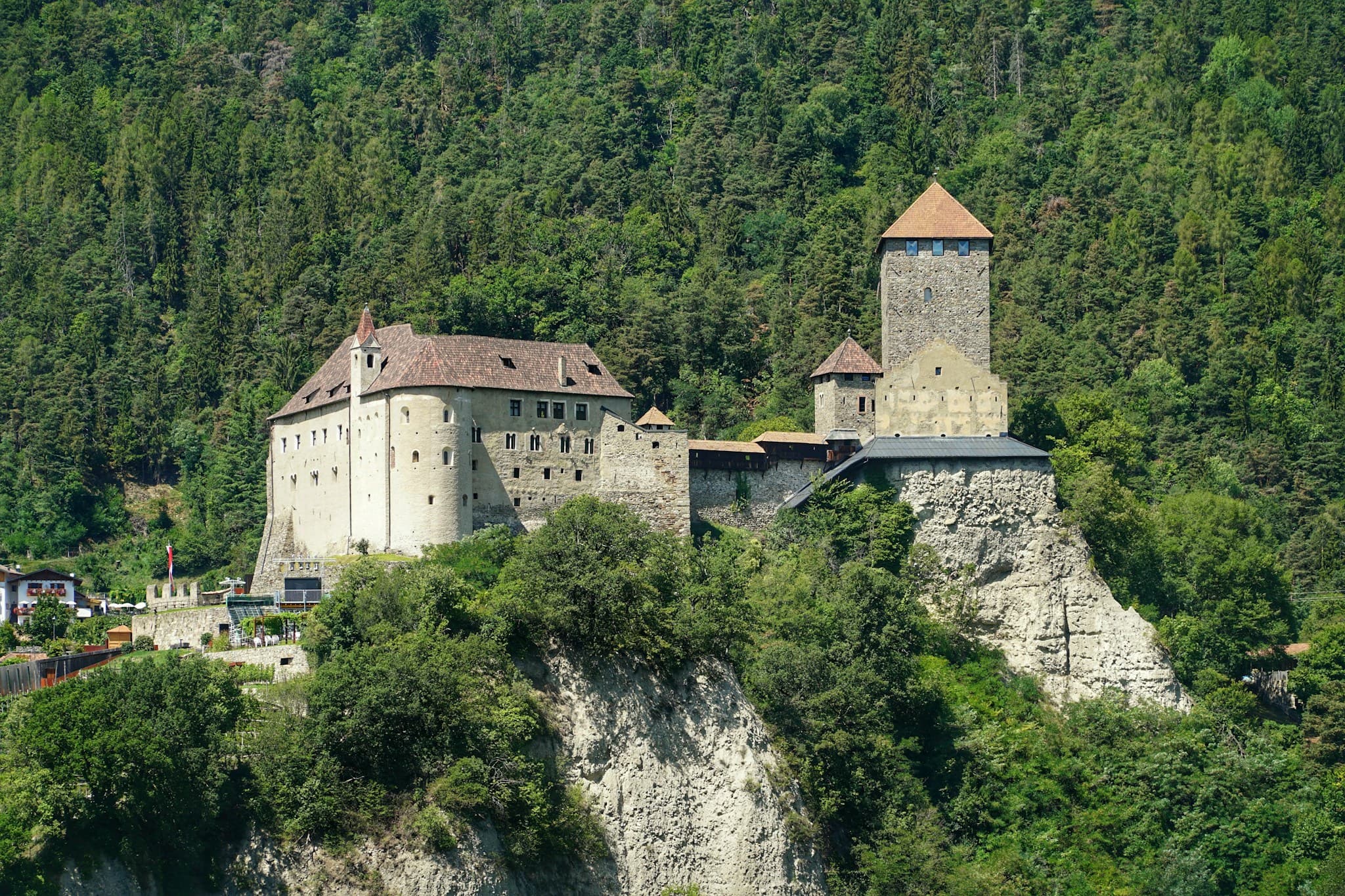
Brunnenburg Castle stands prominently on a hillside near the municipality of Tirol, in the South Tyrol region of northern Italy. Originally constructed in the mid-13th century, this hill castle has a rich history that spans centuries of feudal ownership, architectural transformation, and cultural significance. Its location above the city of Merano offers commanding views of the surrounding landscape, a strategic advantage typical of medieval fortifications.
The castle's name, historically recorded as "Prunnenberch" in 1285 and later as "Brunnberg" in 1437, likely derives from a nearby spring or water source, an important natural feature that influenced both the castle's siting and its medieval identity. This connection to water is a common theme in castle nomenclature, reflecting the practical needs of sustaining a fortified residence.
Medieval origins and feudal history
Brunnenburg was founded around 1250 by Wilhelm Tarant, a vassal of Count Albert III of Tyrol. This period corresponds to the high medieval era, characterized by the growth of regional powers and the establishment of fortified seats of authority. The castle served as a symbol of feudal control and local administration within the Tyrolean region.
Throughout the following centuries, the castle changed hands multiple times among notable families and individuals. In 1356, it was acquired by Heinrich and Johann von Bopfingen; Heinrich was a priest and captain of Tyrol, while Johann was a Minnesänger, a medieval lyric poet. Ownership passed in 1421 to Ulrich Putsch, chaplain to Duke Frederick IV and later bishop of Brixen. By 1457, the von Kripp family took possession, maintaining control until the early 19th century.
Decline and early restoration efforts
By the year 1600, contemporary accounts described Brunnenburg as an old and dilapidated fortress. The castle's condition reflected the shifting political and military landscape, which reduced the strategic importance of many medieval strongholds. Restoration efforts began in 1705 under Gregor Hofer, a local farmer, signaling the first attempts to preserve the structure. Further renovations were undertaken in 1884 by Michael Sonnenburger, mayor of Tirol, who organized notable events such as a shooting competition attended by Archduke Franz Ferdinand in 1889.
20th-century neo-gothic revival and cultural significance
In 1903, industrialist Karl Schwickert purchased Brunnenburg and initiated a comprehensive restoration. Schwickert's vision was heavily influenced by the neo-Gothic architectural style, drawing inspiration from the fairy-tale castles of King Ludwig II of Bavaria and the historic castles of the Rhineland. This transformation gave Brunnenburg its distinctive romantic silhouette, blending medieval foundations with 19th-century revivalist aesthetics.
Schwickert's death in 1927 halted further renovations, and the castle experienced a period of decline until 1955 when Prince Boris de Rachewiltz acquired it. De Rachewiltz, an Egyptologist married to Mary de Rachewiltz (daughter of the American poet Ezra Pound), restored the castle and made it their family home. Ezra Pound lived at Brunnenburg from 1958 until his death in 1972, composing the final six of his 116 Cantos during this time. The castle today houses a memorial dedicated to Pound and serves as a cultural center.
Agricultural museum and literary center
Since 1974, Brunnenburg has hosted the Landwirtschaftsmuseum Brunnenburg (Agricultural Museum), which focuses on the rural traditions and folk culture of South Tyrol. Directed by Dr. Siegfried de Rachewiltz, the museum offers visitors insights into traditional agricultural practices, including wheat processing, bread making, and dairy production. Exhibits also highlight ancient professions such as shoemaking and weaving, preserving knowledge of local crafts and daily life in the region's past.
The castle also accommodates the Ezra Pound Center for Literature, affiliated with the University of New Orleans, promoting literary scholarship and cultural exchange. This unique combination of historical preservation, agricultural heritage, and literary significance makes Brunnenburg a multifaceted site of interest.

Photo by André Beer
Architectural features and layout
Brunnenburg's architecture reflects its layered history. The core structure dates to the 13th century, with typical features of a medieval hill castle, including defensive walls, towers, and a strategic hillside position. The early medieval construction utilized local stone and traditional building methods, emphasizing fortification and durability.
The extensive early 20th-century restoration introduced neo-Gothic elements such as pointed arches, decorative battlements, and ornate window tracery, creating a fairy-tale appearance that contrasts with the castle's original austere medieval character. This stylistic overlay is a hallmark of the romantic revival movement that sought to evoke the grandeur and mystery of the medieval past.
Despite its private ownership by the de Rachewiltz family, parts of the castle are accessible to the public through the museum and cultural programs. The surrounding vineyards, maintained by the family, add to the estate's picturesque setting and reflect the ongoing agricultural tradition of the region.
The castle in its landscape
Perched on a slope near Merano, Brunnenburg commands views of the Adige Valley and the surrounding Alpine foothills. Its location was carefully chosen for both defense and visibility, typical of hill castles designed to monitor and control important routes. The nearby spring that inspired the castle's name would have been a vital resource for its inhabitants.
Historical context within tyrol
Brunnenburg is part of a broader historical landscape that includes Tyrol Castle, the ancestral seat of the Counts of Tyrol. Tyrol Castle gave the entire Tyrol region its name and was the administrative center until 1420, when the Habsburg archduke Frederick IV moved the seat to Innsbruck. While Brunnenburg was never the primary seat of power, it played a significant role in the feudal network of the region.
The castle's history reflects the complex political shifts in Tyrol, from medieval counts to Habsburg rule, and later integration into modern Italy. Its preservation and adaptive reuse demonstrate the region's commitment to honoring its cultural heritage while embracing contemporary functions.
Frequently asked questions (FAQ)
- How do I get to Brunnenburg Castle?
- Brunnenburg Castle is located in Tirol, Italy, just a short drive or hike from the town of Merano. You can access the castle by car, and there is parking available nearby. Alternatively, public transportation options are available, including buses that connect to Merano.
- What is the historical significance of Brunnenburg Castle?
- Brunnenburg Castle dates back to the 13th century and is known for its strategic location overlooking the Adige River. It has played an important role in the region's history, particularly during the medieval period. Today, the castle houses a museum dedicated to the history of the area and the life of its past residents.
- When was Brunnenburg Castle built?
- Brunnenburg Castle was constructed in the 13th century, with its earliest records dating back to 1237. The castle has undergone various renovations and restorations over the centuries, reflecting the architectural styles of different periods. Its storied past adds to the charm and allure of the site.
- Can I visit Brunnenburg Castle year-round?
- Yes, Brunnenburg Castle is open for visitors throughout the year, though hours may vary seasonally. It is advisable to check the official website for the most up-to-date information on opening hours and any special events. Visiting in spring or fall can provide a particularly beautiful backdrop due to the surrounding landscapes.
- Why is Brunnenburg Castle a popular tourist attraction?
- Brunnenburg Castle attracts visitors for its stunning architecture, rich history, and breathtaking views of the surrounding Alps. The castle's museum offers fascinating insights into the region's heritage, making it a perfect destination for history enthusiasts. Additionally, the picturesque setting and nearby hiking trails enhance the overall experience.
- Is it possible to access Brunnenburg Castle with limited mobility?
- While Brunnenburg Castle is a historical site, it does have some accessibility features, though it may present challenges for visitors with limited mobility. The terrain leading up to the castle can be steep and uneven, and certain areas inside the castle may not be fully accessible. It is recommended to contact the castle staff in advance to inquire about specific accessibility options.
- What are the ticket prices for Brunnenburg Castle?
- Ticket prices for Brunnenburg Castle are generally affordable, with discounts available for students and seniors. Children under a certain age may be admitted for free, making it a great family-friendly destination. Check the official website for current ticket prices and any special offers.
- What are the best times to visit Brunnenburg Castle?
- The best time to visit Brunnenburg Castle is during the late spring and early fall when the weather is mild and the landscapes are vibrant. Summer months can be quite busy with tourists, while winter offers a serene atmosphere with fewer crowds. Regardless of the season, each visit provides a unique experience.
- Are there any nearby attractions to Brunnenburg Castle?
- Yes, several attractions are located near Brunnenburg Castle, including the beautiful town of Merano, known for its gardens and thermal baths. Nature lovers can explore numerous hiking trails in the surrounding area, providing stunning views of the Alps. Other historical sites and museums are also within a short drive, making it an ideal base for exploration.
Photo gallery

Photo by André Beer


Information
Website
Visit websiteSources & official resources
Verify the information above using these authoritative references.
Loading map...
Visitor reviews
No reviews yet. Been here? Write the first review and help other travelers!
Write the first reviewVisited this castle? Share your experience
Your review helps other travelers and adds first-hand knowledge to our encyclopedia.