Vordingborg Castle Ruins
Vordingborg Castle, located in the town of Vordingborg, Denmark, stands as a significant monument of medieval Danish history and royal power. Founded in 1175 by King Valdemar I, also known as Valdemar the Great, the castle was originally constructed as a defensive fortress and a strategic base for launching military raids along the German coast. This stronghold played a pivotal role in Denmark's expansion and consolidation during the High Medieval period.
The castle's initial design featured a modest enclosure fortified by earthworks and a moat, typical of early medieval fortifications. However, under the reign of King Knud VI in the late 12th century, the castle underwent significant enhancements. The original earth ramparts were replaced with a robust brick curtain wall made of distinctive monk bricks, marking a transition to more durable construction materials and advanced defensive architecture. This period also saw the addition of St. Andrew's Church just north of the castle, underscoring the site's growing religious and administrative importance.
Architectural evolution and fortifications
During the late 14th century, under the reign of King Valdemar IV (Valdemar Atterdag), Vordingborg Castle was transformed into a formidable fortress with extensive fortifications. The castle's defenses expanded to include nine large defensive towers and twelve smaller half-towers, all interconnected by a massive curtain wall approximately 800 meters long and 8 meters high. This wall enclosed a trapezoidal inner bailey that housed the royal residence, administrative buildings, and military facilities.
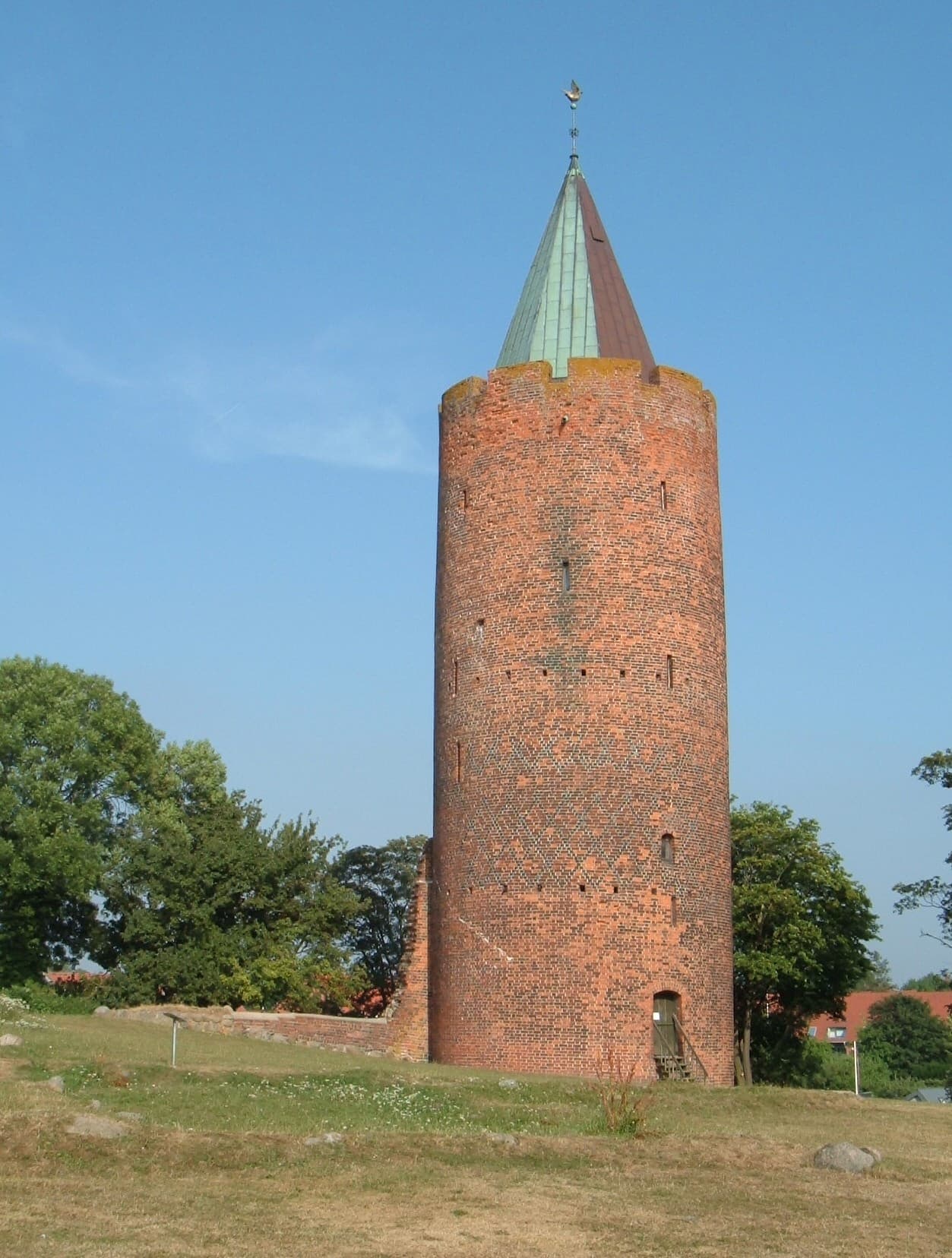
The castle's most iconic feature, the Goose Tower (Gåsetårnet), rises to 26 meters and served multiple functions, including housing the royal archive and treasury. The tower's name derives from the golden goose statue perched atop its spire, a symbol added in 1871. Although the statue is a later addition, the tower itself is a well-preserved example of medieval military architecture and was Denmark's first protected historic monument, designated in 1808.
Defensive waterworks and moats
Vordingborg Castle's defensive system was further strengthened by an intricate network of moats, artificial lakes, and water management structures. Archaeological evidence, including oak piles dated to 1189, reveals advanced engineering techniques used to control water levels and enhance the castle's defenses. These waterworks created formidable barriers against attackers and contributed to the castle's strategic importance.
Historical significance and royal connections
The castle was not only a military stronghold but also a center of political power and administration. In 1241, King Valdemar II promulgated the Law of Jutland at Vordingborg, a significant legal reform that influenced Danish law for centuries. The castle also hosted important peace treaties in 1365 and 1435, involving the Hanseatic League and neighboring rulers, highlighting its diplomatic role.
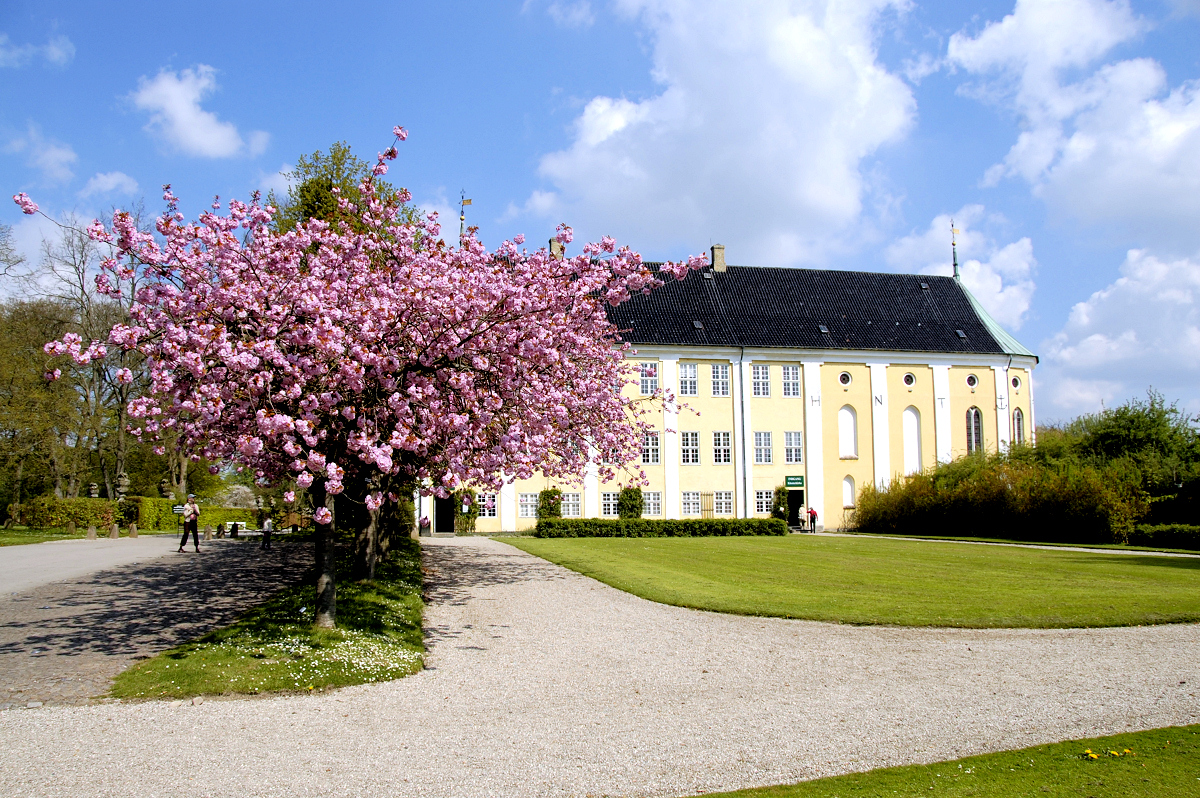
Vordingborg Castle was the birthplace of Queen Margaret I in 1353, a monarch who would later unify Denmark, Norway, and Sweden under the Kalmar Union. The castle's royal connections extended into the 17th century when a Baroque palace was constructed on the site for Prince George, son of King Frederick III, though the prince never resided there and the palace was later demolished.
Decline, demolition, and archaeological rediscovery
The castle's military relevance declined with the advent of cannon warfare, and during the Swedish wars of the mid-17th century, it was captured without resistance. Following these conflicts, much of the medieval fortress was demolished to make way for the Baroque palace, which itself was dismantled by the 18th century. Materials from the castle and palace were repurposed for construction projects in nearby estates and Copenhagen.
Archaeological excavations began in 1889 and have continued intermittently, with significant efforts from 1995 under Museum Sydøstdanmark. These excavations have uncovered collapsed towers, medieval boats, and numerous artifacts that shed light on the castle's construction phases, daily life, and decline. The discovery of the Vordingborg boat, a medieval wooden rowing vessel dating to around 1400, provides a unique glimpse into the castle's operational environment.
Current state and visitor experience
Today, Vordingborg Castle is a ruin with several sections of the 14th-century ring walls still visible. The Goose Tower remains the only fully preserved structure and serves as a powerful symbol of the city and Denmark's medieval heritage. The tower and ruins are surrounded by a botanical garden and a museum that interprets the site's rich history.
The Danish Castle Centre (Danmarks Borgcenter) nearby offers exhibitions displaying many of the archaeological finds from the castle, enhancing public understanding of Denmark's castle heritage. Plans for a larger museum aim to provide comprehensive information on Danish castles nationwide. Regular archaeological digs continue at the site, ensuring ongoing discoveries and preservation efforts.
Visitors to Vordingborg Castle can explore the evocative ruins, enjoy the scenic surroundings, and learn about the castle's significant role in Danish history through informative displays and guided tours. The site is a testament to the evolution of medieval fortifications, royal ambitions, and Denmark's historical landscape.
Frequently asked questions (FAQ)
- What are the visiting hours for Vordingborg Castle Ruins?
- Vordingborg Castle Ruins are generally open to the public during daylight hours. The nearby Danish Castle Centre museum has specific opening times, typically from 10:00 to 16:00 daily, but visitors should check the official website for seasonal variations.
- Is the Goose Tower accessible to visitors?
- Yes, the Goose Tower is accessible to visitors and offers panoramic views of Vordingborg and the surrounding landscape. It is a key highlight of the castle ruins and provides insight into medieval architecture and royal history.
- What is the historical significance of Vordingborg Castle?
- Vordingborg Castle was a major royal fortress in medieval Denmark, serving as a military base, administrative center, and birthplace of Queen Margaret I. It played a crucial role in Danish expansion and legal reforms during the High Medieval period.
- Are there guided tours available at Vordingborg Castle?
- Guided tours are available at Vordingborg Castle and the Danish Castle Centre, offering detailed historical context and architectural insights. These tours help visitors understand the castle's evolution and significance.
- Can I visit the archaeological excavations at the castle?
- While active archaeological excavations are not always open to the public, the Danish Castle Centre regularly showcases recent finds and research. Special events or open days may provide opportunities to observe ongoing digs.
Photo gallery

Public domain
Information
Sources & official resources
Verify the information above using these authoritative references.
Loading map...
Visitor reviews
No reviews yet. Been here? Write the first review and help other travelers!
Write the first reviewVisited this castle? Share your experience
Your review helps other travelers and adds first-hand knowledge to our encyclopedia.