Gisselfeld Castle
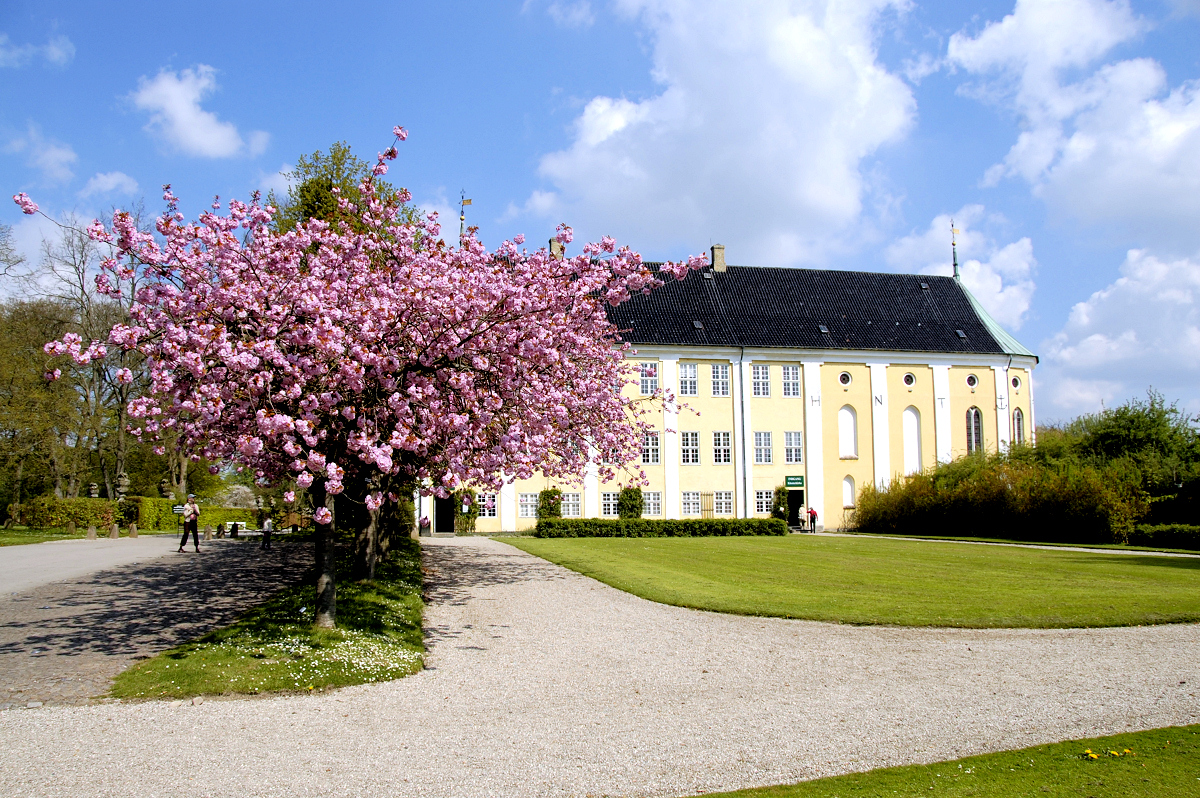
Gisselfeld Castle stands as one of Denmark's most significant estates, renowned for its Renaissance architecture and extensive grounds. Originally a former monastery, the estate is the fifth-largest in Denmark, encompassing approximately 3,850 hectares, including vast forests, lakes, and meticulously maintained gardens. The castle itself is a three-storeyed red-brick building featuring characteristic stepped gables, loopholes, and a distinctive projecting gate tower over the main entrance.
The estate's origins trace back to the late 14th century when it was first mentioned under the ownership of Bo Falk. At that time, a small manor stood near an older fortification, possibly the now lost Valgestrup. The current castle's foundations were laid during the mid-16th century by Peder Oxe til Nielstrup, who constructed the manor between 1547 and 1575. His design comprised four interconnected wings, three storeys high, with thick outer walls designed for defense, including numerous loopholes for archers or firearms. The fourth wing originally housed a chapel, now demolished.
Architectural features and design
The castle's Renaissance style is evident in its symmetrical layout and decorative stepped gables, which are typical of Danish Renaissance manors. The use of red brick with robust masonry and defensive elements like loopholes reflects the transitional period when castles were evolving from purely military fortifications to stately homes. The gate tower projecting from the left wing serves as both a defensive feature and a grand entrance, emphasizing the manor's dual role as a fortress and noble residence.
The estate's grounds enhance its grandeur, featuring a surrounding moat, a well-kept park, a natural lake with a waterfall, formal gardens, a greenhouse, and a decorative fountain. These elements reflect the estate's evolution from a defensive stronghold to a symbol of noble prestige and leisure.
Historical ownership and significance
After Peder Oxe's death, ownership passed to his widow, Mette Rosenkrantz til Vallø. Following her death in 1588, the estate was inherited by her niece, Karen Banner, who married Henrik Lykke til Overgaard. The Lykke family managed Gisselfeld until Kai Lykke's execution in 1661, after which the estate briefly reverted to the Crown.
In 1670, the estate was granted to Count Hans Schack as a reward for his service in the Swedish wars. His son, Otto Diderik Schack, sold the property in 1688 to Adam Levin Knuth, whose family owned it until 1699. Subsequently, it passed to Christian V's illegitimate son, who stipulated in his will that the manor should become a convent. This transformation was realized only after the death of his widow, Dorothea Krag, in 1754.
The convent era and modern use
Since 1755, Gisselfeld has operated as the Gisselfeld Adelige Jomfrukloster I Sjælland (Gisselfeld Convent in Zealand for Virgins of Noble Birth), managed by the descendants of the Danneskiold-Samsøe family. This unique institution reflects a rare form of noble convent tradition in Denmark, providing residence and support for unmarried noblewomen.
Today, the estate is managed by Hele Danneskiold-Samsøe, the 11th in line, who has overseen the property since 2010. Gisselfeld Castle has adapted to contemporary uses, housing a hotel, restaurant, and offering event services, thus blending its historical heritage with modern hospitality.
Landscape and natural surroundings
The estate's extensive grounds are notable for their ecological and aesthetic value. The large forested areas, covering about 2,400 hectares, contribute to biodiversity and provide a natural buffer around the manor. The designed parkland includes water features such as a lake and waterfall, enhancing the scenic quality and reflecting landscape gardening trends of noble estates.
The formal gardens and greenhouse demonstrate the estate's historical emphasis on horticulture and leisure, with the fountain serving as a focal ornamental feature. These elements contribute to Gisselfeld's reputation not only as a historical monument but also as a cultural landscape of significance.
Cultural heritage and architectural importance
Gisselfeld Castle represents a significant example of Danish Renaissance manor architecture, combining defensive medieval elements with the emerging Renaissance aesthetics of the 16th century. Its history encapsulates the transition from fortified stronghold to noble residence and religious institution.
The castle's preservation and continued use as a convent and public venue highlight its ongoing cultural relevance. The estate's layered history, from medieval origins through noble ownership and religious function to modern hospitality, makes it a valuable site for understanding Danish aristocratic and architectural history.
Frequently asked questions (FAQ)
- What is the historical significance of Gisselfeld Castle?
- Gisselfeld Castle, built in the 16th century, is renowned for its rich history and beautiful architecture. It has been a central part of Danish nobility and has played a significant role in the cultural heritage of Denmark.
- When was Gisselfeld Castle built?
- Gisselfeld Castle was constructed in 1559 by the nobleman James Moltke. This stunning Renaissance castle has undergone various renovations over the centuries, preserving its historical charm while adapting to modern needs.
- Can I visit Gisselfeld Castle?
- Yes, Gisselfeld Castle is open to visitors, offering guided tours that provide insights into its history and architecture. Be sure to check the official website for the latest visiting hours and tour availability.
- What are the opening hours for Gisselfeld Castle?
- Gisselfeld Castle typically opens its doors to visitors from April through October, with specific hours varying by day. It is advisable to visit their official site for the most accurate and up-to-date information regarding opening times.
- Is it possible to explore the grounds of Gisselfeld Castle?
- Yes, visitors can explore the beautiful grounds surrounding Gisselfeld Castle, which feature picturesque gardens and scenic views. There are also walking paths that allow you to enjoy the natural beauty of the estate.
- What are the ticket prices for Gisselfeld Castle?
- Ticket prices for Gisselfeld Castle vary depending on the type of tour and age group. Discounts may be available for children, seniors, and groups, so it’s best to check the castle's website for current pricing information.
- When is the best time to visit Gisselfeld Castle?
- The best time to visit Gisselfeld Castle is during the summer months when the gardens are in full bloom and the weather is pleasant. However, spring and autumn also offer beautiful scenery and fewer crowds.
- Are there any nearby attractions to Gisselfeld Castle?
- Yes, Gisselfeld Castle is located near several attractions, including the charming town of Haslev and the scenic forests of the surrounding area. Visitors can also explore nearby historical sites and nature reserves for a full day of adventure.
- How do I get to Gisselfeld Castle?
- Gisselfeld Castle is easily accessible by car and public transport, located just a short drive from Haslev. Visitors can also take a train to Haslev Station and then use local transport options to reach the castle.
Information
Website
Visit websiteSources & official resources
Verify the information above using these authoritative references.
Loading map...
Visitor reviews
No reviews yet. Been here? Write the first review and help other travelers!
Write the first reviewVisited this castle? Share your experience
Your review helps other travelers and adds first-hand knowledge to our encyclopedia.