Vondern Castle
Vondern castle, located in Oberhausen, Germany, stands as a remarkable example of a high medieval hill castle with a layered history spanning from the 12th century to modern times. Founded probably in the 12th or 13th century, it first appears in documents in 1266 as the residence of Gerhard de Vondere. The castle's evolution reflects the changing architectural styles and noble ownerships over centuries, making it a significant cultural monument in the region.
Historical significance and noble lineage
The earliest known references to the lords associated with the site date back to 1162, situating Burg Vondern firmly within the medieval power structures of the Counts and Dukes of Cleves. Initially, the castle belonged to the von Vondern family, who were ministeriales—administrative knights serving the Counts of Cleves. This connection underscores the castle's role as both a fortified residence and an administrative center.
In 1401, the estate was divided among daughters, leading to its passage through marriage to the von Loë family in the early 15th century. Subsequent ownership transferred to the von Willich family in the late 16th century and then to the von Brempt family in the 17th century. The von Brempts were elevated to Reichsfreiherren (Imperial Barons) in 1627, which raised the castle's status to a barony. By the 18th century, it came under the jurisdiction of the County of Berg and was inherited by the von Nesselrode family in 1730. Under Johann Franz Josef von Nesselrode, the castle ceased to be a noble residence in the late 1700s.
From 1799, the castle passed to the Droste zu Vischering family and eventually became property of the Prussian state in 1937. After World War II, ownership transferred to the city of Oberhausen around 1946 or 1947. The castle's role shifted from noble residence to agricultural use and cultural venue, reflecting broader societal changes.
Architectural evolution and features
Outer bailey and defensive structures
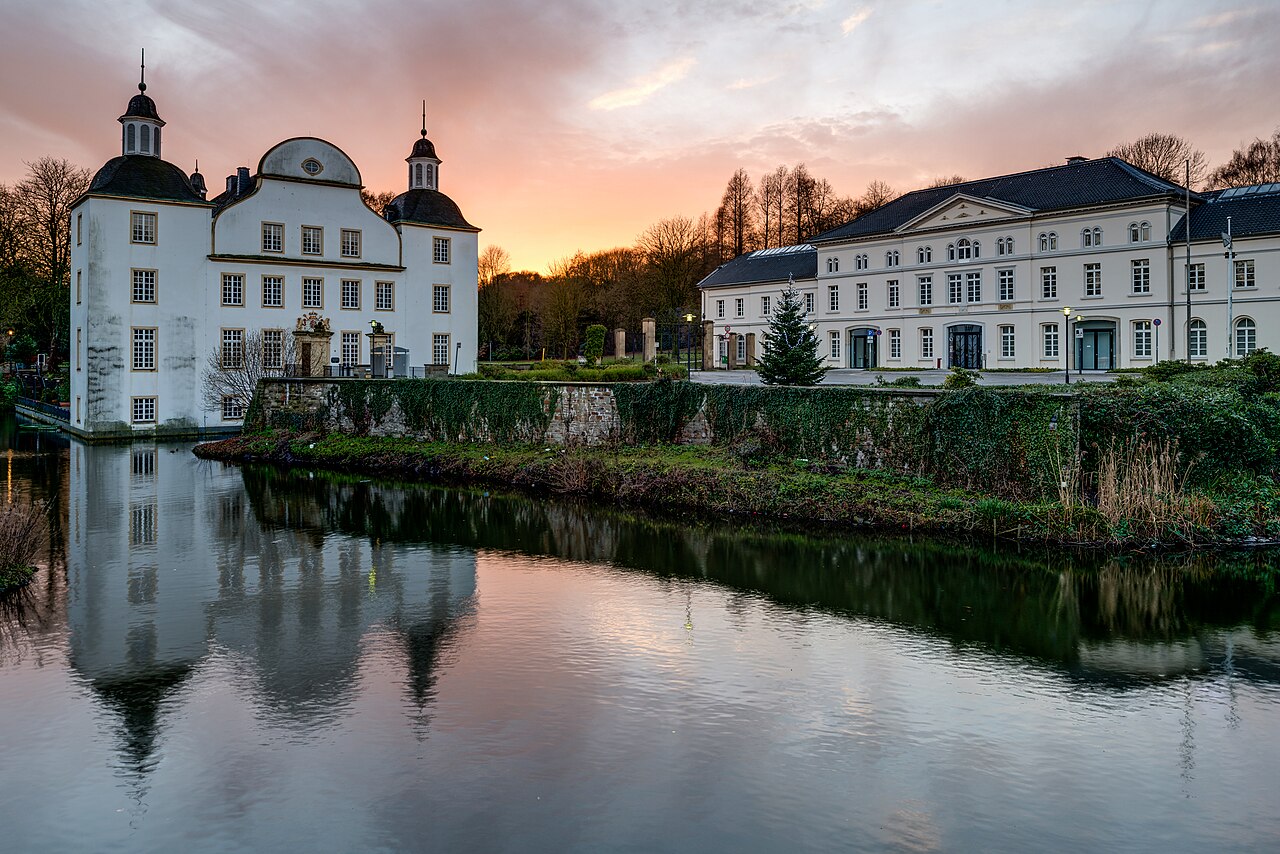
Burg Vondern consists of two main sections: the manor house and a two-winged outer bailey to the southwest. Originally a water castle, it was surrounded by broad moats with the main residential building situated on its own island. Over time, the moats silted up, but modern restoration efforts have recreated ponds near the outer bailey and the Remise building, echoing the castle's original defensive water features.
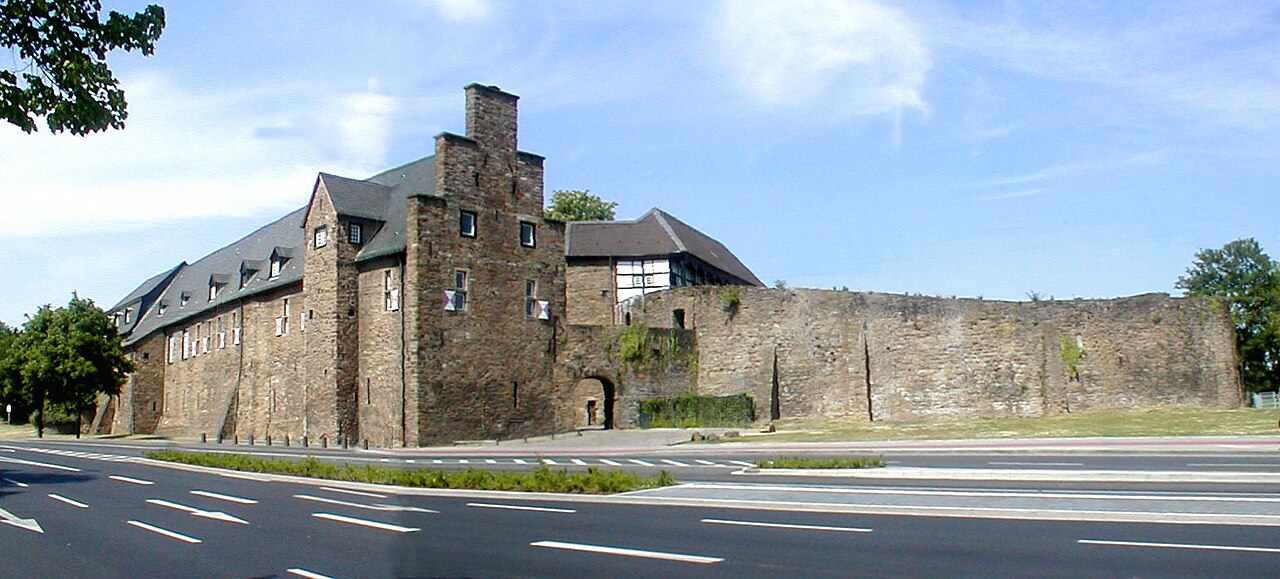
The outer bailey, primarily constructed from brick, showcases architectural elements from the late Gothic to early Renaissance periods. Its current form likely dates to renovations around 1520. A distinctive feature is the central gatehouse with a hipped roof and a rounded-arch frieze beneath the roofline. Flanking the gatehouse are two round corner towers: the northern Abortturm or privy tower, and the southern Gerichtsturm or court tower. These towers have conical roofs and pointed-arch friezes, replacing their original battlements by the 17th century. Keyhole-shaped arrow slits in the walls attest to the castle's 15th-century defensive design.
The south wing's outer wall contains remnants of the original ring wall and features a battlemented walkway supported by arcades with pointed arches. This walkway likely once encircled the entire outer bailey, providing a defensive platform for guards.
Manor house and baroque influences
The manor house dates from the 17th century, possibly constructed during the turmoil of the Thirty Years' War. It exhibits Baroque architectural qualities with its two-winged design and hipped roof. Originally accessed by a wooden drawbridge, this was replaced in the 18th century by a stone arch bridge with sandstone piers, which was restored in 2021.
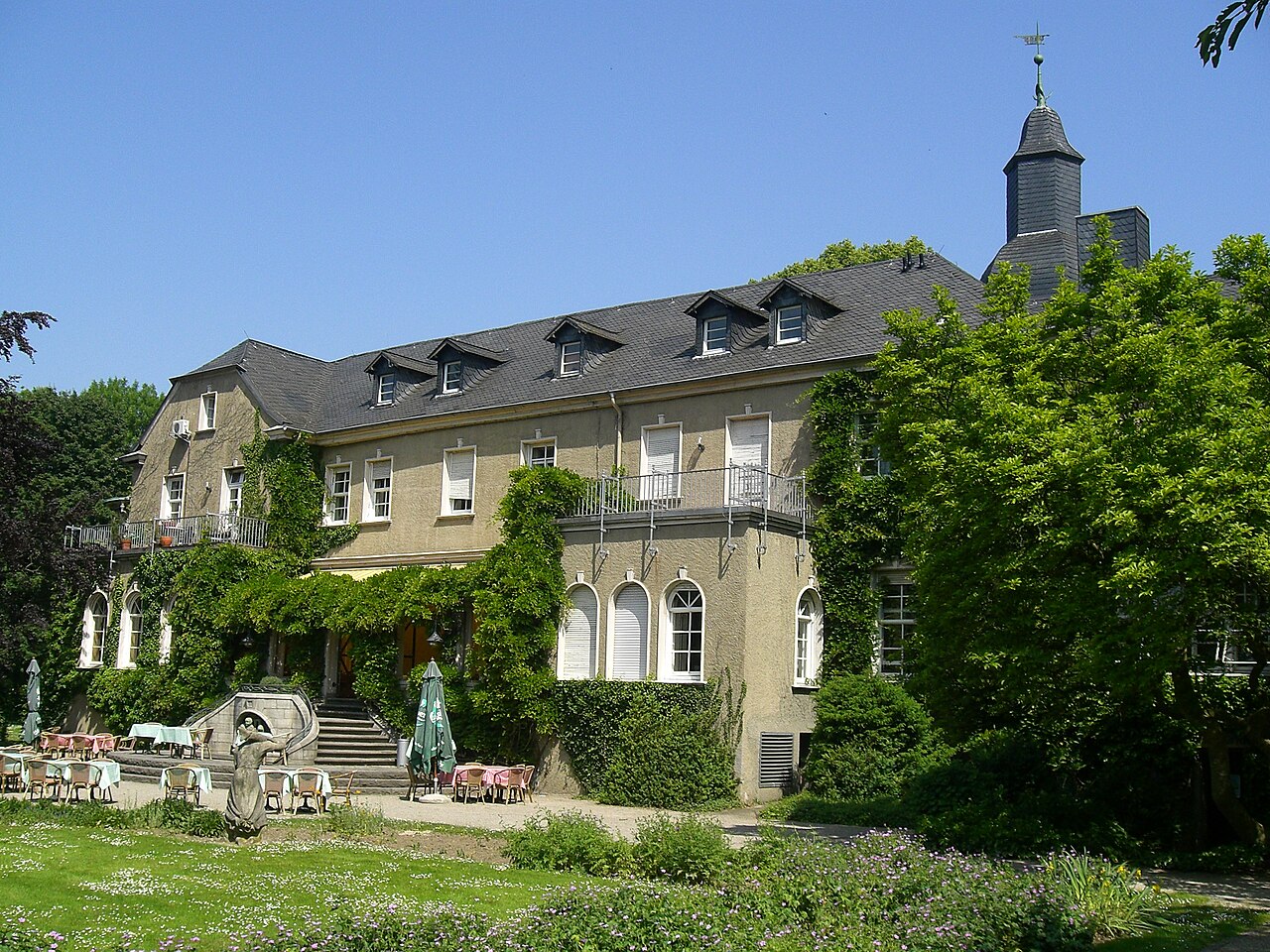
The manor's front facade is organized around seven window axes and framed by two pavilion-like projections topped with curved gables on the ground floor. The rear facade contains bricked-up windows revealing traces of an earlier late Gothic building phase, highlighting the castle's architectural layering.
Excavations during restoration uncovered a vaulted cellar beneath the manor, revealing a medieval kitchen with a fireplace, underscoring continuous occupation and adaptation through centuries.
Modern restoration and cultural use
Following World War II, the castle buildings were used for agricultural purposes. Plans in 1948 to convert the site into a workers' college did not materialize. Between 1982 and 1995, extensive restoration efforts by the city of Oberhausen and a local preservation society halted deterioration and preserved the castle's structural integrity.
In 2006–2007, the former stable in the outer bailey was replaced by the Remise, a new building that continues the site's architectural evolution. Since 1987, Burg Vondern has been officially protected as Oberhausen's oldest listed monument, emphasizing its cultural and historical significance.
Today, Vondern castle serves as a vibrant cultural venue hosting regular concerts, weddings, and a summer medieval market, blending its rich history with contemporary community use.
Defensive and architectural details
The castle's original defensive system included broad moats and an earthwork enclosure, indicating a fully fortified complex. Although much of the original defensive walling has not survived, the remaining structures and archaeological evidence provide insight into the castle's medieval military architecture.
Key architectural elements such as the gatehouse, round corner towers, and ring wall fragments illustrate the transition from medieval fortification to Renaissance residential comfort. The pointed-arch friezes and battlemented walkways reflect the castle's adaptation to changing defensive needs and aesthetic tastes over time.
Frequently asked questions (FAQ)
- When was Vondern castle originally built?
- Vondern castle was likely founded in the 12th or 13th century, with the first documented mention in 1266.
- What architectural styles are visible at Vondern castle?
- The castle displays a mix of late Gothic, early Renaissance, and Baroque architectural styles, reflecting its long history and renovations.
- Can visitors attend events at Vondern castle?
- Yes, Vondern castle hosts regular concerts, weddings, and a medieval market during the summer months.
- Is Vondern castle accessible to the public?
- The castle is owned by the city of Oberhausen and is accessible during events and special occasions; check local listings for visiting hours.
- What defensive features did Vondern castle originally have?
- Originally, the castle was a water castle surrounded by broad moats and an earthwork enclosure, with defensive towers and battlements.
Information
Website
Visit websiteSources & official resources
Verify the information above using these authoritative references.
Loading map...
Visitor reviews
No reviews yet. Been here? Write the first review and help other travelers!
Write the first reviewVisited this castle? Share your experience
Your review helps other travelers and adds first-hand knowledge to our encyclopedia.