Styrum
Styrum castle, located in Mülheim an der Ruhr, North Rhine-Westphalia, Germany, is a significant example of a high medieval hill castle with a complex history that spans several centuries. The castle's origins trace back to a prosperous settlement in the Frankish period, predating Charlemagne in the late 8th century, though the exact date of the castle's initial construction remains uncertain. Over the centuries, Styrum evolved from a strategic lordship within the Holy Roman Empire into a notable seat of power for the Counts of Limburg zu Hohenlimburg and the Lords of Limburg zu Styrum.
Early history and medieval significance
The name "Styrum" derives from the early medieval local dialect term "Stiarhem," meaning "Bulls Home," reflecting the area's agricultural and pastoral roots. The lordship of Styrum was first documented in 1067 when it was granted to the Abbacy of Kaiserswerth. A pivotal moment in its history occurred in 1225 following the assassination of Archbishop Engelbert of Berg of Cologne. Subsequently, the descendants of Frederick I of Isenberg acquired ownership of Mülheim on the river Ruhr, including the castles of Styrum and Hohenlimburg on the river Lenne. This acquisition established the lineage of the Counts of Limburg zu Hohenlimburg and the Lords of Limburg zu Styrum, who became influential landowners in Westphalia and the Lower Rhine region.
Architectural development and baroque transformation
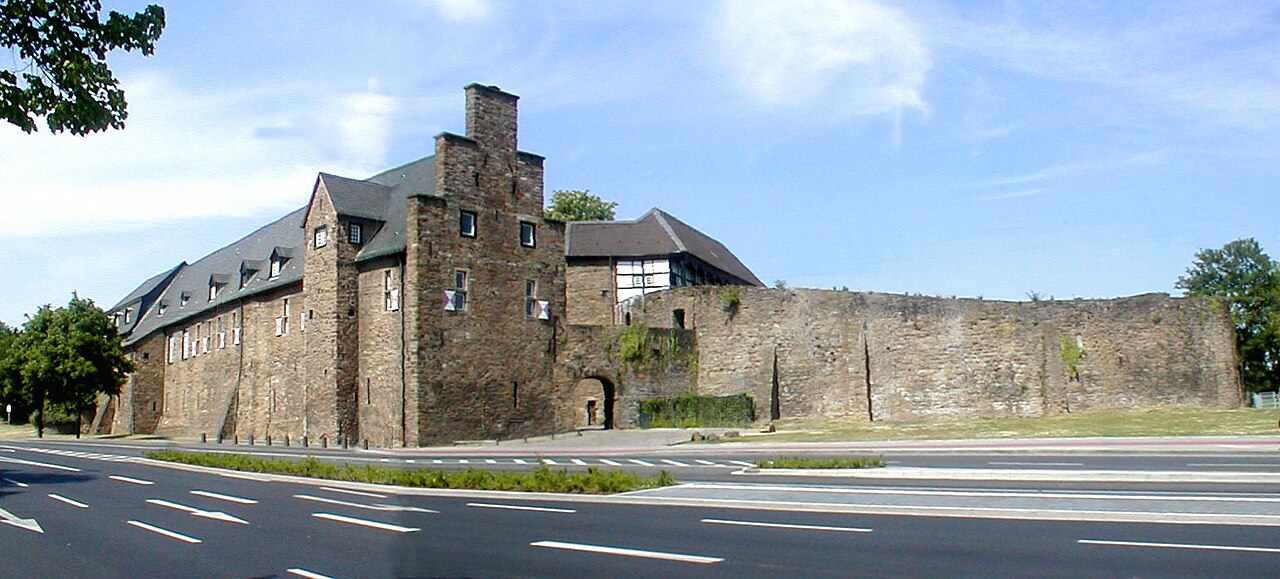
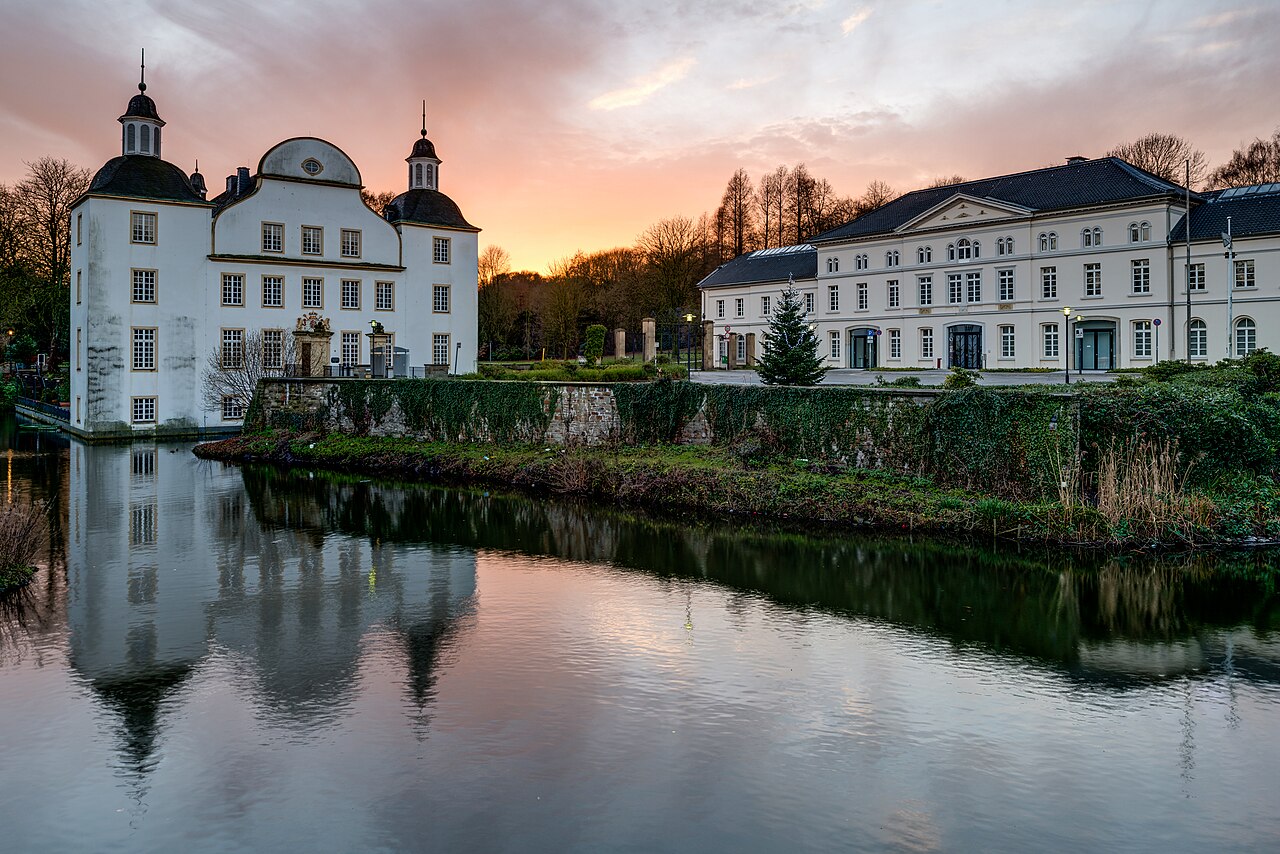
Styrum castle underwent significant architectural changes over the centuries. Originally constructed as a medieval fortress, it was rebuilt in the Baroque style in 1668, reflecting the evolving tastes and defensive needs of the period. This transformation included the addition of more ornate facades and interiors, typical of Baroque aesthetics, which emphasized grandeur and decorative richness. A devastating fire in 1738 led to further reconstruction, giving the castle much of its present form. These renovations likely incorporated contemporary building techniques and stylistic elements, blending the castle's medieval foundations with Baroque elegance.
Structural features and layout
The castle's layout as a hill castle provided natural defensive advantages, situated on elevated terrain overlooking the Ruhr valley. Its fortifications originally included thick stone walls, towers, and a moat, common features designed to withstand sieges and attacks during the high medieval period. The Baroque renovations softened some of these military aspects, focusing more on residential comfort and status display, while maintaining essential defensive structures. The castle complex comprises several courtyards, residential wings, and service buildings, arranged to accommodate both noble living and administrative functions.
Political changes and ownership transitions
Throughout its history, Styrum castle was closely tied to the fortunes of the House of Limburg-Styrum. The family's partition in 1644 led to the establishment of the Limburg-Styrum-Styrum line, which retained control of the castle for several generations. The mediatisation of 1806, a major reorganization of German territories during the Napoleonic era, brought Styrum under the jurisdiction of the Grand Duchy of Berg. The extinction of the Limburg-Styrum-Styrum line in 1809 marked the end of noble ownership. The last count, Ernst Maria Johan, bequeathed the castle to his wife's sister, Maria Margaretha von Humbracht, who later sold it in 1825.
Industrial era and modern use
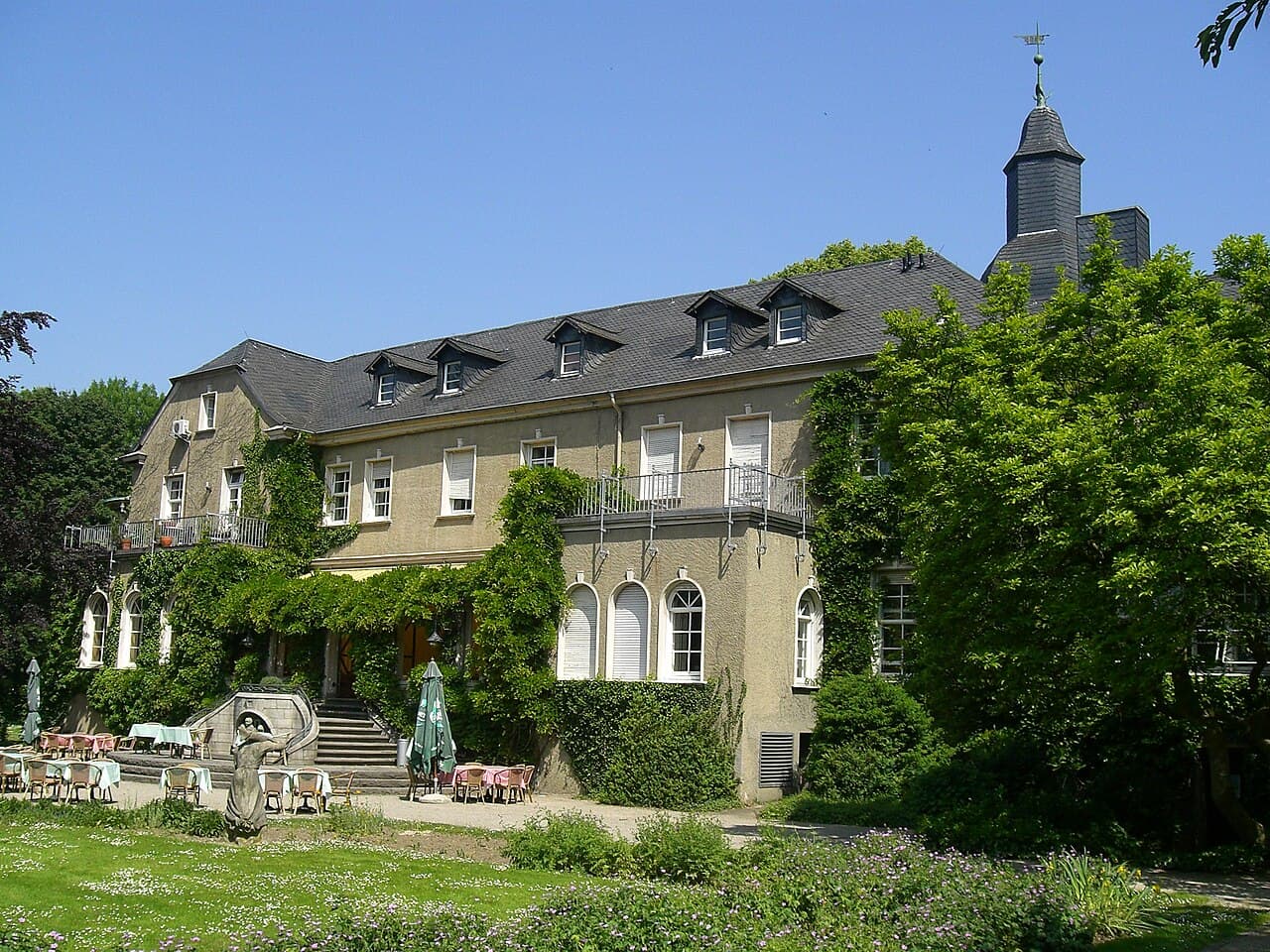
In 1890, the castle was purchased by August Thyssen, a prominent German industrialist. Thyssen's acquisition signaled a shift from aristocratic residence to industrial patronage. The castle remained in the Thyssen family until 1960 when it was donated to the city of Mülheim. Since then, Styrum castle has been repurposed for community use, including a restaurant, artist studios, and a center for the elderly, reflecting adaptive reuse of historic structures in urban settings.
Cultural and local significance
The castle is located in the community of Styrum, now part of the cities of Mülheim an der Ruhr and Oberhausen. The area's local soccer team, originally FC Styrum and later renamed FC Mülheim in 1975, achieved notable success, competing in the 2. Bundesliga-Nord from the 1950s through the 1980s. Styrum castle remains a landmark symbolizing the region's layered history, from medieval lordship through industrial transformation to contemporary cultural hub.
Architectural style and preservation status
Styrum castle exemplifies a blend of high medieval and baroque architectural styles, with its present form largely shaped by the 17th and 18th-century reconstructions. The castle is classified as a hill castle due to its strategic elevated position. Its preservation state is generally well preserved, with ongoing maintenance supporting its use as a public cultural and social venue. The castle’s architecture features characteristic Baroque elements such as symmetrical layouts, decorative stonework, and grand staircases, integrated with medieval defensive structures.
Visitor information and accessibility
Today, Styrum castle is accessible to the public and serves multiple community functions. Visitors can enjoy the castle's restaurant and art spaces, which highlight the building’s historical ambiance alongside contemporary cultural activities. Its location within an urban environment makes it easily reachable, contributing to its role as a heritage site and social gathering place.
Frequently asked questions (FAQ)
- When was Styrum castle originally built?
- The exact construction date of Styrum castle is unknown, but it dates back to at least the 13th century, with the area being prosperous since Frankish times before Charlemagne.
- What architectural styles characterize Styrum castle?
- Styrum castle features a combination of high medieval defensive architecture and Baroque style, the latter resulting from a major reconstruction in 1668 and further rebuilding after a fire in 1738.
- Can visitors access Styrum castle today?
- Yes, Styrum castle is open to the public and currently houses a restaurant, artist studios, and a community center, making it a vibrant cultural venue.
- Who owned Styrum castle during the industrial era?
- The castle was purchased by German industrialist August Thyssen in 1890 and remained in the Thyssen family until it was donated to the city of Mülheim in 1960.
- What is the significance of the name 'Styrum'?
- The name 'Styrum' originates from the early medieval dialect term 'Stiarhem,' meaning 'Bulls Home,' reflecting the area's early agricultural heritage.
Photo gallery

Photo by Doc Feelgood•Public domain
Information
Current owner
City of Mülheim an der Ruhr
Loading map...
Visitor reviews
No reviews yet. Been here? Write the first review and help other travelers!
Write the first reviewVisited this castle? Share your experience
Your review helps other travelers and adds first-hand knowledge to our encyclopedia.