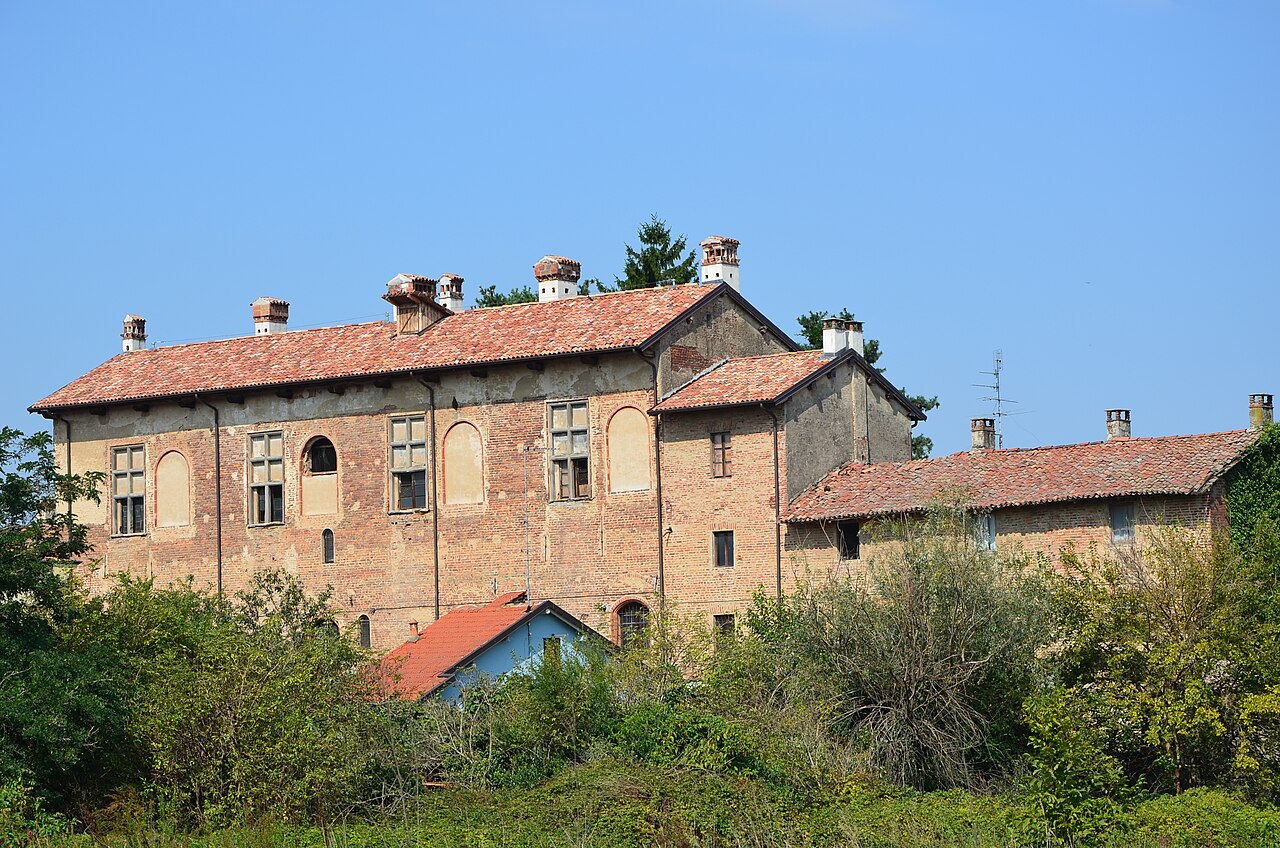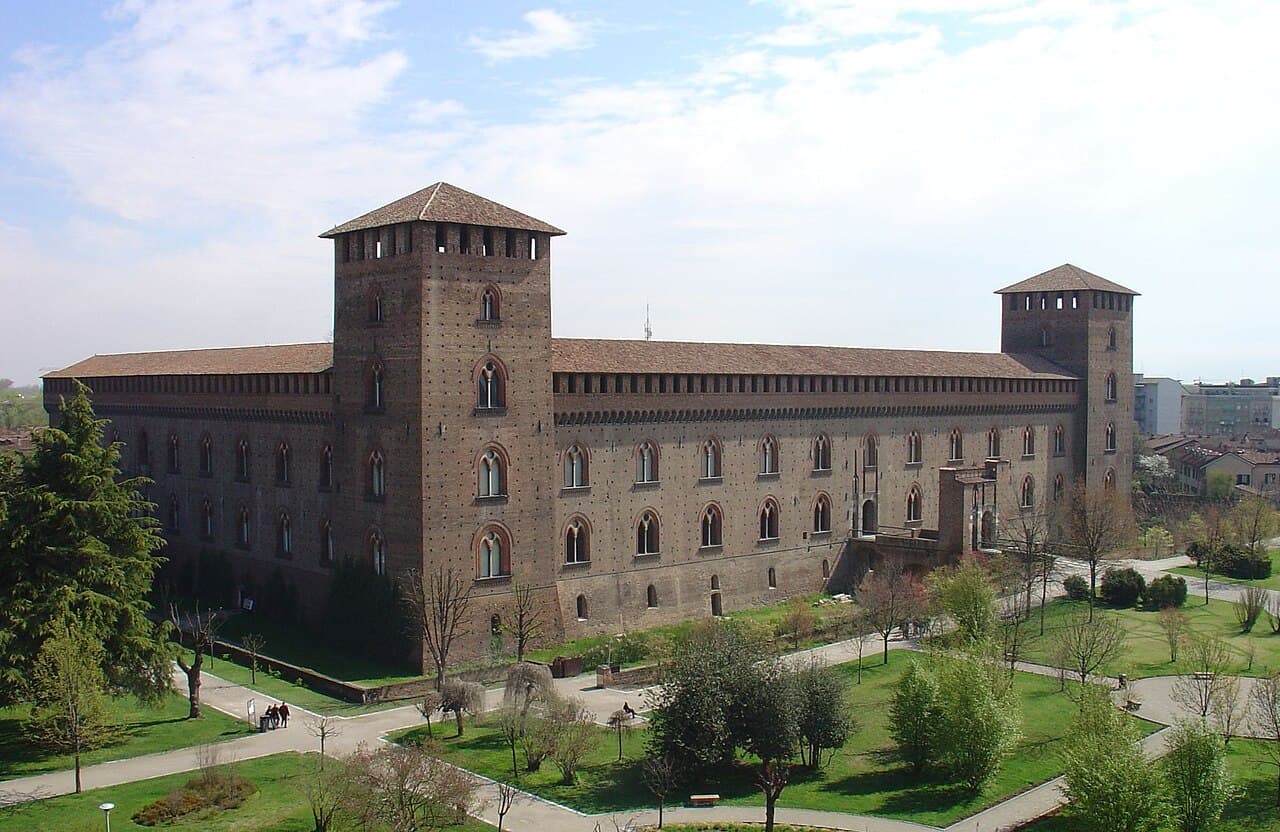
The Visconti Castle in Pavia stands as a remarkable example of late medieval military architecture and noble residence in northern Italy. Constructed in 1360 by Galeazzo II Visconti shortly after the Visconti family's acquisition of the city, the castle marked a significant shift in Pavia's political landscape, transitioning from a free city-state to a ducal possession. The castle was designed by the notable architect Bartolino da Novara, whose work contributed to the robust and imposing character of the fortress. Though the political capital of the Visconti dominion remained Milan, the castle served as the main residence for the family, symbolizing their power and influence in the region.
Strategically positioned north of the castle, a vast park was enclosed, incorporating the renowned Certosa of Pavia, founded in 1396 by Gian Galeazzo Visconti as a dynastic private chapel. The castle grounds witnessed pivotal historical events, most notably the Battle of Pavia in 1525, a decisive conflict during the Italian Wars that shaped European power dynamics. This battle took place within the castle's expansive park, underscoring the site's military and symbolic importance.
Architectural design and features
The Visconti Castle exhibits a classic quadrangular layout surrounded by a moat, typical of fortified structures of the period. Originally, it featured four corner towers, of which only one remains today, albeit shortened due to partial demolitions in the 17th century. The construction predominantly uses brick, with stone elements accentuating structural and decorative details such as slender columns framing mullioned windows and corbels (beccatelli) supporting the roofline.
The castle's main entrance is distinguished by the prominent Biscione emblem, a heraldic serpent devouring a human figure, emblematic of the Visconti family. This stone relief not only asserts ownership but also serves as a powerful symbol of the dynasty's legacy. The interior courtyard, bordered by covered porticoes, provides an open yet sheltered communal space, while the walls are adorned with vibrant frescoes depicting scenes of battles, hunting, and daily life, reflecting the cultural richness of the Visconti era.
Interior decoration and historical significance
Among the castle's most exquisite features is the Blue Room, lavishly decorated with gold and lapis lazuli, showcasing the artistic patronage of the Visconti family. This room likely housed the Visconti library, reputed to contain around 1,000 manuscripts and associated with the renowned poet Petrarch, emphasizing the castle's role as a center of learning and culture.
The castle also contains evidence of its use as a prison, particularly in the upper floor of the eastern wing, where prisoner graffiti remains visible. This historical layer adds to the multifaceted narrative of the fortress, illustrating its military and judicial functions over time.
Historical context and evolution
The castle's history is intertwined with the fortunes of the Visconti family and the broader political shifts in Lombardy. After its initial construction by Galeazzo II Visconti, the castle was expanded and enhanced by his successors, including Gian Galeazzo Visconti, the first Duke of Milan, who further entrenched the family's power. The castle served as a summer residence for duchesses such as Bianca di Savoia, Beatrice di Tenda, and Bona di Savoia, highlighting its status as a noble domicile.
Throughout the 15th century, the castle maintained its military significance, but by the early 17th century, advancements in warfare and changing political realities led to the partial demolition of three corner towers and the southern wing to prevent its use by enemy forces. These actions marked the decline of its military role and its transition to a private residence.
In the 19th century, the castle passed into municipal hands and was repurposed for public use, including as a school and community center. A comprehensive restoration completed in 1995 revived much of the castle's original decorative elements, including its frescoes and prisoner graffiti, preserving its historical and cultural heritage.
Current use and cultural significance
Today, the Visconti Castle houses the Civic Museums of Pavia, which include the Pinacoteca Malaspina, Museo Archeologico, Sala Longobarda, and sections dedicated to medieval, Renaissance, and 19th-century art collections. The castle also hosts the Museo del Risorgimento and the Cripta di Sant’Eusebio, making it a vibrant cultural hub.
The castle remains in a restored condition and continues to function as a municipal center, with public access to its frescoed rooms and central courtyard. Its preservation allows visitors to explore the rich history and architectural grandeur of the Visconti dynasty, while its museums offer insights into the broader cultural and historical context of Pavia and Lombardy.
Strategic location and defensive role
Positioned near the Naviglio Grande canal and the important Milan-Vigevano road, the castle's location was strategically chosen for defense and control of regional transportation. The moat and fortified walls enhanced its defensive capabilities, while its imposing towers and gatehouses projected power and authority.
Despite the loss of some original structures, the castle's layout and surviving architectural elements provide valuable insights into medieval fortification techniques and the lifestyle of Lombard nobility. Its enduring presence in Pavia's urban fabric underscores its historical and cultural importance.
Frequently asked questions (FAQ)
- What are the opening hours of Visconti Castle?
- Visconti Castle is open to visitors from 9 AM to 7 PM during the summer months and from 9 AM to 5 PM in the winter. It's advisable to check the official website for any seasonal changes or special holiday hours.
- How do I get to Visconti Castle?
- Visconti Castle is located in the heart of Pavia, easily accessible by public transport or car. If you're coming by train, the castle is a short walk from the Pavia train station.
- What is the historical significance of Visconti Castle?
- Visconti Castle, constructed in the 14th century, served as the residence of the Visconti family, who played a crucial role in the history of Milan and the surrounding regions. The castle is a testament to the power and influence of the Visconti dynasty during the Middle Ages.
- Is it possible to take guided tours of the castle?
- Yes, guided tours are available for visitors who wish to learn more about the history and architecture of Visconti Castle. These tours typically provide deeper insights into the castle's past and its significance in the region.
- Can I visit the castle with children?
- Absolutely! Visconti Castle is family-friendly and offers various attractions that engage visitors of all ages. Children can enjoy exploring the castle grounds and learning about its fascinating history.
- What are the ticket prices for Visconti Castle?
- Tickets for Visconti Castle are typically very affordable, with discounts available for students and seniors. It's best to check the official website for the most up-to-date pricing and any promotional offers.
- When is the best time to visit Visconti Castle?
- The best time to visit Visconti Castle is during the spring and fall when the weather is pleasant and there are fewer crowds. This allows for a more enjoyable experience as you explore the castle and its beautiful surroundings.
- Are there any nearby attractions to visit?
- Yes, Pavia is rich in history and culture, with nearby attractions such as the Certosa di Pavia, a stunning monastery, and the University of Pavia, one of the oldest universities in Italy. Visiting these sites can enhance your experience in the area.
- Is Visconti Castle accessible for people with disabilities?
- Yes, Visconti Castle is equipped with facilities to accommodate visitors with disabilities. There are accessible entrances and pathways to ensure that everyone can enjoy the beauty of the castle.
Photo gallery

Information
Sources & official resources
Verify the information above using these authoritative references.
Loading map...
Visitor reviews
No reviews yet. Been here? Write the first review and help other travelers!
Write the first reviewVisited this castle? Share your experience
Your review helps other travelers and adds first-hand knowledge to our encyclopedia.